Table of Contents
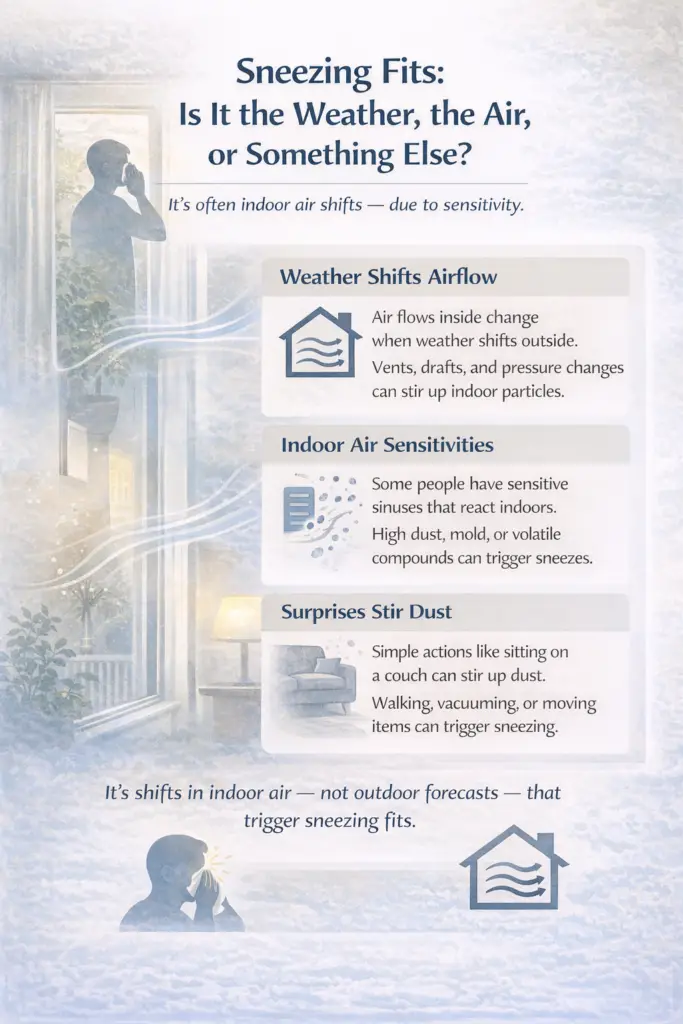 Sneezing Fits: Is It the Weather, the Air, or Something Else?
Sneezing fits are strange. One moment you’re fine, and the next you can’t stop sneezing—sometimes after walking into a different room, stepping indoors, or even standing near a vent. To people who don’t experience it, it looks random. To people who do, it feels very specific.
What makes sneezing fits frustrating is that they don’t always line up with classic allergy explanations. There’s no visible dust cloud. No strong odor. No obvious trigger. Yet the reaction is immediate and repetitive.
In many cases, sneezing fits are less about *what* is in the air and more about **how quickly the environment changes around your nose and sinuses**.
Why Sneezing Fits Often Feel Sudden
Sneezing is a protective reflex controlled by sensitive nerves in the nasal passages. Those nerves can react strongly to rapid changes—even subtle ones.
Common triggers include:
- Sudden temperature shifts
- Changes in humidity
- Air movement from vents or fans
- Pressure differences between rooms
- Dry air hitting moist nasal tissue
When your body moves from one environment to another quickly, the nervous system sometimes reacts before your brain has time to process what changed.
Is the Weather Really Involved?
Weather changes don’t usually cause sneezing directly—but they can **set up the conditions** for it.
For example:
- Cold fronts often dry out indoor air
- Storm systems change barometric pressure
- Seasonal shifts redistribute dust and pollen indoors
- HVAC systems cycle more aggressively during weather swings
In those situations, it’s often the **indoor air response to outdoor weather** that triggers sneezing, not the weather itself.
Why Sneezing Fits Happen in Certain Rooms
Many people notice sneezing fits happen in specific rooms—bedrooms, offices, basements, or near entryways.
Possible reasons include:
- Different humidity levels from room to room
- Air returns or supply vents blowing directly toward the face
- Dust accumulation disturbed by airflow
- Temperature layering (warm air rising, cool air sinking)
Even when a room looks identical to the rest of the house, the air dynamics can be very different.
Sneezing Fits vs. Allergies
Sneezing from allergies usually comes with:
- Itchy eyes
- Runny nose
- Ongoing congestion
Sneezing fits caused by environmental changes are often:
- Sudden
- Intense but short-lived
- Triggered by movement or airflow
- Gone after a few minutes
That difference is why many people feel confused when allergy treatments don’t fully explain what’s happening.
Can HVAC Systems Play a Role?
Yes—sometimes unintentionally.
HVAC systems can:
- Move dry air rapidly across nasal passages
- Redistribute fine particles
- Create pressure changes when doors open or close
- Blow air directly toward the face when seated or lying down
Sneezing fits that happen when the system cycles on—or when standing near vents—are often linked to airflow rather than contamination.
When Sneezing Fits Are More Likely
People tend to notice sneezing fits more:
- During seasonal transitions
- When indoor air is dry
- After storms or weather shifts
- In rooms with strong airflow
- When moving between warm and cool spaces
These are all moments when the environment changes faster than the body can comfortably adapt.
What Sneezing Fits Usually Are Not
Most sneezing fits are not:
- A sign of infection
- A serious medical condition
- A clear allergy reaction
- A reliable predictor of weather
They’re more accurately described as **a sensitivity to environmental transitions**.
Summary
Sneezing fits often feel mysterious because the trigger isn’t always visible. In many cases, they’re caused by **rapid changes in air, temperature, humidity, or airflow**, especially indoors. Weather can influence these conditions indirectly, but the reaction itself usually comes from how your body responds to environmental shifts.
If sneezing fits happen to you regularly—especially in certain rooms or during seasonal changes—you’re not imagining it. It’s a common experience, even if it’s not always easy to explain.
Related Topics You May Find Helpful
- Sinus Pressure That Worsens With Weather Changes
- Why Dry Indoor Air Irritates the Nose and Throat
- Sudden Coughing Fits Indoors
- How Humidity Levels Affect Breathing Comfort
Read More in This Series: Weather, Air, and Body Sensitivity
Many people notice pain, pressure, or strange physical reactions before weather changes.
These articles explore how weather shifts, indoor air conditions, and sensitivity can affect the body in different ways.