
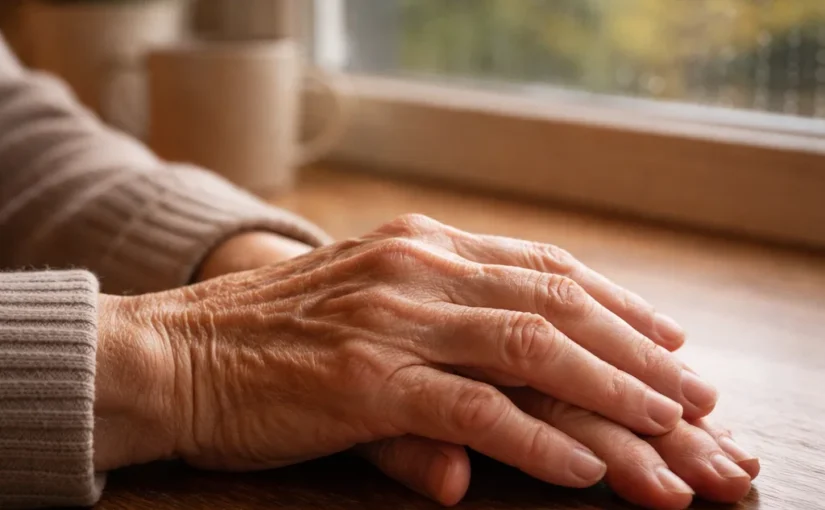
Shifts in barometric pressure, humidity, and indoor air conditions can increase joint stiffness and discomfort, especially for people with existing inflammation. While not everyone experiences this, for those who do, the pattern is often consistent.
Table of Contents
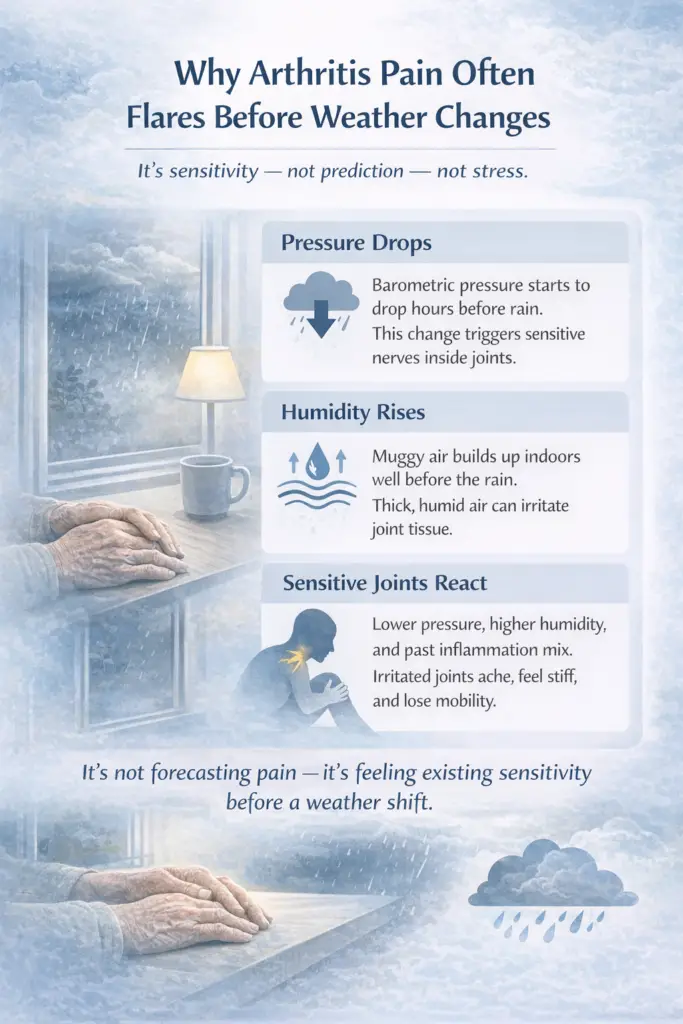 Why Arthritis Pain Flares Before Weather Changes
It’s a common comment, often said half-jokingly: “My joints know when a storm is coming.”
For people who live with arthritis, that statement usually isn’t meant as a metaphor.
Joint pain that flares up before rain, storms, or major weather shifts is widely reported — even though it’s often dismissed by people who don’t experience it. While arthritis pain doesn’t predict the weather, there are practical environmental reasons why existing joint discomfort can become more noticeable.
Why Arthritis Is Sensitive to Environmental Changes
Arthritis affects joints where bones, cartilage, and connective tissue meet. These areas are already prone to:
- Inflammation
- Stiffness
- Reduced flexibility
When the environment changes — especially gradually — joints that are already sensitive may respond more strongly than healthy tissue.
Weather transitions often bring subtle shifts that don’t affect everyone equally. For arthritic joints, even small changes can amplify discomfort.
How Pressure Changes Can Affect Joint Pain
Before storms arrive, barometric pressure usually drops. This doesn’t press on the joints directly, but it can influence how tissues inside the joint feel.
Lower pressure can:
- Allow inflamed tissue to expand slightly
- Increase the sensation of tightness or aching
- Make stiff joints feel more noticeable
For people with arthritis, that added sensitivity can show up as pain hours before weather changes become obvious.
Why Arthritis Pain Often Feels Worse Indoors
Many people notice that joint pain feels more pronounced inside the house, especially before storms.
Indoor environments respond differently to weather changes:
- Humidity often rises before rain
- Air circulation can become stagnant
- HVAC systems may cycle irregularly
- Cold or damp air lingers longer indoors
Higher humidity can increase the sensation of swelling, while cooler indoor air can stiffen joints. Together, these factors often make arthritis pain feel worse indoors during weather transitions.
Humidity, Stiffness, and “Weather Ache”
Humidity plays a quiet but important role in joint comfort.
- High humidity can increase the feeling of swelling and heaviness
- Low humidity can make joints feel dry, stiff, and less flexible
- Rapid indoor humidity changes are especially uncomfortable
Storm systems often cause indoor humidity to rise before rain begins, which helps explain why arthritis pain flares early — not just during the storm itself.
Why Some People Feel This Strongly — and Others Don’t
Not everyone with arthritis experiences weather-related flares. Sensitivity varies based on:
- The type and severity of arthritis
- Prior joint injuries or surgeries
- Overall inflammation levels
- Muscle tension around affected joints
People without joint issues may not notice these environmental changes at all, which makes the experience easy to dismiss. But for those who feel it consistently, the pattern is very real.
What Helps Reduce Weather-Related Arthritis Pain at Home
There’s no way to control the weather, but managing the indoor environment can help reduce flare-ups:
- Keeping indoor humidity steady
- Avoiding cold drafts on joints
- Not running HVAC fan-only mode continuously during humid weather
- Maintaining gentle movement during pressure changes
- Paying attention to indoor comfort during storms
These adjustments don’t cure arthritis — but they can reduce how strongly weather transitions affect joint comfort.
Wrap-Up
Arthritis pain that flares before weather changes isn’t imagination or exaggeration. For many people, gradual shifts in pressure, humidity, and indoor air conditions can make already-sensitive joints feel worse well before storms arrive.
Understanding how the indoor environment responds to weather helps explain why these flares feel predictable — and why small changes at home can make a noticeable difference.
Read More in This Series: Weather, Air, and Body Sensitivity
Many people notice pain, pressure, or strange physical reactions before weather changes.
These articles explore how weather shifts, indoor air conditions, and sensitivity can affect the body in different ways.