

Table of Contents
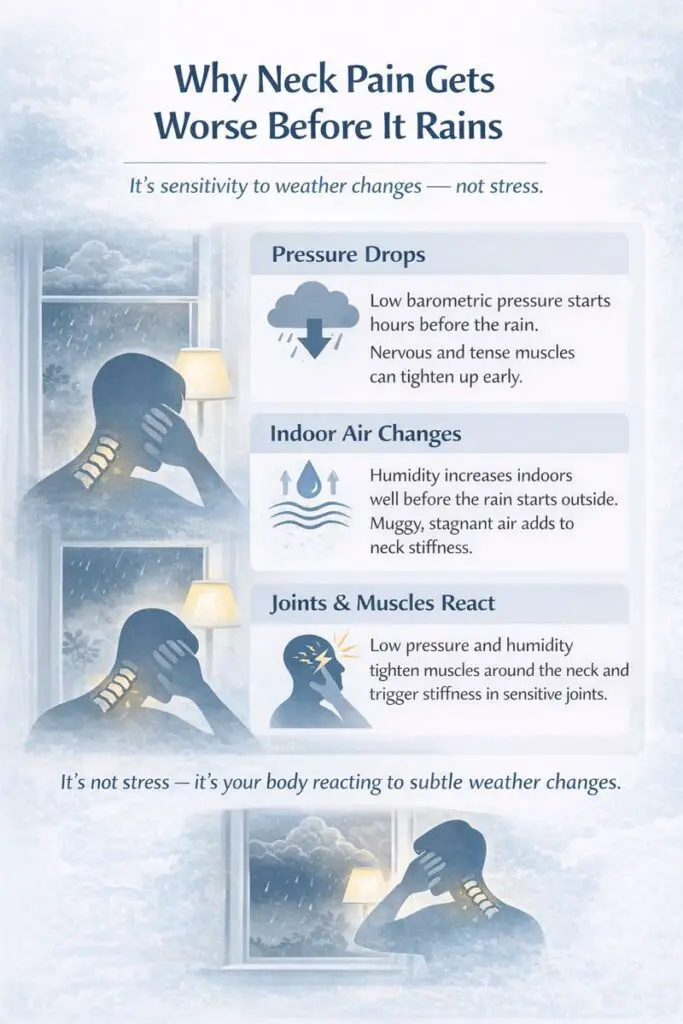 Why Neck Pain Gets Worse Before It Rains
Most people know someone who seems to feel rain coming before it starts—because their neck tightens up or stiffens hours ahead of time. For the person experiencing it, the pattern feels obvious. For everyone else, it often sounds like coincidence.
Neck pain that flares before rain isn’t about the weather “causing” pain. It’s about how environmental changes interact with areas of the body that are already under tension. The neck happens to be one of the most sensitive places for that interaction to show up.
Why the Neck Is Especially Sensitive to Weather Changes
The neck is a small area doing a lot of work.
It supports the weight of the head, houses major nerves and blood vessels, and stays under constant low-level strain from posture, screens, and stress. Even minor changes in muscle tension or nerve sensitivity can become noticeable here faster than in other parts of the body.
People are more likely to notice weather-related neck pain if they:
- Sit at a desk for long periods
- Spend time looking down at phones or screens
- Have had prior neck injuries or surgeries
- Carry chronic tension in their shoulders
When the environment changes, the neck often reacts first.
How Pressure Changes Can Affect Neck Muscles and Nerves
Barometric pressure changes don’t push directly on the body, but they can affect how pressure is balanced internally. For people with sensitive nerves or tight muscles, those subtle shifts can be enough to increase discomfort.
Storm systems usually bring gradual drops in pressure rather than sudden changes. That slow shift can still be felt in areas where nerves, joints, and muscles are closely packed—like the neck.
Tight muscles plus sensitive nerves can turn a mild environmental stress into noticeable stiffness or pain.
Why Neck Pain Often Feels Worse Indoors During Storms
Many people notice their neck feels worse indoors than outdoors when weather changes. That’s not imagined.
Indoor environments respond to weather more slowly and unevenly:
- Indoor pressure equalizes differently than outdoor air
- Humidity often rises before storms
- HVAC systems cycle more frequently
- Airflow repeatedly hits the same areas
Cold or damp air blowing directly onto the neck or shoulders—especially from vents—can increase muscle stiffness. Sleeping with airflow directed at the upper body can also make morning neck pain worse during stormy weather.
Some people even notice slight relief when they move around or step outside briefly, where air pressure and airflow feel more balanced.
Humidity, Muscle Stiffness, and “Locked-Up” Necks
Humidity plays a quiet but important role in muscle comfort.
High humidity can contribute to muscle fatigue and inflammation. Very low humidity can reduce muscle elasticity and increase stiffness. Storm systems often cause indoor humidity to swing between the two, sometimes within the same day.
These fluctuations can affect:
- Sleep quality
- Morning stiffness
- Neck mobility
- Perceived pain levels
That’s why some people wake up with a “locked” neck during stormy weather, even without changing their routine.
Why Some People Feel This Strongly — and Others Don’t
Not everyone experiences weather-related neck pain, and that matters.
Sensitivity varies based on:
- Past injuries or surgeries
- Chronic muscle tension
- Nerve sensitivity
- Posture habits
- Sleep position
People who feel these changes aren’t weaker—they’re often more aware of subtle shifts. Sensitivity isn’t a flaw; it’s responsiveness.
What Helps Reduce Weather-Related Neck Pain at Home
Small environmental adjustments can help reduce flare-ups:
- Avoid cold drafts directly on the neck and shoulders
- Don’t run the AC fan continuously during humid weather
- Maintain steady indoor humidity rather than extremes
- Adjust airflow away from the bed or desk
- Use gentle movement during pressure changes
These steps don’t eliminate weather sensitivity, but they often reduce how intense it feels.
Wrap-Up
Neck pain that worsens before rain isn’t imagination or superstition. It’s the result of sensitive muscles and nerves reacting to environmental change—especially indoors.
Understanding how pressure, humidity, and airflow affect your living space can make those flare-ups easier to manage. Sometimes, small adjustments matter more than people expect.
Related Household Air & Comfort Topics
- Why Some People Get Migraines Before a Storm
- Sinus Pressure That Worsens With Weather Changes
- Fan Mode on AC: Should You Use It?
- Ideal Indoor Humidity Levels for Comfort
Read More in This Series: Weather, Air, and Body Sensitivity
Many people notice pain, pressure, or strange physical reactions before weather changes.
These articles explore how weather shifts, indoor air conditions, and sensitivity can affect the body in different ways.