

Changes in barometric pressure, humidity, and indoor air conditions often begin hours before storms arrive. For people with sensitive sinuses, these shifts can trigger pressure, facial pain, or headaches well before the weather visibly changes.
Table of Contents
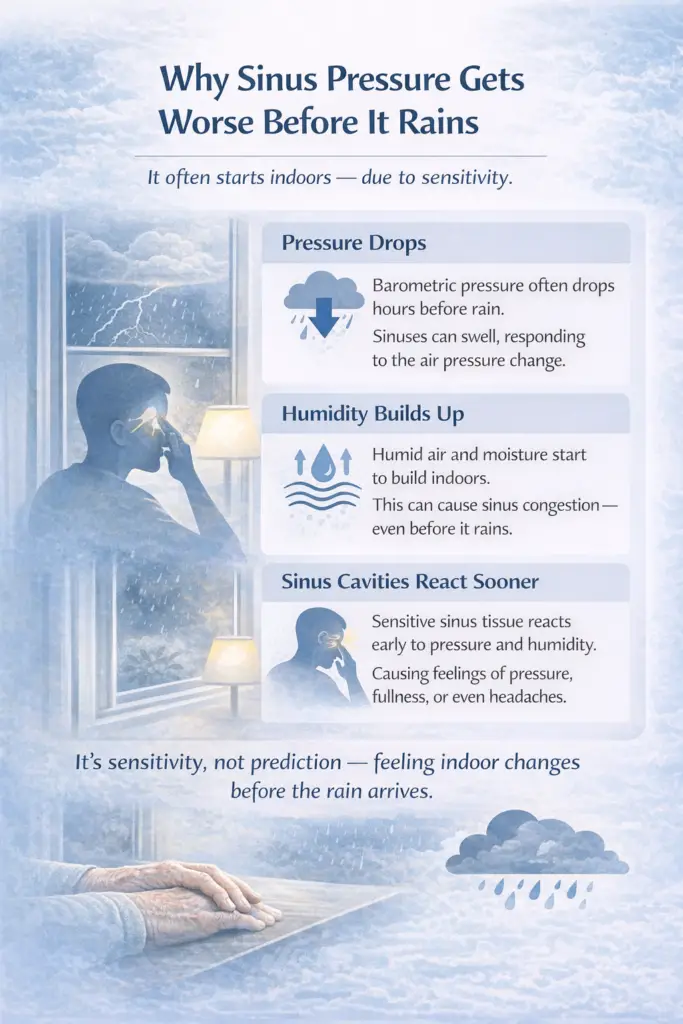 Why Sinus Pressure Gets Worse Before It Rains
Many people say they can feel a storm coming because of pressure in their face, eyes, or teeth. Sometimes it feels like a sinus infection starting — even though there’s no congestion, no fever, and no illness.
To people who don’t experience sinus pressure, this can sound exaggerated. But for those who do, the timing is often consistent enough to be unmistakable. Sinus pressure that flares up before rain isn’t about predicting the weather — it’s about how sensitive sinus cavities respond to environmental changes that begin early.
Why Sinuses Are Especially Sensitive to Weather Changes
Sinuses are air-filled cavities surrounded by bone and soft tissue. That structure makes them particularly sensitive to pressure imbalance.
When the environment changes, sinuses can’t always equalize pressure quickly. For people with narrow passages, chronic irritation, or prior sinus issues, even small pressure shifts can create discomfort.
That’s why sinus pressure often feels localized — behind the eyes, in the cheeks, or in the upper teeth.
How Barometric Pressure Changes Affect Sinus Pressure
Before storms arrive, barometric pressure typically drops. This doesn’t cause pain on its own, but it can create a mismatch between:
- Pressure inside the sinuses
- Pressure in the surrounding environment
When those pressures don’t equalize smoothly, people may feel:
- Facial pressure
- Dull aching
- Headaches that feel “sinus-related”
This can happen hours before rain begins — which is why sinus discomfort often feels predictive.
Why Sinus Pressure Often Feels Worse Indoors
Many people notice that sinus pressure intensifies indoors, especially before storms. That’s not accidental.
Indoor environments respond differently to weather changes:
- Pressure equalizes more slowly inside buildings
- Humidity often rises before rainfall
- Air circulation becomes stagnant
- HVAC systems may recirculate moist air
These conditions can increase swelling and irritation in the sinuses, making pressure feel worse indoors than outside — even when the weather hasn’t fully changed yet.
Humidity, Swelling, and “Full Head” Sensations
Humidity plays a major role in sinus comfort.
- High humidity can cause sinus tissues to swell, increasing pressure
- Low humidity can dry and irritate sinus passages
- Rapid changes between the two are especially uncomfortable
Before storms, indoor humidity often rises quietly. For people with sensitive sinuses, that change alone can trigger pressure or pain without any signs of infection.
Why Some People Feel This Strongly — and Others Don’t
Not everyone experiences weather-related sinus pressure. Sensitivity is more common in people with:
- Narrow sinus passages
- A history of sinus infections
- Allergies or chronic irritation
- Headaches that originate in the sinuses
People without these sensitivities may never notice pressure changes at all — which is why the experience is often dismissed by others.
What Helps Reduce Weather-Related Sinus Pressure at Home
You can’t stop pressure changes, but you can reduce how strongly they affect your sinuses indoors:
- Keep indoor humidity stable rather than fluctuating
- Avoid constant fan-only airflow during humid weather
- Reduce drafts blowing directly at the face
- Maintain good air circulation without over-drying the air
- Pay attention to indoor air conditions during storms
For many people, managing indoor air matters more than the weather outside.
Wrap-Up
Sinus pressure that flares up before rain isn’t imagined. For sensitive sinuses, gradual changes in pressure, humidity, and indoor air conditions can trigger discomfort long before storms arrive.
Understanding how the indoor environment responds to weather helps explain why sinus pressure feels so predictable — and why small adjustments at home can make a meaningful difference.
Read More in This Series: Weather, Air, and Body Sensitivity
Many people notice pain, pressure, or strange physical reactions before weather changes.
These articles explore how weather shifts, indoor air conditions, and sensitivity can affect the body in different ways.