

Shifts in barometric pressure, humidity, and indoor air conditions often begin hours before rain or wind becomes noticeable. For people with sensitive nerves, joints, or sinuses, these subtle changes can trigger discomfort long before the weather actually turns.
Table of Contents
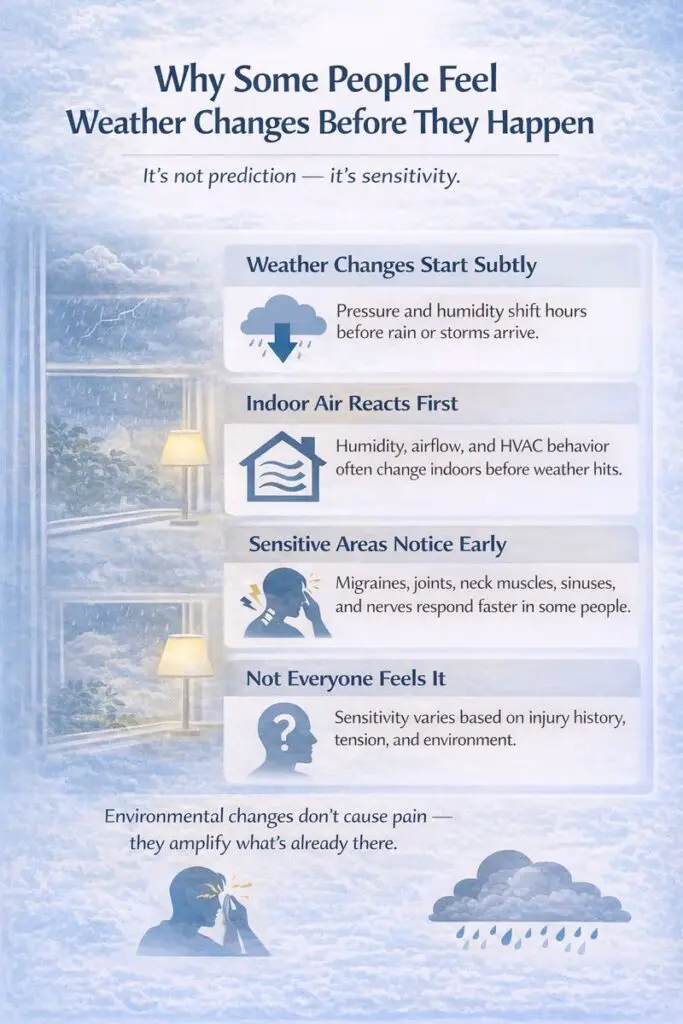 Why Some People Can Feel Weather Changes Before They Happen
Most of us know someone who seems to predict the weather without trying. A storm hasn’t shown up yet, but they already know it’s coming — because their head starts pounding, their neck tightens up, or their joints begin to ache.
To people who don’t experience this, it can sound exaggerated or coincidental. But for those who do, the pattern is often consistent enough to feel impossible to ignore. While it may seem almost instinctive, there are real environmental reasons why some bodies react early to weather changes — especially indoors.
This isn’t about predicting the weather. It’s about sensitivity to environmental shifts that start before storms fully arrive.
It’s Not the Weather — It’s the Change
One of the most important things to understand is that the body doesn’t respond to rain or snow itself. It responds to changes.
Before a storm:
- Barometric pressure begins to drop
- Humidity often rises
- Air density and circulation shift
These changes usually start hours before clouds darken or rain falls. For people who are sensitive to pressure or inflammation, those early shifts can be enough to trigger discomfort.
In other words, the body feels the transition — not the forecast.
Why the Body Notices These Changes First
Certain areas of the body are especially sensitive to environmental stress, including:
- Nerves
- Joints
- Sinuses
- Muscles that stay under constant tension
If someone already has inflammation, prior injuries, or nerve sensitivity, small environmental changes can register more strongly. What barely registers for one person may feel obvious to another.
That sensitivity doesn’t mean something is “wrong.” It means the body is more responsive to subtle shifts that others simply don’t notice.
Why Indoor Air Plays a Bigger Role Than People Realize
Many people notice that their symptoms feel worse inside the house than outdoors — even before storms arrive. That’s not a coincidence.
Indoor environments respond differently to weather changes:
- Pressure equalizes more slowly indoors
- Humidity often rises before rain begins
- HVAC systems cycle differently during storms
- Air can feel stagnant or “heavy”
As a result, people may not be reacting to the weather itself, but to how their home responds to it.
For sensitive individuals, these indoor shifts can amplify discomfort long before outdoor conditions become obvious.
The Most Common Ways People “Feel” Weather Changes
Although everyone experiences this differently, certain patterns come up again and again.
Migraines
Many migraine sufferers report headaches that begin hours before storms. Pressure changes, humidity shifts, and indoor air conditions can irritate sensitive nerve pathways and blood vessels, triggering pain well before weather changes are visible.
Neck and Upper Back Pain
Weather shifts often coincide with muscle tightening, especially in the neck and shoulders. Drafts, humidity changes, and pressure sensitivity can all contribute to stiffness or nerve irritation in areas that already carry tension.
Arthritis and Joint Pain
People with joint issues frequently report stiffness or aching before storms. Changes in pressure and humidity can affect swelling and tissue sensitivity, making discomfort more noticeable during weather transitions.
Sinus Pressure
Sinuses are enclosed spaces, which makes them especially sensitive to pressure imbalance. As barometric pressure drops and humidity rises, sinus pressure and facial discomfort can increase — often well before rain begins.
Why Some People Feel This — and Others Don’t
This is where misunderstandings often happen.
People who don’t experience these symptoms naturally assume they aren’t real. But sensitivity varies widely from person to person. Factors that often increase awareness include:
- Prior injuries or surgeries
- Chronic inflammation
- Nerve sensitivity
- Long-term muscle tension
- Poor sleep during weather changes
Sensitivity isn’t imagination — it’s responsiveness.
What Actually Helps (Without Fighting the Weather)
There’s no way to control the weather, but small indoor adjustments can reduce how strongly it affects the body:
- Keeping indoor humidity within a stable range
- Avoiding continuous fan-only airflow during humid weather
- Reducing cold drafts on the head, neck, and joints
- Paying attention to indoor air changes during storms
- Creating a calm sleep environment when pressure shifts occur
For many people, managing the indoor environment matters more than the weather itself.
Wrap-Up
People who seem to “feel” storms coming aren’t predicting the weather — they’re responding to environmental changes that start early and are amplified indoors. For sensitive bodies, shifts in pressure, humidity, and airflow can trigger discomfort long before storms arrive.
Understanding how indoor air responds to weather helps explain why these experiences feel so consistent — and why small changes at home can make a meaningful difference.
Read More in This Series: Weather, Air, and Body Sensitivity
Many people notice pain, pressure, or strange physical reactions before weather changes.
These articles explore how weather shifts, indoor air conditions, and sensitivity can affect the body in different ways.