

Many people know someone—or are someone—who feels a migraine coming on before the weather shifts. It can happen hours before rain appears on the radar, often before anyone else notices a change.
To those who don’t experience migraines, this might sound like coincidence. But for those who live with them, the pattern is often so consistent it can’t be ignored. While it may feel “predictive,” there are tangible environmental reasons behind it.
Table of Contents
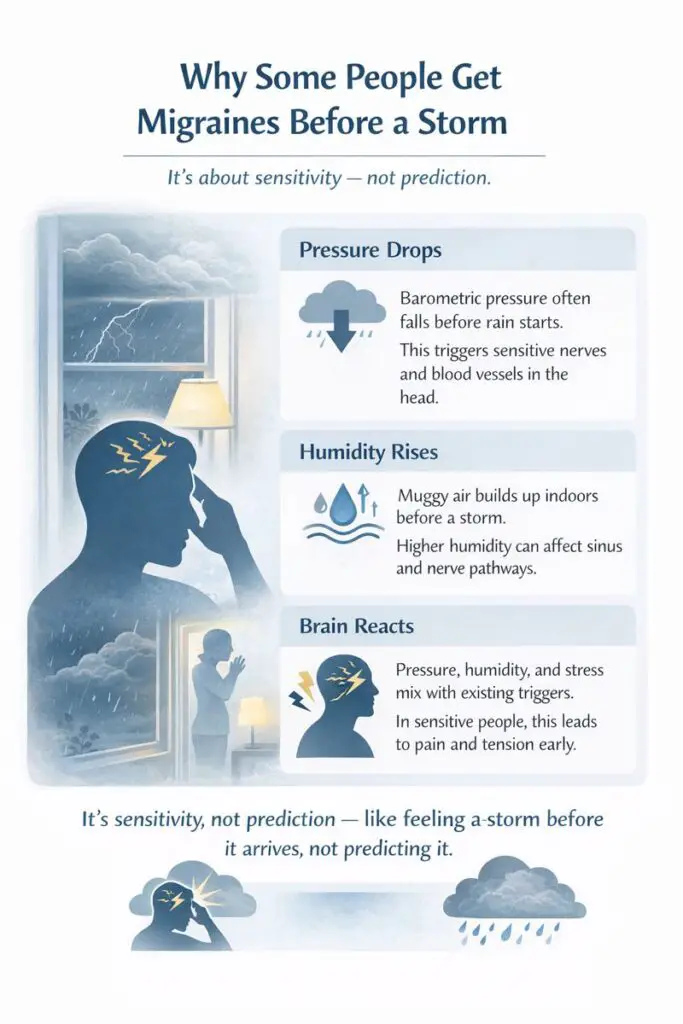 Why Migraines Respond to Weather Shifts
Migraines involve more than just headache pain—they’re neurological events that can involve blood vessel changes, nerve signaling, and heightened sensitivity to pressure, especially around the head and neck.
When weather systems move in, barometric pressure often drops before temperature or rainfall changes. Even subtle pressure shifts can impact those with sensitive nervous systems.
For migraine-prone individuals, these pressure changes may:
- Influence blood vessel dilation in the brain
- Increase pressure in sinuses and inner ear
- Irritate already-sensitive nerve pathways
This combination can trigger a migraine hours before a storm arrives.
Why Migraines Often Start Indoors—Not Outside
Many notice their migraine feels worse inside the home than outdoors. That’s not imagined.
Indoor environments react differently to approaching weather:
- Indoor pressure equalizes more slowly than outside
- Humidity often rises indoors first
- HVAC systems may cycle differently
- Air can become stagnant or feel “heavy”
These indoor shifts can increase physical stress on those sensitive to pressure and airflow changes. This is also why some feel temporary relief when stepping outside—even if the weather isn’t perfect.
Humidity, Airflow & the “Heavy Air” Feeling
Before a storm, indoor air can feel thick, stuffy, or heavy—words that often match measurable changes:
- Humidity tends to rise indoors
- AC systems may short-cycle or struggle to remove moisture
- Fans may recirculate damp air rather than remove it
Higher humidity can increase sinus pressure and inflammation, common migraine triggers. Continuous fan operation can also redistribute moisture rather than clear it.
Why Only Some People Feel This
Not every migraine sufferer is weather-sensitive, but those with certain sensitivities often report stronger reactions:
- A history of migraines
- Sinus pressure issues
- Neck or upper back tension
- Previous head or neck injuries
Their nervous systems register environmental shifts more distinctly—not because they’re dramatic, but because they’re sensitive.
Practical Ways to Ease Weather-Triggered Migraines at Home
While you can’t control the weather, you can influence your indoor environment:
- Keep humidity stable—aim for 40–50% indoors
- Use “Auto” mode on your HVAC instead of continuous fan during humid weather
- Improve gentle air circulation without creating drafts
- Be mindful of indoor air quality before and during storms
Small, consistent adjustments at home often help more than trying to outguess the forecast.
The Takeaway
Migraines before storms aren’t mythical—but they’re not universal either. For those who experience them, subtle shifts in pressure, humidity, and indoor air conditions can serve as reliable triggers long before the sky darkens.
Understanding how indoor air responds to approaching weather helps explain why these episodes feel predictive—and why tending to your home environment can make a noticeable difference in how you feel.
Read More in This Series: Weather, Air, and Body Sensitivity
Many people notice pain, pressure, or strange physical reactions before weather changes.
These articles explore how weather shifts, indoor air conditions, and sensitivity can affect the body in different ways.