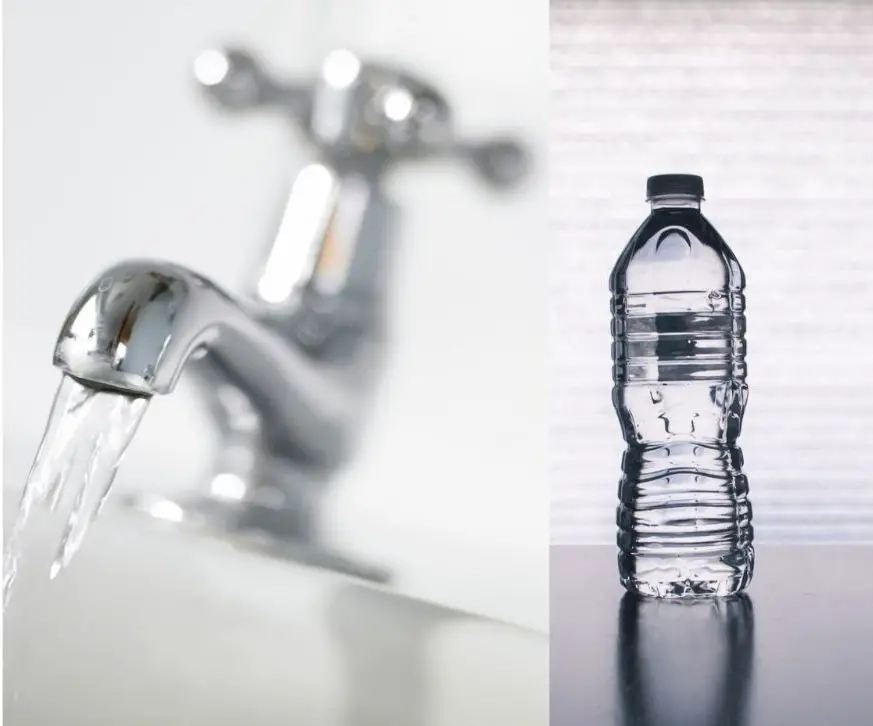
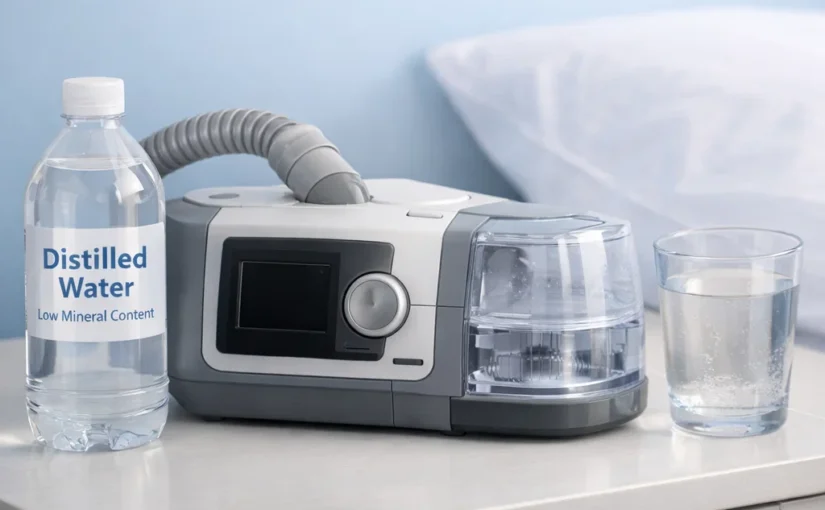
While using tap or bottled water occasionally usually won’t cause immediate harm, repeated use can reduce performance, create white residue, and shorten the life of your CPAP equipment.
 What Happens If You Don’t Use Distilled Water in a CPAP?
If you use a CPAP machine, you’ve probably seen recommendations to use distilled water only. That advice isn’t about purity for breathing — it’s about protecting the machine itself.
When distilled water isn’t used, minerals and impurities left behind during evaporation can slowly build up inside the humidifier chamber and internal components.
For most people, the effects are gradual rather than immediate.
Mineral Buildup Inside the Humidifier
Tap water, bottled water, and even filtered water all contain minerals such as calcium and magnesium. When CPAP humidifiers heat water to add moisture to the air, the water evaporates — but the minerals do not.
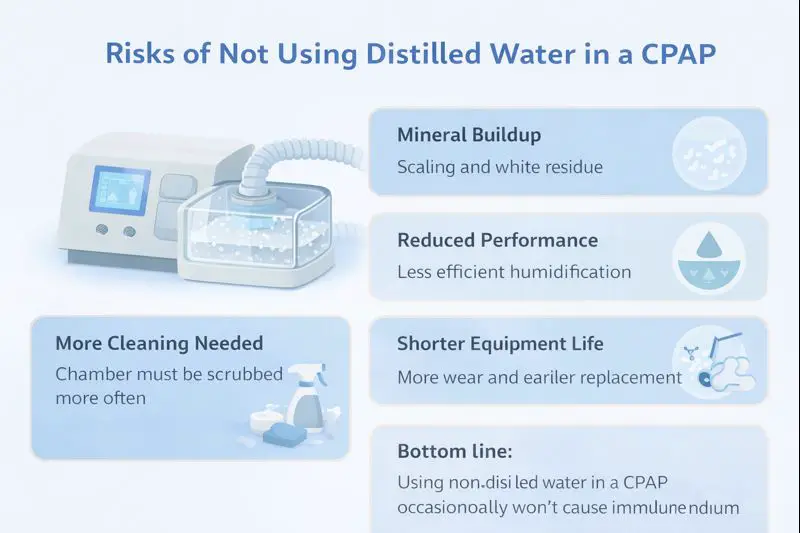
Over time, this can lead to:
- White or chalky residue in the water chamber
- Scale buildup that becomes harder to clean
- Reduced humidifier efficiency
This buildup doesn’t usually enter your lungs, but it does affect how well the humidifier works.
Does It Create Health Risks?
For most users, not using distilled water does not create an immediate health danger.
However, mineral deposits can make surfaces harder to clean properly. Over time, this increases the risk of bacteria or mold growth if the humidifier isn’t maintained regularly.
People with respiratory sensitivities, asthma, or allergies may notice irritation sooner if the system becomes contaminated due to poor cleaning.
What About Using Tap Water “Just This Once”?
Using tap water once — such as during travel or an emergency — is usually fine.
What matters more than the water choice is what happens afterward.
If you use non-distilled water:
- Empty the water chamber the next morning
- Rinse it thoroughly
- Allow it to fully air dry
One or two uses won’t ruin your CPAP, but making it a habit will eventually cause problems.
Filtered Water vs Distilled Water
Filtered water removes some contaminants, but it does not remove dissolved minerals.
That means filtered water can still leave scale behind — just more slowly than tap water.
Distilled water is different because it has gone through a process that removes minerals entirely, leaving nothing behind when it evaporates.
What About Reverse Osmosis (RO) Water?
Reverse osmosis (RO) water is often very low in minerals, but it is not always mineral-free unless it is specifically labeled as such.
If RO water has minerals added back for taste, it can still cause buildup over time.
If distilled water isn’t available, RO water is usually a better short-term option than tap water — but it’s still not ideal for daily use.
How Mineral Buildup Affects CPAP Equipment Long-Term
Repeated use of non-distilled water can lead to:
- Permanent staining or scaling of the humidifier chamber
- Reduced humidity output
- More frequent replacement of parts
These issues don’t happen overnight, but they do add up over months or years.
Best Practice for CPAP Water Use
For long-term reliability and minimal maintenance:
- Use distilled water whenever possible
- Clean the water chamber regularly
- Do not let water sit unused for days
Distilled water isn’t about fear or safety alarms — it’s about preventing slow, avoidable wear on your equipment.
Bottom line: Using non-distilled water in a CPAP occasionally won’t cause immediate harm, but repeated use leads to mineral buildup, more cleaning, and shorter equipment life. Distilled water remains the simplest and safest long-term choice.