
Table of Contents
What Is an Ozone Machine?
✅ Quick Answer
An ozone machine (ozone generator) creates ozone gas (O₃) to help eliminate stubborn odors left behind by smoke, pets, mold, mildew, and other organic contaminants.
In simple terms, it fills a room with ozone gas. The ozone reacts with odor-causing compounds through oxidation, changing them at the molecular level so they no longer produce the same smell.
Unlike an air purifier, it doesn’t remove dust or allergens from the air. Instead, it’s a temporary restoration tool that’s used in unoccupied spaces after cleaning has already been completed.
The biggest takeaway:
Ozone is a finishing tool—not a magic fix.
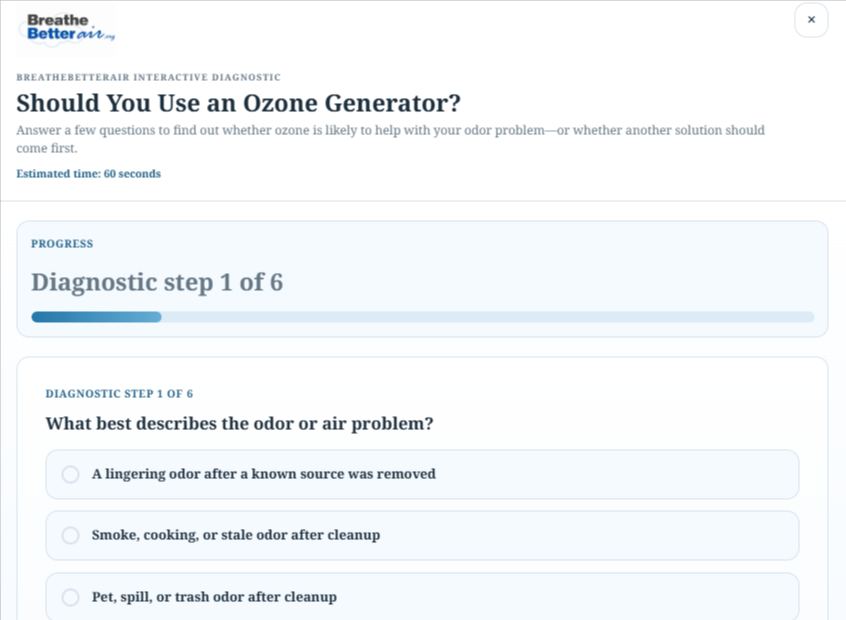
Wondering If an Ozone Machine Is Something You Could Use?
Try our quick Ozone Decision Machine.
Answer a few simple questions about what you’re dealing with, and we’ll help you understand whether ozone may be useful for your situation.
🎥 Watch: Ozone Machines Explained
Learn what ozone generators really do, how to use them safely, and whether they’re the right solution for your situation.
Looking for an Ozone Generator?
If you’ve decided ozone is appropriate for your situation,
you can check out this ozone generator on Amazon and compare it
with other available models.
Check Price & Options on Amazon →
As an Amazon Associate, BreatheBetterAir.org earns from qualifying purchases.
If you’re completely new to ozone generators, our Ozone Generator Starter Guide walks you through when ozone is appropriate, how to use it safely, and how to choose the right machine.
Do Ozone Generators Really Work?
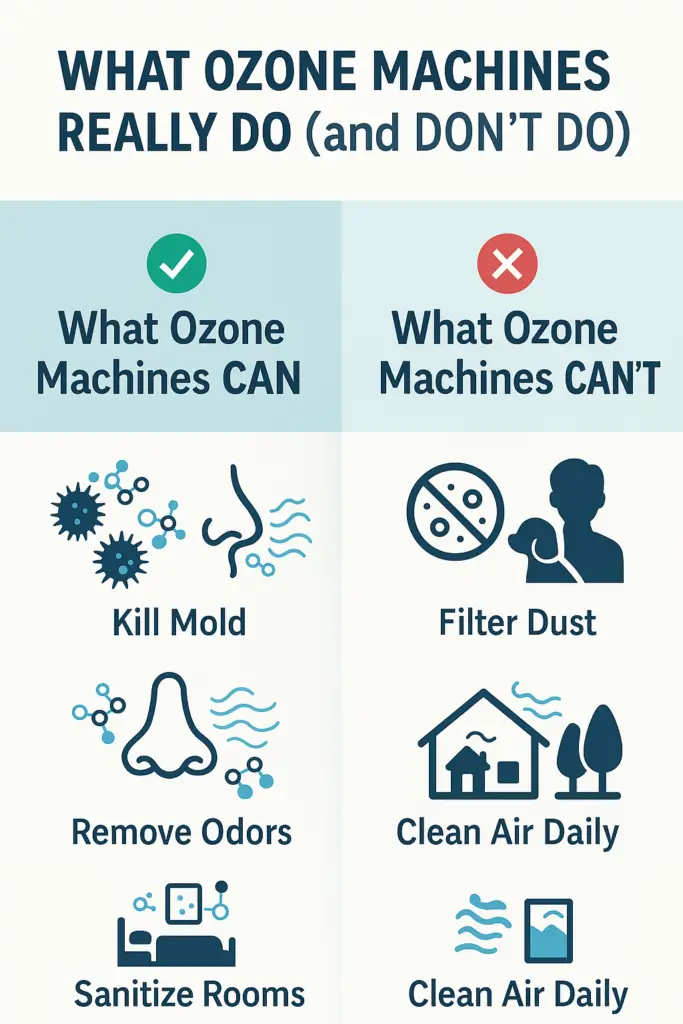
Yes.
Ozone generators have been used for decades by restoration companies, vehicle detailers, hotels, and property managers because they can eliminate odors that ordinary cleaning often leaves behind.
They’re especially effective against:
- Cigarette smoke
- Fire and smoke damage
- Musty odors
- Lingering pet odors
- Some bacteria and mold-related odors
✔ Quick Take
- Excellent for lingering odors.
- Trusted by restoration professionals.
- Works best after cleaning.
- Does not replace cleaning or repairs.
Because ozone is a gas, it reaches places that sprays and surface cleaners can’t. It penetrates fabrics, carpet padding, HVAC ducts, cracks, and other hard-to-reach areas where odor molecules often remain.
That’s also why ozone should never be thought of as a substitute for cleaning. It reaches places cleaners can’t—but it doesn’t remove the source of the problem.
What Should You Realistically Expect?
When used correctly, ozone can produce impressive results—but it’s important to understand what those results actually are.
If you’ve already cleaned the area, repaired the damage, or removed the source of the odor, ozone can often eliminate the lingering smells that remain.
| Realistic Expectations | Unrealistic Expectations |
|---|---|
| Removes lingering odors | Repairs water damage |
| Freshens smoke-damaged rooms | Eliminates pet urine from wood or concrete |
| Works after proper cleaning | Replaces mold remediation |
| Reaches hard-to-access spaces | Filters dust or allergens |
You should also expect:
- A noticeable ozone smell immediately after treatment that fades with ventilation.
- To leave the room vacant during treatment and ventilate it before re-entering.
- Some fabrics to temporarily absorb the ozone smell.
- Better results when the room is clean and dry before treatment.
The biggest disappointment people have with ozone machines usually isn’t that the machine failed.
It’s that they expected ozone to do the cleaning for them.
💡 Remember
Used at the right time, ozone can be remarkably effective.
Used as a shortcut, it’s usually disappointing.
Ozone Isn’t a Magic Fix
This is where many homeowners get disappointed.
Ozone generators are incredibly effective, but they’re often expected to solve problems they were never designed to fix.
❌ What Ozone Can’t Do
- Replace cleaning
- Repair water damage
- Dry wet carpet
- Remove pet urine soaked into subfloors
- Kill mold hidden behind drywall
- Fix plumbing leaks
- Filter dust, pollen, or allergens
If the source of the odor is still there, the smell will usually come back.
⚠️ Most Common Mistake
Many homeowners run an ozone generator before removing the source of the odor.
Professional restoration companies do exactly the opposite.
Professionals follow a proven process:
- Remove the source of the odor.
- Repair the damage.
- Clean the affected area.
- Dry everything completely.
- Use ozone as the final step.
✔ Professional Mindset
Think of ozone as a finishing tool—not the entire solution.
When Is Ozone the Right Tool?
When it’s used at the right point in the process.
The biggest misconception about ozone generators is that you can simply place one in a room, turn it on, and expect amazing results.
That’s rarely how it works.
Running an ozone generator is just one step in a complete odor-removal process.
If you use it too early, you’re likely to be disappointed—not because the machine failed, but because it was asked to do a job it was never designed to do.
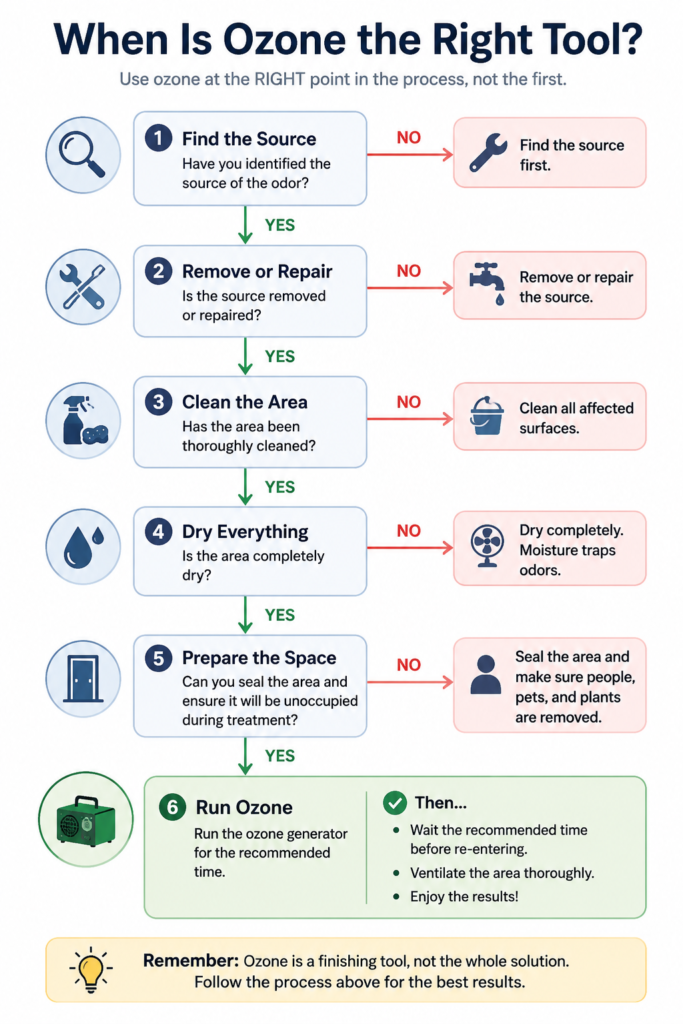
📌 The Correct Order
Remove → Repair → Clean → Dry → Ozone
That’s why ozone is so effective in the hands of restoration professionals.
They don’t expect ozone to remove the problem.
They expect ozone to remove what’s left after the problem has already been solved.
When Is Ozone the Wrong Tool?
Ozone is often expected to do jobs it simply wasn’t designed to do.
| Use Ozone | Don’t Use Ozone |
|---|---|
| Lingering smoke odors | Active mold growth |
| Residual pet odors | Wet carpet |
| Musty odors after drying | Leaking plumbing |
| Odors remaining after cleaning | Everyday air purification |
If your home still has an active leak, hidden mold, or pet urine soaked into building materials, ozone may reduce the smell temporarily—but the odor usually returns because the source is still there.
💡 Bottom Line
Fix the problem first.
Use ozone second.
Are Ozone Machines Dangerous?
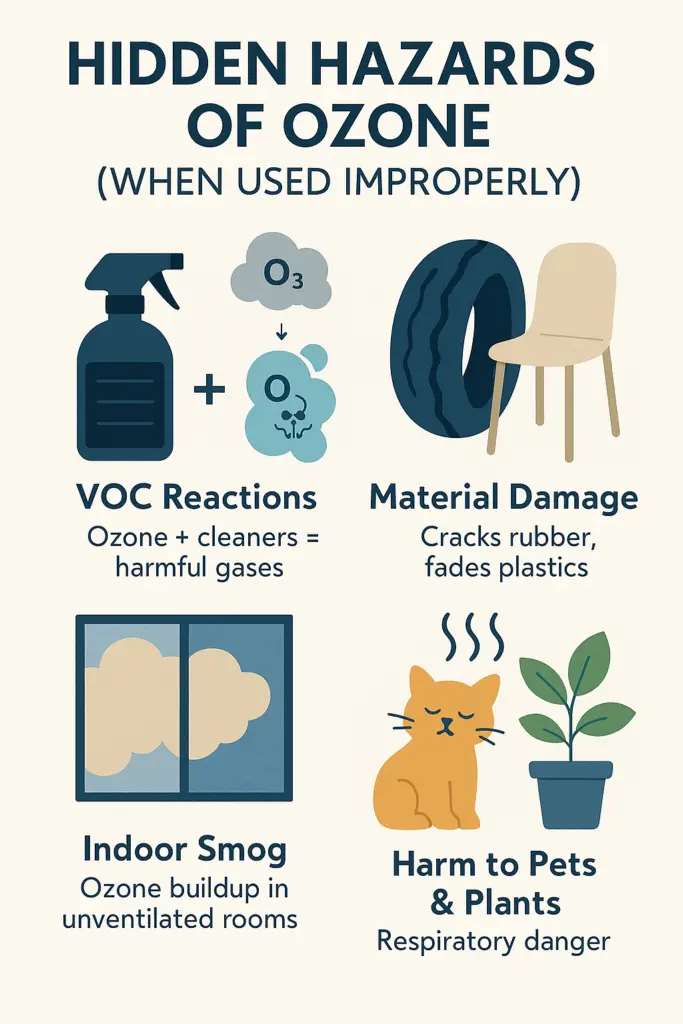
Yes. Ozone is harmful to breathe.
That’s the single most important safety rule to remember.
The same oxidation process that removes odors can also irritate your lungs if you’re exposed to ozone.
Possible symptoms include:
- Coughing
- Chest tightness
- Shortness of breath
- Burning eyes, nose, or throat
- Wheezing
Children, older adults, people with asthma, and anyone with respiratory conditions are especially vulnerable. See: What Do You Do If You Breathe Ozone?
🛑 Safety Checklist Before Every Treatment
Before turning an ozone generator on:
- ✅ Remove all people.
- ✅ Remove all pets.
- ✅ Remove plants.
- ✅ Set the timer.
- ✅ Leave the treatment area.
- ✅ Ventilate thoroughly before returning.
Never think of an ozone generator as an air purifier that runs while you’re in the room.
It’s a restoration tool that’s designed to work only when the treated space is completely unoccupied.
If you’re unsure how long to wait before re-entering, read our guide on How Long to Wait After Using an Ozone Generator, where we explain the process step by step.
Should You Buy One?
Whether you should buy an ozone generator depends on how often you expect to use it.
If you’re dealing with a one-time odor problem, such as moving into a smoker’s home or treating a room after water damage, renting a machine or hiring a restoration company may be the more economical choice.
Buying an ozone generator makes more sense if you regularly deal with stubborn odors.
| Rent or Hire a Professional | Consider Buying One |
|---|---|
| One-time smoke odor | Vehicle detailing |
| After minor flooding | Property management |
| Preparing one home for sale | House flipping |
| Occasional odor problems | Vacation rentals |
| Single restoration project | Frequent restoration work |
✔ Quick Tip
If you’ll only use an ozone generator once, renting one or hiring a restoration company is often the better value.
If you’re still undecided, our guide on renting vs. buying an ozone generator walks through the costs and helps you decide which option makes the most sense.
Popular Ozone Generator Brands
There are dozens of ozone generators on the market, but a handful of manufacturers consistently stand out for reliability, performance, and value.
| Brand | Best Known For |
|---|---|
| Enerzen | Affordable, homeowner-friendly ozone generators. |
| Airthereal | Feature-rich residential machines. |
| OdorStop | Commercial-grade equipment used by restoration professionals. |
Understanding Ozone Generator Specifications
When comparing ozone generators, it’s easy to get caught up in technical specifications. Fortunately, only a few features really matter.
| Specification | Why It Matters |
|---|---|
| Ozone Output (mg/h) | Determines how much ozone the machine produces and the size of spaces it can treat. |
| Timer | Allows the machine to shut off automatically after treatment. |
| Coverage Area | Helps match the generator to your room size. |
| Build Quality | Commercial units generally last longer and use replaceable ozone plates. |
💡 Buying Advice
Don’t buy the machine with the biggest number. Buy the one that’s properly sized for your space, has the safety features you need, and matches how often you’ll use it.
If you’re ready to compare real-world options, our Best Ozone Generators for Homes, Cars, Smoke, and Pet Odors guide compares today’s top machines and explains who each one is best suited for.
Frequently Asked Questions
Do ozone generators permanently remove odors?
They can—but only if the source of the odor has already been removed. Ozone eliminates lingering odors; it doesn’t eliminate the cause.
Can I stay in the room while an ozone generator is running?
No. Ozone generators should only be operated in completely unoccupied spaces.
How long should I wait before going back into the room?
That depends on the machine, treatment time, and ventilation. See our guide on How Long to Wait After Using an Ozone Generator for a complete explanation.
Does ozone kill mold?
No. Ozone may help reduce exposed mold spores, but it does not replace mold remediation.
Can ozone remove cigarette smoke?
Yes. Smoke odor is one of the most common reasons people use ozone generators, especially after surfaces have already been cleaned.
Are ozone generators safe for pets?
No. Remove pets before treatment and don’t allow them back until the ozone has dissipated and the area has been ventilated.
What’s the difference between an ozone generator and an air purifier?
An air purifier filters particles while people are in the room. An ozone generator is a restoration tool used in an unoccupied space after cleaning has been completed.
Final Thoughts
Ozone generators have earned a reputation for being either miracle machines or dangerous gimmicks.
The truth is somewhere in the middle.
They are powerful restoration tools that can produce excellent results when they’re used correctly. But they aren’t a substitute for cleaning, repairs, or proper odor removal techniques.
⭐ If You Remember Only One Thing…
Ozone is a finishing tool—not a magic fix.
Follow this simple process:
Remove the source
⬇
Clean the area
⬇
Dry everything completely
⬇
Then use ozone
That’s the process restoration professionals follow—and it’s why they consistently get the best results.
Continue Learning
If you’d like to learn more about using ozone safely and effectively, these guides are a great next step:
- Ozone Generator Safety Manual
- Best Ozone Generators for Homes, Cars, Smoke, and Pet Odors
- Can Ozone Remove Cat Urine Smell?
- Why Your Room Still Smells After Using Ozone
- Ozone vs. Air Purifier: Which One Do You Need?
- What Does Ozone Smell Like?