Table of Contents
Quick Answer
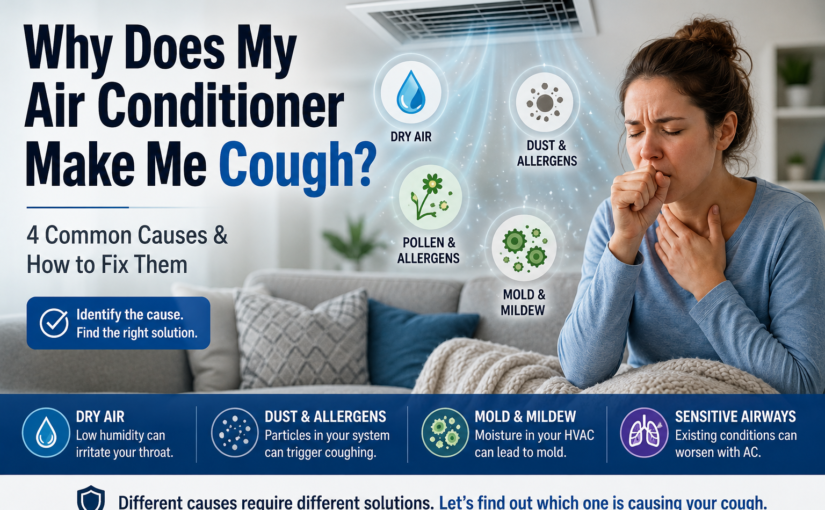
Yes, air conditioning can make you cough—but the cold air itself is rarely the real problem. The most common causes are dry air, dust and allergens, mold or moisture inside the HVAC system, and sensitive airways.
The timing of your cough is the biggest clue:
- After the AC has run for a while: Dry air is likely.
- As soon as the AC turns on: Dust or allergens may be circulating.
- With a musty smell: Check for moisture, mildew, or mold.
- Mostly at night: Dry air, bedroom allergens, or direct airflow may be responsible.
- Only affecting you: Asthma, allergies, or sensitive airways may be involved.
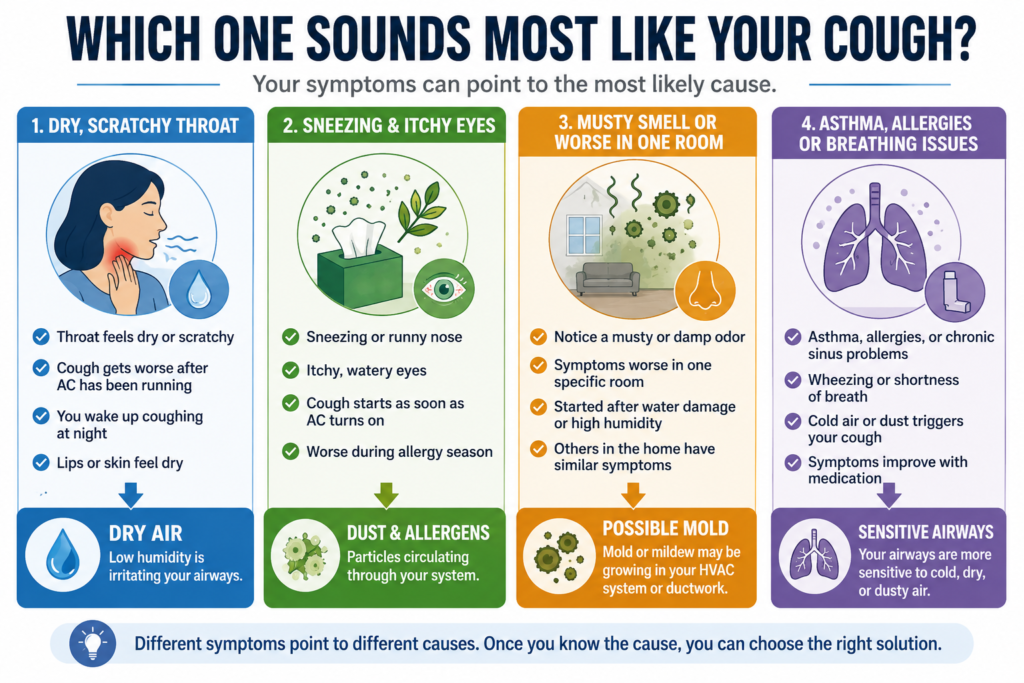
Which One Sounds Most Like Your Cough?
Sometimes the timing of your cough tells you more than the cough itself. Find the description that sounds most like your symptoms, then click the likely cause to jump directly to that section.
| If your cough… | The most likely cause |
|---|---|
| Starts after the AC has been running for a while and your throat feels dry or scratchy | Low indoor humidity or dry air |
| Begins as soon as the air conditioner turns on and is accompanied by sneezing or itchy eyes | Dust, pollen, or other allergens circulating through the system |
| Is worse in one particular room or you notice a musty odor | Mold, mildew, or moisture inside the HVAC system |
| Gets worse at night while you’re sleeping with the AC running | Dry air, bedroom allergens, or air blowing directly toward your bed |
| Only happens to you while everyone else feels fine | Asthma, allergies, or increased sensitivity to cold, dry air |
| Affects several people in the house at the same time | A whole-home indoor air quality or HVAC problem |
1. Dry Air: The Most Common Cause of an AC-Related Cough
If your throat feels dry, scratchy, or irritated after the air conditioner has been running for a while, low indoor humidity is the most likely culprit. As your AC cools your home, it also removes moisture from the air. While that is helpful for comfort during humid weather, it can sometimes leave the air too dry for your nose and throat.
When the delicate tissues lining your airways dry out, they become irritated more easily. That irritation can trigger a persistent dry cough, frequent throat clearing, or even make your voice feel hoarse by the end of the day.
Signs Dry Air Is Causing Your Cough
- Your throat feels dry or scratchy.
- You cough more after the AC has been running for several hours.
- You wake up coughing during the night.
- Your lips, skin, or nasal passages also feel unusually dry.
- Your symptoms improve after spending time outdoors or away from the air conditioning.
How to Fix It
Fortunately, dry air is usually one of the easiest problems to correct.
- Keep your home’s humidity between 30% and 50%.
- Drink plenty of water throughout the day.
- Avoid sitting or sleeping directly under an air vent.
- Use a humidifier if your indoor humidity regularly falls below 30%.
- Set your thermostat a few degrees warmer if the air feels excessively cold and dry.
Good news: If dry air is the cause, many people notice improvement within a day or two after increasing humidity and avoiding direct airflow.
2. Dust and Allergens Circulating Through Your Home
If you cough or start sneezing as soon as your air conditioner turns on, the problem may not be the cold air at all. Your HVAC system constantly circulates the air inside your home. If that air contains dust, pollen, pet dander, or other allergens, every cooling cycle can spread those particles from room to room.
A clogged air filter can make the problem worse by restricting airflow and allowing more dust to build up inside the system. While your filter will not catch every airborne particle, keeping it clean is one of the easiest ways to improve your indoor air quality.
Signs Dust or Allergens May Be the Cause
- You cough or sneeze shortly after the AC starts running.
- Your eyes become itchy or watery.
- You have a runny or congested nose.
- Your symptoms are worse during allergy season.
- You notice dust collecting quickly around your home or near supply vents.
How to Fix It
- Replace or clean your HVAC filter according to the manufacturer’s recommendations.
- Vacuum carpets and upholstered furniture regularly using a vacuum with a HEPA filter.
- Dust supply and return vents to reduce accumulated debris.
- Keep windows closed during periods of high pollen.
- Consider using a HEPA air purifier in the rooms where you spend the most time.
Good news: If dust or allergens are causing your cough, replacing a dirty filter and reducing airborne particles often improves symptoms within a few days.
3. Mold Growing Inside Your Air Conditioner
If your cough is accompanied by a musty smell, seems worse in one room, or does not improve after changing the air filter, mold may be the problem. Air conditioners naturally remove moisture from the air. If that moisture is not draining properly, it can create conditions where mold and mildew begin to grow.
Common places for mold to develop include the evaporator coil, condensate drain pan, ductwork, and areas where condensation remains for long periods. When the system runs, mold spores may become airborne and irritate your nose, throat, and lungs.
Signs Mold May Be Causing Your Cough
- You notice a musty or damp odor when the AC starts.
- Your symptoms are worse in one room than another.
- Your cough is accompanied by sneezing, congestion, or irritated eyes.
- The problem began after water damage or high indoor humidity.
- Your symptoms improve when you leave the house for several hours.
How to Fix It
- Inspect the condensate drain for clogs or standing water.
- Replace dirty air filters to improve airflow.
- Keep indoor humidity between 30% and 50%.
- Schedule a professional HVAC inspection if you suspect mold inside the system or ductwork.
- Address any water leaks or moisture problems that allow mold to grow.
Good news: Mold inside an HVAC system is not the most common cause of an AC-related cough, but it is one of the most important to address. Once the source of the moisture is eliminated and the system is properly cleaned, many people notice a significant improvement in their symptoms.
4. Asthma, Allergies, and Other Respiratory Conditions
Sometimes your air conditioner is not the underlying problem. It may simply expose or aggravate an existing respiratory condition. People with asthma, seasonal allergies, chronic sinus problems, or other sensitive airways often react more strongly to cold, dry, or dusty air.
Even if your HVAC system is clean and working properly, cooler or drier air can irritate already-sensitive airways and trigger coughing, throat irritation, wheezing, or shortness of breath.
Signs an Underlying Condition May Be the Cause
- Your cough occurs even when you are away from home.
- You have a history of asthma, allergies, or chronic sinus issues.
- Your symptoms include wheezing, chest tightness, or shortness of breath.
- Cold air from the vents consistently triggers your cough.
- Your symptoms improve with allergy or asthma medication.
How to Reduce Symptoms
- Keep your HVAC filter clean to reduce airborne irritants.
- Avoid sitting or sleeping directly under supply vents.
- Maintain indoor humidity between 30% and 50%.
- Use a HEPA air purifier if allergies are a frequent problem.
- Follow your healthcare provider’s treatment plan if you have asthma or another chronic respiratory condition.
Good news: Many people with asthma or allergies can use air conditioning comfortably once humidity is properly controlled, filters are kept clean, and airflow is not directed straight at them.
When Should You Be Concerned About an AC-Related Cough?
In most cases, a cough that is triggered by air conditioning is not a medical emergency. It is usually associated with dry air, airborne allergens, mold, moisture, or an underlying sensitivity that may be improved by changing the indoor environment.
However, a persistent or severe cough should not be ignored. If several people in the home develop symptoms at the same time, the problem may involve the HVAC system or a broader indoor air quality issue.
If your cough occurs mainly when the air conditioner is running and improves after the system is turned off, the cause may be related to your indoor environment rather than an infection. The EPA recommends controlling indoor moisture, reducing airborne pollutants, and maintaining HVAC systems to improve indoor air quality.
Consider Having Your HVAC System Inspected If:
- Several people in your home begin coughing when the AC is running.
- You notice a persistent musty or moldy smell coming from the vents.
- Your cough started after water damage or flooding.
- Changing the air filter does not improve your symptoms.
- You suspect mold, excessive dust, or another indoor air quality problem.
Consider Seeing a Healthcare Provider If:
- Your cough lasts longer than three weeks.
- You develop wheezing, chest tightness, or shortness of breath.
- You cough up blood or thick, discolored mucus.
- You have a fever or other signs of an infection.
- Your symptoms are severe or continue getting worse despite improving your home’s air quality.
The bottom line: If your cough only happens when the air conditioner is running, the problem is often something you can identify and improve. But if your symptoms are persistent, severe, or affecting several people in your home, address both the HVAC system and your health to rule out a more serious problem.

How to Stop Your Air Conditioner From Making You Cough
Once you have identified the most likely cause, the next step is improving your indoor air quality. Most AC-related coughs can be reduced by addressing one or two common problems.
- Replace or clean your HVAC filter regularly. A dirty filter allows more dust and allergens to circulate throughout your home.
- Maintain indoor humidity between 30% and 50%. If your home is too dry, consider using a humidifier, especially in bedrooms.
- Keep air vents from blowing directly on you. Constant exposure to cold, dry air can irritate your throat and airways.
- Schedule annual HVAC maintenance. Professional inspections can identify clogged drain lines, dirty evaporator coils, and other issues before they affect indoor air quality.
- Vacuum and dust regularly. Reducing dust inside your home means there is less for your HVAC system to circulate.
- Use a HEPA air purifier if allergies are a problem. An air purifier can help capture airborne particles that your HVAC filter may miss.
- Keep the fan set to “Auto” instead of “On.” This prevents the system from continuously circulating dust and allergens when cooling is not needed.
- Stay hydrated. Drinking water helps keep your throat and nasal passages from drying out.
Many people notice improvement after addressing one or two of these issues. If your cough continues despite improving your home’s air quality, consider having both your HVAC system and your health evaluated to rule out other causes.