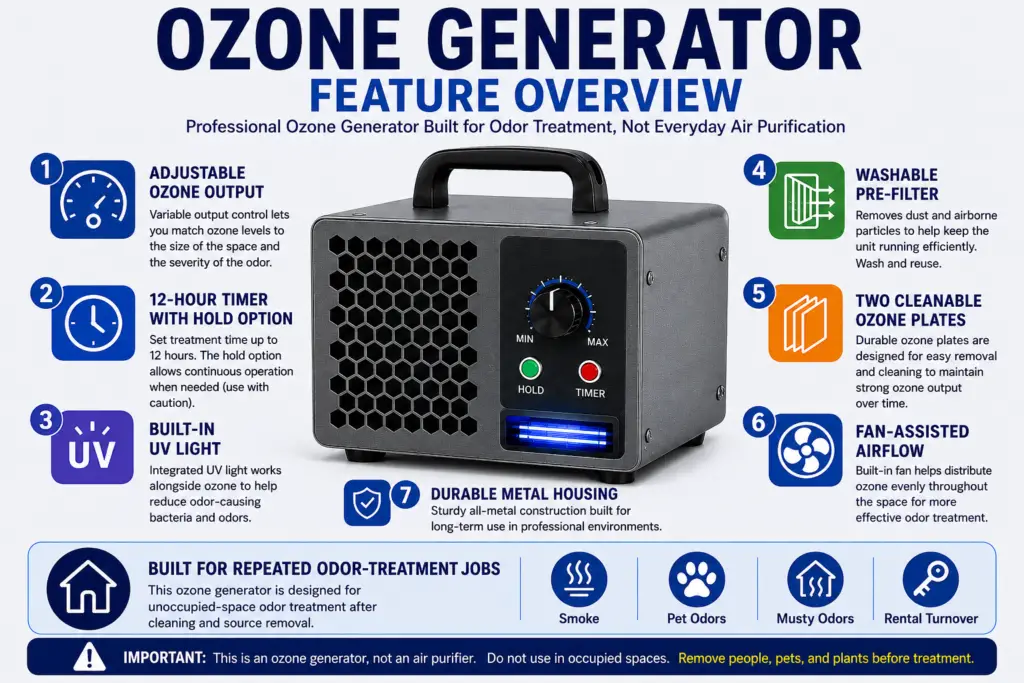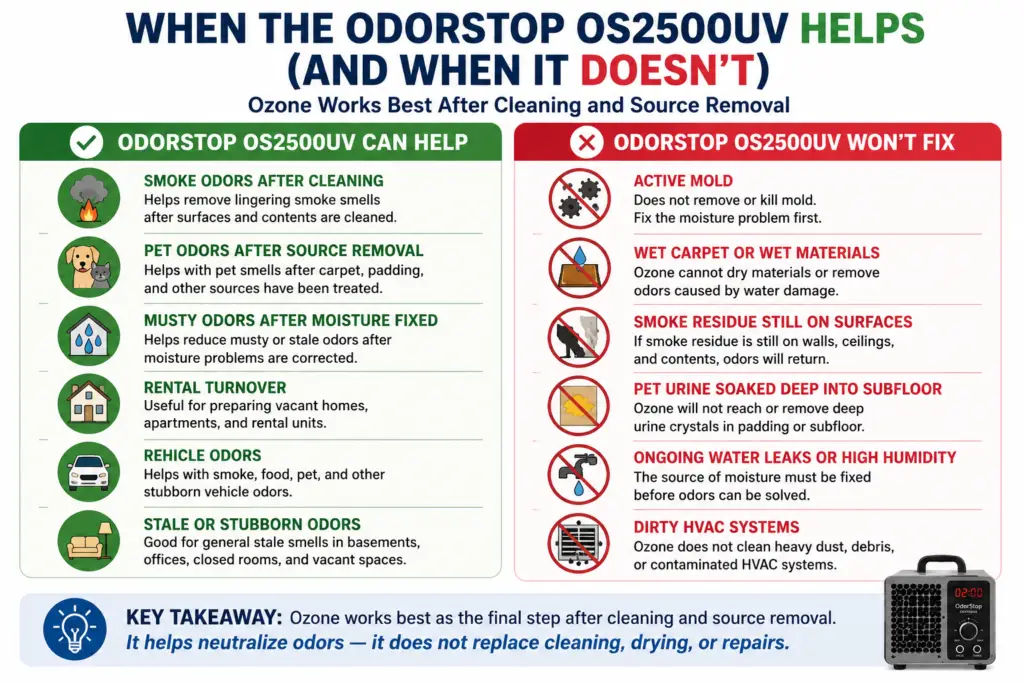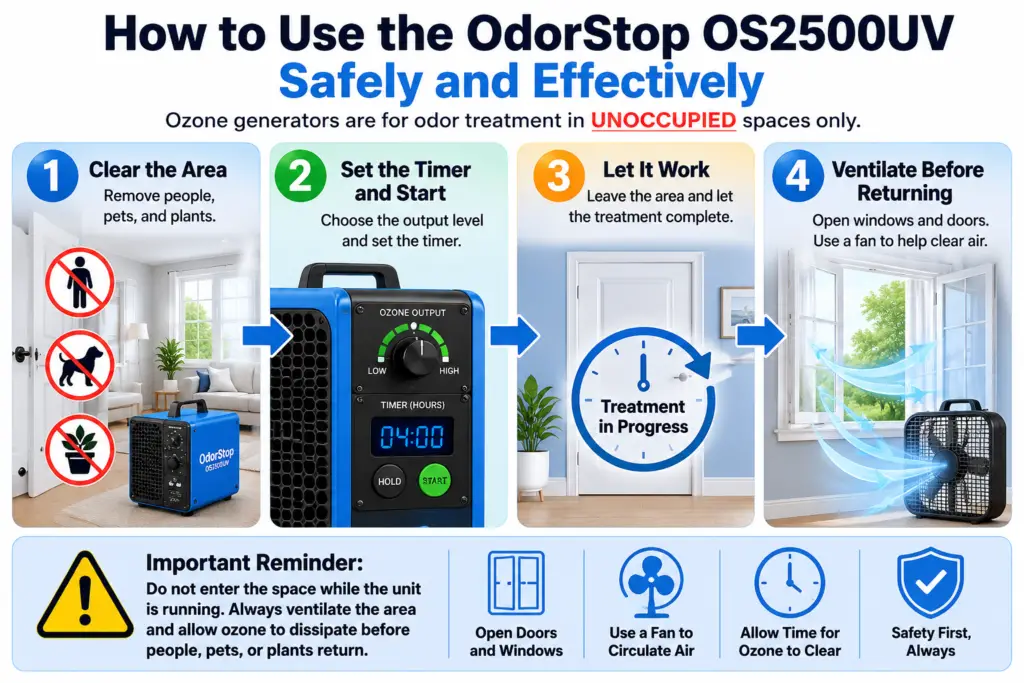


Does Ozone Work for Fire or Smoke Damage?

Yes, ozone can help eliminate lingering fire or smoke odors by breaking down odor-causing molecules—but it won’t remove soot, stains, or restore damaged materials. Use it only in unoccupied areas and always as part of a broader cleanup effort.

Why Smoke Odors Are So Hard to Get Rid Of

Anyone who’s dealt with fire or smoke damage knows that the smell doesn’t just linger—it clings. That acrid scent seeps into drywall, upholstery, vents, carpets, and even electrical components. It’s not just a surface problem; smoke embeds itself in porous materials and air ducts, making it incredibly difficult to treat with air fresheners or simple cleaning products.

Smoke particles are tiny and oily, which makes them stubborn. They’re designed to float—and they do, into every crack and crevice.

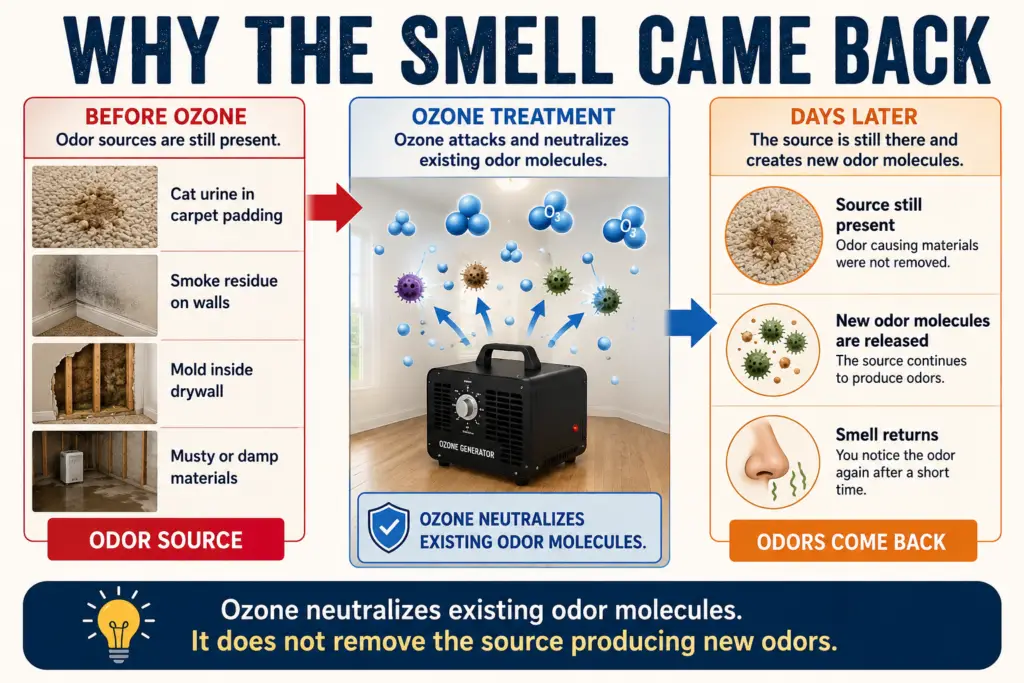
This is where ozone generators come in. They don’t just mask the odor. They actually break down the odor molecules using oxidation, a chemical reaction that destroys them at the molecular level.

pic showing ozone use before and after fireCan an Ozone Generator Really Help with Fire or Smoke Damage?

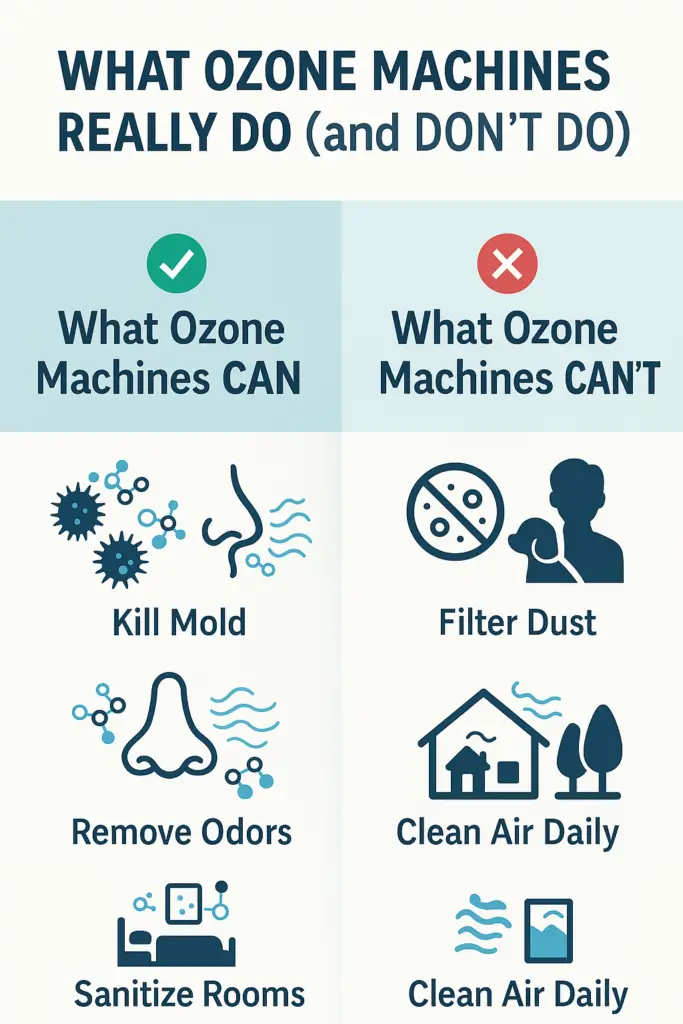
Ozone works best for eliminating smoke odor, not cleaning up the damage. That’s an important distinction. If you’re hoping to remove scorch marks, soot, or yellowing on the walls, ozone won’t help with that. But if you’re weeks or even months post-cleanup and your house still smells like a campfire—or worse—it may be time for an ozone treatment.

Many people have turned to ozone after professional cleaning services still left behind a smoky smell. Used correctly, ozone is extremely effective for this specific purpose.

How to Use an Ozone Generator After a Fire: Step-by-Step

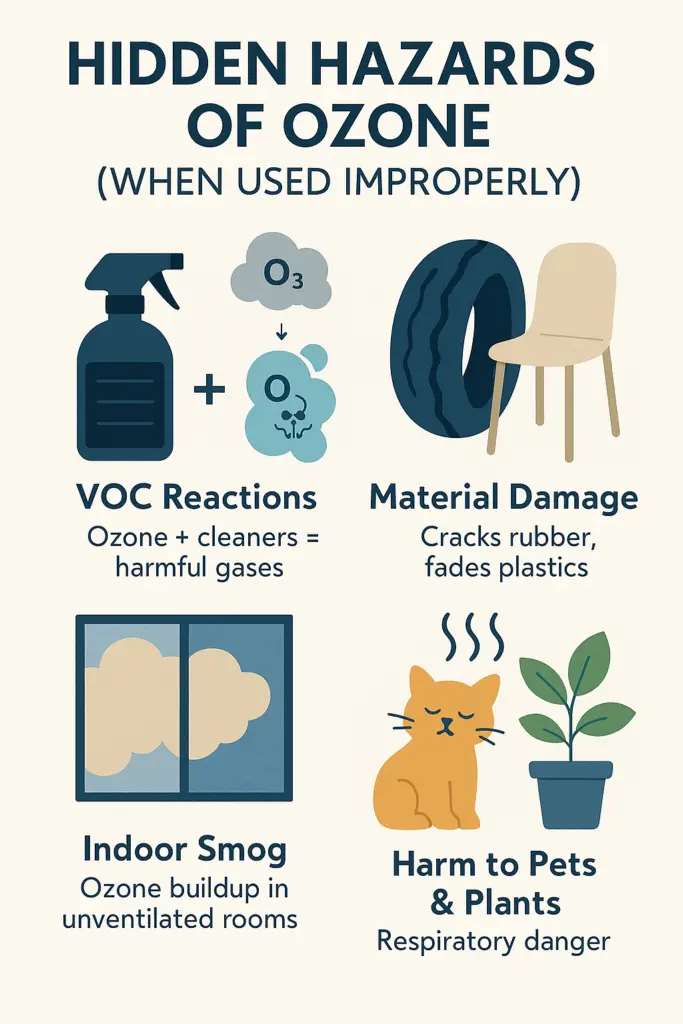
⚠️ Important: Ozone is dangerous to breathe. No people, pets, or plants should be inside the space while the machine is running.

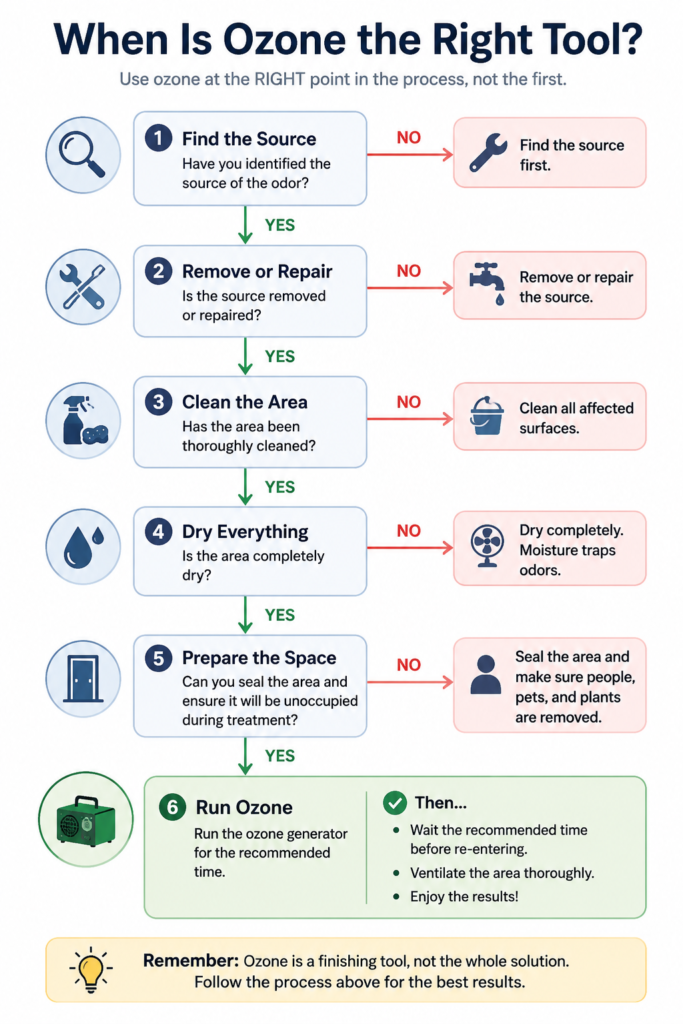
  1. Clean First: Remove all soot, ash, and debris. Wipe down walls, furniture, and vents. Ozone is not a substitute for cleaning—only a final step to deodorize.
  2. Ventilate, Then Seal: Air out the space initially, then seal it tight. Close windows, doors, vents, and block return air paths to prevent ozone from escaping.
  3. Place the Generator High: Smoke rises, and so do lingering odors. Put the ozone machine on a table or shelf for even distribution.
  4. Set a Timer: For a small room (under 500 sq ft), 1–2 hours may be enough. For larger or more severe cases, 4–8 hours may be needed. Always refer to your device’s manual or this ozone sizing guide.
  5. Leave the Area: No entry during the cycle. Place warning signs on doors: “Do Not Enter – Ozone Treatment in Progress.”
  6. Air It Out: Once the cycle ends, wait at least 1 hour before opening doors and windows. Let the room ventilate for 2–4 hours before re-entry.

Real-Life Example: When Ozone Saved the Day

After a minor kitchen fire, Dan and Lisa  had their apartment professionally cleaned, repainted, and the HVAC filters replaced. Still, a bitter smoky smell clung to the unit. Friends recommended they try an ozone treatment. They sealed the space, set up a mid-sized machine overnight, and left for the weekend.

When they returned, the difference was incredible. No more smoke smell in the curtains, furniture, or even the fridge (which had absorbed some odor too). It was like breathing in fresh air for the first time in weeks.

Ozone vs. Other Smoke Odor Solutions

People often try a lot of things before turning to ozone:

  • Vinegar: Good for light odors, but won’t touch embedded smoke in walls or furniture.
  • Activated Charcoal: Useful as a passive filter, but too slow for severe odors.
  • Air Purifiers: HEPA filters trap particles, but don’t remove existing smells.
  • Enzyme Sprays: Sometimes work on fabrics but don’t treat the whole room effectively.

Only ozone fills the entire space, including hard-to-reach areas like vents and insulation gaps.

When You Shouldn’t Use Ozone

If your home has not yet been cleaned or you still see visible smoke or soot damage, ozone should not be your first step. Also, if anyone in your home has respiratory issues or chemical sensitivities, it’s crucial to allow extra ventilation time and avoid repeat treatments.

Always treat ozone as a follow-up to professional or DIY fire cleanup—not a replacement for it.

DIY vs. Professional: Should You Try This Yourself?

For light smoke damage or one-room issues, DIY is totally doable with a quality ozone machine and proper safety prep. But for whole-home smoke remediation after a fire, you may want to bring in a restoration professional who knows how to balance ozone use with thermal fogging, HVAC duct cleaning, and material replacement.

You can also read more about general ozoning do’s and don’ts here.

What If Ozone Doesn’t Work?

Sometimes the smoke has been absorbed too deeply—into carpet padding, drywall, or ductwork. In those cases, you might need to replace materials or use ozone in combination with a UV HVAC system that can keep odors from returning.

As a backup plan, consider a whole-house HEPA system or even enzymatic cleaners for spot odor treatment.

Where to Learn More

We have an entire article explaining how ozone generators work, including pros, cons, and safety tips. Be sure to read that if you’re considering ozone for the first time.

For more help choosing the right size machine, check out our Ozone Generator Sizing Guide.

FAQ: Fire and Smoke Odor Removal with Ozone

Can ozone remove smoke smell from furniture?

Yes, but it depends on the material. Ozone can penetrate fabrics and foam to some degree. For deeply soaked items, multiple treatments may be necessary.

Is ozone safe to use after a fire?

Yes, as long as it’s used properly—only in unoccupied spaces, after visible damage is cleaned, and with proper ventilation afterward.

How long does it take to get rid of smoke smell with ozone?

Most rooms need 1–8 hours of treatment depending on size and severity, followed by several hours of ventilation. For whole homes, overnight or multi-day cycles may be used.

Can I sleep in the room the same day I run the ozone machine?

Only if it’s been fully aired out. Wait at least 4–6 hours after treatment before re-entering and ensure there’s no residual smell or irritation.

Is It Safe to Use Ozone for Killing Viruses Indoors?

Is It Safe to Use Ozone for Killing Viruses Indoors?

Using ozone to kill viruses indoors can be effective — but only when the space is unoccupied. Ozone is a powerful disinfectant that can neutralize viruses on surfaces and in the air, but it is also harmful to humans and animals when inhaled. For safety, ozone treatments must be performed in sealed, vacant areas with proper airing-out time afterward.

What Makes Ozone Effective Against Viruses?

Ozone (O₃) is a triatomic molecule made of three oxygen atoms. That extra oxygen atom is unstable, making ozone highly reactive. This property allows ozone to:

  • Break down the outer shell of viruses, especially enveloped viruses like influenza.
  • Oxidize viral RNA or DNA, rendering the virus non-infectious.
  • Sanitize both air and surfaces, reaching corners and cracks where sprays and UV light might not.

Ozone has been used in hospital settings, food sanitation, and water treatment for decades — all for its ability to kill pathogens.

Let’s look at what the science actually says about ozone’s virus-killing potential in real-world conditions.

What Do Studies Say About Ozone and Viruses?

There is solid scientific backing for ozone’s ability to kill viruses — but it’s mostly from controlled lab environments. Here’s what the research says:

  • Influenza and SARS-CoV-2: Studies show that ozone concentrations of 1–5 ppm can inactivate viruses like influenza A and even coronaviruses, given enough exposure time and humidity.
  • Ozone’s Mechanism: Ozone disrupts the viral envelope and oxidizes proteins and genetic material. It’s especially effective on enveloped viruses, which include many of the most dangerous airborne pathogens.
  • Surface vs. Air Disinfection: Research confirms that ozone can neutralize viruses on hard-to-reach surfaces like fabric, ceilings, and electronics without wetting them — making it a useful dry-clean method in commercial and medical settings.

However, these studies also make one thing very clear: ozone disinfection only works safely when no humans or animals are present. Ongoing exposure, even at low levels, can harm respiratory health.

In real-world settings like homes or offices, these findings translate to: use ozone like a fogger — quick, strong, and strictly off-limits during use.

So Why Not Use It While People Are Around?

Ozone is not safe to breathe. While it’s powerful at destroying viruses, it doesn’t know the difference between a virus particle and the lining of your lungs.

Breathing in ozone can cause:

  • Irritation of the eyes, nose, and throat
  • Shortness of breath and coughing
  • Asthma flare-ups
  • Lung inflammation or damage at high levels

The EPA and OSHA both warn against indoor ozone exposure beyond very small, controlled limits — levels far below what’s needed for effective virus disinfection.
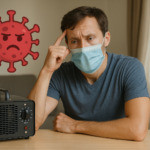
man wondering if ozone is right for virusesHow to Use Ozone Safely for Disinfection

Ozone disinfection can still be a tool in your virus-fighting toolkit — if you use it properly. Here’s a safe approach:

1. Vacate the Area Completely

All people, pets, and plants must be out of the space before ozone is generated. This includes adjacent rooms if air can circulate between them.

2. Seal Off the Treatment Area

Close all windows and doors to contain the ozone and increase its effectiveness. Use towels or weatherstripping to block airflow under doors.

3. Run the Ozone Generator

Set your generator according to the square footage of the space. More ozone does not mean better results — just more risk.
👉 Use our Ozone Generator Sizing Guide to find the right output for your room.

4. Allow for a Dissipation Period

Ozone doesn’t linger forever — it naturally breaks down into regular oxygen. Wait 1–4 hours after treatment (depending on ozone levels and ventilation) before re-entering.

5. Ventilate Before Reentry

Open windows and doors to air out the space. Run fans or your HVAC system to help flush residual ozone.

Ozone vs. Other Whole-Room Disinfection Methods

Even though ozone can work in unoccupied rooms, there are other disinfection methods that may be safer or more convenient for regular use. Here’s how ozone compares to other “no-touch” technologies:

Method Effective Against Viruses? Safe While Occupied? Penetrates Air + Surfaces?
Ozone ✅ Yes (with proper dose) ❌ No ✅ Yes
UV-C Light ✅ Yes (direct exposure) ⚠️ Only in sealed HVAC or shielded units ❌ No (line-of-sight only)
Hydrogen Peroxide Vapor ✅ Yes ❌ No ✅ Yes

Takeaway: Ozone is competitive with hospital-grade methods — but you must follow the safety rules. For daily use, stick with HEPA filtration and UV HVAC systems.

a man reading ozone instruction guideWhen Ozone Works Best for Virus Control
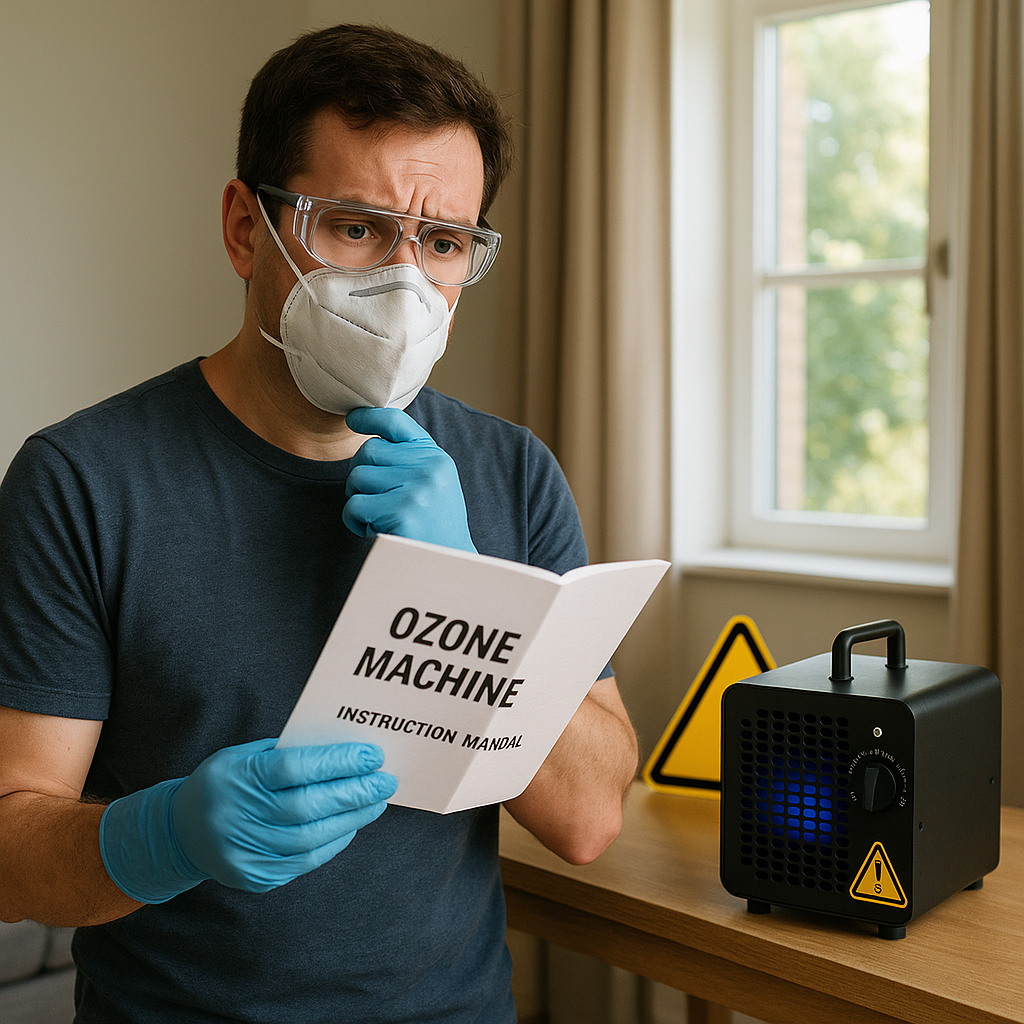
Ozone is especially useful for virus cleanup in situations like:

  • After someone in the household has recovered from illness
  • Before reopening a business or rental space
  • Disinfecting cars, offices, or hotel rooms between guests
  • Treating items like masks, clothing, or tools (in a sealed container or room)

It is not a daily-use method — more like a deep-clean strategy when thorough disinfection is needed.

Better Daily Alternatives for Virus Prevention

Ozone isn’t your only option. In fact, it’s not the best choice for regular indoor use. Instead, consider:

  • HEPA air purifiers, which trap airborne viruses and allergens
  • UV light systems, which neutralize viruses in HVAC ducts
  • Frequent ventilation, opening windows or using fans to bring in fresh air
  • Surface disinfectants approved by the EPA for virus control

👉 Related reading: Pros and Cons of UV Light in HVAC: Is it Worth It?

A Real-Life Example: Post-Illness Cleanup

A BreatheBetterAir reader wrote in about using an ozone generator in their home office after recovering from pneumonia. They followed all safety steps: ran the machine overnight, sealed the room, and ventilated it the next morning. They noticed a distinct “clean” smell afterward, and no one else in the home got sick. While this isn’t proof that ozone killed the virus, it highlights how controlled ozone use can contribute to peace of mind and cleanliness.

Important Warnings

  • Never use ozone in occupied spaces.
  • Don’t use it as a substitute for proper hygiene, air filtration, or ventilation.
  • Always follow your ozone generator’s instructions and safety guidelines.

When misused, ozone can cause more harm than good. But with knowledge and caution, it can be a helpful tool for serious disinfection jobs.

FAQ

Is it safe to run an ozone generator while sleeping?

Absolutely not. Ozone is harmful to breathe and should never be used in a room that is currently occupied — even while you sleep.

How long does ozone last in the air?

Ozone typically breaks down into oxygen within 30 minutes to 4 hours, depending on air circulation and temperature. Ventilation speeds up the process.

Will an ozone machine disinfect surfaces too?

Yes. Ozone can reach surfaces that sprays miss, including walls, ceilings, fabric, and hard-to-reach areas. It oxidizes viral particles on contact.

Bottom Line

Ozone is effective at killing viruses — but only in empty rooms.
Used incorrectly, it’s a health hazard. But used properly, it can be a valuable part of a deep-cleaning protocol after illness or in high-risk spaces.

👉 Learn more about ozone generators:
What Is an Ozone Machine? Benefits and Risks Explained

Can Ozone Remove Dust or Allergens? (Not Exactly)

Can an ozone generator remove dust or allergens?
Not exactly. Ozone doesn’t physically remove dust, pollen, or pet dander from the air. It may neutralize some airborne allergens by altering their chemical structure, but it won’t replace the need for HEPA filters, vacuuming, or regular dusting.

Why People Think Ozone Helps with Allergies

Many homeowners turn to ozone generators hoping for relief from allergies, especially when HEPA purifiers or cleaning alone haven’t worked. That’s understandable — **ozone is marketed as a powerful air “cleaner,” capable of killing mold, bacteria, and odors.**

But dust and allergens are a different kind of challenge. These particles don’t vanish with a zap of ozone. Instead, they *settle* — in your carpet, your couch, and your lungs.

What Ozone Actually Does (And What It Doesn’t)

Ozone is a reactive gas made of three oxygen atoms. When used in a controlled setting, it can:

  • Break down odors like smoke or skunk smell
  • Neutralize surface bacteria on hard-to-clean materials
  • Disrupt mold spores and reduce some VOCs

But here’s what ozone **cannot** do:

  • **Capture or remove solid particles** like dust, pollen, or pet dander
  • **Replace proper air filtration** (like HEPA or electrostatic filters)
  • **Work safely when people or pets are present**

If your allergy symptoms are tied to things like dog hair or house dust, **ozone alone isn’t going to cut it.**

The Problem with Dust and Airborne Allergens

Dust and allergens aren’t just floating in the air — they’re stuck in your vents, layered in your rugs, and embedded in your bedding. Even when airborne, these particles are **physical matter**, not gases or biological agents.

**That means you need something that traps or removes them.**

Think:

  • High-quality vacuuming (with sealed HEPA units)
  • HEPA air purifiers for continual filtering
  • Humidity control to reduce dust mite survival

Ozone doesn’t offer a way to “collect” anything. In fact, once it reacts with dust particles, it can sometimes **create secondary pollutants** — such as formaldehyde or ultrafine particles.

When Ozone *Might* Help with Allergies (In Small Ways)

There are a few cases where ozone could support a broader allergy-reduction strategy:

  • It may neutralize some bio-allergens, like mold spores or dust mite waste proteins, by altering their structure enough to reduce immune response.
  • It can deodorize rooms where allergens like pet dander were previously active — giving a “fresher” feel even if dust remains.

But these are indirect benefits. **Don’t expect ozone to replace air purifiers or allergy medication.**

A Better Combo: HEPA Filters + UV Light + Ozone (With Caution)

Some advanced HVAC systems combine **ozone (or ionization), UV light, and HEPA filtration**. In this kind of setup:

– **HEPA handles the particles** (dust, dander, pollen)
– **UV light kills bacteria and mold**
– **Ozone (or ions) handle residual odor or gas-based contaminants**

For more on the UV side of the equation, read:
Pros and Cons of UV Light in HVAC – Is It Worth It?

And for ozone basics:
What Is an Ozone Machine? Benefits and Risks Explained

Safe Use: Don’t Ozone While You’re Home

**Ozone is not safe to breathe in high amounts.** It can irritate your lungs, eyes, and throat — especially for people with asthma or allergies.

If you decide to run an ozone generator to clear out musty odors or sanitize a room:

  1. Remove all people and pets
  2. Close off the space and seal vents
  3. Run the ozone machine for the recommended duration
  4. Wait at least 2–6 hours after it turns off before re-entering
  5. Ventilate thoroughly before staying in the room

For a deeper dive into safe usage, check out:
Ozoning a House: Do’s and Don’ts

Mini-Scenario: What Actually Helped My Friend with Allergies

A friend of mine had two dogs, carpets in every room, and constant sneezing. He tried an ozone machine hoping it would “clear the air” — but nothing changed. It wasn’t until he:

– Switched to a bagged vacuum with a HEPA filter
– Added a portable air purifier in the bedroom
– Used the ozone generator *once a month only* to remove lingering odors

that he finally felt a difference. **Ozone helped with the smell. Filtration helped with the sneezing.**

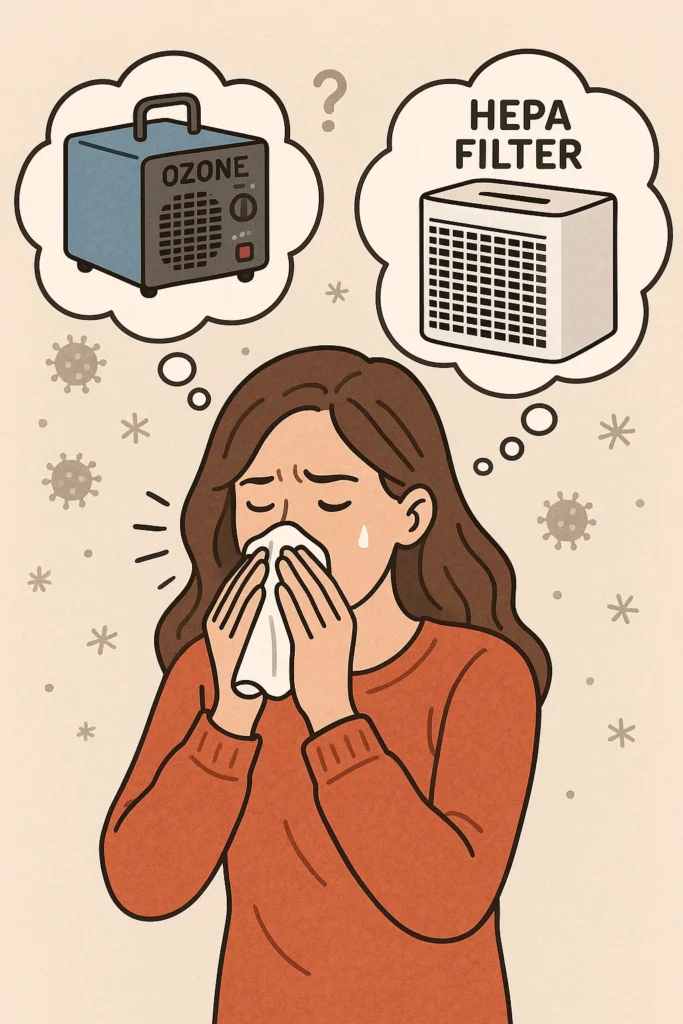
Illustration of a girl wondering if she needs a HEPA filter or a ozone generator for her allergiesOther Tools That Work Better for Dust and Allergies
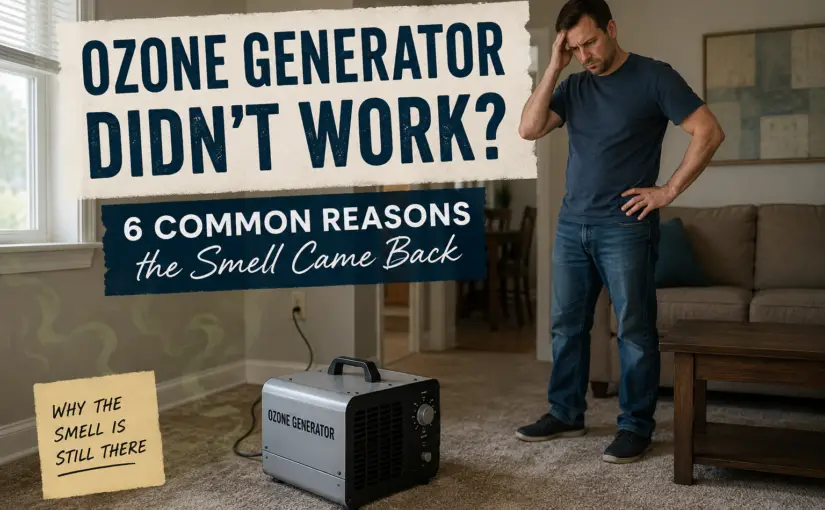
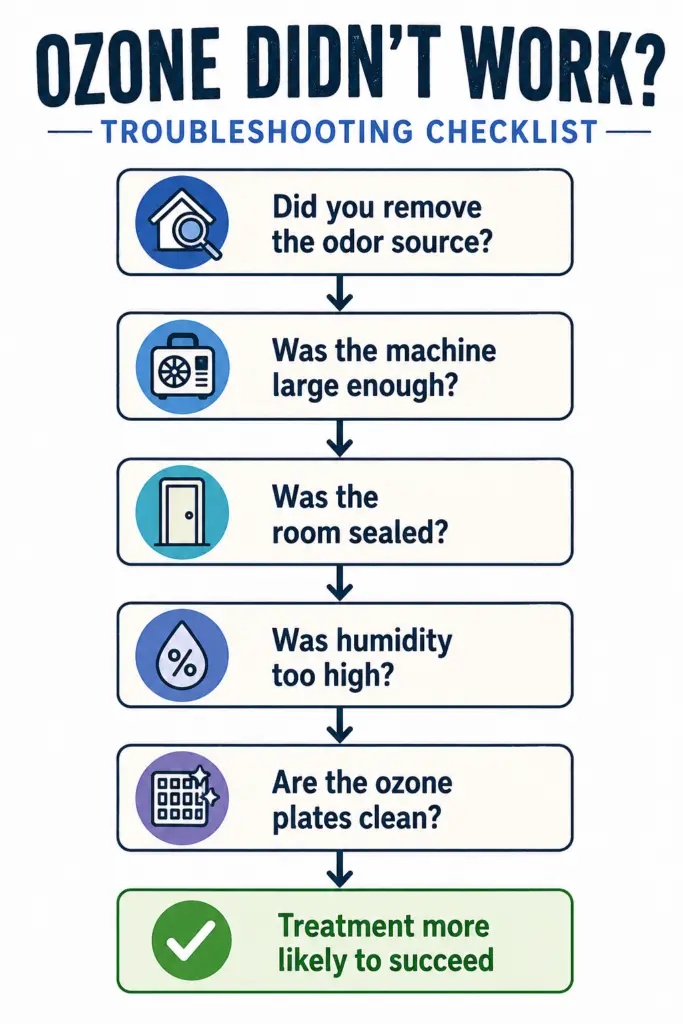
Here’s how ozone stacks up next to more proven methods:

Method Removes Dust? Allergy Relief? Safe for Daily Use?
HEPA Filter ✔️ ✔️ ✔️
Ozone Generator ❌ (indirect only)
UV-C Light ✔️ (for bio-contaminants) ✔️ (in ducts)
Vacuuming w/ HEPA ✔️✔️ ✔️ ✔️

When Is Ozone a Good Idea — and When Is It Not?

Ozone isn’t useless — but it’s often misunderstood. If you’re dealing with **stale smells**, **post-flood mildew**, or **leftover odors from pets or smoke**, a short ozone treatment (when the space is empty) can be surprisingly effective.

But if your goals are **better breathing**, **less sneezing**, or **cleaner air** — ozone won’t get you there alone.

Use ozone when:

  • You want to eliminate lingering smells after cleaning
  • You’re treating a space temporarily unoccupied
  • You need to neutralize odors caused by mold, smoke, or cooking

Avoid ozone when:

  • You’re targeting dust, dander, or pollen
  • People or pets will be in the space during or soon after treatment
  • You want 24/7 filtration or allergen reduction

For daily air quality needs, **pair ozone with mechanical filtration and UV light** if desired — but make sure you know what each tool is really doing.

FAQs About Ozone and Allergies

Can ozone kill dust mites?

**Ozone may damage dust mites and their waste proteins**, but not reliably enough to be a standalone solution. Removing bedding and cleaning with hot water is far more effective.

Can ozone clear pet dander from the air?

No. Pet dander is a physical particle. Ozone may neutralize the odor, but it won’t remove the actual allergens without a filter.

Is it safe to run an ozone generator at night while I sleep?

**Absolutely not.** Ozone should never be used while people or pets are present — especially not overnight.

Can I use an ozone generator in my HVAC system to fight allergens?

Some whole-house systems include ozone or ionization, but they’re designed to run in very low amounts. **Consult your HVAC provider and consider safer alternatives** like UV-C and filtration.

The Bottom Line: Use Ozone for Odors, Not Dust

If you’re looking for **cleaner-smelling air**, ozone has a place. But if you’re hoping to reduce allergens, **you’ll need HEPA filters, consistent cleaning, and maybe even duct upgrades**. Ozone just isn’t built for the job.

For more info, check out:

Can Ozone Remove VOCs from Paint or New Furniture?

Why Are VOCs Harmful — and What Are the Main Ones Indoors?

VOCs may be invisible, but they can have real effects on your health — especially with repeated or prolonged exposure in enclosed spaces. The symptoms range from mild irritation to more serious long-term concerns depending on the compound and concentration.

Common Health Effects of VOC Exposure

  • Eye, nose, and throat irritation
  • Headaches, dizziness, and fatigue
  • Worsened asthma or respiratory conditions
  • Difficulty concentrating
  • Long-term exposure may be linked to liver, kidney, or nervous system damage

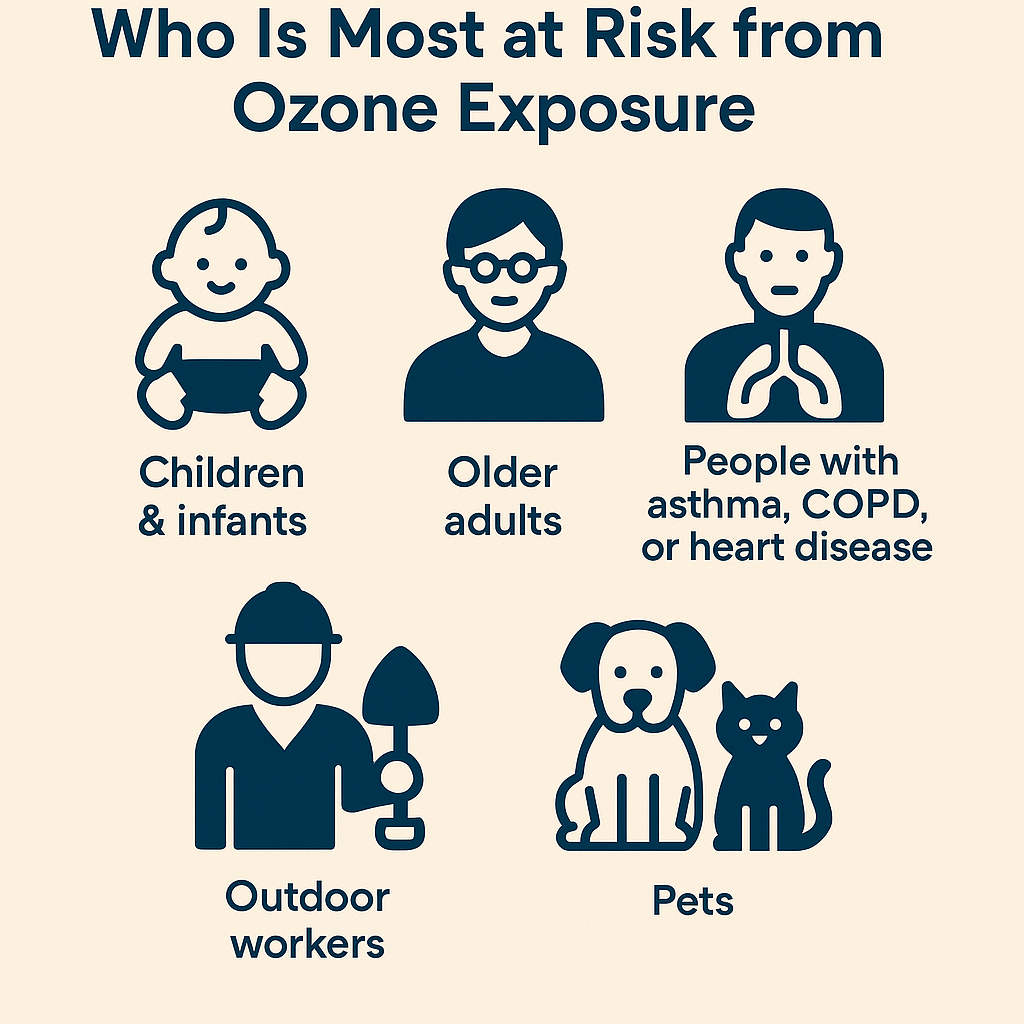
Children, the elderly, and people with pre-existing respiratory issues are especially sensitive to VOCs.

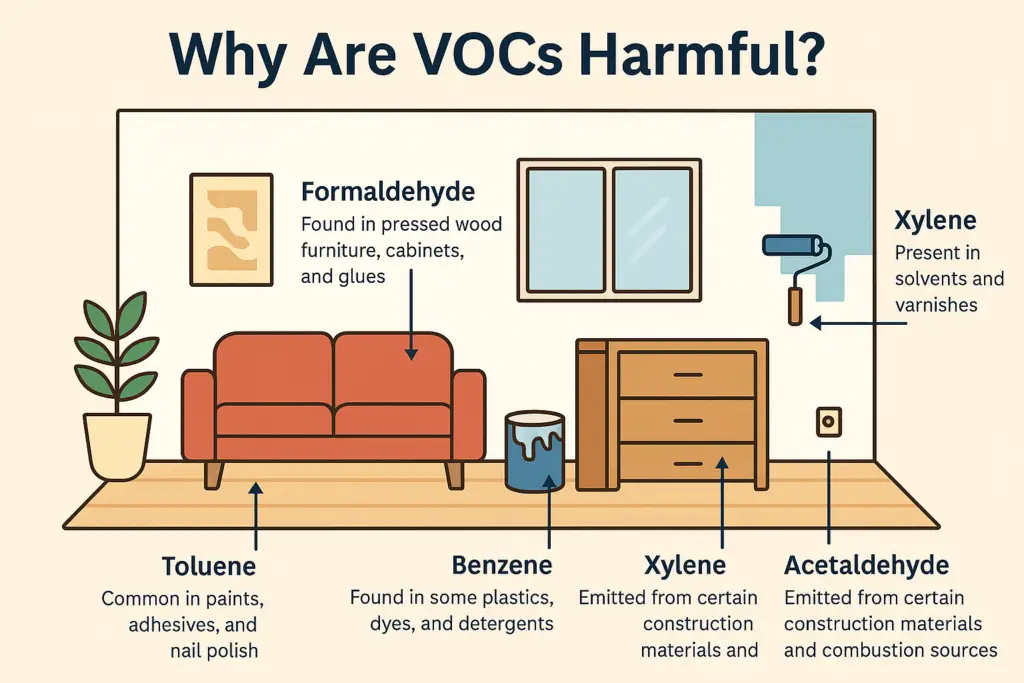
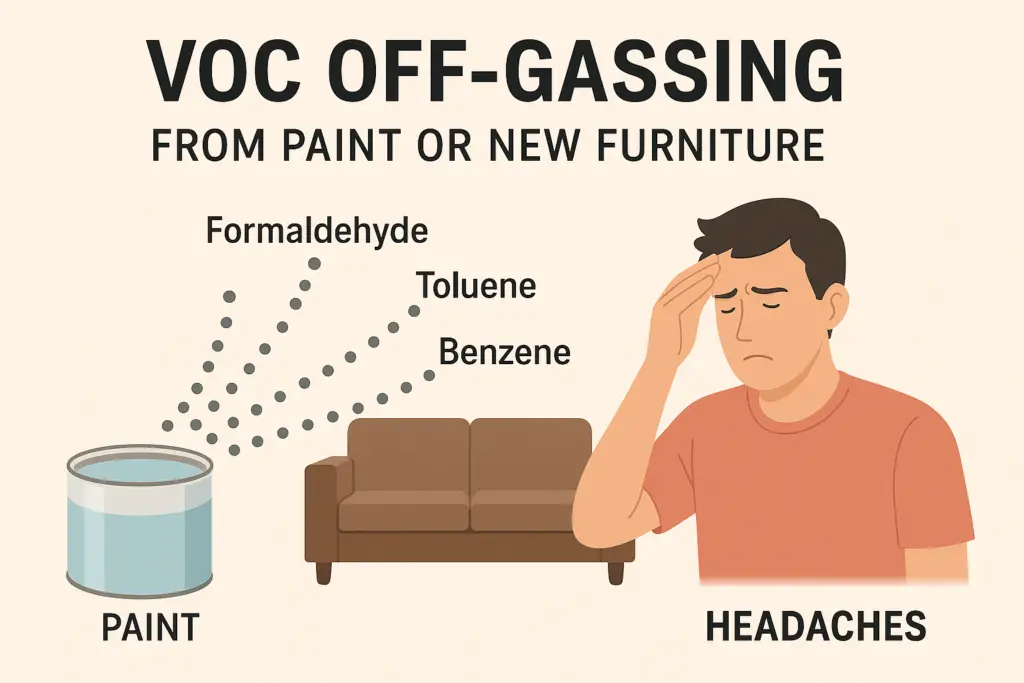
illustration of the types of VOCs and how they can be harmfulThe Most Common Indoor VOCs

You might be surprised how many household products release VOCs. These include:

  • Formaldehyde: Found in pressed wood furniture, cabinets, and glues
  • Toluene: Common in paints, adhesives, and nail polish
  • Benzene: Found in some plastics, dyes, and detergents
  • Xylene: Present in solvents and varnishes
  • Acetaldehyde: Emitted from certain construction materials and combustion sources

These VOCs can accumulate quickly — especially after painting a room, setting up new furniture, or installing carpet. That’s why proper ventilation or ozone treatment may be worth considering, depending on the situation.

Can Ozone Remove VOCs from Paint or New Furniture?

Yes, ozone can help reduce VOCs (volatile organic compounds) from paint and new furniture, but it’s not a one-size-fits-all solution. Used correctly, ozone generators can neutralize lingering chemical smells from off-gassing — especially in confined, unoccupied spaces. But there are important safety rules and limits to what ozone can do, especially when compared to other methods.

This guide walks you through when and how to use ozone for VOC removal, how it stacks up against alternatives, and what to expect during the process.

Learn more about how ozone generators work here →

Why Paint and Furniture Smells Stick Around

New paint and furniture often release VOCs — airborne chemicals like formaldehyde, toluene, and benzene — as they off-gas. These fumes are most noticeable with:

  • Fresh paint or sealants
  • Particleboard or MDF-based furniture
  • New carpets, mattresses, or cabinetry

These VOCs can linger for days or even weeks, especially in low-ventilation spaces, and can cause symptoms like headaches, fatigue, or irritated eyes and throat. Regular air purifiers may help, but ozone offers a chemical-based breakdown — if used properly.

How Ozone Neutralizes VOCs (and Where It Falls Short)

Ozone (O3) is a reactive molecule that oxidizes airborne contaminants. When ozone meets a VOC molecule, it can break it apart — neutralizing odor and sometimes rendering the compound inert.

However:

  • Not all VOCs are equally affected by ozone. Some break down easily, while others resist oxidation.
  • Ozone does not “absorb” or trap VOCs — it breaks them down.
  • Once the ozone process is complete, you must ventilate the space thoroughly to release the byproducts.

Because ozone is a gas, it works best in sealed rooms where air is stagnant — perfect for treating a single room with painted walls or a newly delivered couch.

Real-Life Example: Off-Gassing from a New Bookshelf

Mike had just assembled a new MDF bookshelf in his home office. By the next morning, the room reeked of glue and chemicals. Opening windows didn’t help. He set up an ozone generator for 2 hours while the room was sealed and empty. After airing it out for several hours, the smell was almost completely gone — and no more headaches while working from home.

Illustration of VOCs and their effects Step-by-Step: How to Use an Ozone Generator to Reduce VOCs
Here’s how to safely use ozone to treat VOCs from paint or furniture:

  1. Prep the room: Remove all people, pets, and plants. Seal the room by closing windows and doors.
  2. Place the ozone machine on an elevated surface in the center of the room, if possible. Avoid placing it directly on furniture.
  3. Run the generator for 1–3 hours, depending on the size of the room and strength of the smell. (See our ozone generator sizing guide.)
  4. Do not enter the room while the generator is running. Use a remote switch or timer if possible.
  5. After the cycle finishes, wait at least 2 more hours before re-entering.
  6. Ventilate the space thoroughly. Open all windows and use fans to remove ozone and any remaining VOCs or byproducts.

Repeat if necessary after 24–48 hours. It may take multiple treatments for heavy chemical smells.

Ozone vs. Other Methods for VOC Removal

Let’s compare ozone treatment to other popular options:

Method Effectiveness Pros Cons
Ozone Generator Moderate to High Breaks down VOCs chemically Must be used in unoccupied spaces; cannot trap particles
Activated Charcoal Moderate Traps VOCs physically; reusable Works slowly; doesn’t eliminate, only traps
HEPA + Carbon Air Purifier High (if carbon-rich) Can run continuously; safe around people Doesn’t break down VOCs, only traps them
Ventilation Low to Moderate Simple and safe Limited by weather and air quality
UV HVAC System Moderate Treats whole home; kills some germs Limited direct effect on VOCs

For whole-home air quality, consider a UV light system in your HVAC ducts. Here’s our full breakdown on UV lights in HVAC.

When to Consider Alternatives Instead of Ozone

Ozone isn’t always the best tool — especially if the space is regularly occupied, or if the smell is mild. In those cases, consider:

  • Activated charcoal bags (great for closets and cabinets)
  • HEPA air purifiers with carbon filters (for continuous VOC control)
  • Natural ventilation (if weather permits)
  • Enzyme sprays (more effective for pet or biological odors)

For persistent off-gassing, a combined approach (ozone + ventilation + HEPA) may work best.

DIY or Professional Ozone Treatment?

Most home VOC treatments can be done safely with a residential-grade ozone machine. However:

  • If you’re dealing with large open-plan areas or newly built homes, consider hiring a pro.
  • Professionals can calculate the correct dose, run high-output machines, and ensure proper re-entry timing.

If you go the DIY route, always follow manufacturer directions and use a room timer and safety signage.

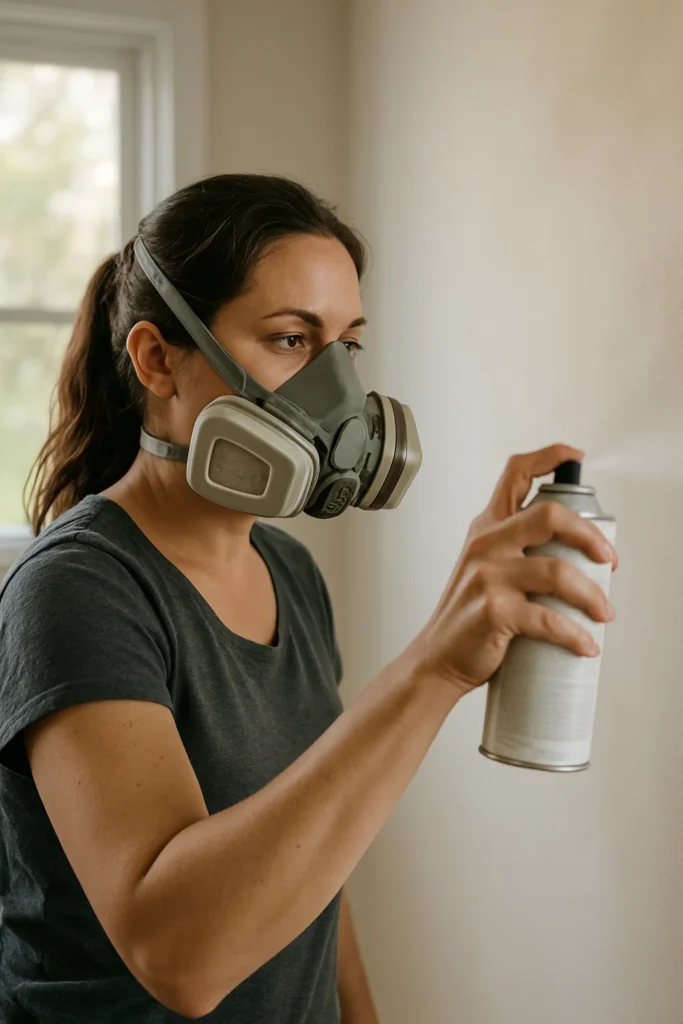
A pic of a Woman wearing a mask using spray paint indoors FAQs About Using Ozone for VOC Removal
Is ozone safe to use around paint or fabric furniture?

Yes — ozone breaks down VOCs in the air and does not leave residues on surfaces. However, repeated exposure may cause mild oxidation to rubber or foam materials over time.

How many ozone treatments does it take to remove paint smells?

Usually 1–3 cycles of 1–2 hours each, spaced 24 hours apart, are enough to significantly reduce VOC odors. Heavy or oil-based paints may require more treatments.

Can I use ozone while the house is occupied?

No. Ozone must only be used in sealed, unoccupied spaces. It can cause respiratory irritation and is unsafe to breathe at high concentrations.

Is ozone better than air purifiers for VOCs?

Not necessarily — they work differently. Ozone breaks down VOCs chemically, while purifiers trap them with filters. The best approach may be using both in combination.

Final Thoughts

Ozone can be a powerful tool for removing chemical smells from paint or new furniture — but it’s not a magic fix. When used responsibly and safely, it can neutralize VOCs that linger despite ventilation or air purifiers. For long-term protection, pair ozone treatments with good airflow and a strong HEPA purifier with activated carbon.

Want a deeper understanding of how ozone works and how to use it safely?

Start with our ozone generator hub article.

Can You Remove Cooking Odors with an Ozone Generator?

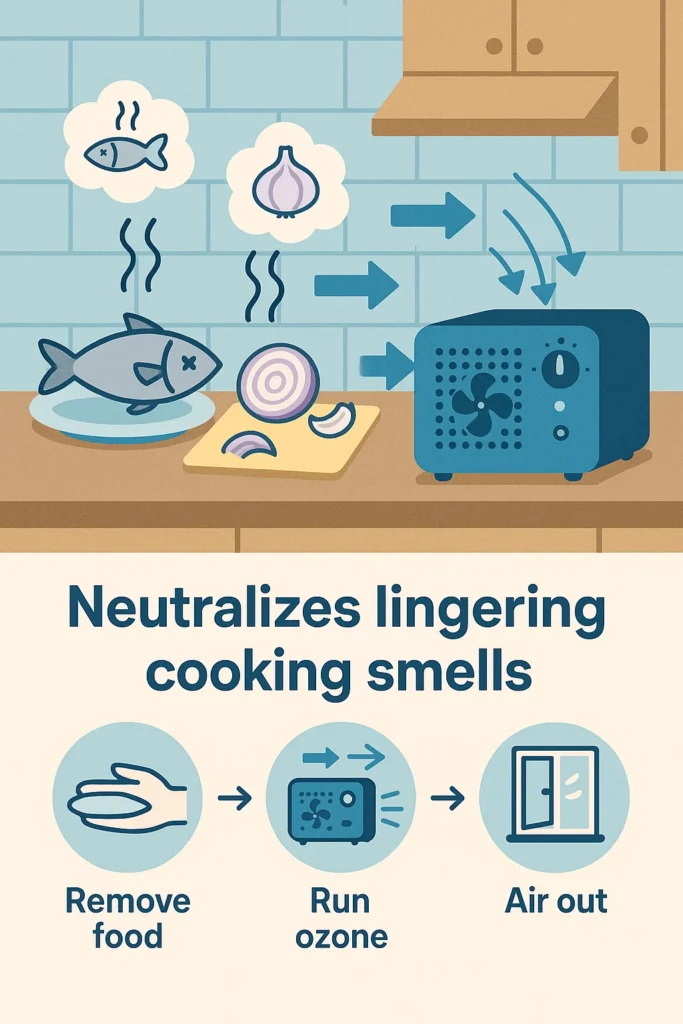
Yes, you can remove stubborn cooking odors with an ozone generator — especially smells from fish, curry, grease, or burnt food — but it must be used with care and the right technique. Ozone breaks down odor-causing molecules at the source, penetrating fabrics, porous materials, and hard-to-reach corners in ways that standard cleaning can’t.
Below, we’ll walk through how it works, when to use it, and why it might be your best bet for lingering food smells.

⚠️ Important: Never use ozone machines around people, pets, or food. Rooms must be unoccupied during treatment.

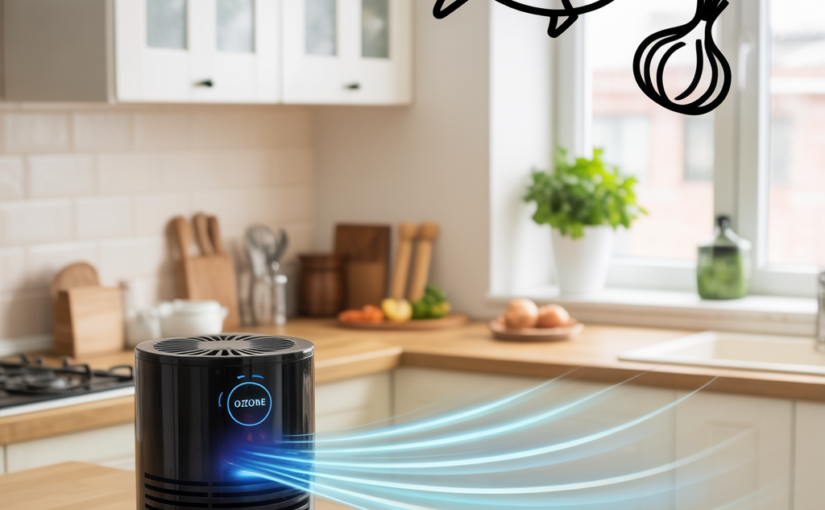
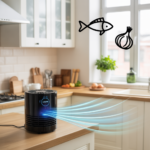
image showing that ozone neutralizes cooking smellsWhy Do Cooking Smells Linger So Long?

Some meals are memorable for the wrong reason: their smell won’t go away. That’s because cooking odors — especially from frying, grilling, or spice-heavy dishes — bond with surfaces in your kitchen and spread through ventilation systems.

Here’s what makes food odors hard to eliminate:

  • Oil vapors cling to walls, cabinets, and textiles like curtains and upholstery.
  • Proteins and sulfur compounds (like those found in fish or eggs) leave behind intense residues.
  • Strong spices like curry or garlic release volatile compounds that sink deep into porous materials.
  • Burnt food creates carbon-based smoke that embeds in everything from carpet to drywall.

These compounds don’t just float in the air — they embed in your home. That’s where ozone comes in.

How Ozone Works on Cooking Odors

Ozone (O₃) is a molecule made of three oxygen atoms. It’s highly reactive, which makes it powerful against odors.

When ozone encounters odor molecules, it oxidizes them — breaking them apart at a chemical level. This is different from air purifiers or deodorizers that simply trap or mask the smell.

Specifically, ozone can:

  • Neutralize aldehydes, sulfur, and amines that come from overcooked meat, eggs, and fish.
  • Penetrate porous materials like wood cabinets, rugs, and drywall.
  • Reach into vents and ductwork to neutralize smells that traveled through the HVAC system.

For a breakdown of how ozone works in general, see our guide:
👉 What Is an Ozone Machine? Benefits and Risks Explained

Step-by-Step: Using an Ozone Generator for Cooking Odors

Here’s how to safely and effectively use an ozone machine to remove cooking smells from your kitchen or home.

✅ Step 1: Prep the Area

  • Remove people, pets, and plants from the space.
  • Seal the room by closing all windows and doors.
  • Remove or cover exposed food items and cookware.

✅ Step 2: Position the Machine

  • Place the ozone generator near the source of the odor (usually in the kitchen).
  • Elevate it to counter or table height for better air circulation.

✅ Step 3: Set the Timer

  • Start with 30–60 minutes for light to moderate smells.
  • For strong odors (burnt food, fried fish), 2–4 hours may be needed.
  • Leave the room before starting the machine.

✅ Step 4: Air Out Thoroughly

  • After the timer finishes, wait at least 1–2 hours before re-entering.
  • Open all windows and run fans to ventilate the space.

See our full guide:
👉 How Long to Wait After Using an Ozone Generator

Real-Life Example: Burnt Bacon Blues

One user told us about a weekend breakfast that went wrong — badly burnt bacon set off the smoke alarm and left a strong smell lingering for days. Despite opening windows, using candles, and cleaning the stove, the odor clung to the couch and kitchen walls.

They used a medium-sized ozone generator for 2 hours with the doors shut and the HVAC off. After ventilating for another 2 hours, the smell was completely gone — no residue, no trace. It worked where sprays and scrubbing had failed.

Ozone vs. Other Odor Removal Methods

Let’s compare:

Method Pros Cons
Baking Soda Bowls Cheap, easy Only absorbs light surface odors
White Vinegar Natural deodorizer Doesn’t penetrate walls or fabrics well
Air Purifiers Great for general air quality Won’t eliminate embedded odors
Scented Sprays Fast, smells nice Just covers up the problem
Ozone Generator Destroys odors at the source Requires caution and proper use

👉 For other strong smells like cigarettes or mold, ozone is often the most effective method:

Is Ozone Safe in Kitchens?

Ozone is only safe when the kitchen is unoccupied during use — and fully aired out afterward.

You must:

  • Turn off HVAC or exhaust fans that might spread ozone.
  • Wait until ozone fully dissipates before prepping or eating food.
  • Keep pets out until the smell is completely gone.

Want to avoid common mistakes? Check out:
👉 Ozoning a House: Do’s and Don’ts

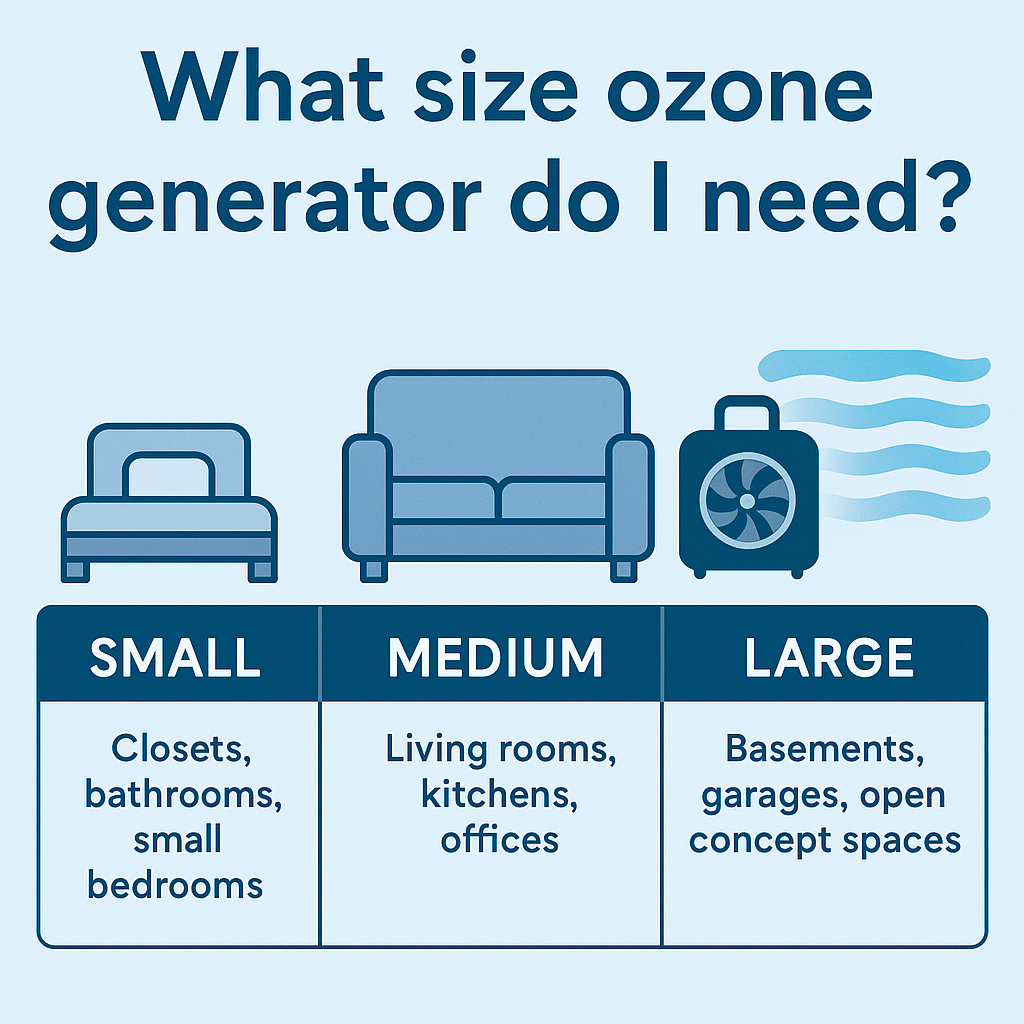
image of a graphic asking "what size ozone generator do i need?"Choosing the Right Ozone Generator Size

The effectiveness of your treatment depends on the size and strength of the machine. For most kitchens:

  • A 2,000–5,000 mg/h ozone generator is ideal for small-to-medium kitchens.
  • Open-concept homes may require larger units or multiple sessions.

👉 Use our sizing chart here:
Ozone Generator Sizing Guide

When You Shouldn’t Use Ozone

Ozone is not the right tool for:

  • Removing grease buildup (clean first, then use ozone).
  • Spaces where you can’t fully ventilate afterward.
  • Continuous daily use — it’s meant for occasional deep treatment.

For ongoing odor control, consider pairing ozone with a UV HVAC system:
👉 UV Light in HVAC: Pros and Cons

FAQ: Cooking Odors & Ozone Generators

Will ozone remove the smell of burnt food?

Yes — ozone works well on carbon-based smoke odors. Burnt toast, bacon, or popcorn odors are common targets for ozone treatment.

Can I use ozone while I’m cooking?

No. Ozone should never be used while people are in the room, especially while food is being prepared or served.

How long will the results last?

If the source of the odor is removed (cleaned thoroughly), ozone can permanently eliminate lingering smells. If not, odors may slowly return.

Is it safe to ozone a kitchen overnight?

Yes — as long as nobody enters the space until morning and it’s ventilated properly before use. Always follow manufacturer safety guidelines.

Final Thoughts

If cooking odors are ruining your comfort at home — ozone can help you start fresh. Whether it’s lingering curry smell, fried fish, or burnt food that just won’t leave, a properly used ozone generator is one of the few solutions that truly neutralizes the source of the smell.

Just remember: use it safely, ventilate well, and treat ozone like a powerful tool — not a casual air freshener.

For more in-depth guidance, don’t miss our article:
👉 What Is an Ozone Machine?

Can an Ozone Generator Get Rid of Cigarette Smoke?

Quick Answer: Yes, ozone generators can effectively eliminate cigarette smoke odors by chemically breaking down odor molecules in the air and porous surfaces.

However, they won’t remove nicotine stains or residue, and require proper safety precautions as ozone can be harmful to breathe.

That moment when you first walk into your “new” apartment and realize the previous tenant must have smoked like a chimney? Or when you buy a used car that smells like it hosted poker nights for a 1950s detective?

Cigarette smoke doesn’t just linger – it moves in, unpacks its bags, and refuses to leave. No amount of Febreze seems to make a dent in that stubborn, stale tobacco smell that clings to everything.

Why Cigarette Smoke is the Worst Houseguest

Cigarette smoke is the ultimate squatter of odors. Unlike cooking smells or pet odors that fade, tobacco smoke contains sticky tar and chemical compounds that chemically bond to surfaces. The nicotine and other VOCs in smoke penetrate deep into fabrics, drywall, and even wood, creating odor reservoirs that keep releasing that distinctive smell long after the last cigarette was extinguished.

I’ll never forget helping my cousin clean her inherited family cabin – despite years of vacancy, the curtains still smelled like her grandfather’s pipe tobacco. Traditional cleaning methods only address surface-level smells, which is why so many people turn to ozone generators as a last resort.

How Ozone Fights Cigarette Odors at the Molecular Level

Ozone generators work differently than air fresheners or purifiers. They produce ozone (O₃), an unstable molecule that aggressively oxidizes and destroys odor compounds. Here’s the science behind why it works so well on cigarette smoke:

  • Chemical breakdown: Ozone molecules attack and dismantle the volatile organic compounds (VOCs) that cause tobacco odors at the molecular level
  • Deep penetration: The gas reaches places cleaning can’t – inside walls, between floorboards, deep in upholstery fibers
  • Complete neutralization: Unlike masking agents, ozone actually eliminates the odor compounds rather than covering them up

Important note: While ozone is incredibly effective against odors, it’s not a cleaning product. Those yellow nicotine stains on walls or that sticky film on windows will still need elbow grease and proper cleaners.

a man smoking a cigarette in a cluttered roomWhat Ozone Can and Can’t Do for Cigarette Smoke

Ozone Can Ozone Can’t
Neutralize airborne smoke odors completely Remove nicotine stains or discoloration
Penetrate deep into fabrics and porous materials Be used while people or pets are present
Reach inaccessible areas like air ducts and inside walls Replace the need for deep cleaning surfaces first
Provide longer-lasting results than masking sprays Work effectively if heavy smoke residue remains

Ozone Safety: Critical Precautions You Must Take

While ozone is powerful against odors, it’s not something to use casually. Ozone is a lung irritant that can cause serious respiratory issues with exposure. Follow these safety rules religiously:

  • Never occupy the space during treatment – no people, pets, or even plants
  • Remove all living things and seal food items before running the generator
  • Ventilate thoroughly afterward – open windows and run fans for at least 1-2 hours
  • Use proper timing – more ozone isn’t better; follow manufacturer guidelines strictly

Warning: Those inexpensive “ionizing” air purifiers claiming ozone benefits typically produce negligible amounts that won’t impact smoke odors. For serious odor removal, you need a proper ozone generator. Learn more about how ozone machines actually work before purchasing.

Step-by-Step Guide to Using Ozone for Smoke Removal

For Homes and Rooms:

  1. Prep the space: Remove all living things, clean surfaces thoroughly, and close all windows/doors
  2. Position the generator: Place it centrally and set the timer (typically 2-4 hours for moderate odors)
  3. Wait it out: After treatment, leave the room closed for 2 more hours to let ozone work
  4. Air it out: Open windows and ventilate thoroughly for at least 1-2 hours before re-entering

ozone removing cigarette smoke in a carFor Vehicles:

  1. Deep clean first: Vacuum and wipe all surfaces with an enzymatic cleaner or vinegar solution
  2. Run the ozone machine: Place it inside with windows up (engine off) for 30-60 minutes
  3. Ventilate: Open all doors and let it air out for at least an hour before driving

Pro tip: For severe cases, you may need 2-3 treatments over several days. Between ozone sessions, sprinkle baking soda on upholstery to absorb more odor, then vacuum it up.

Other Effective Ways to Combat Smoke Odors

If ozone isn’t right for your situation, try these alternatives:

  1. Activated charcoal bags: Excellent for maintaining freshness in cars or closets after ozone treatment
  2. HEPA air purifiers with carbon filters: Helpful for capturing remaining smoke particles and odors
  3. Deep cleaning solutions: TSP cleaner for walls, steam cleaning for carpets, odor-blocking primer for painting
  4. Natural odor absorbers: Bowls of white vinegar or coffee grounds can help between treatments

For best results: Combine methods. Deep clean first, use ozone for the stubborn odors, then maintain with air purifiers or charcoal bags. It’s a comprehensive approach that actually works.

The Final Verdict on Ozone for Cigarette Smoke

Ozone generators can be miracle workers for eliminating cigarette odors, but they’re not magic bullets. Consider ozone treatment when:

  • You’ve already cleaned surfaces but the smell persists
  • You can properly vacate the space during treatment
  • You’re dealing with embedded odors in fabrics or hard-to-reach areas

For mild cases, start with thorough cleaning and air purifiers. For serious smoke damage, ozone can be your nuclear option – just always prioritize safety and proper ventilation above all else.

While ozone clears smoke odors, it fails for infestations like bed bugs. See the ozone and bed bug guide here.

Still fighting stubborn smoke smells? Check out our guide on removing smoke odor from cars for more targeted solutions to this persistent problem.

Here’s an SEO-optimized FAQ section that brings the total word count up to around 1,200 words. One of the FAQs includes a natural internal link to your UV HVAC article.

Frequently Asked Questions

Will ozone get rid of cigarette smoke completely?

Ozone is highly effective at eliminating the smell of cigarette smoke, but it doesn’t remove all traces of smoking. It can neutralize the odor-causing molecules that linger in the air and porous materials, but tar, nicotine stains, and yellowing of surfaces will still require traditional cleaning methods. Think of ozone as the final step — not the only step.

How long should I run an ozone generator for cigarette smoke removal?

For a single room with moderate smoke odor, 2–4 hours is usually sufficient. For entire homes or deeply embedded smells, sessions may need to run for 6–8 hours or be repeated across multiple days. Always follow your machine’s safety and timing guidelines, and never stay in the area during treatment.

Can I use an ozone generator in a house I currently live in?

Yes, but you must vacate the area while the generator is running and during the dissipation period afterward. No people, pets, or plants should be inside while ozone is present. Many users treat one room at a time to make it manageable, especially if relocating temporarily isn’t an option.

What’s better for cigarette smoke: ozone or UV light in HVAC systems?

They serve different purposes. Ozone neutralizes odors by breaking down molecules directly, whereas UV lights in HVAC systems disinfect air passing through the system, killing mold, bacteria, and viruses but not eliminating existing odors. If you’re tackling lingering smells, ozone is the better choice — but if you’re focused on keeping your air clean long-term, UV light can be a helpful addition.
👉 Learn more about the pros and cons of UV lights in HVAC systems.

Do ozone treatments damage electronics or furniture?

Generally, no. Short-term ozone use doesn’t harm most materials, but long-term or frequent treatments may degrade rubber seals or certain plastics over time. If you’re concerned, remove delicate electronics or cover them before treatment. Leather furniture is usually fine, but some users prefer to condition it afterward to be safe.

How can I tell if the ozone treatment worked?

Once the room is safe to enter and fully aired out, use your nose — the lingering cigarette smell should be gone. There may be a faint “clean” or slightly metallic ozone scent at first, which fades with ventilation. If the tobacco odor remains, it may indicate that more ozone is needed or that additional cleaning is required on surfaces.

Can ozone remove smoke smell from clothes?

Yes, but it’s tricky. You can treat clothes by hanging them in a closed room or closet with a small ozone machine — just make sure the items are spaced out for airflow and that the space is unoccupied during treatment. Afterward, wash the clothes to remove any residue. Ozone won’t damage fabrics with occasional use, but delicate materials should be handled with care.

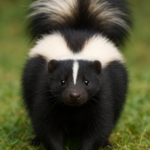
Can Ozone Get Rid of Skunk Smell?

Yes, ozone can remove skunk smell — even the deeply embedded kind that clings to furniture, car upholstery, clothing, or entire rooms. Ozone breaks down the odor-causing compounds at a molecular level, making it one of the few methods that can truly neutralize skunk spray rather than just mask it.

Why Skunk Smell Is So Hard to Eliminate

Skunk spray isn’t just smelly — it’s *chemically designed* to linger. The main culprit is a class of sulfur-based compounds called **thiols**, which are extremely potent. Even a few parts per billion can create a noticeable odor.

Skunk spray can penetrate fabric, wood, carpet, plastic, and even wall paint. Worse, the smell can intensify when the area becomes damp or humid, reactivating the stench long after the spray occurred. That’s why home remedies like vinegar, tomato juice, or air fresheners usually fall short — they may dull the scent temporarily, but they don’t neutralize the source.

How Ozone Neutralizes Skunk Odor

Ozone (O3) works by oxidizing the molecules responsible for the smell. When introduced into a room or object, ozone attacks the thiol compounds and breaks them apart at the molecular level. Once oxidized, those stinky sulfur molecules are no longer recognizable — and no longer smell.

Unlike sprays or cleaners that cover up odors, ozone permanently removes them from the environment. That’s why ozone is used professionally for smoke damage, mold remediation, and yes — skunk odor.

Where Skunk Odors Hide: Common Trouble Spots

Skunks don’t always make a direct hit. Their spray can **drift into crawl spaces, soak into fabrics, or settle inside a car**. Each situation needs a slightly different treatment approach:

  • In the home: Skunk odor can cling to walls, furniture, floors, vents, curtains, and insulation — especially near doors or crawlspace entries where skunks like to hide.
  • In vehicles: If your pet got sprayed and jumped in the car, the smell can work its way into seats, AC vents, and carpet padding.
  • On clothing or gear: Backpacks, jackets, or boots exposed to skunk spray often require deep treatment or disposal.
  • In crawl spaces or basements: Skunks sometimes nest beneath homes, leaving a smell that rises up through floorboards and ductwork.

woman covering her nose because of skunk smellUsing an Ozone Generator for Skunk Smell
Using ozone to treat skunk odor can be highly effective — **but it must be done safely and properly**.

Here’s how to use an ozone machine step by step:

  1. Evacuate all people and pets from the area. Ozone is harmful to breathe during treatment.
  2. Seal off the space as much as possible. Close doors, windows, vents, and HVAC returns to keep ozone concentrated where needed.
  3. Run the ozone generator for 1–4 hours, depending on the severity of the smell and the room size.
  4. Allow at least 1–2 hours of airing out after the cycle ends. Ventilate with fans and open windows.
  5. Repeat if needed. Some deeply saturated materials may require more than one treatment.

For more on how ozone works and safety tips, visit our complete guide to ozone machines.

Can You Use Ozone in a Car That Smells Like Skunk?

Yes — **ozone is one of the best tools for eliminating skunk odor in vehicles**. However, a few precautions are key:

  • Remove any porous materials you can: seat covers, mats, blankets, or crates should be washed or aired separately.
  • Place the ozone machine on a raised surface inside the car. Close all windows and doors except one slightly open with a hose for venting the ozone in.
  • Connect a small extension cord and let the generator run for 1–2 hours.
  • After treatment, open all doors and allow the car to fully air out for another hour or more.

Important: Do not sit in the car during treatment. Ozone can be hazardous in confined spaces.

What About Pets That Get Sprayed?

Unfortunately, **you can’t use ozone directly on your dog or cat**. Ozone is dangerous for living beings to inhale or be exposed to at high levels.

For pets, stick to a vet-approved skunk shampoo or a proven mix of:

  • 1 quart hydrogen peroxide
  • ¼ cup baking soda
  • 1 teaspoon dish soap

Scrub thoroughly and rinse well. Keep pets away from ozone-treated areas until fully ventilated.

Ozone vs. DIY Skunk Odor Remedies

Some people try vinegar, charcoal, air purifiers, or even coffee grounds to battle skunk smell. While these can help absorb odor temporarily, **they don’t eliminate the cause**. Even UV HVAC systems — which work wonders for germs and mold — won’t neutralize thiols effectively on their own.

If you’re curious how ozone compares to UV systems in your home, check out our breakdown on the pros and cons of UV light in HVAC.

Is Ozone Safe for Skunk Odor Removal?

Yes — as long as the treatment space is unoccupied and well-ventilated afterward. Ozone naturally reverts back to regular oxygen within a few hours. Still, it’s not something to use lightly or while people or animals are present.

If you’re unsure, you can hire a professional odor removal service that uses ozone treatment and follows industry safety protocols.

Frequently Asked Questions

How long does it take for ozone to remove skunk smell?

Usually 1 to 4 hours per session. For severe odors or porous materials, you may need to repeat the treatment.

Can ozone damage furniture or car interiors?

Prolonged exposure to high ozone levels can slightly fade rubber or leather over time. For one-time treatments, it’s generally safe.

Will a regular air purifier help with skunk smell?

Not really. Most air purifiers trap particles — they don’t neutralize sulfur compounds. A carbon filter might absorb some odor, but ozone is far more effective.

Can I stay in the house while the ozone machine is running?

No. Never occupy a room or vehicle being treated with ozone. It is toxic to breathe during treatment.

Final Thoughts: When Nothing Else Works, Ozone Might

If you’ve tried everything and that *skunk smell just won’t quit*, ozone may be your best ally. It’s **one of the only tools that can truly erase odor at the source**, even from tight spaces, fabric-lined cars, and basements where skunks like to sneak.

Just be sure to use it safely, allow plenty of ventilation time, and repeat the treatment if needed. Once that sulfur is gone for good, you’ll be breathing easy — without holding your nose.

How Long to Wait After Using an Ozone Generator

How Long to Wait After Using an Ozone Generator

It’s generally recommended to wait at least 1–2 hours after using an ozone generator before re-entering the treated space. Although ozone breaks down naturally, it’s critical to give it time to dissipate to a safe level before anyone returns. Inhaling ozone can irritate your lungs and airways—similar to the effects of breathing in strong chemical fumes like bleach fumes.

Recommended Waiting Times

Infographic showing recommended wait times after using an ozone generator for different space sizes: 1 hour for a small room, 2 hours for a medium room, 4–6 hours for a large open space, and 8–10 hours for a whole house.
Recommended wait times after ozone treatment, based on room size. Always wait until ozone levels drop below 0.05 ppm before re-entry.

Here are general guidelines for how long to wait after using an ozone generator, based on the size of the space:

Space Type Minimum Waiting Time
Small room (e.g., bathroom) 1 hour
Medium room (e.g., bedroom) 2 hours
Large open space 4–6 hours
Whole house 8–10 hours

Always use an ozone monitor if possible to confirm the space is safe. Health experts recommend re-entering only once ozone levels fall to 0.05 parts per million (ppm) or lower. If levels remain high, extend the wait time or increase ventilation.

How to Tell If It’s Safe to Re-Enter Without a Monitor

While an ozone monitor is the most accurate way to check safety, not everyone has one on hand. If you’re working without a monitor, here are some general tips to help you stay safe:

  • Wait longer than recommended times: If the room smells strongly of ozone, add at least 1–2 extra hours before entering.
  • Smell test: Ozone has a sharp, chlorine-like smell. If you can still smell it, it’s not safe yet—even if it’s faint.
  • Use ventilation cues: If you opened windows or ran HVAC systems, ozone may have dissipated more quickly. Still, err on the side of caution.
  • Better safe than sorry: When in doubt, wait longer or return briefly while holding your breath and wearing a mask to test the air, then exit quickly if any irritation occurs.

These tips aren’t a substitute for a real ozone meter, but they help reduce risk when you’re going by feel. For comparison, the effects of breathing ozone are similar to exposure to bleach fumes—and just as dangerous at high levels.

Why You Should Wait

Ozone generators are powerful tools for removing odors, mold, and bacteria. They work by releasing ozone gas (O₃), which oxidizes and breaks down contaminants. But that same power comes with a risk: ozone is a known lung irritant.

Breathing in high concentrations of ozone can lead to:

  • Chest pain and tightness
  • Throat and eye irritation
  • Shortness of breath or coughing

That’s why it’s important to give ozone time to clear out before returning to the treated space. In fact, the health effects of ozone exposure are similar in severity to inhaling bleach fumes or other harsh chemicals.

Key reasons to wait:

  • Ozone levels must drop below 0.05 ppm to be considered safe
  • Lingering ozone can irritate your lungs, eyes, and sinuses
  • Closed spaces allow ozone to build up and persist longer
  • Waiting allows time for ozone to react with and neutralize contaminants fully
    Infographic showing how long ozone persists at different concentrations: 1–2 days at ≥50 ppm, 10–12 hours at 5–10 ppm, and 1–2 hours at ≤0.1 ppm
    Ozone persistence depends on concentration—higher levels linger longer. Ventilation helps speed up the breakdown process.

When Not to Use an Ozone Generator

Ozone machines can be effective, but they’re not the right tool for every situation. In fact, using them in the wrong environment can cause more harm than good.

Avoid using an ozone generator if:

  • The space is occupied: Never use ozone in rooms where people or pets are present—even briefly.
  • You need daily odor control: Ozone is meant for deep treatments, not everyday air freshening. Use a UV air purifier or HEPA-based system for continuous cleaning.
  • You’re unsure how long to run it: Guessing runtimes can lead to excess ozone buildup. Always follow your model’s manual or use the shortest recommended setting.
  • You’re treating delicate materials: Ozone can degrade rubber, leather, and certain fabrics over time.

If you’re looking for safer, more hands-off solutions, a UV light system installed in your HVAC could be a better fit for routine air purification.

How Long Ozone Persists

Ozone doesn’t last forever—it has a relatively short half-life and naturally breaks down over time. However, how long it lingers depends on both the concentration and whether the space is ventilated.

Here’s how long ozone can stick around:

  • High concentrations (50+ ppm): May persist for 24–48 hours
  • Moderate concentrations (5–10 ppm): Can last 10–12 hours
  • Low concentrations (0.1 ppm): Usually dissipate in 1–2 hours
    Infographic showing how long ozone persists at different concentrations: 1–2 days at ≥50 ppm, 10–12 hours at 5–10 ppm, and 1–2 hours at ≤0.1 ppm

To speed up ozone removal, ventilate the space by opening windows, turning on fans, or running the HVAC system. Airflow dramatically reduces ozone levels compared to waiting for them to break down naturally.

Ozone vs. Other Air Cleaning Methods

Comparison chart showing ozone generators, UV lights, HEPA air purifiers, and DIY coil cleaning, with strengths and drawbacks listed for each air cleaning method.
Compare the pros and cons of different air cleaning methods to decide if an ozone generator is right for your needs.

Ozone generators are just one way to clean the air—but they’re not always the most practical or safest. Here’s how they compare to other purification methods:

Method Strengths Drawbacks
Ozone Generators Reaches hidden areas; eliminates mold, odors, bacteria Unsafe in occupied spaces; potential material damage
UV Lights in HVAC Ongoing disinfection; safe for daily use Doesn’t remove odors; limited to coil/surface mold
HEPA Air Purifiers Captures dust, pollen, allergens safely Doesn’t kill bacteria or mold spores
DIY Coil Cleaning Great for removing grime from AC units Requires manual effort; doesn’t sanitize air

For a complete guide to DIY options, see our AC coil cleaner recipes. If you’re dealing with mold or air quality issues, comparing these methods helps you choose the right approach.

Safety Tips

Infographic listing six safety tips for using an ozone generator, including avoiding occupied spaces, posting warning signs, ventilating, and checking ozone levels before re-entry.
Follow these safety tips to reduce health risks and use your ozone generator responsibly.

Ozone generators are powerful tools, but using them safely is essential to avoid health risks. Here are some important precautions to follow:

  • Only run ozone generators in unoccupied spaces—never stay in the room while it’s operating.
  • Post warning signs outside the treated area to prevent accidental entry.
  • Use the shortest runtime necessary for the job to reduce excess ozone buildup.
  • Ventilate the space after treatment by opening windows or running fans.
  • Use an ozone monitor and don’t re-enter until levels fall below 0.05 ppm.
Infographic titled 'Safe Use of Ozone Generators' showing four safety tips: run in unoccupied spaces, post warning signs, ventilate after use, and check ozone levels before re-entry.
Follow these four safety steps to ensure ozone treatments are effective without putting your health or belongings at risk.

By following these simple safety tips, you can make the most of your ozone generator while protecting yourself, your family, and your pets.

Warning Signs of Ozone Overexposure

Even with proper timing, accidental exposure can happen. If you or someone else enters a space too soon after ozone use, watch for these signs of overexposure:

  • Burning sensation in eyes or nose
  • Scratchy or dry throat
  • Chest tightness or mild shortness of breath
  • Dry cough that wasn’t present before
  • Headache or lightheadedness

If any of these symptoms appear:

  • Leave the area immediately
  • Increase ventilation by opening windows or turning on fans
  • Drink water to soothe airways
  • If symptoms persist, seek medical attention

Keep in mind that ozone is powerful enough to neutralize bacteria—but it can also irritate the lungs like inhaling bleach fumes if used unsafely.

Infographic showing four common uses for ozone generators: odor removal, mold treatment, disinfecting, and allergen control, each with a corresponding icon.
Ozone generators are commonly used to eliminate odors, treat mold, disinfect surfaces, and reduce allergens in indoor spaces.

Frequently Asked Questions

Why can ozone be dangerous?

Ozone is a powerful oxidizer that can irritate your lungs, throat, and eyes—especially at high levels. It’s similar to breathing in strong chemical fumes like bleach fumes. Prolonged exposure may cause coughing, chest pain, and shortness of breath.

How long does ozone last in a house?

Depending on the generator size and ozone concentration, it can linger for 8–10 hours or more. Proper ventilation will help clear it faster.

Will ozone damage my possessions?

Yes. High ozone levels can break down rubber, fabrics, leather, and some artwork. Keep valuable or sensitive items out of the room, or limit ozone exposure time.

What is a safe ozone level?

The recommended safe threshold is 0.05 ppm. Anything above this may irritate the respiratory system, especially with long exposure.

Should I ventilate after using ozone?

Infographic with the question 'Should I ventilate after using an ozone generator?' showing airflow through a window and advising to open windows, run fans, or use HVAC systems.
Ventilating after ozone treatment helps the gas dissipate faster, making the space safer for re-entry

Absolutely. Open windows, run HVAC systems, or use fans to help ozone dissipate faster. This reduces waiting time and ensures safe re-entry.

Can ozone permanently remove odors?

Yes—ozone can permanently eliminate odors caused by smoke, mold, pets, and more. It works by oxidizing odor-causing molecules. For mold issues in particular, see how mold affects window air conditioners.

Is ozone harmful to pets?

Infographic with the title 'Ozone Safety Tips for Pet Owners' showing a dog and cat behind a red prohibition sign, advising to keep pets out during ozone treatment and wait until it’s safe before letting them return
Protect your pets during ozone treatment by keeping them out of the area until ozone levels return to safe limits.

Yes. Pets are often more sensitive than humans to airborne irritants. Remove all animals from the area before and during ozone use—and keep them out until ozone levels are safe.

If you’re renting a machine for your treatment, this guide explains when ozone machine rental makes sense and when buying is smarter.

Ozone Generators – A Complete Guide

Get the Ozone Generator Guide – Free Download

Want everything you need to know about ozone machines in one place? Download our free guide to learn when to use them, how they work, and how to stay safe while getting results.

🌀 Harness the Power of Ozone – Safely

Download our free guide and learn when, where, and
how to use ozone without putting your family or pets at risk.


Download Free Ozone Guide

No spam. Unsubscribe anytime.

Introduction to Ozone Generators: Harnessing the Power of Ozone for Your Space

Ozone generators release ozone gas (O₃) to neutralize odors, kill bacteria, and sanitize indoor air. While highly effective, they must only be used in unoccupied spaces and require proper ventilation afterward to ensure safe reentry.

What Is an Ozone Generator and How Does It Work?

Ever walk into a space that smells crisp and clean—almost like the air after a thunderstorm? That fresh scent might be ozone at work.

An ozone generator is a device that produces ozone gas (O₃), a molecule made of three oxygen atoms. Ozone is naturally present in the Earth’s atmosphere and is known for its ability to oxidize—or break down—odor-causing particles, bacteria, viruses, and even mold spores.

How it works: The generator pulls in regular oxygen (O₂) and uses an electrical process to convert it into ozone (O₃). When released into a room, this extra oxygen atom binds with pollutants in the air and destroys them at a molecular level.
Common uses include:

  • Odor elimination: Great for removing smells caused by smoke, pets, cooking, or mildew.
  • Air purification: Helps clear the air of bacteria, allergens, and even some viruses.
  • Surface sanitization: In high enough concentrations, ozone can sanitize entire rooms—including furniture and textiles.⚠️ However, this power comes with responsibility. Ozone can be harmful if used improperly—so it’s vital to understand when and how to use these machines safely.

Are Ozone Generators Safe? Key Safety Precautions

Ozone generators are effective—but they’re not plug-and-play devices. Misuse can lead to health risks, especially for your lungs. Here’s what every user should know before running one at home.

🔹 Before You Start

  • Know what ozone is: It’s a strong oxidizer, great for cleaning—but dangerous to breathe in high concentrations.
  • Clear the area: Make sure people, pets, and plants are out of the room before turning on the device.
  • Read the manual: Always follow the manufacturer’s instructions carefully. Models vary in strength and operation.

🔹 During Use

  • Use in unoccupied spaces only: Never stay in the room while the generator is running.
  • Watch your settings: Higher concentrations and longer treatment times aren’t always better. Start small and adjust as needed.
  • Protect sensitive items: Cover or remove rubber, plastic, electronics, and fabrics that could degrade from repeated ozone exposure.

🔹 After Treatment

  • Ventilate thoroughly: Open windows and use fans to circulate fresh air. Let ozone break down naturally before reentering.
  • Wear protection if needed: If early entry is required, use an ozone-rated respirator and gloves.
  • Have a backup plan: Know what to do in case of overexposure. Symptoms can include coughing, chest tightness, and shortness of breath.

Safety should always come first. Used properly, ozone generators can make your air cleaner and your space feel renewed—just be sure you’re treating the air, not the people inside it.

Buying Guide: How to Choose the Right Ozone Generator for Your Home

Choosing the right ozone generator can make a huge difference in how effective—and safe—your treatment is. The best model for your space depends on what you’re trying to achieve, the size of the area, and how often you plan to use the machine.

Here’s a simplified guide to help you make a smart decision:

1. Know Your Purpose

  • Air Purification: If you’re targeting allergens or bacteria in the air, a lower-output unit with better control settings is often best. You may also want to consider UV light air purifiers as a long-term solution for air quality maintenance.
  • Odor Elimination: For smoke, mildew, or strong pet odors, go for a model designed for deeper, more intense treatments. If you’re dealing with lingering smells after a disaster, you may want to read our guide on using ozone generators after tornado damage.

2. Match Output to Space Size

Ozone output is measured in milligrams per hour (mg/h)—and bigger spaces require stronger machines.

  • Small rooms (closets, bathrooms): 100–500 mg/h
  • Bedrooms, kitchens: 500–1,000 mg/h
  • Basements, garages, large rooms: 1,000–4,000 mg/h or more

📌 Tip: Always start with lower settings and short durations to avoid over-treatment. For more on how ozone concentration affects safety, see our guide on chemical fume safety.

3. Prioritize Safety Features

Look for models that include:

  • Built-in timers for automatic shutoff
  • Adjustable ozone output to match room size
  • Delay start or remote control to avoid being in the room when it starts

4. Consider Portability and Design

If you plan to use the unit in different rooms or take it to other locations:

  • Choose a lightweight unit with a handle or wheels
  • Look for a compact design for easier storage—especially useful for cleanup projects like post-flood restoration

5. Durability and Maintenance

Quality materials and build matter. A cheap unit may wear out quickly, especially with regular use.

  • Check for metal casing instead of flimsy plastic
  • Look for brands that include or sell replacement ozone plates and filters
  • Review the warranty and availability of customer support

💡 If you’re planning regular use for mold control, check out our article on UV light systems vs. ozone machines to compare long-term maintenance needs.

6. Noise Level and Energy Use

These are easy to overlook but can matter depending on where and how often you use it.

  • Noise-sensitive areas: Check decibel (dB) ratings in the product specs
  • Frequent use: Choose energy-efficient models to save power

7. Price vs. Value

Don’t just buy the cheapest machine. A higher-quality model with more control, safety, and power is often worth the extra cost.

  • Compare brands with good customer reviews
  • Ensure it’s certified or compliant with local safety standards

🧠 Final Tip:
If you’re unsure, start with a mid-range generator rated for medium rooms (500–1,000 mg/h). These are versatile, effective, and safer for first-time users. And if you’re using your unit in an HVAC space, you might want to review the pros and cons of HVAC UV lights as a maintenance-free supplement to ozone treatment.

Before choosing a size, decide whether you’ll need ozone often. Here’s how to know when to rent an ozone machine and when buying is more cost-effective

Step-by-Step: How to Use an Ozone Generator at Home

Using an ozone generator for the first time might seem intimidating, but once you know the steps, it becomes a straightforward process. The key is always safety—ozone is effective, but it must be handled with care.

This step-by-step guide will walk you through the full process of using your generator properly so you can get the results you want—whether it’s removing stubborn odors or disinfecting a room after a cleanup.

Step 1: Unboxing and Assembly

  • Carefully remove the ozone generator and any accessories from the box.
  • Follow the manufacturer’s instructions for assembly. This might include attaching a hose or inserting filters.

Step 2: Choose the Right Location

  • Select a space that will be unoccupied during treatment—no people, pets, or plants.
  • Place the device in a central, elevated location (like a table or shelf) to allow ozone to spread evenly.

Step 3: Prepare the Area

  • Remove or cover sensitive materials like rubber, leather, electronics, or live plants. Ozone can degrade these over time.
  • Close all windows and doors to seal the room. If you’re treating HVAC odors, be sure the system is off unless you’re using ozone for duct treatment (see our related post: UV Light in HVAC: Is It Worth It?).

Step 4: Plan Your Treatment

  • Decide on a treatment time and ozone output level based on the size of the room and the intensity of the issue (refer to our section on output levels).
  • When in doubt, start with shorter times and lower settings, then adjust as needed.

Step 5: Set Up the Device

  • Plug the generator into a secure outlet. Make sure it’s sitting level and won’t be disturbed.
  • If your unit has a timer, set it. If not, use an external timer or smart plug to control treatment duration safely.

Step 6: Start the Ozone Generator

  • Turn on the device using the appropriate setting.
  • Immediately exit the room and close the door tightly behind you.

Step 7: Let It Run Uninterrupted

  • Do not re-enter the room while the ozone generator is running.
  • If you’re treating a space after water damage, check out our tips on ozone use after flooding.

Step 8: Ventilate After Treatment

  • Once the treatment ends, wait 1–2 hours before re-entering to allow ozone to dissipate.
  • Open windows and use fans to increase ventilation and help clear any lingering ozone. You can also run your HVAC system in Fan Mode to circulate air without cooling.

Step 9: Post-Treatment Check

  • Return to the space and assess. You should notice a clean, fresh smell and significantly reduced odor or contamination.
  • If results aren’t sufficient, you can do a second treatment—just make sure to adjust duration or settings based on your first experience.

Step 10: Maintenance

  • Clean or replace filters or ozone plates if needed (see the maintenance table below for full instructions).
  • Store the unit in a dry place and unplug it when not in use.

Remember: Every space is different. Start small, follow safety guidelines, and adjust based on your results. Used properly, ozone generators are powerful tools for eliminating odors and improving indoor air quality.

Ozone Output Levels: How Much Do You Really Need?

Ozone generators vary widely in how much ozone they produce—measured in milligrams per hour (mg/h). Choosing the right output level is crucial for both effectiveness and safety. Too little ozone, and you won’t get results. Too much, and you risk damaging materials or overexposing the space.

Here’s a simple breakdown of what each level is best suited for:

🔹 Low Output (100–500 mg/h)

  • Best for: Small spaces like closets, pantries, or bathrooms
  • Use cases: Light pet odors, mild mildew, lingering food smells
  • Duration: Short bursts of 15–30 minutes are often enough

👉 Ideal for apartment dwellers or anyone dealing with light but persistent odors.

🔸 Medium Output (500–1,000 mg/h)

  • Best for: Bedrooms, small living rooms, or laundry rooms
  • Use cases: Moderate odors from pets, smoke, or humidity-related mildew
  • Duration: 30 minutes to 1 hour, depending on severity

💡 Tip: If you’re also using your AC to circulate air, check out our article on Fan Mode on your AC to help move treated air safely after a session.

🔶 High Output (1,000–4,000 mg/h)

  • Best for: Basements, garages, entire apartments
  • Use cases: Strong smoke damage, pet accidents, mold issues
  • Duration: 1 to 2 hours per treatment, followed by thorough ventilation

📌 Great for post-disaster cleanup. If you’re dealing with storm recovery, see our guide to ozone generators and tornado damage.

🔴 Very High Output (4,000+ mg/h)

  • Best for: Whole-house treatments, commercial spaces, or extreme conditions
  • Use cases: Flood restoration, hoarding cleanup, biohazards
  • Duration: 2–4 hours+ followed by 4–6 hours of ventilation (or longer)

⚠️ These are best handled by professionals. If you’re considering this level of ozone treatment, also weigh the pros and cons of alternatives like UV light in HVAC systems.

Quick Visual Comparison: Ozone Generator Output Levels

Output (mg/h) Room Size Use Case Run Time Skill Level
100–500 Closet, Bathroom Light odors, mildew 15–30 minutes Beginner
500–1,000 Bedroom, Kitchen Pets, smoke, damp smells 30–60 minutes Beginner
1,000–4,000 Garage, Apartment Mold, strong odors 1–2 hours Intermediate
4,000+ Whole House, Commercial Fire, flood, biohazards 2–4 hours+ Pro / Extreme Use

How to Maintain Your Ozone Generator (And Why It Matters)

Ozone generators don’t require daily upkeep, but regular maintenance is essential if you want reliable performance and a longer lifespan. Dirty filters, corroded plates, or internal dust buildup can all reduce your unit’s effectiveness—and in some cases, make it unsafe to use.

Below is a maintenance schedule you can follow to keep your machine in top condition:

🧰 Ozone Generator Maintenance Schedule

Maintenance Task Frequency Description
Filter Cleaning/Replacement After every use Clean or replace filters to prevent airflow blockages and maintain ozone output efficiency.
Ozone Plate Cleaning Monthly Use mild detergent and warm water to remove residue from plates, then dry completely before reuse.
Interior and Fan Cleaning Every 3–6 months Remove dust and buildup from internal components and fan blades to prevent overheating or performance drops.
Electrical Connections Check Every 6 months Ensure wiring is secure and that there are no signs of corrosion or damage.
Exterior Cleaning As needed Wipe down the exterior with a soft, damp cloth to prevent dust accumulation.
Overall Inspection Annually Conduct a full system check to identify any signs of wear, electrical issues, or needed part replacements.

🔍 Notes & Best Practices

  • Always unplug your unit and let it cool down completely before doing any maintenance.
  • Refer to your manufacturer’s manual for any brand-specific cleaning steps or part compatibility.
  • Handle ozone plates with care—they can be fragile and costly to replace.
  • Staying on top of these tasks helps prevent performance drops and extends the overall life of the machine.

📌 If your ozone generator is being used frequently for tough jobs—like treating smoke or mold after a storm—consider pairing it with a more permanent system like a UV light in HVAC system to reduce how often deep ozone treatments are needed.

Frequently Asked Questions (FAQ)

Safety and Usage

Q: Are ozone generators safe to use at home?
A: Yes, as long as they are used according to manufacturer instructions. Always ensure the area is unoccupied during use and well-ventilated afterward. Improper use can lead to respiratory irritation.

Q: Can I be in the room while the ozone generator is running?
A: No. It is unsafe to stay in a room with active ozone generation. Ozone in high concentrations can irritate the lungs and airways.

Q: What are the health risks associated with ozone?
A: Inhaling ozone can cause coughing, chest discomfort, and difficulty breathing—especially for those with asthma or respiratory conditions.

Q: Are there any items that should be removed before treatment?
A: Yes. Remove plants, pets, rubber items, delicate fabrics, and certain electronics. Ozone can deteriorate these materials over time.
Ozone can tackle odors and bacteria, but it’s not a cure for insects. Read the full bed bug guide for details.

Selecting the Right Ozone Generator

Q: What size ozone generator do I need?
A: It depends on the size of the space and the severity of the problem. Small units (100–500 mg/h) are great for closets or bathrooms, while larger spaces like basements may require 1,000–4,000 mg/h or more.

Q: Can I use one generator to treat my whole house?
A: It’s possible, but treating individual rooms is safer and more effective. Whole-house treatments require higher-output machines and longer ventilation times.

Q: How does an ozone generator differ from an air purifier?
A: Air purifiers use physical filters (like HEPA) to trap particles. Ozone generators chemically break down pollutants and odors using ozone gas. Each has its own role.

Operation and Maintenance

Q: How long should I run my ozone generator?
A: Duration depends on room size and odor severity. Start with 15–30 minutes for small rooms or 1–2 hours for larger spaces. Adjust based on results.

Q: How often should I clean my ozone generator?
A: Clean the filters after every use and wipe down the ozone plates monthly (or as directed by your model’s manual).

Q: What happens if I don’t maintain my generator?
A: Lack of maintenance can reduce ozone output, impair performance, and shorten the lifespan of the unit.

Troubleshooting Guide

If your ozone generator isn’t working as expected, here are common issues and how to fix them:

Power & Startup Issues

Problem: Generator won’t turn on
✅ Check if it’s plugged into a working outlet
✅ Inspect the power cord for damage
✅ Look for safety switches or loose components that prevent startup

Performance Issues

Problem: Reduced ozone output
✅ Clean the ozone plates (they may have buildup)
✅ Ensure air vents and filters aren’t blocked
✅ Consider humidity—ozone output drops in high humidity environments

Problem: Persistent odors after treatment
✅ Increase treatment duration
✅ Boost ozone output if adjustable
✅ Repeat treatment cycles if needed

Problem: Ozone smell lingers too long
✅ Improve room ventilation
✅ Use shorter treatment times
✅ Check that the generator isn’t oversized for the space

Mechanical Issues

Problem: Strange noises
✅ Clean the fan and check for obstructions
✅ Tighten loose screws or components

Problem: Overheating
✅ Allow time to cool down between sessions
✅ Ensure vents are clear and device isn’t near heat sources

Problem: Sparks or electrical smell
❌ Unplug the unit immediately
☎️ Contact the manufacturer or a certified electrician—do not attempt repair yourself

Complementary Products to Use with Ozone Generators

To boost air quality and maintain freshness between ozone treatments, consider combining your generator with the following tools:

1. HEPA Air Purifiers

What They Do: Trap airborne particles like dust, pollen, and allergens down to 0.3 microns
Why It Helps: While ozone kills odors and microbes, HEPA purifiers filter the physical debris left behind.

2. Activated Charcoal Filters

What They Do: Absorb odors, gases, and VOCs
Why It Helps: These work great in conjunction with ozone, catching leftover chemicals or smells.

3. UV Light Systems

What They Do: Kill bacteria and viruses with UV-C light
Why It Helps: Provide passive air sanitation between ozone treatments. Learn more in our article on UV lights in HVAC.

4. Essential Oil Diffusers

What They Do: Add pleasant scents and may offer mild antimicrobial effects
Why It Helps: Great for freshening air naturally after ozone dissipates

5. Proper Ventilation

What It Does: Improves airflow and reduces pollutant buildup
Why It Helps: Helps ozone clear faster post-treatment. Use with open windows or in fan mode on your AC.

6. Humidity Control (Dehumidifiers or Humidifiers)

What They Do: Keep indoor humidity at optimal levels
Why It Helps: Reduces conditions that cause mildew and odor buildup

7. Indoor Plants

What They Do: Absorb pollutants and increase oxygen levels
Why It Helps: Offers a passive, natural form of air purification that works well alongside occasional ozone treatments

8. Baking Soda

What It Does: Absorbs mild household odors
Why It Helps: Great for maintenance between ozone sessions—use in trash cans, fridges, or on carpets

Final Thoughts

Ozone generators are powerful tools that can transform your indoor air—when used responsibly. From choosing the right output level to following essential safety steps, it’s all about balancing effectiveness with caution. Whether you’re targeting stubborn smoke smells, battling mold, or just freshening up a space, knowing how to use your machine the right way makes all the difference.

If you’re still exploring air purification options, be sure to check out our guides on UV lights in HVAC and mold prevention strategies.

Breathe better, live healthier—and treat ozone with the respect it deserves.

Breathing Easy: Understanding How Long to Wait After Using Ozone Generator

How long to wait after using an ozone generator?
Wait at least 2 to 4 hours before re-entering a space after using an ozone generator. For cars, it may only take 30 minutes to an hour. Larger or poorly ventilated areas may require 6+ hours. Always follow safety guidelines and allow extra time if unsure.

Flat illustration showing a woman waiting near an ozone generator with text: wait at least 2–4 hours before re-entering the treated area

Why Ozone Dissipation Time Matters for Safety

When considering the use of ozone generators indoors, understanding the dissipation time of ozone becomes crucial for ensuring safety and effectiveness. Ozone generators are often employed for air purification, odor elimination, and disinfecting spaces.

While ozone is powerful for such applications, it’s essential to know how long it takes for ozone to break down after use to avoid potential health risks associated with ozone exposure.

Ozone Dissipation Times by Environment
Infographic showing ozone dissipation times: car (30 minutes to 1 hour), small room (1 to 2 hours), large room (2 to 4 hours), commercial space (2 to 6 hours), water treatment (varies)

Environment Estimated Dissipation Time Factors Influencing Time
Small Car 30 minutes to 1 hour Ventilation, sunlight exposure, interior materials
Residential Room (Small) 1 to 2 hours Room size, ventilation, humidity, temperature
Residential Room (Large) 2 to 4 hours Room size, ventilation, humidity, temperature
Commercial Space 2 to 6 hours Space size, ventilation system, number of ozone generators used
Water Treatment Varies depending on volume Water volume, ozone concentration, water temperature

Note: These times are estimates and can vary significantly based on specific conditions and ozone generator models. Always refer to the manufacturer’s guidelines and consider the specific environmental factors at play.

how long to wait after using ozone generator in carOzone Dissipation in Specific Environments

In a Car

  • Dissipation Time: Typically, ozone will dissipate within 30 minutes to 1 hour in a small car, assuming moderate ventilation and ambient temperatures.
  • Tips for Acceleration: Opening all doors and windows after treatment can speed up the process. Parking in direct sunlight can also help due to the increase in temperature and UV exposure aiding ozone breakdown.

In a House

  • Room Size Variation: Smaller rooms might require only 1 to 2 hours, while larger spaces could need up to 4 hours for ozone to dissipate safely.
  • Enhancing Dissipation: Utilize ceiling fans, open windows, and air conditioning systems to improve air circulation and expedite ozone breakdown.

Commercial Spaces

  • Extended Times: Larger commercial spaces can expect dissipation times ranging from 2 to 6 hours, heavily influenced by the efficiency of the existing ventilation systems.
  • Effective Practices: For large areas, consider sequential or zone-based ozone treatment to manage dissipation times better and reduce overall downtime.

Additional Considerations

  • Safety Margin: Always err on the side of caution by adding a safety margin to the estimated dissipation times, especially in spaces with limited ventilation or where sensitive individuals may be exposed.
  • Monitoring: If possible, use ozone detectors to monitor the ozone level in real-time, ensuring it falls back to safe levels before reoccupation.

Ozone Dissipation Indoors

Unlike the natural atmospheric conditions, the indoor environment can significantly vary, influencing how quickly ozone reverts to oxygen. Several factors affect this process:

  1. Ventilation: Good ventilation speeds up the dissipation of ozone. Opening windows and doors or using fans can help circulate fresh air and reduce ozone concentration more quickly.
  2. Room Temperature: Similar to the natural environment, higher indoor temperatures can accelerate the breakdown of ozone.
  3. Indoor Materials: Various materials found indoors can react with ozone, leading to a faster breakdown. Fabrics, carpets, and certain building materials can absorb and neutralize ozone molecules.
  4. Relative Humidity: Higher humidity levels can enhance the reactivity of ozone, leading to a quicker breakdown, though this can also depend on the specific conditions and materials present in the environment.

ozone generatorTechnological Aspects of Ozone Generators

Types of Ozone Generators

1. Corona Discharge Ozone Generators:

  • How They Work: These generators simulate lightning via an electrical discharge to split oxygen molecules, which then recombine to form ozone.
  • Pros:
    • High ozone output, making them suitable for commercial and industrial applications.
    • Efficient in terms of energy consumption relative to the amount of ozone produced.
  • Cons:
    • Can produce nitrogen oxides as byproducts in air-based systems, which require additional filtration.
    • Generally more expensive and complex, making them less accessible for casual or home use.

2. Ultraviolet (UV) Light Ozone Generators:

  • How They Work: UV ozone generators use ultraviolet radiation to split oxygen molecules, which recombine to form ozone, mimicking the natural formation of ozone in the upper atmosphere.
  • Pros:
    • Simpler and more cost-effective compared to corona discharge generators.
    • No risk of producing harmful nitrogen oxides as byproducts.
  • Cons:
    • Lower ozone output compared to corona discharge generators, making them more suitable for smaller spaces or less intensive applications.
    • UV lamps need to be replaced periodically, adding to maintenance requirements.

3. Electrolytic Ozone Generators:

  • How They Work: These generators produce ozone by passing an electric current through water, splitting water and oxygen molecules to produce ozone.
  • Pros:
    • Produce very pure ozone without nitrogen byproducts.
    • Suitable for applications requiring high-purity ozone, like certain medical or laboratory settings.
  • Cons:
    • Lower ozone output compared to corona discharge methods.
    • Primarily designed for use in water treatment applications, limiting their versatility.

      OdorFree Villa 3000 Ozone Generator for Eliminating Odors, permanently removing Tobacco, Pet and Musty Odors at their Source – Easily Treats Up To 3000 Sq Ft
      See Picture Here

Choosing the Right Generator

When selecting an ozone generator, consider the following factors to ensure it meets your specific needs:

1. Space Size and Intended Use:

  • Determine the volume of the area where the ozone generator will be used and the primary purpose (odor removal, air purification, disinfection). Larger spaces or more demanding applications may require generators with higher ozone output.

2. Ozone Output Levels:

  • Look for generators that allow you to adjust ozone output levels. This feature provides flexibility for different applications and helps prevent the overuse of ozone.

3. Generator Type:

  • For home or small-scale applications, a UV light ozone generator may be sufficient. In contrast, commercial or industrial settings might benefit from the higher output of a corona discharge generator.

4. Safety Features:

  • Choose generators equipped with timers, automatic shut-off features, and ozone level detectors to enhance safety and ease of use.

5. Maintenance and Operating Costs:

  • Consider the long-term maintenance requirements, including the need for replacement parts like UV lamps or filters. Evaluate the energy efficiency of the generator as it impacts operating costs.

6. Reviews and Manufacturer Reputation:

  • Research customer reviews and the manufacturer’s reputation in the market. Look for products with positive feedback regarding reliability, effectiveness, and customer service.

By considering these factors and understanding the different types of ozone generators, you can make a well-informed decision that ensures the safety and effectiveness of your ozone treatment applications.

Table 2: Comparison of Ozone Generator Types

Feature Corona Discharge Ultraviolet Light Electrolytic
Ozone Output High Moderate Low to Moderate
Best Used For Commercial/Industrial Home/Small Spaces Water Treatment
Byproduct Formation Possible nitrogen oxides None None
Maintenance Level High (requires regular checks) Moderate (UV lamps replacement) Low
Cost Higher initial & operating Lower initial, moderate operating Moderate to High initial
Energy Efficiency Moderate to High Moderate High

Frequently Asked Questions (FAQs)

1. How long does it take for ozone to dissipate after using an ozone generator?

  • Typically, you should wait 2-4 hours for ozone to dissipate in a residential setting. This can vary based on factors like room size, ventilation, and the ozone concentration used.

2. Is it safe to be in the room while using an ozone generator?

  • No, it’s unsafe to be in the room during ozone treatment. Ozone can cause respiratory irritation and other health issues. Always vacate the area being treated and ensure pets and plants are also removed.

3. Can ozone generators remove strong odors like smoke or pet odors?

  • Yes, ozone generators are effective in removing strong odors, including smoke and pet odors, as ozone can oxidize and neutralize odor-causing molecules.

4. How do I know which ozone generator is right for my space?

  • Select an ozone generator based on the size of the space you want to treat and the intended application. Consider factors like ozone output, adjustability, and safety features.

5. Are there any materials that should be removed before using an ozone generator?

  • Yes, remove or protect vulnerable materials like rubber, certain plastics, and indoor plants. Ozone can cause degradation or damage to these materials over time.

6. How can I ensure that my ozone generator is used safely?

  • Follow the manufacturer’s instructions carefully, use the generator in unoccupied spaces, and adhere to recommended wait times before re-entering the treated area. Consider using ozone detectors to monitor levels.

7. Can ozone treatment eliminate mold and bacteria?

  • Ozone is a powerful disinfectant and can kill bacteria, viruses, and some forms of mold. However, it may not penetrate deeply into porous materials, so it’s not a complete solution for mold remediation.

8. How often should I use an ozone generator in my home or office?

  • Use an ozone generator as needed for odor control or air purification, but avoid frequent or continuous use to prevent potential health risks and material degradation. Always prioritize ventilation and air quality.

9. Can ozone generators be used to kill bugs?

Yes, ozone can help eliminate certain bugs by disrupting their respiratory systems, particularly soft-bodied pests like bed bugs and some insects. However, it’s not a guaranteed or targeted pest control method. For best results, it should be used in conjunction with other pest control practices.
👉 Learn more about using ozone for bug removal

10. Is it safe to use ozone generators for pest control at home?

Ozone generators must only be used in unoccupied spaces and with strict safety timing. While ozone can impact bugs, it’s also dangerous to humans and pets during treatment. Never use it while people or animals are in the area.

11. Does ozoning a house remove bug odors?

Yes — ozone is excellent for removing strong odors, including those left behind by pests like rodents, roaches, or pet accidents. It oxidizes the molecules responsible for lingering smells.

12. Will ozone kill bed bugs or cockroaches?

Ozone may kill some pests like bed bugs or small insects under high enough concentrations and long enough exposure, but it’s unreliable as a sole solution. It’s better viewed as a supplement to other pest control methods.