Table of Contents
Humidifiers: The Short Answer
A humidifier adds moisture to dry indoor air. You may benefit from one when your home’s relative humidity drops below 30% and you begin noticing dry skin, irritated sinuses, static electricity, cracked wood, or uncomfortable sleeping conditions.
What You Need to Know
- When to use one: Run a humidifier when a hygrometer shows that your indoor humidity is below 30%.
- The humidity to aim for: Keep your home between 30% and 50% relative humidity.
- The best type for most people: A cool-mist humidifier is usually the most practical choice for bedrooms and everyday living spaces.
- When to turn it down: Reduce or stop using it if windows collect condensation or nearby surfaces begin feeling damp.
Don’t rely on how the air feels. A small digital hygrometer tells you when the air is truly dry and helps prevent you from adding enough moisture to encourage mold or dust mites.
Next, compare the main types of humidifiers to see which one best fits your room and the way you plan to use it.
Which Type of Humidifier Should You Choose?
For most people, the choice comes down to how much space you need to humidify, how much maintenance you are willing to do, and whether mineral dust or hot water is a concern.
| Humidifier type | Best for | Advantages | Watch out for |
|---|---|---|---|
| Ultrasonic cool mist | Bedrooms and everyday room use | Quiet, energy-efficient, and widely available | Tap water may produce white mineral dust; clean it frequently |
| Evaporative | Bedrooms and larger living areas | Less likely to over-humidify and usually produces less white dust | The fan may be noticeable, and the wick requires replacement |
| Warm mist | Adults who prefer warm vapor | Quiet operation with no fan and no white dust | Hot water creates a burn risk around children and pets |
| Console | Large rooms or several connected spaces | Larger tank and greater coverage than a tabletop model | Requires more floor space, water, and regular cleaning |
| Whole-house | Dryness throughout the entire home | Works with the HVAC system and requires less daily attention | Higher cost, professional installation, and ongoing maintenance |
Best starting point: For one bedroom or ordinary living space, begin with a properly sized cool-mist humidifier. Choose evaporative if white dust is a major concern, or consider a console or whole-house unit when several rooms are consistently too dry.
My Practical Recommendation
For most bedrooms and everyday living spaces, I recommend starting with an ultrasonic cool-mist humidifier. It is quiet, simple to operate, and does not create the burn risk associated with warm mist.
My Practical Recommendation
For most bedrooms and everyday living spaces, I recommend starting with an ultrasonic cool-mist humidifier. It is quiet, simple to operate, and does not create the burn risk associated with warm mist.
Levoit is my preferred starting point. Its cool-mist humidifiers are easy to live with and among the best options I have used.
Ready to Compare Humidifiers?
If a humidifier makes sense for your room, you can compare available models, sizes, and features on Amazon.
As an Amazon Associate, BreatheBetterAir.org earns from qualifying purchases.
Where Should You Put a Humidifier?
- Place it near where you spend time, such as beside the bed or in the main living area—but not where mist blows directly onto people.
- Use a raised, water-resistant surface rather than carpet or bare wood.
- Keep it away from walls, curtains, furniture, and electronics so moisture cannot collect on them.
- Leave space around the mist outlet for moisture to disperse into the room.
- Keep warm-mist models out of reach of children and pets because the water and steam can cause burns.
Placement check: If the surface around the humidifier becomes damp, move the unit, lower its output, or run it for less time.
When Should You Turn It On?
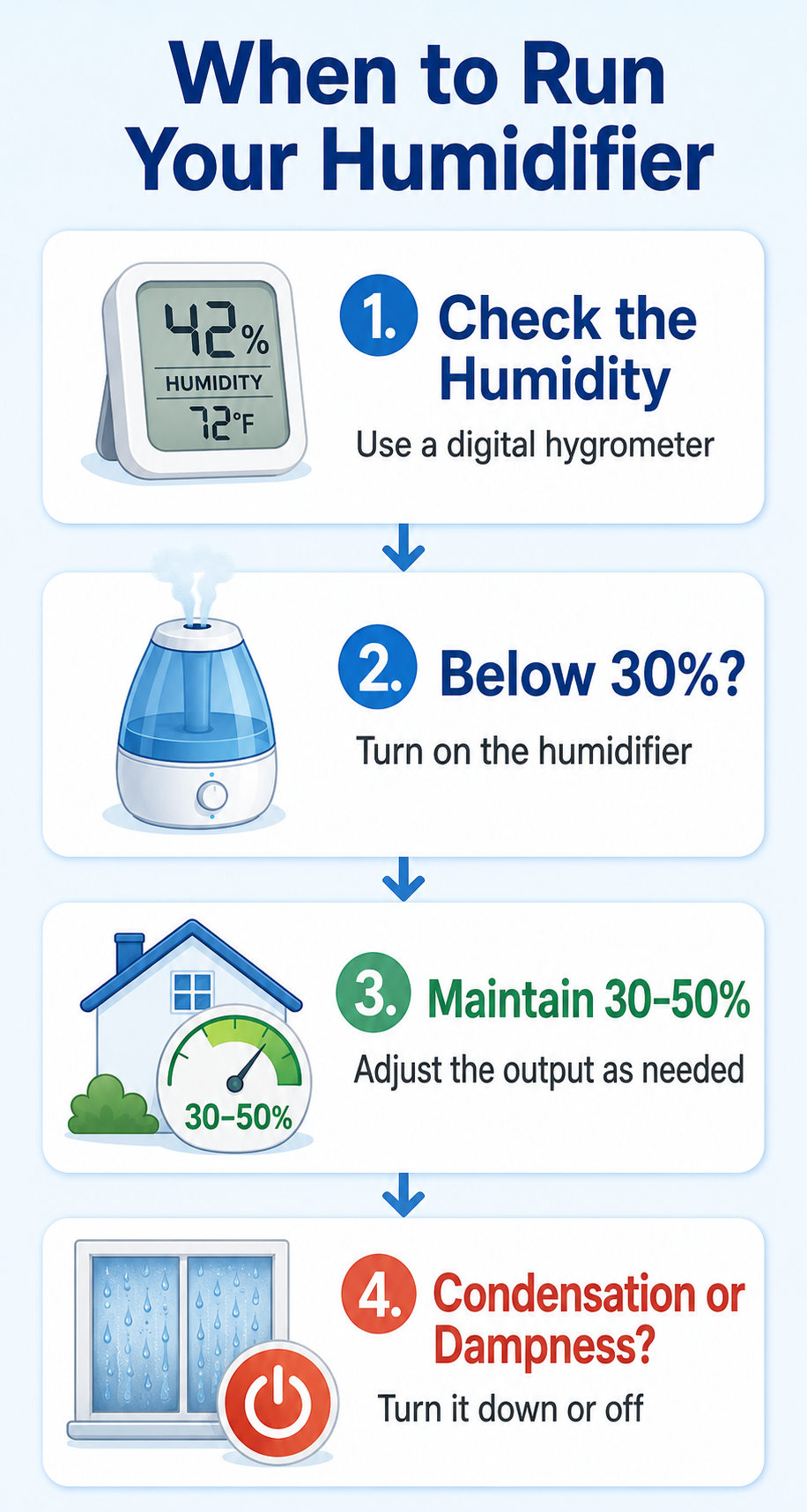
- Below 30% humidity: Turn the humidifier on.
- Between 30% and 50%: Use it only as needed to stay within this range.
- Above 50%: Turn it down or off.
- Condensation appears: Stop using it until the excess moisture clears.
Use a hygrometer instead of guessing. Check the humidity near the area where you use the humidifier—not directly beside its mist outlet, where the reading may be artificially high.
Use It Safely
- Empty and rinse the tank daily; clean it according to the manufacturer’s instructions.
- Use distilled water in ultrasonic models if tap water creates white mineral dust.
- Never let nearby surfaces remain damp. Excess moisture can encourage mold and dust mites.
- Keep warm mist away from children and pets because hot water and steam can cause burns.
Continue With the Complete Humidifier Guide
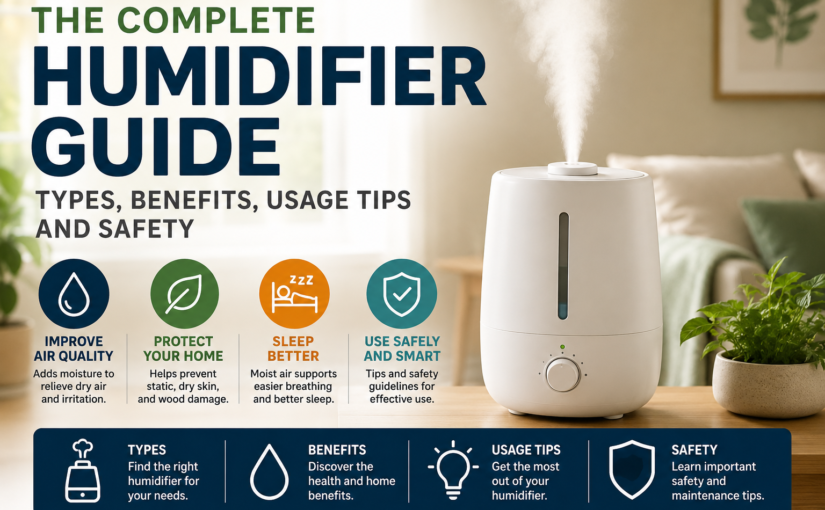
That is the short version. The complete guide below explains how each type of humidifier works, how to choose the correct size, what water to use, how to clean the unit, and how to solve common humidifier problems.
How Do Humidifiers Work?
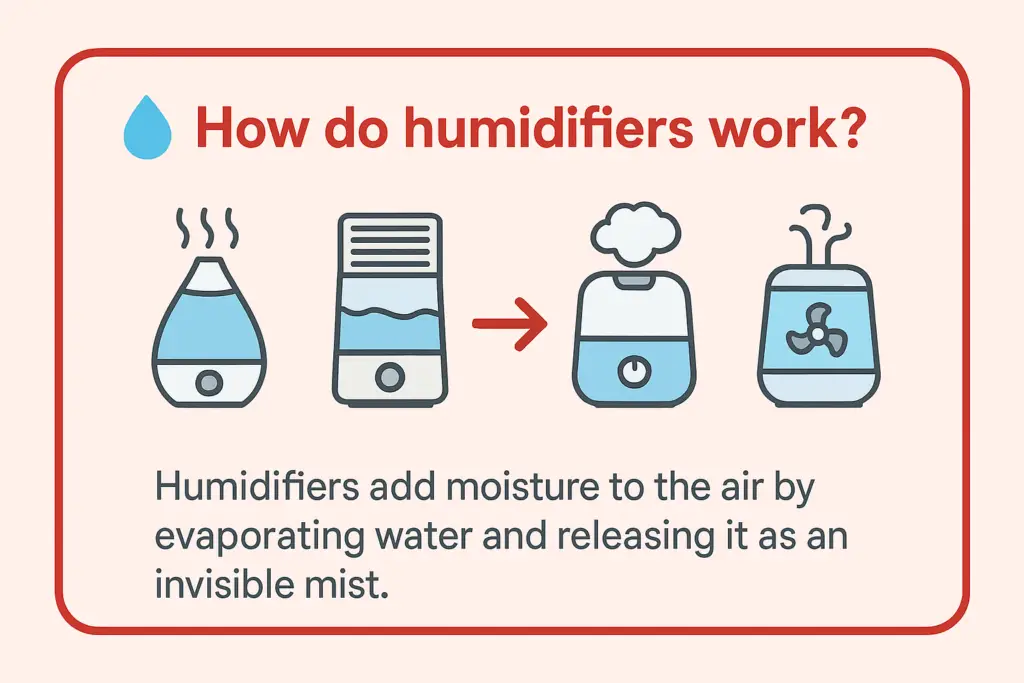
Humidifiers increase the moisture content in the air to improve comfort and health. They work by releasing water vapor or mist into your indoor environment, helping to counteract dry air—especially during colder months when indoor heating systems reduce humidity levels.
There are several types of humidifiers, each using a different method to disperse moisture:
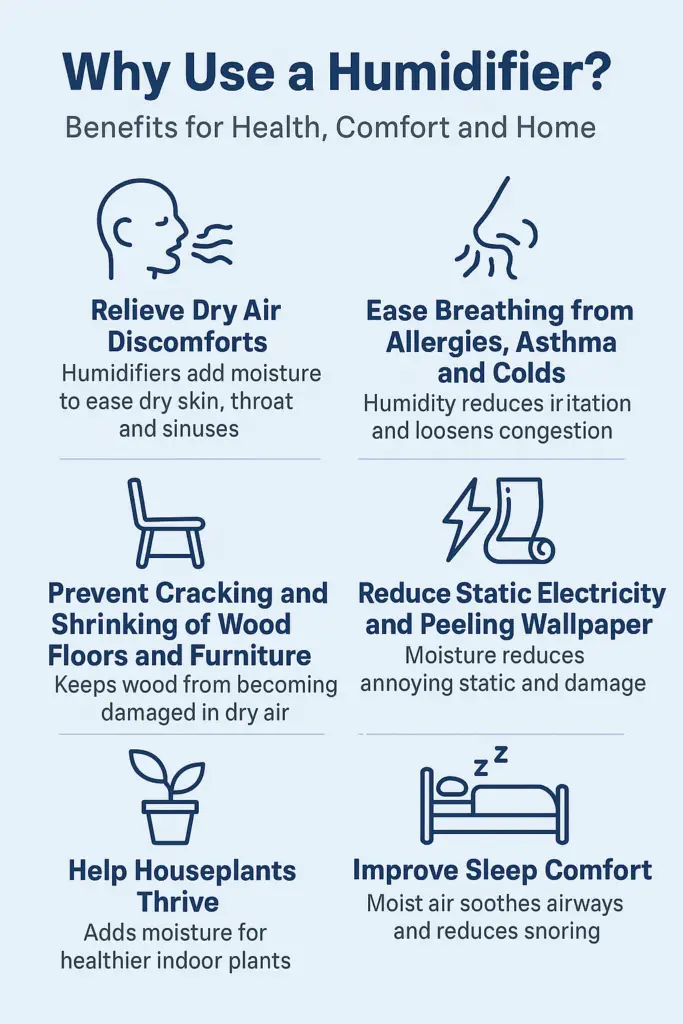
- Evaporative humidifiers use a wick filter and a fan. Air is blown through the damp wick, causing moisture to evaporate into the room.
- Ultrasonic or impeller humidifiers use high-frequency vibrations to turn water into a fine mist that’s released into the air.
- Steam vaporizer humidifiers boil water to create steam, which is cooled slightly before being released into the room.
The ideal indoor humidity level is typically between 30% and 50%. When air becomes too dry, it can cause a range of problems — including static electricity, dry throat, itchy skin, cracked lips, and even nosebleeds.
Using a humidifier can help relieve breathing issues caused by dry air. This includes symptoms from allergies, asthma, colds, and sinus infections. By keeping nasal passages moist, it also helps loosen mucus and improve congestion.
Dry air doesn’t just affect your health — it also impacts your home. Humidifiers help prevent cracking in wood floors, furniture, and musical instruments. They also reduce peeling wallpaper and protect houseplants that need adequate humidity to thrive.
During the winter, when heating systems are running, humidifiers are especially useful for restoring balance to indoor air. They help maintain comfort, preserve indoor materials, and make the air easier to breathe.
Why Use a Humidifier?
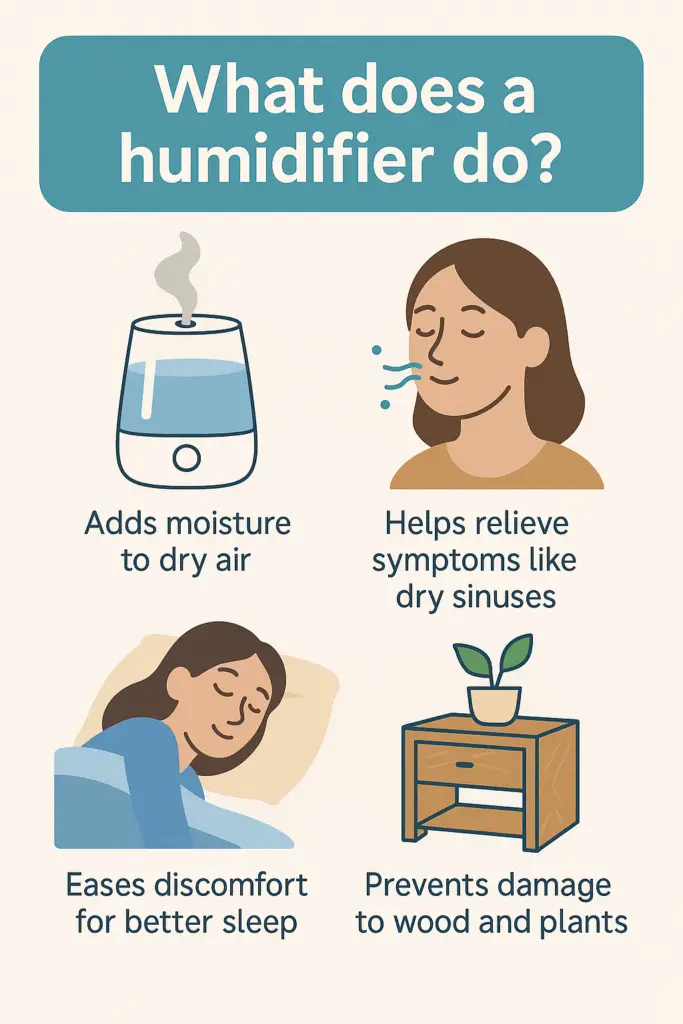
Humidifiers help fix many frustrating problems caused by dry indoor air. If you’ve ever dealt with itchy skin, a dry throat, cracked lips, or sinus irritation during winter, low humidity is likely to blame.
One of the biggest benefits of a humidifier is relief from respiratory discomfort. Dry air can inflame nasal passages and worsen symptoms from colds, allergies, asthma, bronchitis, and sinus infections. By adding moisture, humidifiers loosen mucus, reduce inflammation, and make it easier to breathe.
Humidifiers can improve sleep comfort and reduce snoring. If you wake up congested, coughing, or with a dry mouth, adding moisture to the air while you sleep can help. Babies and children often sleep better when the air isn’t too dry.
Low humidity can damage your home and furnishings over time. Wood flooring and furniture may shrink, crack, or warp when exposed to prolonged dryness. Wallpaper may peel, and static electricity shocks become more common. A humidifier helps preserve materials by stabilizing moisture levels.
Houseplants also benefit from increased humidity levels. Signs of dry air stress in plants include brown leaf tips, drooping leaves, and stunted growth. Running a humidifier near plants mimics their natural environment and helps them thrive.
There’s also some evidence that humidifiers may help reduce the spread of airborne viruses. Maintaining humidity between 40–60% may cause virus droplets to fall out of the air more quickly, reducing transmission risk—especially during flu season.
From better breathing and skin to protecting your home and health, humidifiers offer many everyday benefits. They’re a simple tool that can make a big difference during the dry months.
Types of Humidifiers
Popular Humidifier Brands Worth Considering
Shopping for a humidifier can feel overwhelming because there are dozens of models on the market. Fortunately, a handful of manufacturers consistently appear in expert reviews, best-seller lists, and homeowner recommendations. The best humidifier isn’t simply the most expensive—it’s the one that matches your room size, preferred maintenance level, desired noise level, and the type of humidity control you need.
Well-Known Humidifier Lines
Levoit Classic 300S Smart Ultrasonic Humidifier
One of the most popular smart humidifiers for bedrooms and medium-sized rooms. It offers Wi-Fi app control, a built-in humidistat, automatic humidity adjustment, top-fill convenience, and very quiet operation. Levoit is frequently recommended for homeowners who want modern smart-home features without spending premium prices.
Honeywell HCM-350 Cool Moisture Humidifier
A long-time favorite evaporative humidifier that uses a wick filter and fan. Because evaporative models naturally slow their moisture output as humidity rises, they’re often recommended for homeowners who want steady humidity without accidentally over-humidifying a room.
Vicks Warm Mist Humidifier
A classic warm mist model commonly used during cold and flu season. Many versions include a medicine cup for compatible Vicks inhalants, producing soothing warm vapor that many users find comforting during congestion. Because warm mist humidifiers generate hot steam, they should always be kept out of reach of children and pets.
Dyson Purifier Humidify+Cool
A premium all-in-one appliance that combines humidification, HEPA air purification, and fan cooling in a single unit. Automatic sensors continuously monitor indoor air quality and humidity, making it popular with homeowners looking for advanced air quality management and smart controls.
Canopy Humidifier
Known for its easy-to-clean design, Canopy uses evaporative technology and dishwasher-safe components to help reduce mold and bacteria buildup inside the unit. Its maintenance-focused design has made it increasingly popular with families concerned about hygiene.
Venta Airwasher
Unlike traditional humidifiers, Venta Airwasher systems use evaporative technology to add moisture while helping capture larger airborne particles at the same time. Many owners appreciate the low-maintenance design that doesn’t require disposable wick filters.
AprilAire Whole-House Humidifiers
Rather than humidifying a single room, AprilAire systems connect directly to your home’s HVAC system to maintain comfortable humidity throughout the entire house. They’re a popular choice for homeowners looking for a permanent whole-home humidity solution.
Buying Tip: Brand name is only one part of the equation. Before choosing a humidifier, compare:
- Room coverage (square footage)
- Cool mist vs. warm mist operation
- Ultrasonic vs. evaporative technology
- Noise level
- Tank size and runtime
- Cleaning requirements
- Built-in humidistat and automatic controls
- Smart features like Wi-Fi or app control
Remember: Even the highest-rated humidifier can create problems if it’s oversized, poorly maintained, or used in an already humid room. For most homes, maintaining an indoor humidity level between 30% and 50% is more important than choosing any particular brand or model.
There are several main types of humidifiers, and each works differently to add moisture to the air. The best one for you depends on your room size, how quiet you want it to be, and how much maintenance you’re willing to do.
Cool Mist (Evaporative) Humidifiers
Evaporative humidifiers use a wick filter and a fan to release cool moisture into the air. These are among the most common types and do not use heat.
- Pros: Safe around kids, good for large spaces, energy efficient
- Cons: Fan noise, wick filters can grow mold if not cleaned, may leave white dust from minerals
Best for: bedrooms, offices, living rooms
Warm Mist Humidifiers
Warm mist models boil water and release steam into the air. This makes them ideal for colds and congestion, but they do use more energy.
- Pros: Soothing warm vapor, can kill bacteria, helps with congestion
- Cons: Hot steam can be unsafe for kids/pets, mineral buildup, higher electricity usage
Best for: bedrooms (without kids), bathrooms
Ultrasonic Humidifiers
Ultrasonic humidifiers use high-frequency vibrations to create a fine mist. They’re extremely quiet and energy efficient.
- Pros: Very quiet, energy-saving, no filter needed
- Cons: Can release white dust, must be cleaned to prevent mold
Best for: baby rooms, offices, bedrooms
Impeller Humidifiers
Impeller (centrifugal) humidifiers use a spinning disc to fling water into the air as droplets. These are less common but can cover large spaces.
- Pros: High mist output, no heating element, no filters
- Cons: Noisy, high condensation, use a lot of water
Best for: greenhouses, warehouses, large rooms
Whole House Humidifiers
Whole-house models connect to your central HVAC system and humidify every room through the air ducts. They’re ideal for consistent, home-wide humidity.
- Pros: Covers entire home, set-it-and-forget-it, no portable units needed
- Cons: More expensive, professional install required, ducts must be maintained to prevent mold
Best for: entire home humidity control
Portable Personal Humidifiers
These are small units designed for single rooms, desks, or travel. They’re lightweight, simple, and easy to refill.
- Pros: Low cost, easy to move, convenient for personal use
- Cons: Low mist output, frequent refills, not powerful enough for large rooms
Best for: travel, bedrooms, nurseries, desk spaces
Smart Humidifiers
Smart humidifiers connect to Wi-Fi or voice assistants and allow app-based control and monitoring.
- Pros: Remote control, programmable schedules, humidity tracking, alerts
- Cons: Higher cost, app issues, still need manual cleaning
Best for: tech-savvy users, remote management, see more
Top Fill Humidifiers
Top-fill designs make refilling water easy without removing the tank from the base.
- Pros: Mess-free filling, easier to clean, convenient for daily use
- Cons: Must still be cleaned regularly, can be heavy when full
Best for: convenience and frequent use
Tower Humidifiers
Tower humidifiers are tall, floor-standing units with a vertical mist output. They save floor space and often include wheels for mobility.
- Pros: Small footprint, portable, good mist reach
- Cons: Easier to knock over, harder to lift when full
Best for: floor placement, medium to large rooms
Combination Humidifiers with Essential Oil Trays
These humidifiers not only add moisture to the air but also allow you to diffuse essential oils for added aroma and potential wellness benefits. They typically feature a separate tray or compartment for oils so the main water tank stays clean.
- Pros: Dual function (humidifying + aromatherapy), pleasant scents, can help mask odors
- Cons: Some oils can damage plastic parts, potential for overuse of scents, added cleaning required
Best for: users who want humidity and fragrance in one device, living rooms, bedrooms, or relaxation spaces
There’s no one-size-fits-all humidifier — the best choice depends on your room, your health needs, and how hands-on you want to be with maintenance.
Placement Tips for Maximum Efficiency
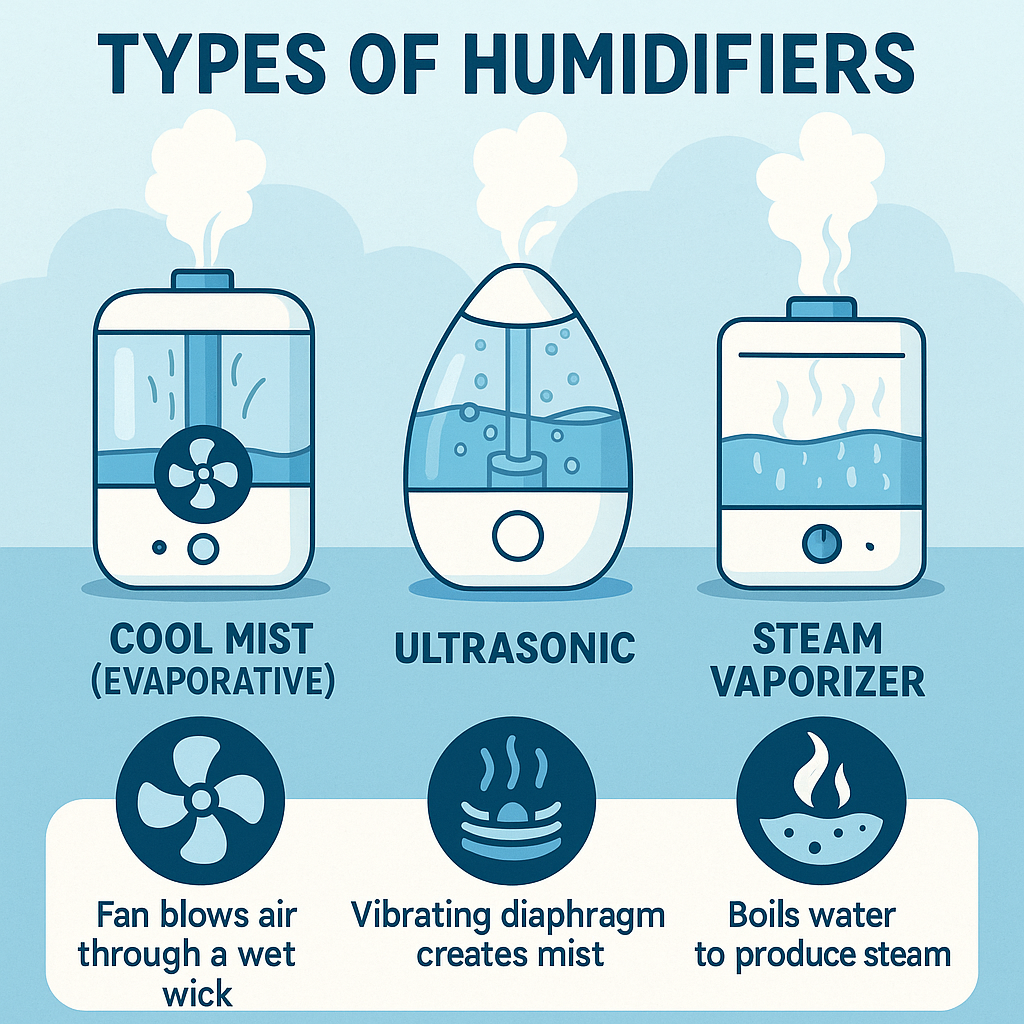
Where you put your humidifier affects how well it works. Proper placement helps the mist circulate evenly, avoids over-saturation in one area, and prevents damage to furniture or electronics.
Choose a stable, level surface. Place the humidifier on a flat, elevated surface like a table, shelf, or stand. Avoid putting it directly on carpet or wood floors, where moisture could cause damage or encourage mold underneath.
Keep it away from walls and vents. Place the unit at least 6–12 inches from any walls so mist can circulate freely. Avoid setting it near heating or air conditioning vents, which can disrupt the mist’s flow or dry the air too quickly.
Adjust the height for best mist dispersal. For ultrasonic and cool mist models, place the unit above furniture but below head level so the mist enters the breathing zone. Warm mist rises more easily, so it can be positioned slightly lower.
Avoid direct sunlight. Sunlight can encourage algae growth inside the tank and discolor the unit. Keep the humidifier in a shaded, well-ventilated area away from windows.
Don’t place it too close to beds or desks. While you want the mist nearby, placing a humidifier too close can cause damp bedding, papers, or condensation buildup. A few feet away is best for comfort and safety.
Put it near houseplants if needed. Plants love humidity. Placing a humidifier nearby can help revive droopy or browning leaves, especially in winter months.
Use multiple units for large rooms. If one humidifier isn’t powerful enough, use two smaller ones on opposite ends of the room. This provides more even moisture distribution without oversaturating one spot.
Top-fill and wheeled units offer placement flexibility. Top-fill designs are easier to refill no matter where you place them. Floor models with wheels (like tower humidifiers) can be moved to the warmest or driest area of the room.
Check your model’s user manual. Some humidifiers have unique airflow needs or safety clearance requirements. Follow any manufacturer-specific guidance to get the most out of your device.
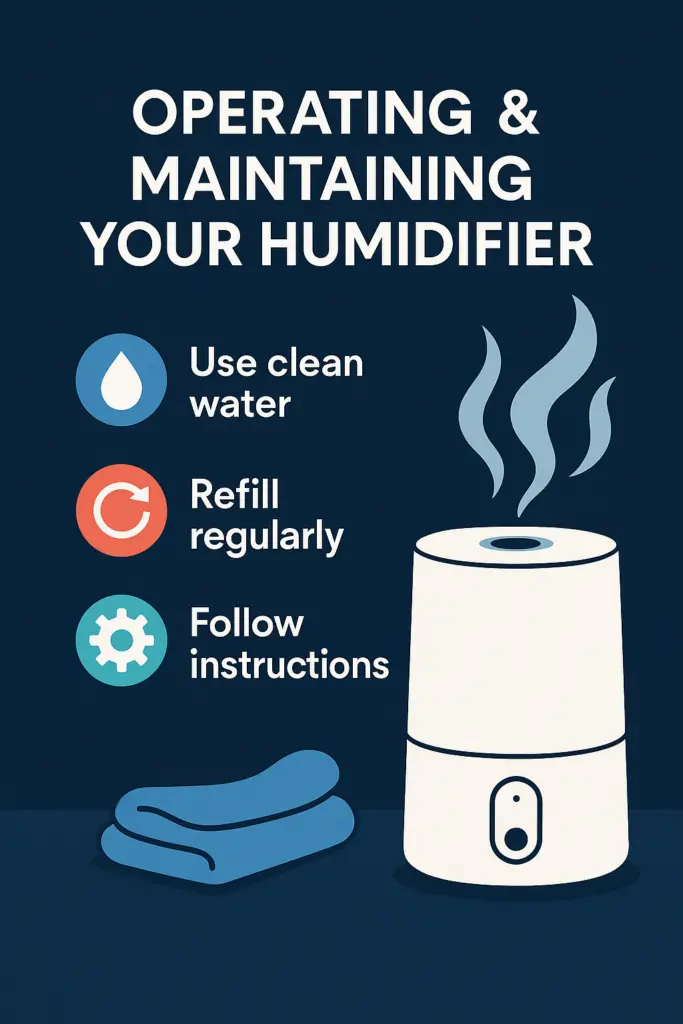
Operating and Maintaining Your Humidifier
To keep your humidifier running efficiently and safely, regular cleaning is a must. Skipping maintenance can lead to mold growth, bacteria buildup, and poor mist output.
🗓️ Daily Tasks
- Check and refill the water tank daily — don’t let it run dry.
- Empty and rinse the tank each day to reduce bacteria buildup.
- Wipe down the exterior with a clean, damp cloth to remove dust or mineral spots.
- Inspect the filter or wick (if applicable) and make sure it’s not moldy or discolored.
🧽 Weekly Maintenance
- Deep clean all parts using a vinegar-water solution (1:1 ratio) to dissolve mineral buildup.
- Disinfect the tank using a mild bleach solution (1 tsp bleach per gallon of water). Let sit, then rinse thoroughly.
- Scrub filters and wicks gently with a soft brush if reusable. Replace if damaged or moldy.
- Clean heating elements (for warm mist models) to remove scale and prevent odor.
📆 Yearly Tasks or End-of-Season Care
- Do a full system cleaning before storing the humidifier at the end of winter.
- Replace filters, wicks, or desiccant packs so they’re fresh for next season.
- Inspect for leaks or cracks in tanks and hoses.
- Store in a dry, cool place to avoid mildew buildup while not in use.
⚠️ Tips to Prevent Mold and Bacteria
- Always use clean, fresh water. Filtered or distilled is best.
- Let parts dry fully between uses — especially inside the tank.
- Don’t leave water standing in the unit when not in use.
- Follow the cleaning steps in your owner’s manual and stick to the schedule.
Consistent maintenance not only extends the life of your humidifier, but it also protects your health. A dirty unit can spread bacteria into the air — so stay on top of cleaning tasks year-round.
What Kind of Water to Use in a Humidifier
Using the right water in your humidifier helps prevent buildup, extend lifespan, and protect your air quality. Tap water may be convenient, but it’s not always the best option for your machine — or your lungs.
✅ Best Options
- Distilled Water: The gold standard. It’s free of minerals, reduces white dust, and prevents scaling inside the unit.
- Filtered Water: A solid alternative if you don’t have distilled on hand. Use a high-quality carbon or reverse osmosis filter to reduce minerals.
- Bottled Water (Labeled “Purified” or “Demineralized”): Safe to use, especially if labeled as distilled or reverse osmosis-treated.
⚠️ Water to Avoid
- Tap Water: Contains minerals like calcium, magnesium, and silica that can cause white dust, clog parts, and encourage bacteria growth.
- Well Water: Typically high in iron and minerals, making it even more prone to scaling and bacterial contamination. Avoid unless filtered and tested.
- Hot Water: Encourages faster microbial growth and can crack some tanks. Always use cool or room-temperature water.
If you’re seeing white powder near your humidifier, you’re probably using tap water with a high mineral content. That white dust settles on surfaces and may irritate your lungs — especially for people with allergies or asthma.
To keep your air clean and your humidifier running smoothly, stick with distilled or filtered water whenever possible. It’s a small extra step that prevents big problems later.

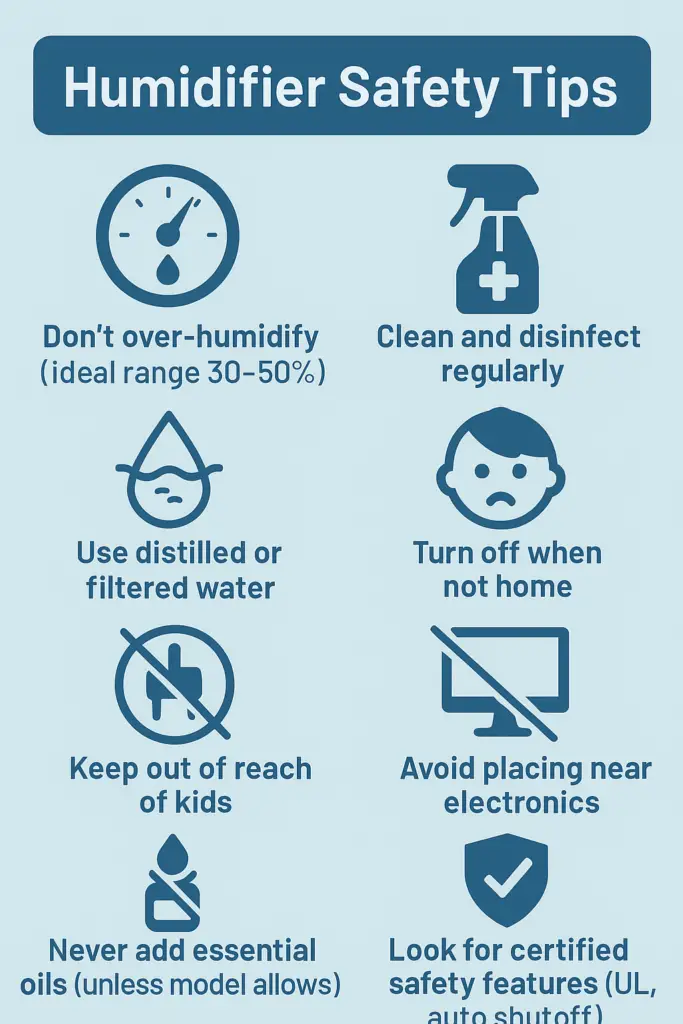
Humidifier Safety Tips and Potential Risks
While humidifiers offer many health benefits, using them incorrectly can create new problems — like mold growth or even burns. Follow these safety tips to protect yourself, your home, and your air quality.
✅ General Safety Guidelines
- Don’t over-humidify your space. Keep indoor humidity between 30–50%. Higher levels encourage mold, dust mites, and condensation on walls and windows.
- Use a hygrometer (or humidifier with built-in sensor) to monitor levels. Adjust mist output accordingly.
- Clean your humidifier regularly. Daily rinsing and weekly disinfecting are critical to avoid harmful bacteria or mold entering the air.
- Always use clean, filtered, or distilled water. Tap and well water can introduce minerals, metals, and contaminants into the air as white dust.
⚠️ Safety for Children and Pets
- Never place a warm mist humidifier near children or pets. The boiling water and steam can cause serious burns if tipped over.
- Position humidifiers where they cannot be knocked over. Use stable surfaces and avoid locations within reach of little hands or tails.
🧯 Electrical and Home Safety
- Turn off the humidifier when you’re not home. This prevents over-humidifying and potential overheating or electrical risks.
- Keep the unit away from electronics and power strips. Moisture from mist can damage components over time.
- Watch for condensation on windows and walls. This can lead to mildew and rot if left unchecked. Reduce mist output or run in intervals.
🚫 What NOT to Do
- Do not add essential oils to the water tank unless your model specifically allows it. Oils can damage components and release harmful VOCs when heated.
- Do not run the unit nonstop without checking the humidity level. “Set-it-and-forget-it” can lead to moisture problems fast.
To use a humidifier safely, think of it like a mini appliance — one that needs proper placement, cleaning, and monitoring. Used responsibly, it can be a major boost to your comfort and air quality.
Top Humidifier Features to Look For
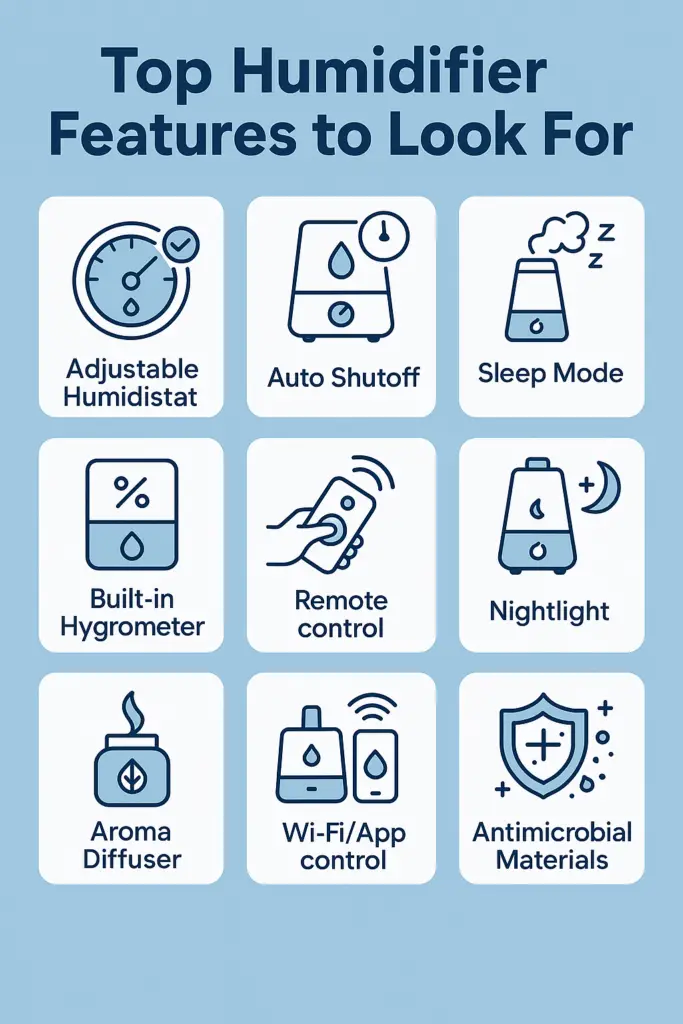
Modern humidifiers offer smart features and user-friendly options that can make a big difference in daily use. Here’s a breakdown of the most useful features to look for when buying a humidifier — whether you’re shopping for a nursery, bedroom, or whole-home setup.
🌡️ Humidity Control
- Adjustable Humidistat: Lets you set a specific humidity level (like 40%) and maintains it automatically.
- Built-in Hygrometer: Measures the current room humidity so you don’t need a separate device.
- Auto Mode: Increases or decreases mist output based on real-time humidity readings.
🛑 Convenience & Safety
- Auto Shut-Off: Turns the humidifier off when the tank is empty or your target humidity is reached — protects both the device and your home.
- Timer Function: Set it to run for 2, 4, or 8 hours. Helps prevent over-humidifying while you sleep or leave the house.
- Sleep Mode: Dims lights and runs quietly to support uninterrupted sleep — great for bedrooms and nurseries.
📱 Smart Controls
- Wi-Fi/App Connectivity: Control humidity settings from your smartphone or tablet. Some models include charts and usage logs.
- Voice Assistant Integration: Works with Alexa, Google Home, or other smart home systems for hands-free control.
💡 Other Useful Features
- Top Fill Design: Lets you refill the tank from the top without removing the base — more convenient and less mess.
- Removable Water Tank with Handle: Makes cleaning and refilling much easier.
- Nightlight: Built-in soft light — helpful for children’s rooms or nighttime visibility.
- Aroma Diffuser: A separate tray or chamber for essential oils (only safe on models that support this feature).
🦠 Antimicrobial Features
- Antimicrobial Materials: Built-in treatment to reduce bacteria and mold growth inside the tank.
- UV-C Light or Silver Ion Filters: Help kill germs in the water before mist is released into the air.
The more advanced the features, the easier it is to manage humidity levels safely and efficiently — especially in high-use areas like bedrooms or whole homes.
Top-Rated Humidifiers
Not sure which humidifier to buy? We’ve put together a free downloadable guide that compares top-rated models by size, type, and special features.
From quiet ultrasonic units for bedrooms to high-output models for large living rooms, you’ll find our personal picks based on performance, reliability, and ease of use.
Frequently Asked Questions
Q: What is the ideal humidity level for a home?
A: The ideal indoor humidity is between 30% and 50%. Below that can cause dryness and irritation; above 50% may encourage mold, dust mites, and condensation issues.
Q: How do I choose what size humidifier I need?
A: Match the unit’s output (usually listed in square feet) to your room size. A small bedroom might need a unit that covers 200–400 sq ft, while a living room may require 600–1,000 sq ft or more.
Q: What type of humidifier is best for sinus relief?
A: Both cool and warm mist models can help. Cool mist is safer and more energy-efficient. Warm mist may feel more soothing during congestion but poses burn risk around children.
Q: Can I use tap water in my humidifier?
A: You can, but it’s not ideal. Tap water contains minerals that create white dust and can clog or damage your unit. Distilled or filtered water is safer and cleaner.
Q: Why is there white dust on my furniture?
A: That’s mineral residue from hard water. It’s harmless but annoying and can irritate lungs. Use distilled water or a model with a demineralization cartridge.
Q: How often should I clean my humidifier?
A: Rinse and refill the tank daily. Disinfect weekly with vinegar or bleach (depending on the model). Always follow your manufacturer’s cleaning schedule.
Q: How do I prevent mold in my humidifier?
A: Clean it regularly, use distilled water, empty the tank daily, and let all parts dry between uses. Avoid stagnant water and never leave the tank full when off.
Q: Is it safe to run a humidifier all night?
A: Yes, if the humidity stays within the safe range (30%–50%) and the unit is placed safely. Use a model with auto shutoff or built-in humidistat for peace of mind.
Q: Where should I place my humidifier?
A: Place it on a flat, elevated surface like a table or dresser. Keep it away from walls, electronics, and direct sunlight, and at least a few feet from your bed or seating area.
Q: Can a humidifier cause mold in my house?
A: Yes — if overused. High humidity levels over 60% can cause mold on walls, windows, or furniture. Use a hygrometer and don’t exceed recommended levels.
Q: Can I add essential oils to my humidifier?
A: Only if the model is designed for it. Most humidifiers will be damaged by essential oils unless they have a dedicated aroma tray or oil-safe reservoir.
Q: What’s the difference between a humidifier and a vaporizer?
A: A humidifier adds moisture to the air without heat (cool mist), while a vaporizer creates steam by boiling water. Both add humidity, but vaporizers can feel warmer and require more power.
Q: Do I need a humidifier in summer?
A: Not usually. Humidifiers are most helpful in winter when heating systems dry out the air. However, some climates have dry summers too — check your indoor humidity to decide.
Q: Can I use a humidifier and air purifier at the same time?
A: Yes — and it’s often recommended. A humidifier adds moisture, while a purifier removes airborne particles. Just keep them a few feet apart so the purifier doesn’t pull in moist air directly.