Table of Contents
Quick Answer
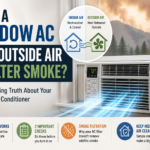
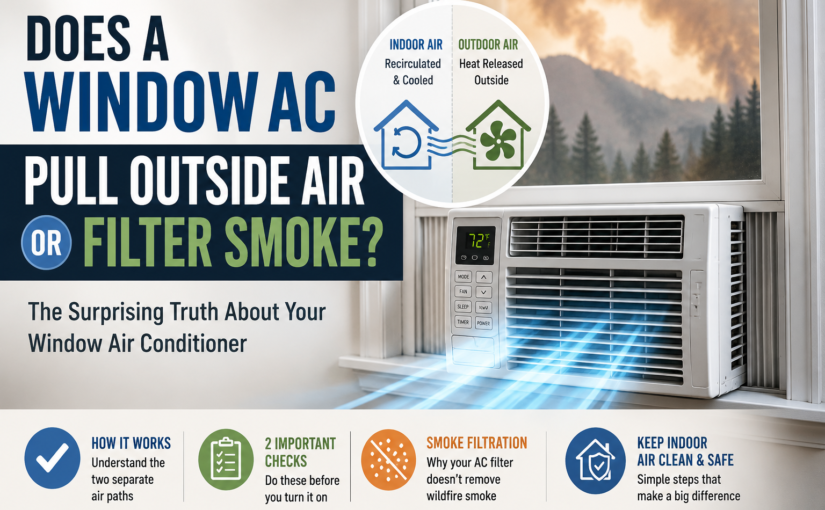
Yes. In most cases, you can safely run a standard window air conditioner during wildfire smoke, heavy pollen, traffic exhaust, strong outdoor odors, or other outdoor air quality events.
A typical window air conditioner does not cool your room by pulling outside air into your home. Instead, it recirculates the air already inside while releasing unwanted heat outdoors.
⚠️ Before you turn it on, there’s one important thing you should check first…
In this guide you’ll learn:
- ✔ Why window ACs don’t normally pull outside air indoors
- ✔ The one feature that can let smoke inside
- ✔ Two things to check before turning your AC on
- ✔ Why your AC filter doesn’t remove wildfire smoke
Many people are surprised to learn that one overlooked feature—or one simple installation mistake—can allow smoke, odors, pollen, or other outdoor pollutants to find their way indoors, even though the air conditioner itself is working exactly as it was designed.
Fortunately, it’s easy to avoid once you know what to look for.
First, let’s look at how a window air conditioner actually works and why understanding that makes all the difference.
Why People Worry About Using a Window AC During Wildfire Smoke
It seems logical to think a window air conditioner would pull smoky outdoor air into your home. After all, half of the unit sits outside the window while the other half is inside your room.
If smoke is filling the air outdoors, many people assume the air conditioner is sucking that smoky air inside and blowing it into the room.
💡 Did You Know?
Most window air conditioners don’t bring outside air into your room at all. Their primary job is to recirculate the air already inside your home, cool it, and send it back into the room while dumping heat outdoors.
That surprises a lot of homeowners because the outdoor portion of the unit looks like an air intake. In reality, it’s there primarily to release heat—not to supply fresh air to your living space.
Whether you own a Frigidaire, LG, GE, Midea, Whirlpool, Hisense, Haier, Friedrich, or another standard window air conditioner, the basic cooling principle is essentially the same. The vast majority recirculate the air already inside your room rather than pulling outside air into your living space.
Understanding that one principle makes it much easier to know when it’s safe to run your window AC—and when you should check for other ways outdoor smoke could be getting inside.
How a Window Air Conditioner Actually Works
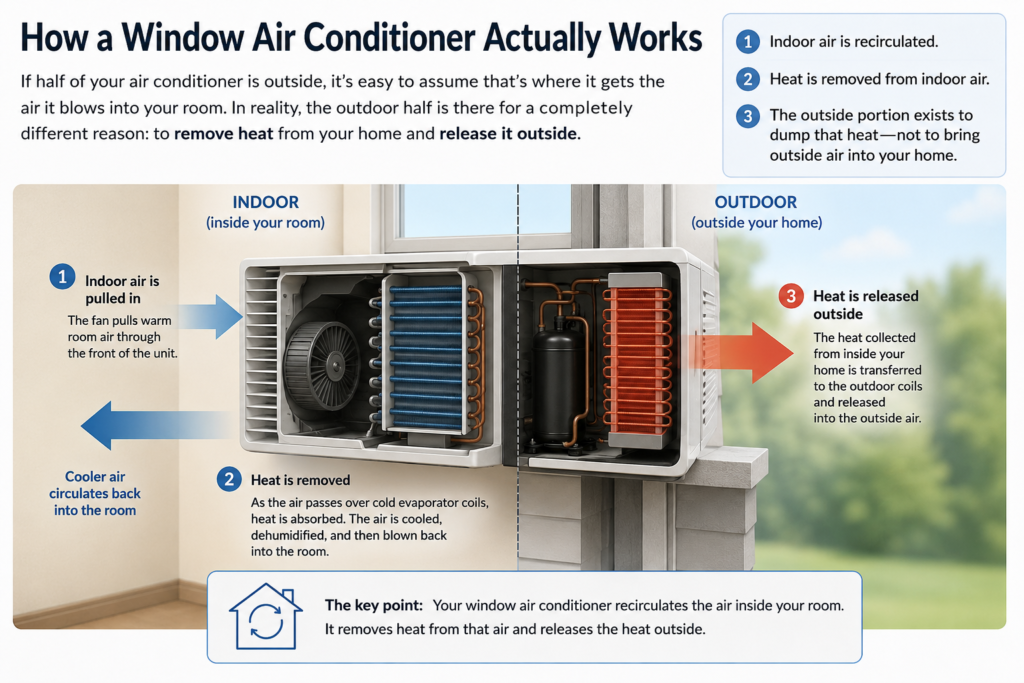
If half of your window air conditioner is outside, it’s easy to assume that’s where it gets the air it blows into your room. In reality, the outdoor half is there for a completely different reason: to remove heat from your home and release it outside.
The air you feel coming from the front of the unit is the same indoor air being pulled in, cooled, and circulated back into the room.
💡 Key Takeaway
A standard window air conditioner has two separate air paths.
- The indoor side recirculates and cools the air already inside your room.
- The outdoor side releases heat into the outside air.
Under normal operation, these two air streams remain separate, which is why a properly installed window air conditioner does not normally pull outdoor smoke into your home.
Now that you know a window air conditioner recirculates indoor air, there are just two things you should check before using one when outdoor air quality is poor.
Before You Turn Your Window AC On: Two Things to Check
Remember the one important thing we told you to check before turning your window air conditioner on?
This is it. If you get this part wrong, you might as well leave the window open.
Knowing that your window air conditioner recirculates indoor air is only part of the story. Before using it during wildfire smoke or other poor outdoor air quality events, take a minute to check these two items.
✅ Check #1: Fresh Air Vent
Some window air conditioners include a Fresh Air, Vent, or Exhaust control that allows a small amount of outdoor air into the room.
During wildfire smoke, heavy pollen, or outdoor odor events, this control should normally remain closed.
What to do:
- ✔ Look for a Vent or Fresh Air lever.
- ✔ Make sure it is in the Closed position.
- ✔ Check your owner’s manual if you’re unsure.
✅ Check #2: Air Leaks Around the Unit
Even if the air conditioner is working correctly, smoke can still enter your home through gaps around the installation.
Most unwanted outdoor air comes through loose side panels, poorly sealed window frames, or small openings around the unit—not through the cooling system itself.
What to check:
- ✔ Side accordion panels
- ✔ Foam weather stripping
- ✔ Gaps above the unit
- ✔ Cracks around the window frame
⚠️ Remember
If smoke is getting into your room, the problem is usually the installation—not the air conditioner.
Can a Window Air Conditioner Filter Wildfire Smoke?
Not very well.
Most window air conditioners use a small washable mesh filter designed to catch larger particles like dust, lint, and pet hair before they reach the evaporator coil. Keeping the coil clean helps the unit operate efficiently, but that filter was never intended to clean the air the way an air purifier does.
❌ Myth
A window air conditioner removes wildfire smoke from the air because it has a filter.
✅ Fact
The filter mainly protects the air conditioner, not your indoor air. Smoke particles are much smaller than what these filters are designed to capture.
If you’re trying to reduce wildfire smoke indoors, a portable HEPA air purifier is designed for that job. Your window air conditioner keeps the room cool, while the air purifier removes fine airborne smoke particles.
💡 Good Combination
For the best indoor comfort during wildfire smoke, let your window air conditioner cool the room while a HEPA air purifier cleans the air. The two appliances complement each other rather than replace one another.
Frequently Asked Questions
Can wildfire smoke come through a window air conditioner?
Not through the normal cooling process. However, smoke can enter if your unit has a fresh air vent that is open or if there are gaps around the installation that allow outdoor air to leak inside.
Should I turn my window air conditioner off during wildfire smoke?
Usually, no. If your unit is properly installed, the fresh air vent is closed, and your windows and doors are sealed, running your window air conditioner can help keep your home comfortable while you stay indoors.
Does the filter in a window air conditioner remove smoke particles?
No. The washable filter is designed to capture larger particles like dust and lint to protect the air conditioner. It is not a HEPA filter and is not designed to remove the tiny particles found in wildfire smoke.
Can I install a HEPA filter in my window air conditioner?
Generally, no. Window air conditioners are engineered for a specific amount of airflow. Installing a HEPA filter can severely restrict airflow, reduce cooling performance, and may even damage the unit. If you want cleaner indoor air, use a separate portable HEPA air purifier.
What if my room still smells like smoke while the AC is running?
The smoke odor is often entering through small gaps around the window or from another opening in the home rather than through the air conditioner itself. Check the installation carefully and inspect weather stripping, side panels, and other potential air leaks.
Bottom Line
Most window air conditioners do not pull outside air into your home while cooling.
- ✓ They recirculate the air already inside your room.
- ✓ Keep the fresh air vent closed during wildfire smoke.
- ✓ Seal gaps around the installation.
- ✓ Use a portable HEPA air purifier if you want to reduce smoke particles indoors.
With those simple steps, you can usually continue using your window air conditioner safely even when outdoor air quality is poor.