Table of Contents
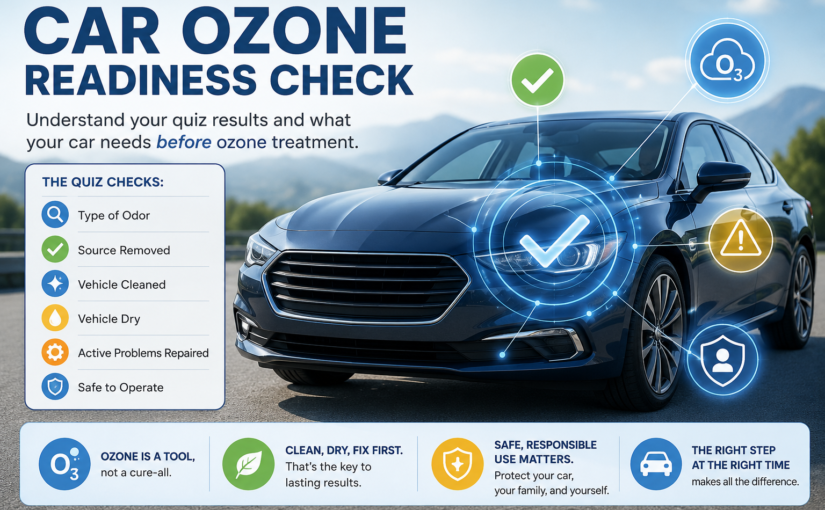
CAR OZONE READINESS CHECK
Understanding why the quiz asked each question—and what your answers mean.
The Car Ozone Readiness Check is not designed to tell everyone to use an ozone generator.
In fact, many people discover they are not quite ready for ozone yet—and
that is a useful result.
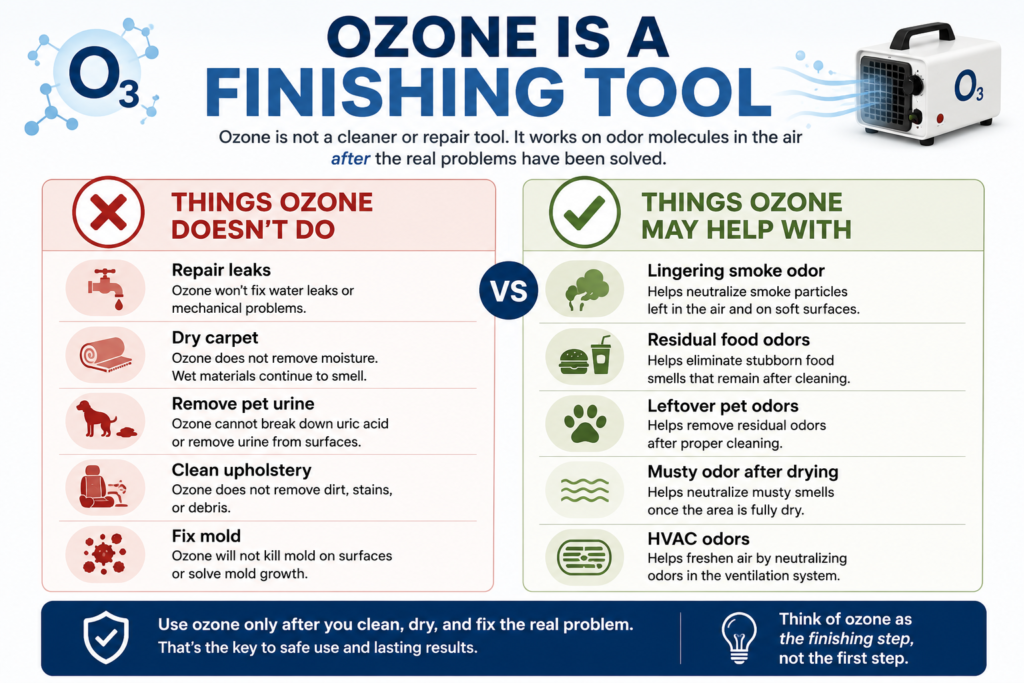
Ozone is usually the last step in odor removal, not the first.
Every question in the quiz helps determine whether ozone is likely to help or whether
cleaning, drying, removal, repair, or further investigation should come first.
New here?
If you haven’t taken the Car Ozone Readiness Check, start there first.
In about two minutes, you’ll get a personalized recommendation based on your vehicle,
the type of odor, and whether ozone is likely to help.
New here?
Take the Car Ozone Readiness Check
Get a personalized recommendation based on your vehicle, the odor source,
and whether ozone is likely to help.
Why the Type of Odor Matters
Some odors are good candidates for ozone. Others are warning signs that
require a completely different solution.
Ozone may help with lingering smoke, stale food, pet, and other organic odors after
the original source has been removed and the vehicle has been cleaned.
Gasoline, exhaust, coolant, burning electrical components, and strong chemical smells
are different. They may indicate an active leak, mechanical defect, or safety problem.
Those conditions should be investigated rather than treated as ordinary odor problems.
either the right finishing tool—or the wrong tool entirely.
Why the Odor Source Must Be Removed
If something is still producing the odor, ozone will not permanently solve
the problem.
Imagine spilled milk beneath a seat. Ozone may reduce the smell temporarily, but the
milk is still there. As long as the source remains, it can continue producing odor.
The same principle applies to:
- Pet urine trapped in carpet padding or seat foam
- Rodent nests, droppings, or contaminated insulation
- Food spills beneath seats or trim
- Mold-contaminated materials
- Smoke residue coating interior surfaces
- A dead animal inside the ventilation system
cannot remove the material that is creating them.
 Why Cleaning Comes Before Ozone
Cleaning removes much of the odor before ozone is ever needed.
Smoke residue, food oils, dust, pet contamination, and other odor-holding materials
cling to dashboards, upholstery, carpet fibers, headliners, vents, and cabin air filters.
Ozone is not a substitute for physically removing that contamination.
Vacuuming, wiping hard surfaces, shampooing appropriate fabrics, cleaning affected
HVAC components, and inspecting the cabin filter may solve most—or sometimes all—of
the problem.
If a lingering odor remains after cleaning, ozone has a much better chance of reaching
and treating it effectively.
for detailing and source removal.
Why Moisture Changes Everything
Moisture usually means the odor problem is still active.
Wet carpet padding, leaking door seals, windshield leaks, clogged air-conditioning
drains, flood damage, and hidden condensation can continue producing musty odors.
The surface may feel dry while padding or insulation underneath remains wet.
Ozone cannot repair a leak or dry the vehicle. It may temporarily change the smell,
but the odor is likely to return while damp material remains.
than simply planning a longer ozone treatment.
Why Active Problems Must Be Repaired
Some smells are warnings—not odor problems.
Gasoline, exhaust, coolant, overheated wiring, burning plastic, oil, or recurring
water intrusion may indicate an active mechanical, electrical, or structural issue.
Using ozone does not make those conditions safe. It may also delay the diagnosis by
changing or temporarily covering the warning smell.
leak, electrical warning, or other possible safety issue.
Why Safe Operation Matters
Ozone works because it is highly reactive. That same reactivity means it must
be used responsibly.
- Never remain inside the vehicle while the generator is operating.
- Keep other people and pets away from the treatment area.
- Follow the instructions supplied with the specific machine.
- Use a dependable timer or another safe method of controlling the generator.
- Ventilate the vehicle thoroughly before anyone re-enters.
- Avoid unnecessarily long, high-output, or repeated treatments.
More ozone is not automatically better. Excessive exposure can increase risks to
people and may accelerate deterioration of susceptible materials such as natural
rubber, elastic components, certain fabrics, dyes, coatings, or adhesives.
vehicle and the materials inside it.
When Ozone Is Actually the Right Tool
Ozone works best after the hard work has already been done.
A vehicle is a better candidate for ozone treatment when it has already been:
- Cleared of the original odor source
- Thoroughly cleaned
- Dried completely
- Repaired if a leak or mechanical problem was present
- Prepared for safe, unoccupied treatment
At that point, ozone may help treat lingering odors that remain in upholstery,
crevices, and ventilation pathways after conventional cleaning.
 Understanding Your Quiz Result
 Understanding Your Quiz Result
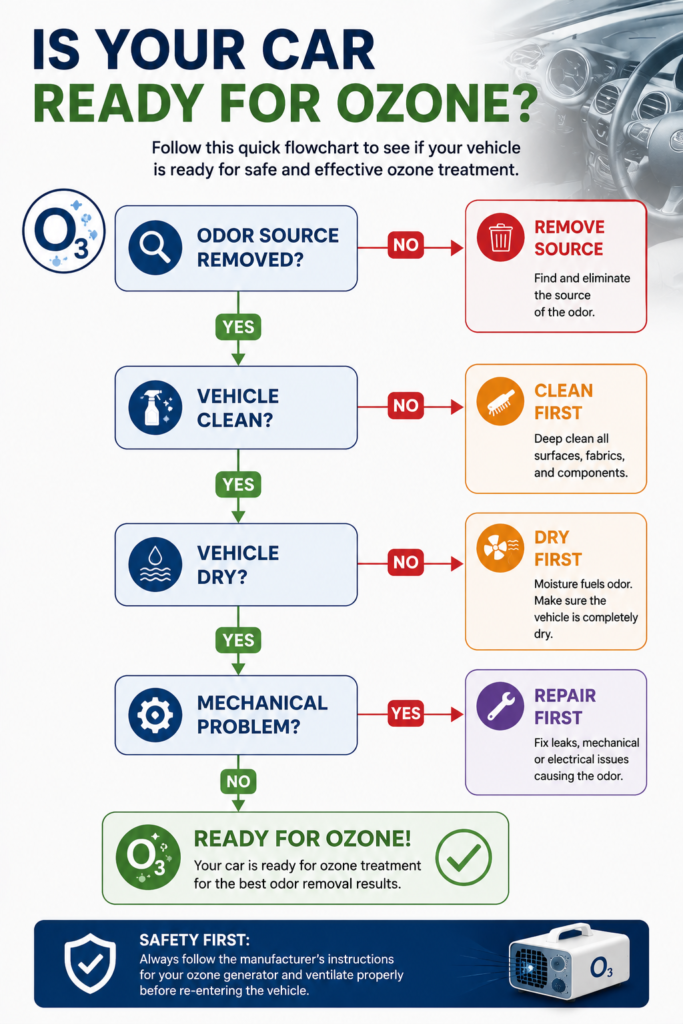
Your result identifies the most important step between your vehicle’s current condition
and a potentially successful ozone treatment.
Ready for Ozone
Your answers suggest that the conditions most likely to interfere with ozone have
already been addressed. The source appears to be gone, the interior has been cleaned
and dried, no active leak or mechanical warning was identified, and the treatment
can be completed safely.
This result does not guarantee that every trace of odor will disappear. It means
ozone now makes sense as a finishing step rather than an attempt to bypass cleaning
or repair.
conservatively according to its instructions.
Clean First
Your answers suggest that odor-holding residue may still be inside the vehicle.
Smoke film, food oils, dust, contaminated upholstery, carpet fibers, vents, or the
cabin air filter can continue holding and releasing odor.
Treating before cleaning may produce disappointing or temporary results. In many
cases, a thorough cleaning removes most of the smell without ozone.
the HVAC system and cabin filter, and reassess the odor afterward.
Dry First
Your answers suggest that moisture is present or has not been fully ruled out.
Damp carpet, wet padding, clogged drainage, leaking seals, or hidden water intrusion
can continue producing odor even after the visible surface seems dry.
Ozone cannot remove that moisture. Treating too early may change the smell temporarily
while leaving the real cause untouched.
necessary, and dry all affected materials completely.
Remove the Source
Your answers indicate that something may still be producing the odor. Possible
sources include food, pet contamination, rodent material, smoke residue, moldy
materials, or another substance trapped beneath carpet, trim, or upholstery.
As long as that material remains, it can continue releasing odor after treatment.
Ozone may reduce the smell for a time, but the result is unlikely to last.
causing the odor. Reconsider ozone only for the residual smell that remains.
Repair the Source
Your answers suggest that the smell may be connected to an active condition rather
than leftover odor. Gasoline, exhaust, coolant, overheated wiring, oil, or recurring
water intrusion may require inspection and repair.
Ozone should not be used to disguise a warning smell. Repairing the underlying issue
protects the vehicle and its occupants and prevents the odor from returning.
electrical problem, or water intrusion diagnosed and repaired first.
Need More Information
Your answers did not provide enough information to establish what is causing the
odor or whether ozone is the appropriate next step.
Guessing often leads to repeated treatments and frustration. Details such as where
the smell is strongest, when it appears, whether the HVAC affects it, and what makes
it better or worse can help identify the actual cause.
mechanic, leak specialist, or restoration professional to help identify it.
Still Have Questions?
These are some of the most common questions people ask before using an ozone generator
in a vehicle.
Will ozone damage my leather seats?
Occasional, carefully controlled treatments are different from repeated or excessively
long exposure. Overuse may accelerate the aging of leather finishes, dyes, stitching,
adhesives, or nearby susceptible materials. Avoid unnecessary repeat treatments and
follow the generator manufacturer’s instructions.
Will ozone dry out rubber seals or weatherstripping?
Natural rubber is particularly susceptible to ozone, and prolonged or repeated exposure
can contribute to cracking or deterioration. Modern vehicles contain different blends
of rubber and synthetic materials, so the safest approach is to use only the amount of
treatment needed.
Can ozone crack or fade the plastic inside my car?
One conservative treatment is different from repeated high-concentration exposure.
Plastics, coatings, dyes, and foam can vary considerably between vehicles. Avoid the
assumption that a longer treatment is automatically more effective.
Can ozone damage my car’s electronics?
Properly controlled vehicle treatments are not intended to damage modern electronics.
However, unnecessary high concentrations or very long treatments increase exposure
without guaranteeing better odor removal. That is another reason to follow the machine’s
instructions instead of improvising an extreme treatment.
Can I stay in the car while the ozone generator is running?
No. People and pets should not occupy the vehicle during treatment. The generator
should be operated and controlled without entering an ozone-filled cabin.
How long should I air out the vehicle afterward?
Follow the ventilation and re-entry instructions supplied with your generator.
Open the doors or windows and allow the cabin to ventilate thoroughly before anyone
enters or drives the vehicle.
Do I need a respirator when I open the vehicle?
The safer approach is to avoid opening the vehicle while the ozone concentration is
still elevated and then leaning into the cabin. Use a setup that allows the treatment
to stop without entering, allow the recommended waiting period, and ventilate from
outside.
Is it safe to use an ozone generator in a garage?
Ozone escaping from a vehicle can affect the surrounding space. An attached or poorly
ventilated garage can expose people or pets elsewhere in the building. Follow the
manufacturer’s location requirements and make sure the treatment area can remain
isolated and properly ventilated.
Should the windows stay open or closed during treatment?
Vehicles are commonly treated with the windows and doors closed so the ozone remains
inside the cabin. After treatment, the vehicle must be opened and ventilated thoroughly.
Follow the procedure provided for the specific generator.
Should I run the air conditioner during treatment?
Some vehicle-treatment procedures use the fan and recirculation mode to move treated
air through the vents and HVAC pathways. That does not mean every generator should be
used the same way. Follow the equipment instructions and avoid entering an ozone-filled
vehicle to change controls.
Should I remove or replace the cabin air filter?
A contaminated filter can hold and redistribute smoke, mildew, pet, and other odors.
Inspect it during the cleaning process and replace it when it is dirty or odor-contaminated.
Ozone is not a substitute for replacing a filter that is part of the problem.
Can ozone permanently remove cigarette smoke?
Ozone can help with lingering smoke odor after nicotine, tar, ash, and smoke residue
have been cleaned from surfaces and fabrics. If heavy residue remains, the odor may
return regardless of how long the generator runs.
Can ozone remove pet urine odor?
Only after the urine source has been thoroughly treated or removed. Ozone cannot pull
urine out of carpet padding, insulation, or seat foam. Enzymatic cleaning, material
removal, or other source treatment may need to come first.
Can ozone remove mold and mildew?
Ozone may affect some lingering musty odors, but it does not repair leaks, dry wet
materials, or physically remove mold-contaminated carpet, padding, or insulation.
Moisture control and proper cleanup must come first.
Will ozone remove gasoline, exhaust, or coolant smells?
Those smells may be warnings of an active leak or mechanical problem. They should be
diagnosed and repaired—not treated as ordinary cabin odors.
How long should I run an ozone generator in my car?
There is no reliable universal runtime. The appropriate procedure depends on the
generator’s output, the size and layout of the vehicle, the severity of the odor, and
the manufacturer’s directions. Longer is not automatically better.
Are several short treatments better than one long treatment?
Shorter, controlled treatments allow you to ventilate and reassess instead of exposing
the interior unnecessarily. Do not create your own treatment schedule without considering
the instructions for the specific machine.
Can I leave an ozone generator running overnight?
An overnight treatment can expose the vehicle to far more ozone than necessary,
especially when using a high-output machine in a small cabin. Do not assume an unattended
all-night treatment is safe or more effective.
Why didn’t the quiz give me an exact treatment time?
Because a single number would ignore differences in machine output, vehicle volume,
odor severity, interior materials, and manufacturer instructions. A universal time
recommendation could encourage severe over-treatment.
Why didn’t the quiz recommend ozone yet?
It identified at least one factor that should be corrected first. Cleaning, drying,
removing contamination, or repairing an active problem usually improves both safety
and the chances of a lasting result.
What if I still do not know what is causing the smell?
Do not guess by repeatedly running ozone. Identify where the smell is strongest,
when it occurs, whether the HVAC changes it, and whether moisture or driving conditions
affect it. Finding the source is usually the fastest route to permanent odor removal.
Ready for the Next Step?
If your quiz result suggests that the vehicle is clean, dry, repaired, free of the
original odor source, and safe to treat, the next step is choosing a generator suitable
for a vehicle-sized space.
Continue the guide:
Best Ozone Generators for Homes, Cars, Smoke, and Pet Odors.
Compare machine output, timer controls, practical vehicle use, and the features that
matter more than simply buying the largest generator available.