Table of Contents
Quick Answer
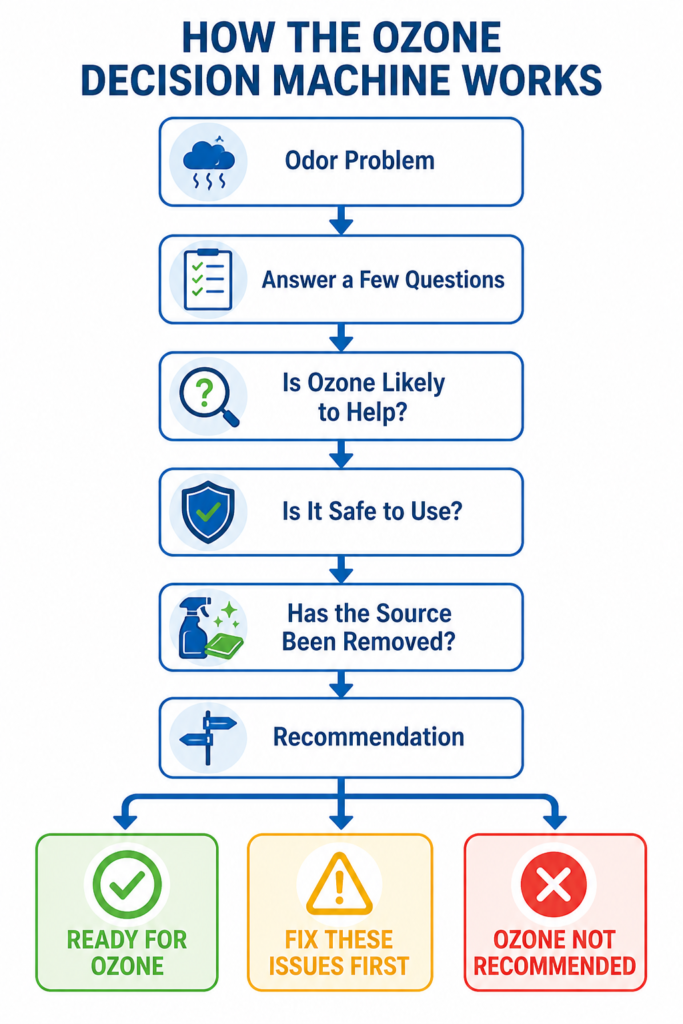
The Ozone Decision Machine looks at three things:
- Whether ozone is likely to help with your type of odor.
- Whether the source has already been removed, cleaned, and dried.
- Whether the space can be treated without exposing people, pets, or plants.
Run the Decision Machine Again →
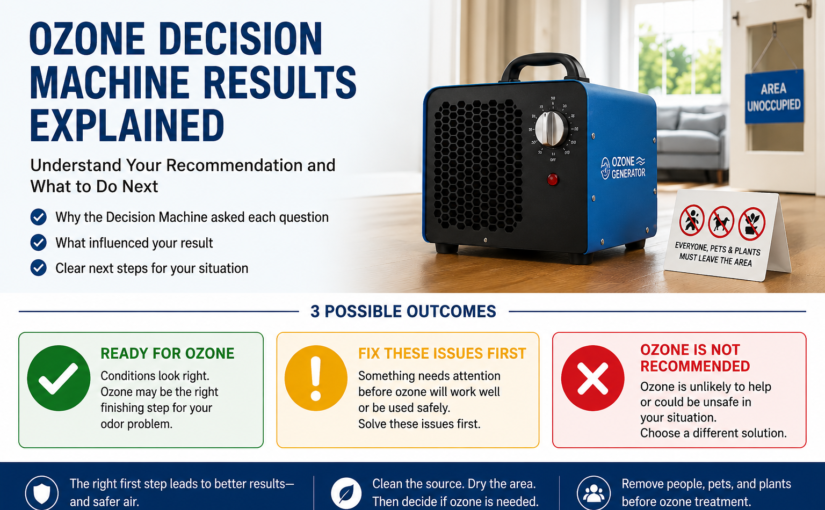
Your result is not simply a judgment about whether ozone is good or bad. It is a recommendation based on whether ozone appears to be the right finishing step for your situation right now.
Your Recommendation Explained
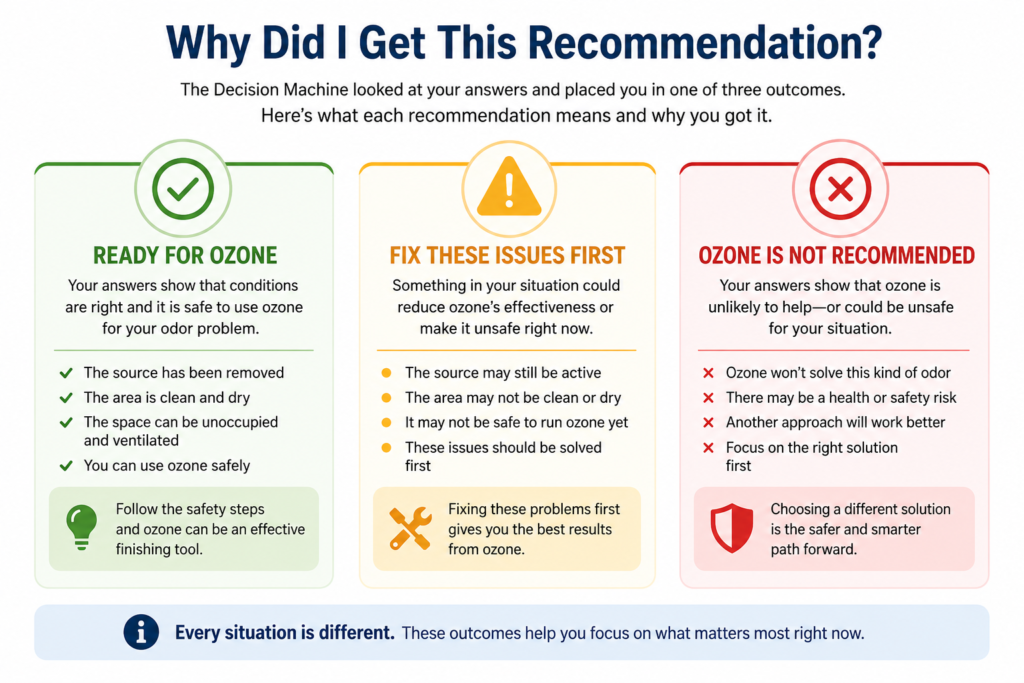
Ready for Ozone
You received this result because your answers suggest that ozone may be an appropriate finishing step for the odor problem you described.
That usually means:
- The odor is one ozone may be able to help reduce.
- The source of the odor has been removed or stopped.
- The affected area has been cleaned.
- Moisture is not still feeding the problem.
- The space can remain completely unoccupied during treatment.
- The area can be ventilated before anyone returns.
Ready for Ozone does not mean that you can skip the safety instructions. It means the basic conditions appear appropriate enough to move forward carefully.
Decision Tip
Think of ozone as the final odor-treatment step after the physical source, contamination, and moisture have already been addressed.
Your next step is to choose an appropriately sized ozone generator and follow a complete operating and ventilation procedure.
Fix These Issues First
This result does not necessarily mean ozone will never be useful. It means something in your answers needs attention before ozone is likely to work well or be used safely.
The Decision Machine may have identified one or more issues such as:
- The odor source may still be present.
- The affected area may not have been thoroughly cleaned.
- Carpet, drywall, wood, padding, or another material may still be damp.
- The space may not be able to remain completely unoccupied.
- There may not be a reliable way to ventilate the area afterward.
- The odor may be coming from a problem that ozone cannot repair.
Do the part that physically solves the problem first. Then reevaluate whether ozone is still needed.
For example, ozone cannot remove pet urine from carpet padding, stop a water leak, wash smoke residue from walls, or clean grease from kitchen cabinets.
Once the source has been removed and the area is clean and dry, you can run the Decision Machine again. Your result may change.
Decision Tip
Fix These Issues First is not a failed result. It may save you from using ozone too soon and then wondering why the odor returned.
Recommended Next Step
Your answers suggest that ozone is not the best next step right now. A True HEPA air purifier can help remove airborne smoke particles, dust, pet dander, pollen, and mold spores while you complete the cleanup. Unlike ozone, HEPA filtration can be used continuously in occupied homes and often improves the air enough that ozone is no longer needed.
Learn how HEPA fits into the odor-removal process, when it works best, and how to choose the right purifier for your situation.
Ozone Is Not Recommended
You received this result because your answers suggest that ozone is unlikely to solve the problem, cannot be used safely in the space, or could distract from a more important issue.
This can include situations involving:
- Active mold growth or ongoing moisture.
- Sewage contamination.
- Fuel, solvents, pesticides, or unknown chemical odors.
- An odor source that has not been identified.
- A space that cannot be fully vacated.
- Shared air that could carry ozone into an occupied area.
- A problem requiring repair, removal, cleaning, or professional remediation.
This result is not saying that your odor problem is unimportant. It is saying that ozone is not the right first response.
Decision Tip
When the odor source is unknown, finding it is more important than trying to neutralize the smell. The odor may be the warning that helps you locate a leak, contamination problem, dead animal, electrical issue, or chemical source.
The better next step is to identify and correct the underlying problem or bring in the appropriate repair, cleaning, restoration, or environmental professional.
Why the Decision Machine Asked Those Questions
The questions were not chosen at random. Each one checks a different part of the decision:
- Can ozone help with this kind of odor?
- Has the physical cause already been addressed?
- Can ozone be used without exposing anyone?
Why Did the Type of Odor Matter?
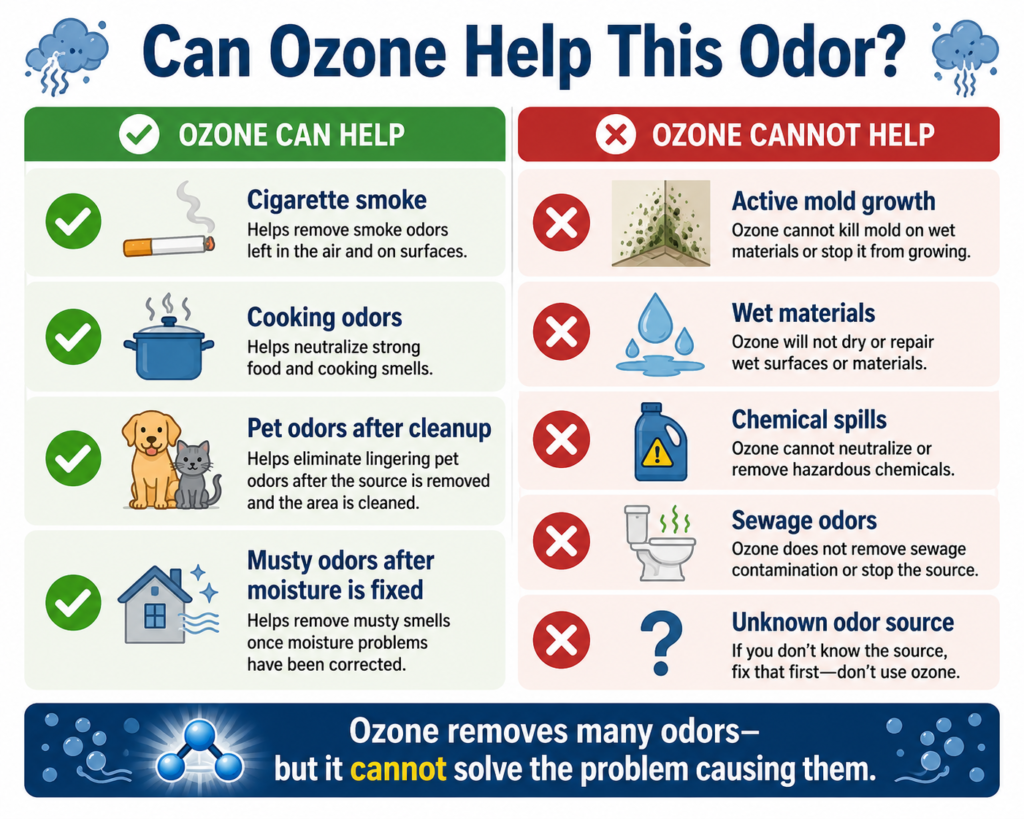
Ozone can react with some odor-causing compounds, but not every bad smell should be treated with ozone.
Lingering cigarette smoke, strong cooking odors, and pet odors may be reasonable ozone applications—but only after the affected surfaces and materials have been cleaned.
Other odors point to problems that require a different response. Sewage needs sanitation. A chemical spill requires the correct hazardous-material response. Active mold requires moisture control and physical remediation. An unknown odor needs investigation.
The Decision Machine asks about the odor because the smell can reveal whether ozone is a reasonable finishing treatment or a distraction from the real problem.
Decision Tip
Do not choose ozone based only on how strong or unpleasant the smell is. Choose the response based on what is causing it.
Why Did It Ask Whether the Source Was Removed?
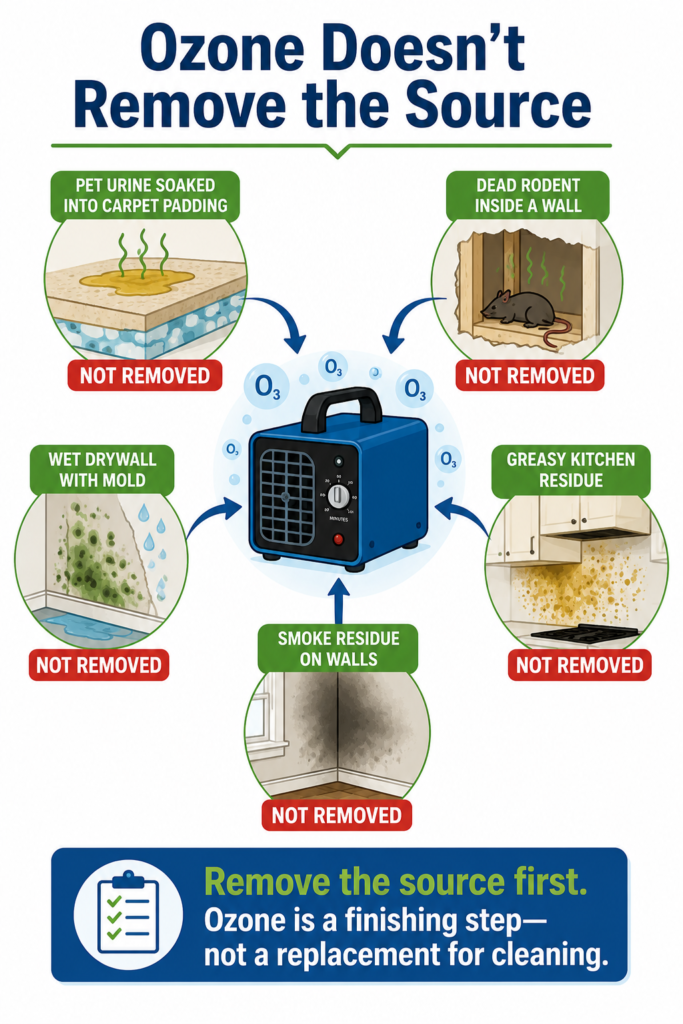
An odor normally has a physical source. As long as that source remains, it can continue releasing odor after an ozone treatment ends.
Examples include:
- Urine trapped in carpet padding or subflooring.
- A dead animal inside a wall or attic.
- Wet drywall or insulation.
- Grease on cabinets, ceilings, and walls.
- Smoke residue embedded in porous materials.
Ozone may change some odor compounds in the air or on exposed surfaces, but it does not physically remove contaminated carpet padding, open a wall, repair a leak, or wash residue away.
Decision Tip
If the smell returns quickly after treatment, that often means the source was never fully removed.
Why Did Cleaning Matter?
Removing the source and cleaning the affected area are related, but they are not always the same thing.
You might remove the ashtray but still have smoke residue on the walls. You might stop a pet accident but still have urine in the padding. You might repair a kitchen exhaust problem but still have years of grease on nearby surfaces.
Cleaning removes material that ozone cannot remove for you.
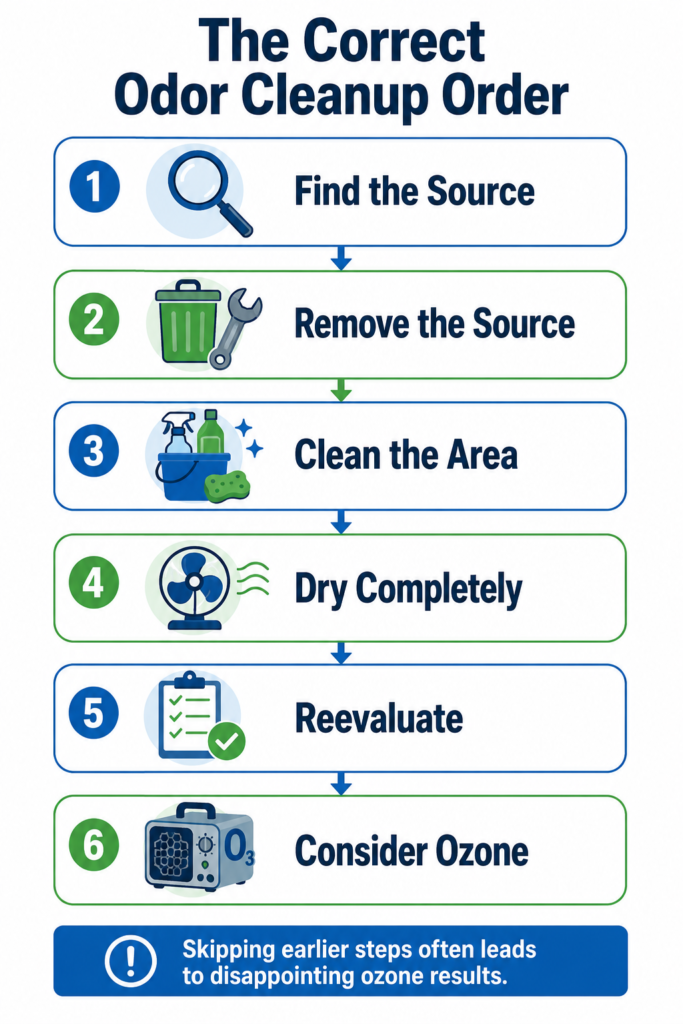
A dependable order is:
- Find the source.
- Remove or stop the source.
- Clean the affected area.
- Dry everything completely.
- Reevaluate the remaining odor.
- Consider ozone only if it is still appropriate.
Decision Tip
You may discover that cleaning solves enough of the odor that ozone is no longer necessary.
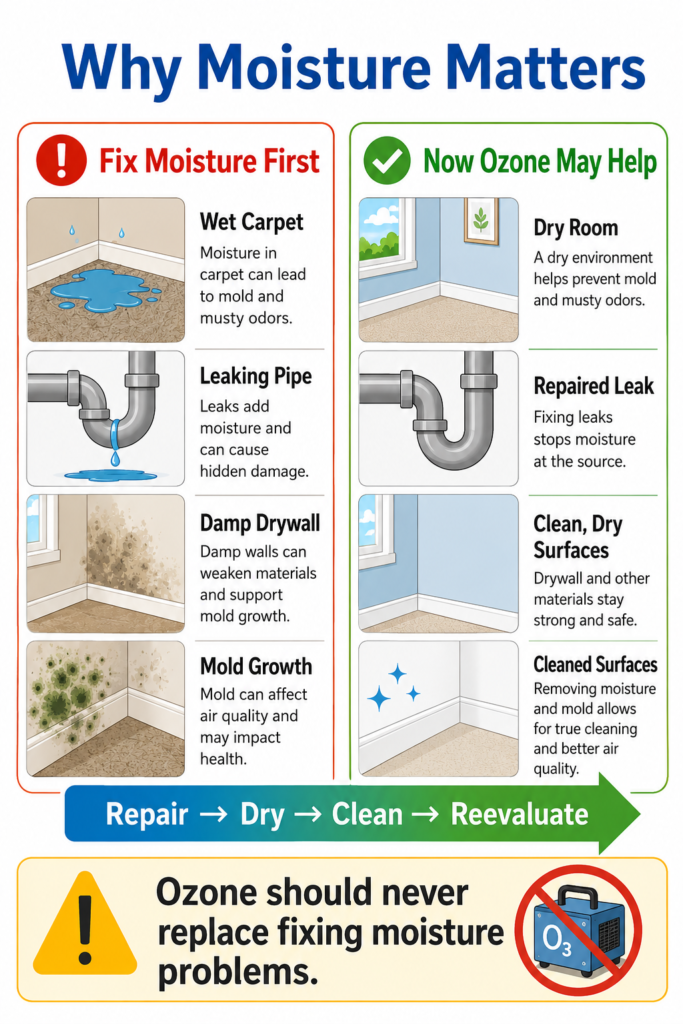
Why Did Moisture Matter?
Moisture changes the recommendation because it can mean the odor source is still active.
Wet carpet, damp drywall, saturated wood, leaking plumbing, and humid building materials can continue supporting musty odors and microbial growth. Running an ozone generator does not dry those materials or repair the water problem.
Even when the surface appears dry, moisture may remain inside padding, wall cavities, subflooring, insulation, or wood.
Repair → Dry → Clean → Reevaluate
Decision Tip
If a musty odor improves and then returns, continue looking for moisture. The smell may be telling you that the underlying condition is still present.
Why Did It Ask Whether the Space Could Be Unoccupied?
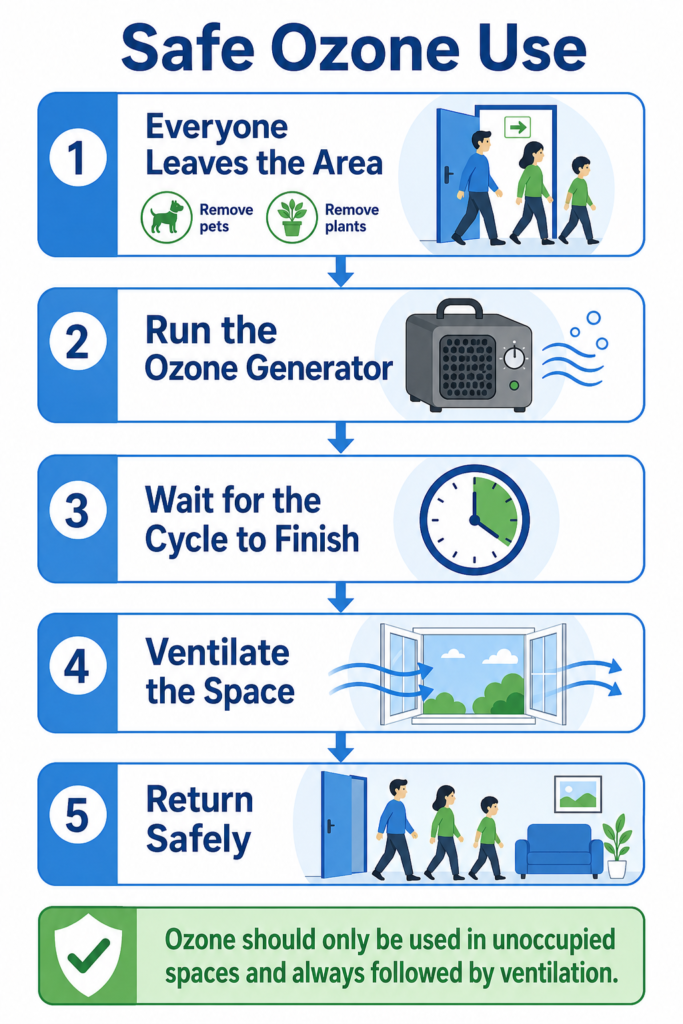
Ozone treatment requires the area to be empty. People, pets, and plants should not remain in the treatment space.
That is why the Decision Machine does not treat occupancy as a minor detail. Being able to close the door is not enough if ozone can move through shared ventilation, gaps, hallways, attached rooms, or common HVAC systems.
The entire affected airspace must be considered, not merely the room where the generator is sitting.
If you cannot confidently prevent exposure, ozone is not the appropriate option.
Why Did Ventilation Matter?
The treatment cycle ending does not automatically mean the space is ready for reentry.
After treatment, the area needs time and active ventilation. Windows, doors, and fans may be used as appropriate to move treated air outdoors before people and animals return.
The Decision Machine asks about ventilation because a space that cannot be aired out is not a good candidate for ozone treatment.
Decision Tip
Do not use the remaining smell of ozone as your only reentry test. Follow the operating, waiting, and ventilation instructions for the treatment plan and equipment being used.
Why Did the Decision Machine Ask What You Expected Ozone to Do?
Many disappointing ozone treatments begin with the wrong expectation.
An ozone generator does not:
- Shampoo carpet.
- Remove urine from padding.
- Wash nicotine or grease from walls.
- Repair plumbing or roofing.
- Dry building materials.
- Remove dead animals.
- Clean sewage contamination.
- Make an occupied space safe for treatment.
Ozone is better understood as a possible finishing treatment for a remaining odor after the physical work has been completed.
Find the source. Remove it. Clean. Dry. Then decide whether ozone is still needed.
What Should You Do Next?
A HEPA air purifier may be useful while you clean, particularly when airborne dust, smoke particles, pet dander, or mold spores are part of the problem. HEPA filtration does not replace source removal, but it may be a practical part of the cleanup process.
If the underlying problem is corrected later, run the Decision Machine again. A different recommendation may be appropriate once the situation has changed.
Has Your Situation Changed?
If you’ve:
- ✔ Removed the odor source
- ✔ Finished cleaning
- ✔ Dried the affected area completely
- ✔ Corrected moisture problems
- ✔ Improved the air with HEPA filtration
Your recommendation may now be different. Run the Decision Machine again to receive an updated recommendation.
Common Questions About Your Result
Can I run the Decision Machine again?
Yes. Run it again after the situation changes. Removing a source, completing the cleaning, drying the area, or finding a safe way to vacate and ventilate the space may lead to a different result.
Does “Ready for Ozone” guarantee that it will remove the odor?
No. It means your answers did not identify an obvious reason to rule ozone out. Results still depend on the odor source, the cleanup already completed, the materials involved, the treatment plan, and safe operation.
Why did I get “Fix These Issues First” when I already cleaned?
The source may still be present below or behind the visible surface. Carpet padding, subflooring, wall cavities, upholstery, insulation, unfinished wood, and HVAC components can hold contamination that ordinary surface cleaning does not reach.
Can a HEPA purifier remove odors?
HEPA filtration primarily captures airborne particles. A purifier with activated carbon may also reduce some airborne odors and gases, but neither HEPA nor carbon can remove a physical source such as wet drywall, urine-soaked padding, grease buildup, or sewage contamination.
Why is active mold an ozone stop sign?
Active mold usually means moisture and contaminated material still need attention. Ozone does not repair the moisture source or physically remove mold-damaged materials. Correcting the water problem and completing proper cleanup come first.
What if I do not know what is causing the odor?
Do not begin with ozone. Investigate the source first. Unknown odors can be associated with moisture, pests, overheating electrical components, plumbing problems, chemicals, fuel, or other conditions that need direct attention.
Is the Decision Machine replacing professional advice?
No. It is a screening and educational guide. It helps identify obvious reasons to proceed carefully, fix another issue first, or avoid ozone. Complex contamination, health concerns, hazardous odors, and major building problems may require qualified professional help.
Final Thought
The Ozone Decision Machine was not designed to convince everyone to use an ozone generator.
It was designed to help you choose the right next step.
Sometimes that step is ozone. Sometimes it is more cleaning, drying, repair, filtration, or professional remediation.
The best result is not necessarily permission to use a machine. It is understanding what your odor problem actually needs.
Your recommendation isn’t permanent. As your situation changes, your next step may change too. After additional cleaning, drying, repairs, or HEPA filtration, run the Ozone Decision Machine again to see whether your recommendation has changed.