Mold Growth in Central Air Conditioners – Causes, Health Risks, and Remediation

Mold in Central AC Units: Causes, Health Risks, and Solutions

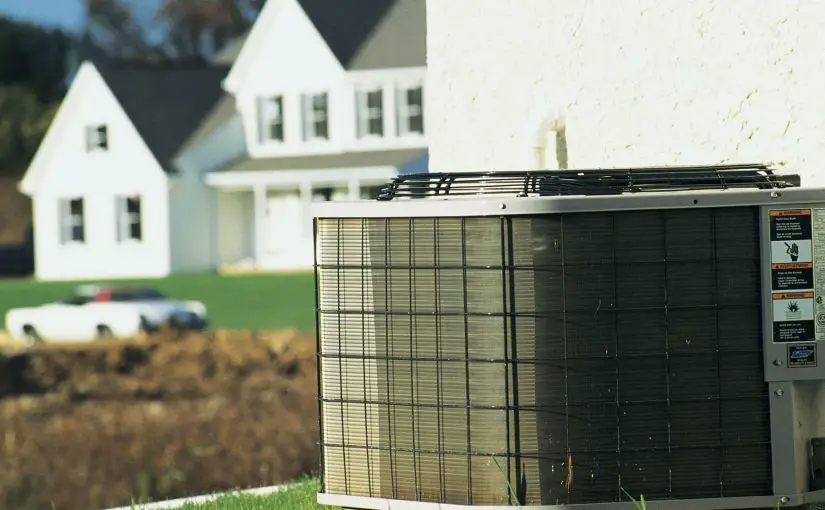
Central air conditioning systems provide welcome relief from summer heat. But if moisture builds up inside the system, mold can begin to grow. Mold spores circulating through AC ductwork raise health concerns. Let’s examine what causes mold in AC units, the health risks, and how to remove mold for cleaner indoor air.

What Causes Mold to Grow in Central AC Units?

Several factors can cause mold growth inside central AC equipment:

Moisture – Excess humidity from leaks, condensation, or flooded components encourages mold. Older AC systems and ductwork prone to leaks are most vulnerable.

Dust buildup – Dust trapped inside the HVAC system provides food for mold spores. Lack of maintenance and changing filters allows dust to accumulate.

Poor airflow – Reduced airflow slows evaporation, allowing moisture to puddle and mold to thrive. Clogged filters or vents hinder proper airflow.

Temperature fluctuations – Frequent on/off cycling prevents the AC from dehumidifying consistently. This fluctuation in temperature and humidity fosters mold growth.

Contaminated insulation – Insulation inside the air handler or ductwork can harbor mold once it becomes wet. Porous insulation soaks up moisture readily.

With central AC systems, any excess moisture can quickly lead to out-of-control mold colonies. Proper maintenance and moisture control keep mold from gaining a foothold.

Health Dangers of Mold Exposure from AC Units

Mold spores circulating through HVAC systems get distributed throughout the home. Exposure to these spores can trigger allergic reactions and other health issues:

  • Allergic reactions – Symptoms like sneezing, runny nose, red eyes, and skin rash. Mold allergies are common.
  • Asthma attacks – Mold spores irritate lungs and can induce asthma episodes in sensitive individuals. Wheezing, chest tightness, coughing, and shortness of breath.
  • Respiratory infections – Mold spores compromise immune function and increase vulnerability to respiratory infections like pneumonia.
  • Headaches and fatigue – Toxic molds release mycotoxins that cause headaches, impaired concentration, and chronic fatigue.
  • Neurological effects – Memory issues, mood changes, and tremors are associated with mold toxin exposure. Children are especially vulnerable.

Chronic mold exposure takes a real toll on respiratory health and everyday wellbeing. Remediating mold provides cleaner, healthier indoor air.

Detecting and Eliminating Mold in AC Systems

If you suspect mold contamination in your central AC equipment, take these steps:

Inspect Visible Components

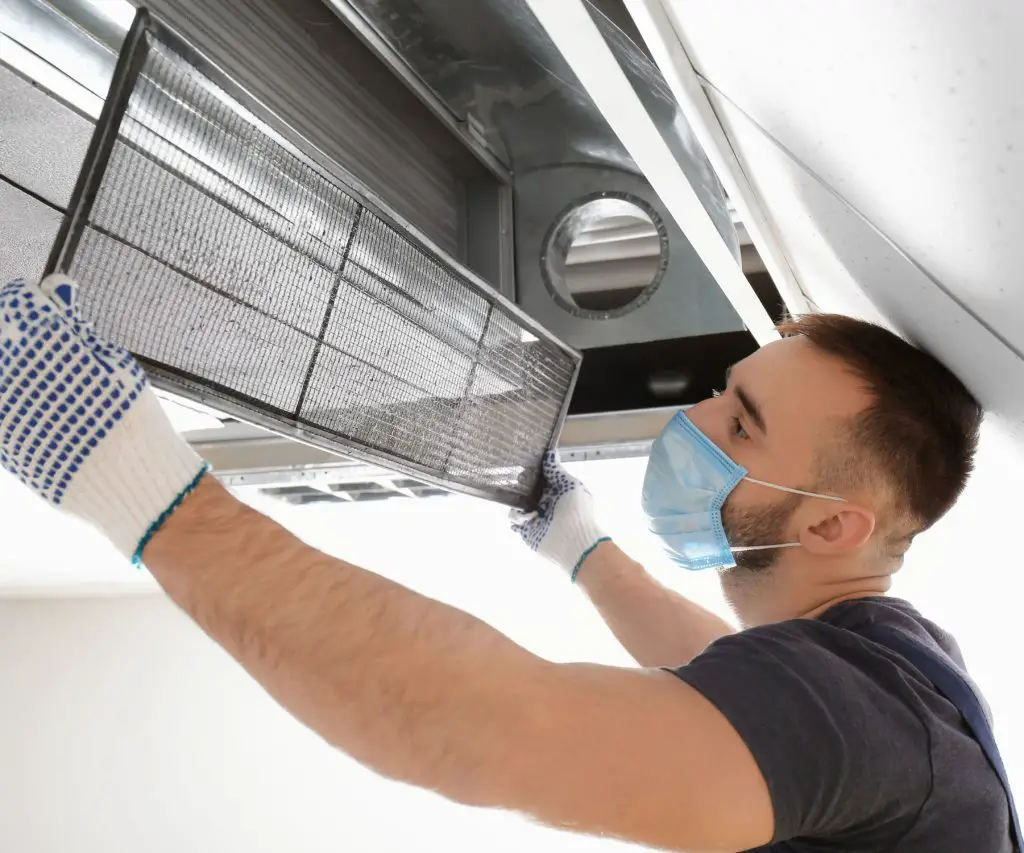
  • Remove and inspect air filters, looking for mold growth or dark staining.
  • Check insulation inside the air handler cabinet for moisture or mold.
  • Examine ductwork joints and openings for any accumulated dust or debris.
  • Look for water leaks, rust, or condensation around HVAC components.

Professional Duct Cleaning

  • Hire an HVAC professional to clean ducts and remove accumulated mold spores.
  • Use a high-powered vacuum with a HEPA filter to capture mold and debris.
  • Clean supply and return ducts, registers, diffusers, heat exchangers, and fans.

Apply Antimicrobial Coating

  • Apply an EPA-registered antimicrobial coating inside ducts and AC components.
  • These coatings inhibit future mold growth and airborne spore levels.
  • Routinely retreat ducts and equipment to maintain protective coating.

Address Underlying Issues

  • Repair water leaks, seal ducts, and insulate condensation-prone areas.
  • Increase airflow and ensure consistent temperature/humidity levels.
  • Replace contaminated insulation, filters, and parts that cannot be properly cleaned.

With proactive maintenance and moisture control, you can keep central AC systems free of mold and other contaminants.

Frequently Asked Questions about Mold in AC Units

Here are answers to common questions about dealing with mold in central air conditioning systems:

How often should I change my AC filter?

Change filters every 1-3 months, more often if you have pets or allergy/asthma issues. Clogged filters restrict airflow and allow mold to flourish.

What causes condensation in AC ducts?

Temperature differences between cool supply air and warm duct surfaces cause moisture to condense. Insufficient insulation allows duct sweat and moisture.

Can I clean AC ducts myself?

You can vacuum registers and diffusers, but should hire pros to deep clean ducts. Special tools and training are needed to access and clean the full system.

What health problems are linked to mold?

Allergic reactions, asthma attacks, respiratory infections, chronic headaches/fatigue, and neurological symptoms have been associated with indoor mold.

Should I test my home for mold?

Consider a professional mold inspection if you see visible mold growth or are experiencing unexplained health issues. An inspector can identify contaminated areas.

How do I find and fix leaks in my AC ducts?

An HVAC technician can pressure test the duct system to find leaks. Sealing tape, mastic sealant, metal tape, and mesh can repair leaky duct joints.

Is mold in AC units covered by homeowners insurance?

Most policies exclude mold coverage. However, some companies offer mold coverage as an add-on. Check your policy or consult your insurance agent.

Should duct cleaning be part of yearly AC maintenance?

If you have allergy/asthma issues or odor/debris concerns, consider having ducts cleaned annually. Routine maintenance also helps prevent mold.

How long does it take to remediate mold in an AC system?

Simple surface cleaning may take a few hours. More extensive mold issues could require one week or longer to fully remediate affected areas.

Summary

Mold growth in central AC equipment should not be ignored. Left unchecked, spores distributed through supply ducts can create an unhealthy indoor environment. With routine maintenance, moisture control, professional duct cleaning, and antimicrobial treatment, you can protect your home’s air quality and your family’s respiratory health. Addressing underlying causes like leaks, airflow issues, and insulation prevents HVAC mold from recurring. Reach out to licensed HVAC contractors if you suspect your central air system has a mold problem. With proactive action, you can breathe easier knowing the air flowing from your AC vents is clean.
resources


 

Do HEPA Filters Actually Remove Viruses from the Air We Breathe?

Do HEPA Filters Remove Viruses?

With illnesses like COVID-19 and the flu spreading through the air, many people wonder if using a HEPA filter can help protect them from airborne viruses. HEPA filtration can capture some viral particles, but it should not be relied on as a complete solution. This article will examine how effective HEPA filters are against viruses and what precautions are still needed even when using these specialized filters.

What Are HEPA Filters and How Do They Work?

HEPA stands for “high efficiency particulate air.” To qualify as true HEPA, a filter must remove a minimum of 99.97% of particles that are 0.3 microns in size during testing. This capability makes HEPA filters useful against viruses, but they have limitations.

Particle Size Removal Efficiency
0.3 microns 99.97%
0.1 microns 99.99%

HEPA filters capture particles through a combination of techniques:

  • Interception – particles following the air flow path collide with filter fibers and stick.
  • Impaction – particles too large to avoid fibers get trapped in them.
  • Diffusion – smallest particles bounce around and adhere to fibers.
  • Electrostatic attraction – filter materials attract and hold particles.

This mesh of dense fibers catches even very tiny particles like viruses as air passes through. Better filters have more uniform fibers to maximize particle capture.

Can HEPA Filters Remove Viruses Like COVID-19 and Flu?

HEPA filters can capture airborne viral particles, including SARS-CoV-2 (the virus causing COVID-19) and influenza. However, viruses present some challenges:

  • Small size – Many viruses are smaller than 0.3 microns. HEPA filters are less effective on these tiny particles.
  • Aerosol transmission – Viruses can travel in aerosols, remaining airborne longer than larger droplets.
  • Infectious dose – It may take only a few virus particles to cause infection and illness.

Despite these difficulties, HEPA filters still significantly reduce airborne viruses. Studies estimate they remove over 99% of virus-containing droplets and particles. Portable HEPA air purifiers can supplement HVAC filters to improve air cleaning throughout a building.

HEPA Filter Limitations Against Viruses

While HEPA filters capture most viral particles, they cannot completely eliminate the risk of airborne transmission:

  • Not 100% effective – A small number of viruses can pass through, especially smallest ones.
  • Bypass – Unfiltered air can bypass filter if not properly sealed.
  • Saturation – Filters get overloaded as particles accumulate.
  • Recirculation – Filters do not remove viruses already present in the air.

Additionally, viruses deposited on the filter can remain infectious for hours to days depending on the specific type. Proper handling and disposal is important to avoid transmission from used filters.

Virus Survival Time on HEPA Filter
SARS-CoV-1 72 hours
MS2 bacteriophage 8-12 hours

Best Practices for HEPA Filtration Against Viruses

While HEPA filters have limitations, they remain a useful part of a complete infection control strategy when implemented properly:

  • Right filter ratings – Choose true HEPA rated filters, which are 99.97% efficient at 0.3 microns.
  • Combined ventilation – Supplement with outdoor air intake and exhaust ventilation.
  • Portable purifiers – Use HEPA purifiers to boost filtration in high-risk areas.
  • Monitor performance – Check differential pressure across filter to detect any damage or leaks.
  • Change filters – Replace per manufacturer instructions, typically every 6-12 months.
  • Proper installation – Ensure tight filter fit to prevent bypass leakage.
  • Control humidity – Keep relative humidity below 65% to avoid viral particle aggregation.

In critical spaces like hospitals, the highest-rated HEPA filters along with supplemental disinfection techniques are recommended. Commercial buildings should consult HVAC professionals on selecting appropriate filtration levels.

Other Precautions to Take with HEPA Filtration

HEPA filters reduce airborne viruses, but cannot entirely prevent transmission on their own. Even venues using HEPA filters need additional precautions like:

  • Face masks – Wear tight-fitting masks like N95s, KN95s, or KF94s.
  • Social distancing – Keep at least 6 feet between people.
  • Occupancy limits – Reduce density in indoor spaces.
  • Ventilation – Bring in outdoor air; avoid stagnant recirculation.
  • Surface cleaning – Disinfect high-touch surfaces frequently.
  • Hand hygiene – Wash hands thoroughly and often.
  • Respiratory etiquette – Cover coughs and sneezes.

A “Swiss cheese” model with layered interventions will reduce overall transmission risks more than any single measure alone. HEPA filters serve as an important component when combined with additional evidence-based precautions.

Conclusion

HEPA filtration can capture most airborne viruses in a space, lowering infection risk. However, it has limitations and should not be the sole protective measure. True HEPA filters, properly installed and maintained, remain useful as part of a multifaceted infection control approach. Supplementing with portable purifiers, adequate ventilation, and other hygiene practices is key for protecting public health against illnesses like COVID-19 or influenza.

Here is a 7 question FAQ added to the end of the article:

Frequently Asked Questions

Q: How small of particles can HEPA filters remove?

A: HEPA filters are rated to remove 99.97% of particles sized 0.3 microns. Even smaller particles down to 0.1 microns are captured at 99.99% efficiency or higher.

Q: Can HEPA filters protect against COVID-19?

A: Yes, HEPA filters effectively capture the SARS-CoV-2 virus particles that cause COVID-19. They greatly reduce transmission risks.

Q: Are HEPA filters 100% effective against viruses?

A: No. While HEPA filtration removes over 99% of viral particles, it cannot completely eliminate the risk of airborne transmission on its own.

Q: How often should you change a HEPA filter?

A: Replace HEPA filters based on manufacturer recommendations, typically every 6-12 months. Check pressure readings across the filter to monitor when changeout is needed.

Q: Can HEPA filters trap viruses and then release them later?

A: Viruses trapped on the filter can remain infectious for hours to days depending on the specific type. Proper PPE and handling is important when changing used filters.

Q: Are portable HEPA purifiers or in-duct HVAC filters better?

A: Built-in HVAC filters clean the overall space air. Portable purifiers supplement them by providing intensive filtration in high-risk areas. Using both together gives the best results.

Q: What other steps help reduce viral transmission?

A: Wear tight-fitting masks, keep distance, improve ventilation, use disinfection, wash hands frequently, and cover coughs/sneezes. A layered defense is most effective.
source

Can You Run an Air Purifier With the Window Open?

Can You Run an Air Purifier With the Window Open?

The short answer is yes, you can run an air purifier with the window open. However, doing so may impact the effectiveness of the air purifier. In this article, we’ll explore the reasons why you may want to run an air purifier with the window open, factors that can reduce the air purifier’s performance, and tips to maximize its effectiveness if you need to have the window open.

Why Run an Air Purifier Near an Open Window?

There are a few reasons why you may need or want to run an air purifier near an open window:

  • To remove odors, smoke, pollen, or other pollutants entering through the open window.
  • To increase airflow and ventilation.
  • If placing the air purifier elsewhere would block walkways or furniture.
  • If noise from the air purifier is less bothersome near the open window.

For example, you may want to open a window to let in fresh air but also need to run an air purifier to filter out pollen, dander, or other allergens coming in from outside. An open window near a busy road could also allow pollutants like car exhaust to enter, which an air purifier could help remove.

Factors That May Reduce Air Purifier Effectiveness

While running an air purifier near an open window is possible, there are some factors that may reduce its effectiveness:

  • Air exchange rate – Open windows increase ventilation and airflow through a room. This quick turnover of air from outside can limit the time the air purifier has to filter and clean the air.
  • Unpurified air entering – With a constant source of unfiltered air coming in through the window, the air purifier has to work harder to keep up.
  • Allergens and pollutants – Depending on wind and weather conditions outside, running the air purifier near the open window may draw in more of the particles you’re trying to avoid rather than push them out.
  • Room size – Air purifiers are usually designed for closed rooms of certain sizes. Opening a window can throw off that balance and reduce the unit’s cleaning capacity for the space.

The rate of air exchange from outside, combined with the unit’s CADR (clean air delivery rate) will determine if the air purifier can still effectively clean the air with the window open. Larger capacity air purifiers will be better equipped to handle open windows in small spaces.

Tips for Running an Air Purifier Effectively Near an Open Window

If you need to run an air purifier with the window open, the following tips can help maximize its performance:

  • Close all other windows and doors – This contains the area the air purifier needs to clean.
  • Position the air purifier 2-4 feet from the open window – Lets it focus on filtering the incoming air.
  • Point the air purifier towards the window – Helps direct any allergens and pollutants back outside.
  • Reduce window opening size – Start with windows cracked open just a few inches to allow some air exchange while minimizing impact on the air purifier.
  • Use highest fan setting – Runs the air purifier at maximum filtration capacity.
  • Supplement with box or tower fans – Strategically placed fans can help direct incoming air towards the purifier and disturb stagnant pockets of air.
  • Close the window periodically – Gives the air purifier time to properly clean the room’s air without constant dilution.

Monitoring pollen counts and air quality reports can help determine when it’s best to shut the window altogether. At night or during periods of poor outdoor air quality, you may want to keep windows closed and rely solely on the air purifier.

When an Air Purifier May Not be Enough

While air purifiers can help clean the air, they have limits. If you are experiencing very poor outdoor air quality or are highly sensitive to pollens or pollutants:

  • Sealing off the room completely and running the air purifier may be a better approach.
  • Using HEPA air filters in HVAC systems can provide whole-home air purification.
  • Portable air conditioners with HEPA filters offer an alternative to open windows for warm rooms.
  • Consulting an indoor air quality expert can help identify the best solutions for your situation.

Air purifiers work optimally when windows are kept closed, but can still provide some benefit if the factors reducing their effectiveness are minimized. Try the tips suggested here if you need to have a window open near your air purifier.

Frequently Asked Questions

1. Do air purifiers work with windows open?

Air purifiers can still provide some benefit with windows open, but their effectiveness will be reduced. The constant influx of unfiltered air limits the time the purifier has to clean the room’s air. Strategic purifier placement and fan usage can help maximize air cleaning.

2. Should you keep windows open with air purifier?

It’s generally recommended to keep windows closed when running an air purifier, especially if trying to control a specific indoor air pollutant like pollen. Open windows increase ventilation but allow more allergens and pollutants to enter unchecked. However, you may need to open windows periodically for fresh air.

3. Do air purifiers work better with windows closed?

Yes, air purifiers work significantly better with all windows and doors closed. This contains the area the purifier needs to clean and prevents constant dilution with untreated outside air. Closed rooms allow air purifiers to recirculate and filter the room’s air multiple times.

4. Should you run air purifier all the time?

Many experts recommend running air purifiers continuously if you want to maintain improved indoor air quality. Airborne particulates accumulate quickly after an air purifier is turned off. However, some models have an auto mode that monitors air quality and adjusts operation as needed to save energy.

5. Is it a waste to run air purifier with window open?

It’s not a complete waste, as the air purifier can still filter some of the incoming air. However, the benefits are significantly reduced compared to running with windows closed. It’s best to limit window opening size, point the purifier towards incoming air, and maximize fan speeds.

6. Do air purifiers pull air from outside?

Air purifiers are designed to filter and recirculate the air within a closed room. They don’t actively pull air in from outside sources. However, opening windows and doors near an air purifier can impact the air currents in a way that draws outdoor air into the room and purifier intake.

7. Can air purifiers remove car exhaust from outside air?

Air purifiers with activated carbon filters can help remove some vehicle exhaust that enters indoors from open windows or doors. However, very high levels from direct sources like highways may overwhelm an air purifier. Sealing off rooms or using whole-home air purification is more effective.

The Bottom Line

Running an air purifier near an open window is generally not ideal, since the constant influx of outside air reduces the unit’s cleaning capacity. But strategic placement and fan usage can still allow it to filter out some allergens, odors, and pollutants entering indoors. Just don’t expect the same level of air purification compared to running with all windows firmly shut.

For further reading, check out this article from EPA.gov on the use of air purifiers and filters in the home.

Is Asbestos Still Dangerous When Wet? The Health Risks Explained

Is Asbestos Dangerous When Wet?

Asbestos is a dangerous material and poses health risks even when wet. The microscopic asbestos fibers can still become airborne when disturbed, increasing the risk of inhaling them and developing asbestos-related diseases.

Asbestos is a naturally occurring fibrous mineral that was extensively used in building materials in the past for its durability, fire resistance, and insulating abilities. However, research showed that exposure to asbestos fibers can cause serious illnesses like mesothelioma, asbestosis, and lung cancer. This led to strict regulations on the use of asbestos in many countries.

When materials containing asbestos are disturbed, it can release microscopic fibers into the air. Exposure typically occurs when people inhale these airborne fibers, often without realizing it. The durability of asbestos fibers allows them to remain in the lungs for long periods. Over time, the embedded fibers cause inflammation, scarring, and genetic damage that can eventually lead to disease.

Asbestos Fibers Can Still Be Released When Wet

Wetting asbestos aims to keep the fibers contained in liquid, preventing them from becoming airborne. However, asbestos fibers can still be released from wet materials if disturbed or agitated vigorously. Activities like scrubbing, scraping, power-washing, or even removing saturated asbestos materials can dislodge fibers into the air. The water itself also becomes contaminated with asbestos and needs proper disposal.

Asbestos Fibers Don’t Dissolve in Water

Unlike other minerals like salt, asbestos fibers do not dissolve or break down when mixed with water. The fibers still remain whole and potentially hazardous if released from the liquid. Even Thames River sediment containing asbestos fibers hundreds of years old can pose a risk if stirred up according to research. Asbestos maintains its fibrous structure and health risks when wet.

Asbestos Can Re-release Fibers as it Dries

Wet asbestos materials like insulation or cement sheets will start to dry following any leak or flood damage. The drying process can release fibers as the asbestos re-emerges to a dried state. Improper drying also leads to material degradation over time, creating more potential for exposure. Professional asbestos removal follows strict procedures to dispose of wet materials safely before drying occurs.

Microscopic Asbestos Fibers Remain Hard to Detect

Wet asbestos still contains the microscopic fibers that make asbestos dangerous to inhale. When released from water, these thin fibers 5,000 times smaller than a human hair become very hard to detect visually. You cannot rely on only seeing fibers in the air to gauge asbestos exposure. Detecting airborne asbestos instead requires specialized equipment and professional testing.

For these reasons, treating asbestos as safe when wet is erroneous. Precautions are still vital to avoid releasing fibers that could be inhaled. The microscopic size and durability of asbestos fibers means wet asbestos should be handled as carefully as dry until properly disposed of by professionals.

Health Risks from Asbestos Exposure

Inhaling or ingesting asbestos fibers can eventually cause toxic effects and serious diseases. Asbestos poses health risks including:

  • Mesothelioma – This is an aggressive rare cancer affecting the lining of the lungs, abdomen or heart. It is exclusively tied to asbestos exposure.
  • Lung Cancer – Inhaled asbestos fibers are known to increase the risk of lung cancer, especially in smokers. Non-smokers are also at risk.
  • Asbestosis – This chronic disease causes lung inflammation and scarring that worsens over time. It restricts breathing and has no cure.
  • Pleural Plaques – Thick scar tissue spots that grow on the pleura (lining of the lungs and chest cavity). Can cause pain and breathing issues.

These diseases often arise decades after asbestos exposure took place. Once diagnosed, life expectancy ranges from a few months for mesothelioma to only a few years for asbestosis. Even low dose, incidental asbestos exposure can eventually accumulate to cause disease. There are no absolutely safe levels of exposure.

Situations Where Asbestos Exposure Can Occur

Asbestos deposits are found across the world and asbestos has been used in thousands of products. While now banned or restricted in many applications, asbestos can still be encountered in these settings:

  • Older Homes – Asbestos was used until the 1980s in insulation, shingles, siding and many other building materials. Renovations pose a major risk.
  • Commercial Buildings – Schools, offices and factories built before the 1990s can still contain asbestos in walls, ceilings, pipes and flooring. Damage or renovations release fibers.
  • Automotive Applications – Brake pads and older clutches and gaskets contained asbestos that when serviced can expose mechanics.
  • Power Plants – Asbestos was used extensively at power plants for insulation around boilers and pipes. Maintenance workers remain at risk.
  • Naturally Occurring Sites – Natural asbestos deposits are found across states like California and Wyoming. Construction projects in those areas can release fibers.
  • Secondhand Exposure – Handling asbestos materials can release fibers that stick to clothing. Household members of exposed workers were once at great risk.

Recognizing materials that may contain asbestos and using proper safety precautions is key to minimizing exposure from these sources. Never handle suspected asbestos without consulting an expert.

Professional Asbestos Management

Given the hazards wet or dry asbestos can pose, it should only be handled and removed by specialized professionals. Disturbing asbestos unsafely can just worsen exposure. Professional abatement companies follow strict regulations to protect people and property.

Asbestos professionals:

  • Inspect buildings for asbestos and take samples to identify asbestos content.
  • Perform risk assessments to identify hazards and priorities for asbestos management.
  • Develop detailed site-specific plans and procedures for asbestos projects.
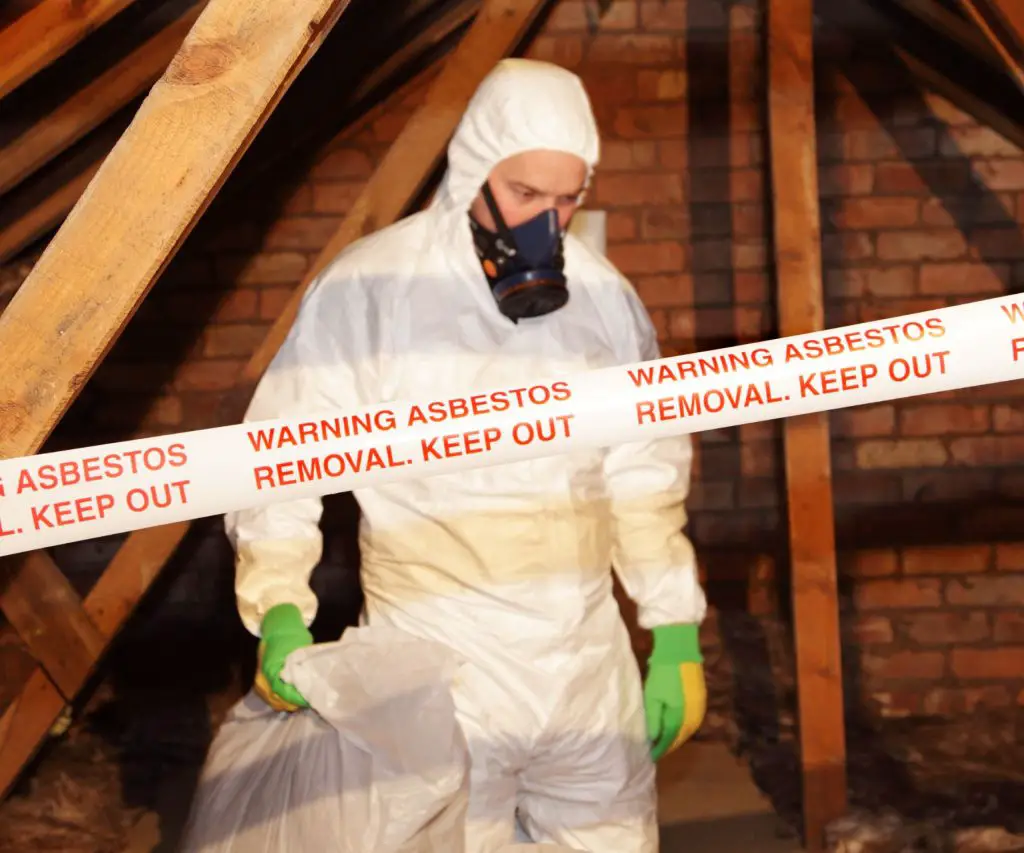
  • Use safety practices that isolate the workspace, control air flow and require specialized respirators and protective equipment. This prevents fibers from spreading.
  • Wet asbestos during removal and keep it wet until sealed off for disposal. This reduces airborne emissions dramatically.
  • Dispose of asbestos waste at designated landfills to prevent exposure from dry waste.
  • Monitor air quality during removal and conduct clearance testing afterwards. This confirms absence of lingering fibers.
  • Provide documentation like manifests and permits showing proper transportation and disposal.

Homeowners should not attempt DIY asbestos projects. Likewise, some contractors may cut corners to lower costs, putting people at risk of exposure. Always hire accredited asbestos professionals following asbestos work practices to ensure safety.

Asbestos Removal Tips for Homeowners

If you suspect asbestos at home, don’t disturb it. Follow these tips:

  • Identify suspect materials like old vinyl tiles, insulation and cement products that could contain asbestos. Assume they contain asbestos if unsure.
  • Limit damage and deterioration through maintenance. Don’t break or sand materials.
  • Inspect for damage after any work done at home and look for debris that could release fibers.
  • Consider sealing off damaged areas using plastic sheeting and tape until professional assessment.
  • Get samples lab tested to confirm asbestos content before doing work.
  • Hire a certified asbestos company if removal or large repairs are needed. Require proper protective measures.
  • For minor repairs hire an asbestos-trained professional to use wet methods, protective equipment and proper cleanup.
  • Ensure asbestos waste is disposed of properly. Confirm disposal facility and permits.
  • Consider encapsulation (sealing asbestos with a protective coating) as an alternative to removal where possible.
  • Follow all federal, state and local asbestos regulations which can vary by region.

Trying to handle asbestos yourself without training puts you and your family at risk of exposure. The dangers remain whether asbestos is wet or dry. Safer alternatives are encapsulation or hiring professional asbestos services.

Frequently Asked Questions

1. Why is asbestos so dangerous?

Asbestos is dangerous due to the microscopic size, shape and durability of its fibers. When inhaled, the fibers become lodged in lung tissue where they cause chronic inflammation and scarring over time. This leads to asbestos-related diseases that are often fatal.

2. Is asbestos illegal?

Asbestos is not completely illegal in the US but is heavily regulated. Some specific asbestos-containing products have been banned. Strict rules govern asbestos removal and disposal. Asbestos use in new materials is prohibited.

3. Can you see asbestos fibers?

No, asbestos fibers are invisible to the naked eye. They are around 5,000 times thinner than a human hair. You cannot rely on visibility to determine if asbestos exposure is occurring. Specialized equipment is required to detect airborne asbestos reliably.

4. Does washing asbestos make it safe?

No, washing asbestos does not make it safe. Asbestos fibers do not dissolve or break down in water. They can still be released into the air from wet asbestos materials if disturbed. Handling wet asbestos still requires protective equipment to prevent exposure.

5. Is removing asbestos yourself safe?

Removing any significant amount of asbestos yourself is extremely dangerous and not recommended. The average person lacks the specialized equipment, training and experience needed to prevent asbestos exposure during removal. Always hire certified asbestos professionals.

6. How can you tell if something contains asbestos?

You cannot identify asbestos materials visually. Previously common building products like drywall, tiles and insulation can contain hidden asbestos. The only way to conclusively identify asbestos is through lab testing of material samples, done by asbestos inspectors.

7. Is encapsulation an effective method for asbestos?

Encapsulation involves sealing asbestos material in place with a protective coating rather than removing it. This can be an effective method when done properly by asbestos professionals. It eliminates exposure from deterioration while avoiding risks of removal. Ongoing monitoring is recommended.

Conclusion

In conclusion, asbestos remains a significant health hazard even when wet due to the nature of its durable microscopic fibers. Breathing in these released fibers can eventually lead to life-threatening illnesses for which there are limited treatments available. All asbestos handling jobs, regardless of wetness, necessitate protective equipment and training to minimize risks. Homeowners should refrain from disturbing suspected asbestos materials, keeping them well maintained or sealed off, and only hire accredited asbestos professionals when removal is required. While historically ubiquitous, following proper asbestos safety procedures when identified in buildings can limit exposure and protect health.

External Resources:

Asbestos – US EPA

Asbestos Frequently Asked Questions – US EPA

Asbestos Health Effects – CDC

Can You Really Taste Asbestos in the Air?

Can You Really Taste Asbestos in the Air? The Truth Behind This Common Myth

The short answer is no, you cannot actually taste asbestos fibers in the air. The idea that asbestos has a distinctive taste is a myth. Asbestos is a fibrous mineral that was once widely used in construction materials and insulation. When asbestos-containing materials break down or are disturbed, microscopic fibers can be released into the air. These tiny fibers are invisible to the naked eye and do not have any detectable taste.

Where Did the Asbestos Taste Myth Originate?

So how did the myth that asbestos has a distinctive taste come about? There are a few potential origins:

  • Some have speculated that the myth arose from World War II shipyard workers. Asbestos was used extensively in shipbuilding at the time. The workers may have breathed in asbestos fibers while working and attributed a “metallic” or “woody” taste to the presence of asbestos.
  • Another theory is that the myth developed from the practice of tasting samples of talc powder. Talc can be contaminated with asbestos due to the close geological relationship between the two minerals. Tasting talc to check for a bitter or metallic taste was thought to identify the presence of asbestos.
  • The odor of organic materials applied to asbestos for binding purposes could also potentially be misinterpreted as a taste.

In any case, the notion that you can literally taste asbestos itself appears to be unfounded.

Why You Cannot Taste Asbestos

There are a few reasons why it is physiologically impossible to taste asbestos fibers in the air:

  • Taste receptors are located in the taste buds on the tongue. They allow you to detect tastes like sweet, sour, bitter, salty, and umami. There are no taste receptors in the throat or lungs where airborne asbestos fibers would make contact.
  • For something to elicit a taste, molecules must dissolve in saliva. Asbestos fibers do not dissolve.
  • Asbestos fibers are far too small to interact with taste receptors. Taste buds can only detect dissolved particles around 1 micron or larger. Asbestos fibers are typically 0.1 microns or smaller.

So while the mouth and nose may experience irritation or discomfort when exposed to high concentrations of asbestos, there is no distinct taste associated with the fibers themselves.

The Dangers of Asbestos Exposure

Although asbestos has no taste, inhaling or ingesting asbestos fibers can still be very hazardous to your health. Asbestos has been classified as a known human carcinogen by the EPA, WHO, and OSHA.

When asbestos fibers become lodged in lung tissue, they can cause lung diseases like asbestosis, lung cancer, and mesothelioma. These diseases often have long latency periods and may not show up until decades after exposure. Asbestos-related diseases kill thousands of people each year.

The highest risks of asbestos exposure are among asbestos miners/millers, construction/demolition workers, shipyard workers, auto mechanics, and other trades that work directly with older asbestos-containing materials. However, indirect second-hand exposure can also occur among asbestos workers’ families members as fibers are brought home on shoes and clothing.

How to Detect Asbestos Hazards

Instead of tasting the air, the best ways to identify possible asbestos hazards are:

  • Look for signs of damage – Asbestos-containing insulation or other materials that are cracked, broken, or deteriorating can release fibers into the air.
  • Be aware of the age of the building – Asbestos was widely used in construction before being phased out in the 1970s. Older homes and buildings are more likely to contain asbestos materials.
  • Review building records – Records may indicate if and where asbestos was used, particularly for commercial buildings.
  • Consult an asbestos inspector – If there are signs of damage or you suspect asbestos is present, have a qualified asbestos inspector take samples for testing.

Trying to determine if asbestos is present by the taste or smell of the air is not reliable and can put you at risk. Leave asbestos testing and removal to trained professionals.

FAQs

1. What does asbestos smell like?

Asbestos itself does not have a distinct smell. The odor associated with asbestos is usually traced to the binding materials like asphalt, vinyl, or cement used in asbestos-containing products.

2. What does asbestos exposure do to the body?

When inhaled, asbestos fibers become lodged in lung tissue and cause scarring and inflammation. This damage can eventually lead to serious diseases like asbestosis, lung cancer, and mesothelioma. Asbestos fibers can also be ingested and potentially cause gastrointestinal issues.

3. Is it safe to breathe near asbestos?

No, you should avoid breathing in asbestos fibers even from short-term or low-level exposure. Inhaling asbestos poses a health hazard as fibers can become permanently embedded in lung tissue and lead to disease.

4. Can you smell asbestos on clothes?

Not exactly. Asbestos itself is odorless. But clothes contaminated with asbestos may pick up the scent of binding agents or other materials associated with asbestos-containing products. Always launder work clothes separately if asbestos exposure is possible.

5. Does asbestos cause nausea?

Inhalation of high levels of asbestos could potentially cause nausea as a short-term symptom. This is likely due to irritation and inflammation of the lungs. If ongoing nausea occurs, it is important to see a doctor to rule out asbestos-related disease.

6. How dangerous is it to disturb asbestos?

Disturbing or damaging asbestos-containing materials can release hazardous fibers into the air. This poses a health risk to anyone inhaling the fibers. Asbestos should always be handled and removed by specially trained professionals.

7. How long after asbestos exposure do symptoms appear?

Due to the long latency period of asbestos-related diseases, symptoms usually don’t appear until 10-50 years after exposure. That’s why it is critical to limit exposure, as health effects are not immediate. Shortness of breath and coughing are some early symptoms of asbestos disease.

The Bottom Line

It is physically impossible to truly taste asbestos fibers in the air. Breathing in asbestos over time poses serious health risks, but the fibers have no odor or distinct flavor. Don’t rely on your senses to detect asbestos. Be proactive in identifying asbestos hazards in older buildings and preventing exposure. Contact a professional if you have any concerns about the safety of asbestos-containing materials in your home or workplace.

For more information, visit the EPA’s official website about asbestos.


What Do Carbon Filters Do? What should you expect?


What Do Carbon Filters Do?

Carbon water filters are a popular method of filtering water to remove contaminants and improve taste and odor. The activated carbon adsorbs chemicals like chlorine and volatile organic compounds (VOCs) as the water passes through. However, carbon filters have limitations in removing some dissolved minerals, heavy metals, and microorganisms.

When Do Carbon Filters Work Well?

Carbon filtration excels at removing certain types of water contaminants:

  • Chlorine removal – Carbon chemically reacts with chlorine and eliminates it from water very effectively. This makes carbon filters useful for most municipal tap water.
  • VOC and odor reduction – The porous carbon traps VOC molecules that cause odors, smoke, and off-tastes. Carbon removes these contaminants from water.
  • Particulate filtration – Carbon traps sediment and particles, improving the clarity and appearance of water.

When to Consider Other Filtration Methods

While carbon filters are good for the contaminants above, they have limitations:

  • Microorganisms – Bacteria, viruses, and parasites are too small to be trapped by carbon. Reverse osmosis or UV sterilization is better for biological threats.
  • Heavy metals – Carbon does not remove many heavy metals. Reverse osmosis or specific metal filters are more thorough options.
  • Dissolved minerals – Carbon does not remove dissolved salts, calcium, magnesium, and other minerals. For softening hard water, a water softener or reverse osmosis works better.

Comparing Carbon Filter Types

There are several types of carbon filters for home use:

Filter Type Advantages Disadvantages
Pitcher Style Inexpensive, Easy to Use Lower Capacity, Bulky
Faucet Mount Convenient, Easy Install Lower Flow Rate
Refrigerator Built-In Filtering More Expensive, Fixed Filter
Under Sink High Capacity Professional Installation

Carbon Filter Recommendations by Contaminant

Contaminant Recommended Filter Type
Chlorine Carbon Filter
VOCs/Odors Carbon Filter
Sediment Carbon Pre-Filter
Bacteria/Viruses Reverse Osmosis, UV Filter
Heavy Metals Reverse Osmosis, Metal Filter
Hard Water Water Softener, Reverse Osmosis

Carbon Filter Contaminant Removal

Contaminant Removal Effectiveness
Chlorine Highly Effective
VOCs Highly Effective
Particulates Highly Effective
Bacteria/Viruses Not Effective
Heavy Metals Limited Effectiveness
Calcium/Hardness Not Effective

Frequently Asked Questions

1. How often should I change my carbon filter?

Most carbon filters should be replaced every 2-6 months depending on usage and water quality. Check with the manufacturer for your filter’s recommended change frequency.

2. Where is the best place to install a carbon filter?

For whole home filtration, carbon filters are often installed on main water lines entering the home or under the sink at point of use. Pitcher or fridge filters can also be good options.

3. Can carbon filters remove lead?

Carbon filters alone cannot remove all lead in water. They should be paired with reverse osmosis or an additional lead-specific filter for full lead removal.

4. What maintenance is required for carbon filters?

Carbon filters themselves are low maintenance, only needing occasional cartridge replacements. Pre-filters may need changing every few months to keep the carbon filter working optimally.

5. Can I filter hot water through a carbon filter?

Carbon filters are designed for cold water use. Filtering water hotter than 100°F can damage the carbon and reduce effectiveness.

6. Do carbon shower filters work?

Yes, carbon can filter some chlorine and VOCs from shower water, though they are not effective for filtering microorganisms. Replace filters often in humid shower conditions.

7. Can carbon filters remove fluoride?

No, carbon filtration does not remove dissolved fluoride ions. Reverse osmosis or distillation is required to remove fluoride.

For more information, check out guidance from the EPA on water treatment.


Do HEPA filters remove VOCs? Particle vs Chemical Filtration

Humidifier with hepa filterDo HEPA Filters Remove VOCs?

“HEPA filters excel at trapping particles like dust and allergens, but they are not effective in removing volatile organic compounds (VOCs) due to their gaseous nature. For comprehensive indoor air quality improvement, consider a multi-pronged strategy involving HEPA filtration, low-VOC product choices, specialized air purifiers, enhanced ventilation, and advanced technologies like activated carbon or photocatalytic oxidation to address both particles and VOCs.”

As an air quality specialist, I’m often asked if using a HEPA filter can effectively remove volatile organic compounds (VOCs) from indoor air.

VOCs are emitted as gases from some solids or liquids, such as furniture, paints, cleaning supplies, etc.

Exposure to high concentrations of VOCs can cause health issues like headaches, dizziness, and damage to the liver, kidneys and central nervous system.

Some common VOCs found indoors are:

  • Formaldehyde
  • Benzene
  • Ethylene glycol
  • Toluene
  • Xylenes

So do HEPA filters help remove these harmful VOCs from the air you breathe every day? Let’s take a closer look at how HEPA filters work and their limitations when it comes to VOC removal.

What is a HEPA Filter?

HEPA stands for High Efficiency Particulate Air. As the name indicates, HEPA filters are designed to remove tiny particulate matter from the air.

Particles that can be captured by a HEPA filter include:

  • Dust
  • Pollen
  • Mold spores
  • Pet dander
  • Smoke
  • Bacteria
  • Viruses

To qualify as a HEPA filter, it must satisfy these criteria:

  • Remove at least 99.97% of particles that are 0.3 microns in size
  • Have a tightly constructed filter material using random interlaced glass or plastic fibers

This construction allows very small particles to be trapped as air passes through the filter. Particles smaller than 0.3 microns are even more easily captured at higher rates.

HEPA Filter Effectiveness for Particles

Here’s how efficient HEPA filters are for removing various particle sizes from the air:

Particle Size Removal Efficiency
0.3 microns 99.97%
0.1 microns 99.999%
0.05 microns 99.9999%

As you can see, HEPA filters are extremely effective at trapping microscopic particulate matter, including bacteria, viruses, smoke, and allergens. This makes them very useful for improving indoor air quality and health.

Do HEPA Filters Remove VOCs?

Now that we understand how HEPA technology works to filter out particles, let’s get back to our original question – can they remove gaseous VOCs?

Unfortunately, HEPA filters do NOT remove VOCs or other gases from the air.

The reason is simple – VOCs are not particles, they are chemical gases. The pores in the HEPA filter fiber mesh are too large to trap the smaller VOC molecules. So the VOCs simply pass through the filter unchanged.

While excellent for filtering particulate matter, HEPA filters have these limitations when it comes to VOCs:

  • Do not capture or adsorb gaseous chemicals
  • Allow VOCs to pass freely through filter material
  • Do not breakdown or alter VOCs through chemical reactions

So using a HEPA filter alone is not effective for reducing VOCs and their associated health risks. It only addresses one part of indoor air quality issues.

Alternative Ways to Reduce VOCs

Since HEPA filters fall short for VOC removal, what other options should you consider for reducing VOC exposure?

Source Control

Limiting the amount of VOCs entering the indoor environment in the first place is ideal. Some tips:

  • Choose low-VOC or zero-VOC paints, finishes, and adhesives
  • Use green cleaning products without harsh chemicals
  • Ensure proper ventilation when painting, refinishing floors, etc.
  • Avoid purchasing furniture and goods with high VOC emissions

Local Exhaust

Use bath and kitchen fans to vent emissions directly outdoors before spreading through the home.

Air Purifiers

Specialized air purifiers with activated carbon filters can adsorb VOCs very effectively. The porous carbon has a huge surface area for trapping gaseous molecules.

Other technologies like photocatalytic oxidation (PCO) purifiers can actually break down VOCs into less harmful compounds.

Improved Ventilation

Increasing the amount of fresh outdoor air circulating indoors helps dilute VOCs and remove them from the home.

Make sure your HVAC system is running properly and bring in outdoor air as much as possible. Open windows regularly too.

The Bottom Line

While extremely useful for filtering airborne particles like dust, dander, and allergens, HEPA filters do NOT remove VOCs which are gaseous chemicals.

To reduce both particulate matter AND VOCs for better indoor air quality, utilize a multi-pronged approach:

  • Use HEPA filters to remove particles
  • Control VOC sources by choosing low-VOC products
  • Improve ventilation and air circulation
  • Use air purifiers with activated carbon or PCO technology to remove VOCs

Taking these steps together will minimize both particles and VOCs, creating the cleanest, healthiest indoor air possible. As an air quality specialist, I always recommend a complete strategy including HEPA filters plus VOC removal methods for optimal air quality and health.

hepa filtersFAQ

1. Can HEPA filters remove volatile organic compounds (VOCs)?

HEPA filters are highly efficient at capturing particles but are not designed to remove gaseous VOCs. VOCs have a different chemical nature that prevents them from being trapped by HEPA filters.

2. What particles can HEPA filters effectively capture?

HEPA filters can effectively capture particles such as dust, pollen, mold spores, pet dander, smoke, bacteria, and viruses.

3. What is the efficiency of HEPA filters for particle removal?

HEPA filters can remove particles of various sizes with remarkable efficiency, including 99.97% for 0.3 microns, 99.999% for 0.1 microns, and 99.9999% for 0.05 microns.

4. Why are HEPA filters ineffective against VOCs?

HEPA filters have pores that are too large to capture the smaller molecules of volatile organic compounds (VOCs), which are gaseous chemicals. As a result, VOCs easily pass through HEPA filters.

5. How can I reduce VOC exposure in indoor environments?

To minimize VOC exposure, opt for low-VOC or zero-VOC paints, finishes, and adhesives. Additionally, use green cleaning products, ensure proper ventilation during activities like painting, and avoid items with high VOC emissions.

6. Can air purifiers help with VOC removal?

Yes, specialized air purifiers equipped with activated carbon filters are effective at adsorbing VOCs. Other technologies like photocatalytic oxidation (PCO) purifiers can break down VOCs into less harmful compounds.

7. What’s the recommended approach for optimal indoor air quality?

For the best indoor air quality, combine strategies: utilize HEPA filters to address particles, control VOC sources by selecting low-VOC products, enhance ventilation, and employ air purifiers with activated carbon or PCO technology to target VOCs.

For more detailed information on indoor air quality and VOCs, you can refer to resources provided by the United States Environmental Protection Agency (EPA). The EPA offers authoritative guidance on air quality, VOCs, and strategies for maintaining a healthier indoor environment.

The Benefits and Risks of Running Your Air Conditioner Under 60 or 65 Degrees

Running your AC under 60 or 65 degrees is not recommended. It can cause higher energy bills, frozen coils, excess wear on the unit, and even discomfort or health issues for occupants. For best efficiency and comfort, the Department of Energy suggests setting your thermostat to around 78°F in summer, while using fans, insulation, and regular AC maintenance to stay cool without straining your system.


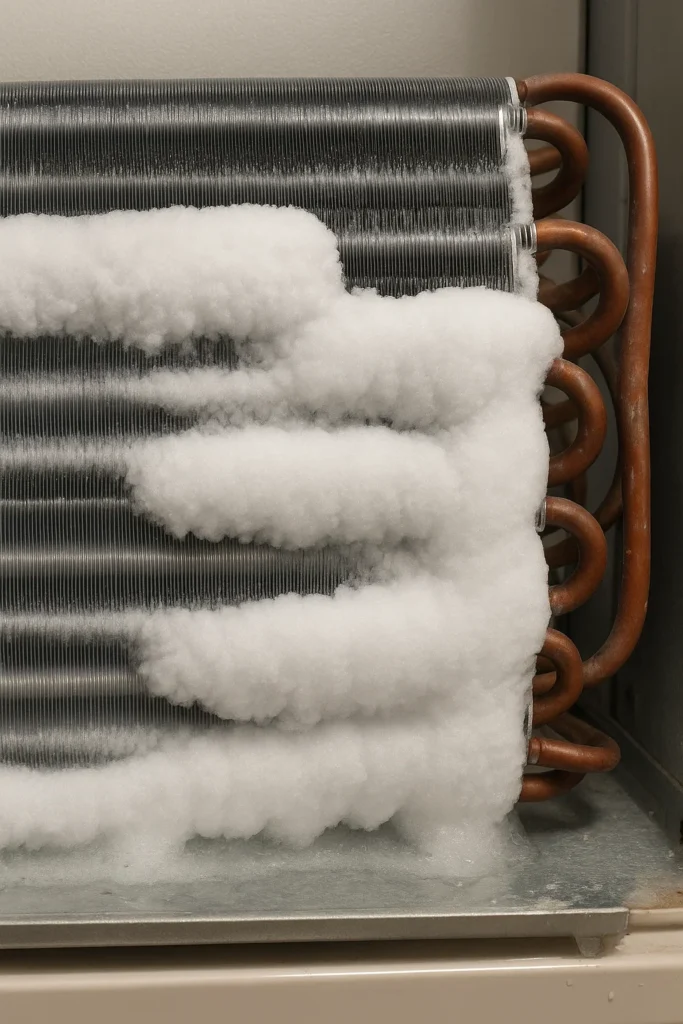
pic showing frost build up on dirty ac coilsSetting your AC unit under 60 or 65 degrees may lead to increased energy consumption, potential problems with your AC unit, and discomfort for occupants.
By setting your thermostat to a recommended temperature, maintaining your AC unit, and using other tips for efficiency, you can save money on your electricity bills, extend the lifespan of your AC unit, and maintain optimal air quality and comfort in your home.

Running AC Under 60 or 65 Degrees: Benefits and Tips for Efficiency

Air conditioning is a necessary comfort during the hot summer months, but it can also be a significant expense on your electricity bills.

Running your AC unit under 60 or 65 degrees may seem like a way to cool your home faster, but it can lead to increased energy usage and potential problems with your AC unit.

In this article, we’ll discuss the benefits of running your AC under 60 or 65 degrees and provide some tips for maximizing efficiency and preventing potential problems.

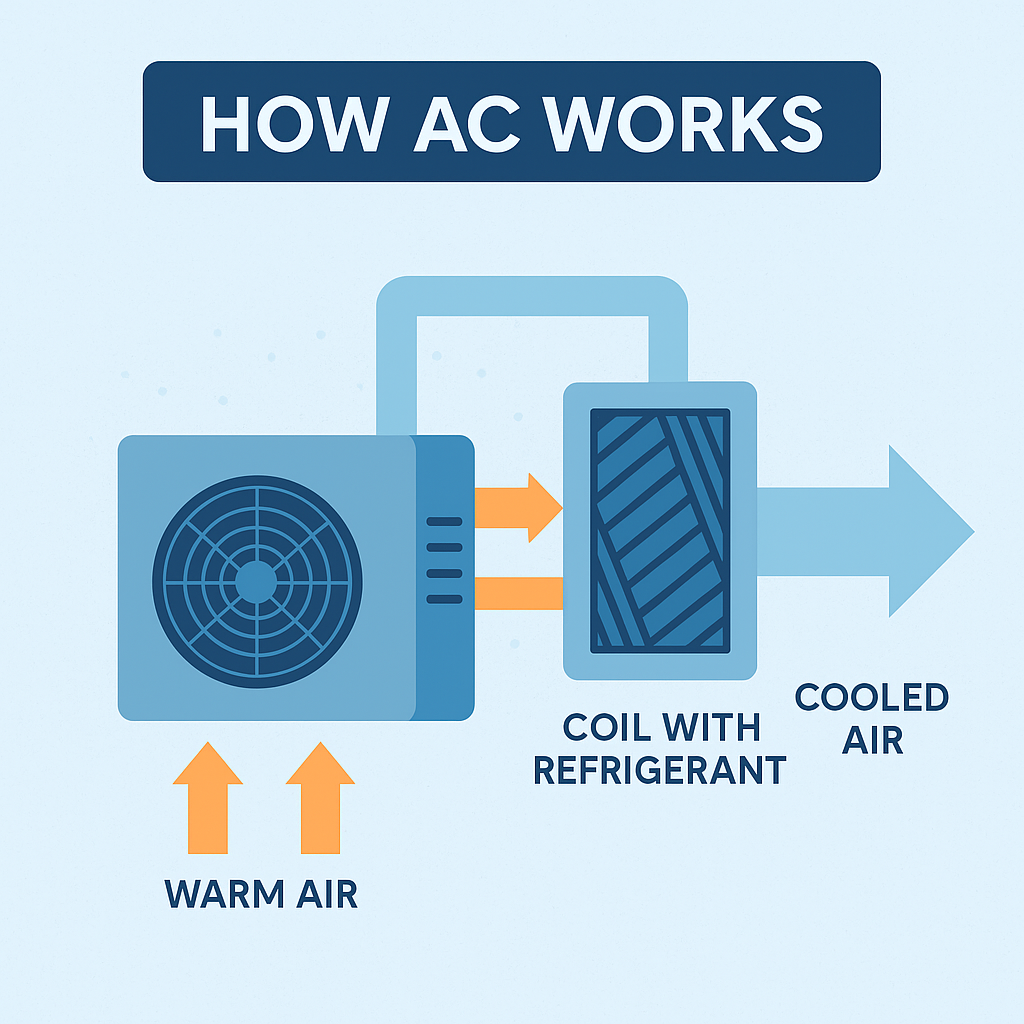
Diagram showing how an air conditioner works, with warm air pulled in, cooled by a refrigerant coil, and released as cool air into the homeHow AC Works

Before we discuss the benefits and tips, let’s review how air conditioners work.

An air conditioner cools the air by removing heat and humidity from the indoor air and then circulating the cool air back into the room.

The AC unit pulls warm air into the system, runs it over a coil filled with refrigerant, and then releases the cooled air back into the room.

Importance of Proper Temperature for Efficient AC Operation

The temperature you set your thermostat affects how efficiently your AC unit operates.

The Department of Energy recommends setting your thermostat to 78 degrees Fahrenheit during the summer months to balance comfort and energy efficiency.

However, if you prefer a cooler temperature, setting your thermostat to 60 or 65 degrees can be a viable option.

Benefits of Running AC Under 60 or 65 Degrees

  1. Energy savings and reduced electricity bills:
    Running your AC unit under 60 or 65 degrees can lead to increased energy usage and higher electricity bills.By setting your thermostat to 60 or 65 degrees, you can save money on your electricity bills and reduce your overall energy consumption.
  2. Increased lifespan of the AC unit:
    Running your AC unit at a lower temperature than recommended can cause unnecessary wear and tear on the system, leading to premature failure. By running your AC unit at a recommended temperature, you can extend the lifespan of the unit.Improved air quality and comfort: Running your AC unit at a lower temperature can lead to excess humidity in your home, which can lead to mold growth and decreased air quality. By running your AC unit at a recommended temperature, you can maintain optimal air quality and comfort.

How to Run AC Under 60 or 65 Degrees

  1. Set the thermostat to 60 or 65 degrees:
    To run your AC unit under 60 or 65 degrees, simply set your thermostat to the desired temperature.
  2. Use a programmable thermostat to regulate temperature:
    A programmable thermostat allows you to set the temperature in advance, reducing the need for manual adjustments and helping to maintain optimal temperatures.
  3. Use ceiling fans or other fans to circulate cool air:
    Fans can help circulate cool air throughout your home, reducing the need for a lower temperature setting on your AC unit.
Topic Information
Recommended temperature for AC 78 degrees Fahrenheit
Lower temperature options 60 or 65 degrees Fahrenheit
Benefits of running AC under 60 or 65 degrees Energy savings, increased lifespan of AC unit, improved air quality and comfort
How to run AC under 60 or 65 degrees Set thermostat to desired temperature, use a programmable thermostat, use fans to circulate cool air
Tips for maximizing AC efficiency Regular maintenance and cleaning of AC unit, proper insulation and weather sealing, use of window coverings and shades
Potential problems with running AC under 60 or 65 degrees Risk of freezing AC unit, risk of discomfort or health problems for occupants, increased wear and tear on AC unit

Tips for Maximizing AC Efficiency

  1. Regular maintenance and cleaning of the AC unit:Regular maintenance and cleaning of your AC unit can help ensure optimal efficiency and prevent potential problems.Replace your air filters regularly, and have your AC unit serviced annually by a professional.
  2. Proper insulation and weather sealing: Proper insulation and weather sealing can help keep cool air inside your home and prevent warm air from entering, reducing the workload on your AC unit.
  3. Use of window coverings and shades: Window coverings and shades can help block out sunlight and reduce heat gain, further reducing the workload on your AC unit.

Potential Problems with Running AC Under 60 or 65 Degrees

  1. Risk of freezing the AC unit: Running your AC unit at too low a temperature can cause the evaporator coil to freeze, leading to decreased efficiency and potential damage to the system.
  2. Risk of discomfort or health problems for occupants: Running your AC unit at too low a temperature can lead to discomfort for occupants, especially if they are not dressed appropriately for cooler temperatures.In addition, it can cause health problems such as headaches, colds, or other respiratory issues.
  1. Increased wear and tear on the AC unit: Running your AC unit at too low a temperature can cause unnecessary wear and tear on the system, leading to increased repair costs or premature failure.

A woman happy about learning how to get the best out of her AC by running it at the proper temp.Conclusion

Running your AC unit under 60 or 65 degrees may seem like a quick fix for cooling your home, but it can lead to increased energy consumption, potential problems with your AC unit, and discomfort for occupants.

By setting your thermostat to a recommended temperature, maintaining your AC unit, and using other tips for efficiency, you can save money on your electricity bills, extend the lifespan of your AC unit, and maintain optimal air quality and comfort in your home.

 Remember, proper AC maintenance and operation are key to optimal efficiency and comfort.

FAQ

1. Is it recommended to run your AC unit under 60 or 65 degrees?

No, the Department of Energy recommends setting your thermostat to 78 degrees Fahrenheit during the summer months to balance comfort and energy efficiency.

However, if you prefer a cooler temperature, setting your thermostat to 60 or 65 degrees can be a viable option.

2. What are the benefits of running your AC unit under 60 or 65 degrees?

Some benefits of running your AC unit under 60 or 65 degrees include energy savings, increased lifespan of the AC unit, and improved air quality and comfort.

3. How can you run your AC unit under 60 or 65 degrees?

You can run your AC unit under 60 or 65 degrees by setting your thermostat to the desired temperature, using a programmable thermostat to regulate temperature, and using fans to circulate cool air.

4. What are some tips for maximizing AC efficiency?

Some tips for maximizing AC efficiency include regular maintenance and cleaning of the AC unit, proper insulation and weather sealing, and use of window coverings and shades.

5. What are the potential problems with running your AC unit under 60 or 65 degrees?

Potential problems with running your AC unit under 60 or 65 degrees include the risk of freezing the AC unit, the risk of discomfort or health problems for occupants, and increased wear and tear on the AC unit.

6. How can running your AC unit under 60 or 65 degrees lead to energy savings?

Running your AC unit under 60 or 65 degrees can lead to energy savings by reducing your overall energy consumption and lowering your electricity bills.

7. How can running your AC unit at a recommended temperature improve air quality? Running your AC unit at a recommended temperature can improve air quality by reducing excess humidity in your home, which can lead to mold growth and decreased air quality.

Can You Run Your AC Without a Filter for One Night? Here’s What You Need to Know


Can You Run Your AC Without a Filter for One Night?


Have you ever found yourself in a situation where you forgot to replace the filter in your air conditioning unit or don’t have a spare one on hand?

It might seem like running your AC without a filter for one night is a quick fix, but is it really a good idea?

 Let’s take a closer look at the potential consequences.

The Function of AC Filters


The filter in your AC system plays a vital role in trapping dirt, dust, and other debris before they enter the unit.

This helps to improve indoor air quality and prevent damage to the AC unit. When you run your AC without a filter, all of that dirt and debris can enter the system unchecked.

 Consequences of Running Your AC Without a Filter
 

Running your AC without a filter can have several serious consequences.

 Firstly, it can lead to decreased air quality as dirt and debris circulate freely through your home.

 This can cause allergy and respiratory issues, particularly for people who are sensitive to dust and other airborne particles.

Secondly, it can result in increased energy consumption as the unit has to work harder to push air through the system.

 This can lead to higher energy bills and increased wear and tear on the unit.

Finally, it can cause damage to the AC unit itself over time, as dirt and debris build up and cause breakdowns or other issues.

 How Long Can You Run Your AC Without a Filter?


The length of time you can run your AC without a filter depends on various factors, such as the age and condition of the unit and how dirty the air in your home is.

 However, in general, it’s recommended that you replace your AC filter every 1-3 months to prevent any serious issues.

Additional Thoughts about running your AC without a filter

Be sure to follow the manufacturer’s recommendations for your specific AC unit when it comes to changing the filter.

Some units may require more frequent filter changes than others.

If you or someone in your household has allergies or respiratory issues, it’s especially important to keep up with regular AC maintenance and replace the filter on a regular basis.

In addition to replacing the filter, there are other steps you can take to maintain your AC unit, such as cleaning the coils and checking the refrigerant levels.

 Regular maintenance can help prolong the life of your unit and prevent breakdowns.


If you’re not sure how to replace the filter in your AC unit, consult the manufacturer’s instructions or consider hiring a professional HVAC technician to do the job for you.

It’s important to ensure that the filter is properly installed to prevent any issues.

Finally, if you do experience any issues with your AC unit after running it without a filter or for any other reason, it’s best to contact a professional HVAC technician for repairs.

Attempting to fix the unit yourself can be dangerous and may cause further damage.

AC Filter Alternatives

If you don’t have a filter handy for your air conditioner, there are a few alternatives that you can use in a pinch.

 Keep in mind, however, that these alternatives are not as effective as air conditioner filters and should only be used as a temporary solution until you can replace the filter.

1. Coffee filters:

 Coffee filters can be used as a temporary replacement for an air conditioner filter.

 They are not as effective as actual air conditioner filters, but they can help capture larger particles like dust and dirt. Simply cut the coffee filter to the size of your air filter and place it in the filter slot.

 2. MERV-rated furnace filter:


If you have a furnace filter that is MERV-rated between 6 and 13, you can use it as a temporary air conditioner filter.

Again, this is not a permanent solution, but it can help capture some particles and improve indoor air quality until you can replace the air conditioner filter.

 3. Window screen:

A window screen can also be used as a temporary air conditioner filter.

However, keep in mind that this is not an effective solution and can actually reduce airflow to your air conditioner, making it less efficient.

Buying Guide for an Air Conditioner Filter


Air conditioner filters are essential components of your air conditioning system.

They help improve indoor air quality by capturing and removing dust, pollen, and other airborne particles.

With so many different types of air conditioner filters available in the market, choosing the right one can be overwhelming.

 In this guide, we will provide you with essential tips to consider when buying an air conditioner filter.

1.Check your air conditioner’s specifications:

Before you start shopping for a filter, check your air conditioner’s specifications to determine the type and size of the filter you need. Most air conditioners will specify the filter size and type in the owner’s manual or on the unit itself.

 2. Filter Type:

There are different types of air conditioner filters available, and the right one for you will depend on your needs. The most common types of filters are:

 3.Fiberglass filters:

These are the most basic and affordable filters. They are good at capturing large particles, such as dust and lint, but do not filter out smaller particles like pollen or pet dander.

4. Pleated filters:
These are more effective than fiberglass filters at capturing small particles like pollen and pet dander. They are also more durable and have a longer lifespan.

5.Electrostatic filters:
These filters use static electricity to attract and capture particles. They are highly efficient at capturing even the smallest particles and are suitable for those with allergies or respiratory issues.

6.HEPA filters:
These are the most effective filters at capturing airborne particles. They can capture 99.97% of particles as small as 0.3 microns.

7.MERV rating:

The MERV (Minimum Efficiency Reporting Value) rating is a standard used to measure the effectiveness of air filters.

 The higher the MERV rating, the better the filter is at capturing smaller particles.

However, a higher MERV rating also means that the filter can restrict airflow, which can reduce the efficiency of your air conditioner.

 Most residential air conditioners can handle filters with a MERV rating between 6 and 13.

 8. Filter Size:

Make sure you choose the right size filter for your air conditioner. A filter that is too small will not be effective at capturing particles, while a filter that is too large may not fit correctly and can cause airflow issues.

 9.Replaceability:

Check how often you need to replace the filter. Some filters can last up to 6 months, while others need to be replaced every month. Choosing a filter that needs to be replaced less frequently can save you money in the long run.

 10. Price:

Air conditioner filters come in a wide range of prices, from a few dollars to over $50. Consider your budget, but remember that a more expensive filter may be more effective and last longer.

By considering these factors, you can choose the right air conditioner filter for your needs and improve the indoor air quality of your home or office.

 
Conclusion: Can You Run Your AC Without a Filter for One Night?
 

While it’s possible to run your AC without a filter for one night, it’s not recommended.

Regular AC maintenance, including changing the filter on a regular basis, is essential to keep your AC running smoothly and efficiently.

 If you find yourself without a spare filter, it’s better to turn off the AC and wait until you can replace the filter.

 By taking good care of your AC unit, you can help ensure it lasts for years to come.

FAQ

Q. Can I run my AC without a filter for one night?
A: While it is possible to run your AC without a filter for one night, it is not recommended due to potential consequences such as decreased air quality and damage to the AC unit.
 
Q. What is the function of the filter in an AC system?
A: The filter in an AC system traps dirt, dust, and other debris before they enter the unit. This helps to improve indoor air quality and prevent damage to the AC unit.
 
Q. What are the consequences of running my AC without a filter?
A: Running your AC without a filter can lead to decreased air quality, increased energy consumption, and damage to the AC unit itself over time.
 
Q. How long can I run my AC without a filter?
A: The length of time you can run your AC without a filter depends on various factors such as the age and condition of the unit and how dirty the air in your home is. However, in general, it’s recommended that you replace your AC filter every 1-3 months to prevent any serious issues.
 
Q. What should I do if I don’t have a spare filter for my AC unit?
A: If you find yourself in a situation where you don’t have a spare filter, it’s better to turn off the AC and wait until you can replace the filter. Running your AC without a filter is not recommended and can have serious consequences.

Air Conditioner Dry Mode vs Dehumidifier: Which is Better for Reducing Humidity?

Air conditioning is a must-have during the summer months, but did you know that there is an air conditioner dry mode that can reduce humidity?

 Alternatively, dehumidifiers can also help regulate the humidity in your home.

 In this article, we will explore the differences between air conditioner dry mode and dehumidifiers to help you decide which is best for your needs.

Air Conditioner Dry Mode vs Dehumidifier

Air conditioner dry mode and dehumidifiers are two methods used to reduce humidity in indoor spaces.

While air conditioner dry mode is built into most modern air conditioners, standalone dehumidifiers may be more effective at reducing humidity in particularly humid environments.

When it comes to staying cool in the summer, air conditioning is a popular choice.

However, excess humidity can make it feel hotter than it actually is.

 This is where air conditioner dry mode and dehumidifiers come in. Both are designed to reduce the humidity in the air, but they work in different ways.

Air Conditioner Dry Mode

Air conditioner dry mode, also known as dehumidifying mode, is a setting that can be found on most modern air conditioners.

 It works by reducing the humidity in the air without significantly cooling the room.

The air conditioner circulates the air over the evaporator coils, which removes moisture from the air. The dry air is then released back into the room.

One of the advantages of air conditioner dry mode is that it doesn’t require any additional equipment, as it is built into your air conditioner.

 However, it may not be as effective as a standalone dehumidifier, as it is only designed to reduce humidity and not eliminate it completely.

Dehumidifier

A dehumidifier is a standalone device that is specifically designed to reduce humidity in the air.

 It works by drawing in the moist air and passing it over a cooling coil. This causes the moisture to condense, and the dry air is then released back into the room.

Dehumidifiers come in different sizes and capacities, so it’s important to choose one that is suitable for the size of your room.

Dehumidifiers can be advantageous as they are specifically designed to reduce humidity, which makes them more effective than air conditioner dry mode.

 However, they can be noisy, and require regular maintenance, such as emptying the water tank and cleaning the filter.

Air Conditioner Dry Mode vs Dehumidifier Comparison Chart

 Air Conditioner Dry ModeDehumidifier
PurposeReduces humidityReduces humidity
EquipmentBuilt into air conditionerStandalone device
CoolingMay not cool roomDoes not cool room
EffectivenessMay not eliminate humidity completelyMore effective at reducing humidity
Noise LevelQuietCan be noisy
MaintenanceClean filters, annual servicingEmpty water tank, clean filter regularly
Suitable SituationsWhen cooling is also requiredWhen humidity is main concern
CapacityDependent on air conditioner sizeDependent on device capacity

When to Use Air Conditioner Dry Mode vs Dehumidifier

When deciding whether to use air conditioner dry mode or a dehumidifier, there are a few factors to consider.

 If you have an air conditioner with a built-in dry mode, this may be sufficient for reducing humidity.

However, if you live in a particularly humid climate, a standalone dehumidifier may be more effective.

In situations where you want to cool the room as well as reduce humidity, air conditioner dry mode may be the better option.

However, if humidity is the main concern, a dehumidifier is likely to be more effective.

Maintenance and Care

Regardless of which option you choose, it’s important to keep it well-maintained to ensure it operates effectively.

 For air conditioner dry mode, ensure that the filters are cleaned regularly and that the unit is serviced annually.

 For dehumidifiers, regularly empty the water tank and clean the filter to prevent the buildup of mold and bacteria.

Conclusion: Air Conditioner Dry Mode vs Dehumidifier

When it comes to reducing humidity, air conditioner dry mode and dehumidifiers are both viable options.

 Air conditioner dry mode is built into most modern air conditioners, but may not be as effective as a standalone dehumidifier.

 Dehumidifiers are specifically designed to reduce humidity, but require regular maintenance.

Ultimately, the choice between air conditioner dry mode and dehumidifiers will depend on your specific needs and circumstances.

FAQ

What is the difference between air conditioner dry mode and a dehumidifier?

Air conditioner dry mode is a setting on most air conditioners that reduces humidity without significantly cooling the room.

A dehumidifier is a standalone device designed specifically to reduce humidity.

Which one is more effective at reducing humidity?

Dehumidifiers are more effective at reducing humidity as they are specifically designed for this purpose.

Air conditioner dry mode may not eliminate humidity completely.

Can air conditioner dry mode cool a room?

Air conditioner dry mode may not cool a room significantly, as it is designed to reduce humidity rather than temperature.

If cooling the room is a concern, an air conditioner in standard mode or with a separate cooling unit may be more appropriate.

Are there any maintenance requirements for air conditioner dry mode and dehumidifiers?

Air conditioner dry mode requires regular filter cleaning and annual servicing to maintain its effectiveness.

Dehumidifiers require regular emptying of the water tank and cleaning of the filter to prevent the buildup of mold and bacteria.

Which one should I choose for my indoor space?

If you live in a particularly humid environment, a dehumidifier may be the better choice.

If you only need to reduce humidity and don’t need additional cooling, air conditioner dry mode may be sufficient.