
Quick Answer
Ozone has a sharp electrical smell that people commonly compare to chlorine bleach, static electricity, burnt electronics, warm metal, or the air around a thunderstorm.
But those smells do not all mean the same thing.
A brief outdoor electrical smell around a storm may have a natural explanation. The same smell inside your home could come from an ozone generator, an ionizing air purifier, a power tool, or an electrical problem that should not be ignored. The location and timing of the odor can usually help you identify the source.
Where Are You Smelling It?
Choose the situation that sounds closest to yours to jump to the most likely source.
Most people describe ozone as smelling like chlorine bleach, electricity, static, or the air around a thunderstorm.
That answers the basic question—but it does not tell you whether the odor is expected, whether an appliance is producing it, or whether something electrical may be going wrong.
The most useful question is not simply, “Does this smell like ozone?” It is, “Where is the smell coming from?”
If you have identified an ozone generator as the source and are unfamiliar with the equipment, begin with our Ozone Generator Starter Guide. It explains what ozone generators do, when they may be appropriate, and why rooms and vehicles must remain unoccupied during treatment.
What Do People Say Ozone Smells Like?

| Common Description |
What People Usually Mean |
| Chlorine or bleach |
A sharp, clean, chemical odor |
| Air around a thunderstorm |
A fresh but noticeably electrical outdoor smell |
| Electricity or static |
A crisp smell associated with sparks or high-voltage equipment |
| Burnt electronics |
Ozone mixed with heated plastic, dust, wiring, or electrical components |
| Warm metal |
A smell noticed near motors, power tools, printers, or electrical equipment |
| Sweet or sour chemical odor |
Stronger ozone or ozone reacting with materials and existing odors |
Why People Describe the Same Gas Differently
One of the most interesting things about ozone is that people often describe the same gas in completely different ways.
Some people say it smells fresh and clean. Others compare it to burnt electronics, sour lightning, chlorine, bleach, or hot metal.
The difference usually comes down to:
- How concentrated the ozone is
- Whether it is indoors or outdoors
- What materials the ozone is reacting with
- How sensitive the person is to the odor
- Whether heat, smoke, plastic, dust, or electrical components are also involved
The chlorine or bleach comparison is probably the most recognizable. If you have ever entered an indoor swimming pool and noticed a sharp chemical smell, that is close to how many people describe ozone.
Others notice an electrical quality instead. They compare it to the air near a spark, a laser printer, an old copy machine, an electric motor, or a lightning strike.
At higher concentrations, particularly after an ozone treatment in a room or vehicle, the smell can become harsher, more metallic, or more chemical.
Ozone can also react with smoke residue, carpeting, upholstery, oils, rubber, plastic, and other materials. Those reactions may create additional odors that people describe as sweet, sour, rubbery, stale, or unpleasant.
Once you have smelled ozone clearly, its sharp electrical quality often becomes easier to recognize in the future.
Why Does Ozone Smell Like a Thunderstorm?

One of the most common descriptions of ozone is that it smells like the air before or after a thunderstorm.
That comparison has a scientific basis.
When lightning passes through the atmosphere, the electrical discharge can split oxygen molecules apart. Some of those oxygen atoms then recombine to form ozone, which contains three oxygen atoms instead of the usual two.
Storm winds and downdrafts may carry ozone-containing air toward ground level, where some people notice a sharp electrical smell.
However, ozone is only one part of what people call the “smell of rain.” Wet soil, plant oils, moisture, and a compound called geosmin also contribute to the familiar outdoor scent around storms.
Important:
Smell alone cannot tell you how much ozone is present. An outdoor electrical smell around a storm may have a natural source, but your nose is not an ozone meter and should not be used to judge exposure levels.
Why Does Ozone Smell Stronger Indoors?
The biggest difference is concentration and ventilation.
Outdoors, ozone is diluted through an enormous volume of moving air. It may also be mixed with rain, soil odors, plants, and changing weather conditions.
Indoors, ozone can become much more noticeable because it is contained within a room, basement, vehicle, workshop, or other enclosed area.
An ozone generator, for example, is specifically designed to produce ozone. When it operates inside a closed room or car, the gas is not immediately diluted by outdoor air.
This is why people often describe outdoor ozone as fresh or electrical but describe indoor ozone as:
- Harsh
- Chemical
- Metallic
- Chlorine-like
- Acrid
- Unpleasant
Think of it this way:
A faint outdoor ozone smell can be like briefly noticing chlorine while walking past a swimming pool.
Ozone inside a confined room or vehicle may smell much stronger because it is concentrated and reacting with materials inside the space.
Ozone does not simply sit in the air. It reacts with smoke residue, fragrances, oils, carpeting, upholstery, rubber, plastic, and other compounds.
Those reactions can change the odor and sometimes explain why a room or vehicle smells strange even after the most obvious ozone scent has begun to fade.
When Can an Ozone Smell Be a Warning Sign?
An unexpected sharp electrical smell indoors should not be ignored until you identify its source.
The odor may come from an ozone generator, ionizer, printer, copier, or power tool. But it can also be produced by electrical arcing, overheating components, loose connections, damaged wiring, or failing equipment.
Pay Attention If:
- The odor is strongest near an outlet or switch.
- You notice it around a breaker panel.
- The smell appears near HVAC equipment or an electric motor.
- The ozone-like odor is mixed with a burning smell.
- You hear buzzing, popping, crackling, or sparking.
- An appliance feels unusually hot.
- The smell suddenly appears with no known source.
Ozone itself may not be the only concern. Sometimes the smell is a clue that electricity is jumping across a gap, a process called electrical arcing.
Loose wiring, worn motor brushes, damaged insulation, failing switches, overloaded components, and defective appliances can sometimes create ozone along with heat or a burning odor.
If You Suspect an Electrical Source:
- Do not ignore a burning or ozone-like smell.
- Determine whether the odor is strongest near a specific outlet, switch, appliance, motor, or electrical panel.
- Listen for buzzing, crackling, popping, or sparking.
- Turn off and unplug suspect equipment if it is safe to do so.
- Avoid touching damaged, hot, smoking, or sparking equipment.
- Contact a qualified electrician when the source cannot be safely identified.
The good news is that many ozone-like smells are produced by ordinary equipment rather than a dangerous wiring problem.
The key is identifying the source instead of assuming that every sharp electrical odor is harmless—or that every odor is ozone.
If the smell is damp, earthy, stale, or similar to wet carpet rather than sharp and electrical, ozone may not be the cause. Use our musty room diagnostic guide to check humidity, carpet padding, HVAC moisture, closets, and hidden leaks.
What Commonly Produces the Smell of Ozone?

If you notice an ozone smell, a relatively small number of sources account for most situations.
Thunderstorms and Lightning
Lightning and electrical activity can contribute to the sharp outdoor smell people associate with storms.
Remember that rain, soil, plants, and other compounds also contribute to the familiar thunderstorm smell, so the odor is not necessarily pure ozone.
Ozone Generators
Ozone generators are designed specifically to produce ozone for odor treatment and restoration work.
They usually create the strongest ozone smell people encounter indoors because they are operated inside enclosed spaces.
People, pets, and plants should not remain inside an area while it is being treated with an ozone generator. After treatment, the space should remain unoccupied for the required waiting period and then be thoroughly ventilated before normal use resumes.
For a broader explanation of treatment precautions, see Ozoning a House: Do’s and Don’ts.
If a treated room or vehicle still smells strongly of ozone, do not rely on your nose to decide that the area is safe. Follow the machine manufacturer’s instructions, allow adequate waiting time, and ventilate the area thoroughly.
Ionizers and Some Air Purifiers
Some ionizers, electrostatic air cleaners, and electronic air purifiers can produce ozone as a byproduct.
This is one reason people sometimes notice a faint chlorine-like or electrical odor while an air-cleaning device is running.
If the smell begins only when the device operates, turn it off and check the product manual. Determine whether the unit intentionally produces ions or ozone and whether it is approved for use in occupied spaces.
Laser Printers and Copy Machines
Printers and copiers contain high-voltage components that can produce small amounts of ozone during operation.
The smell is often described as warm electronics, static electricity, hot paper, or a faint chlorine odor.
Good ventilation is especially important in small offices, copy rooms, or areas containing several machines.
Power tools are another common place to notice an ozone-like smell.
Saws, grinders, routers, drills, shop vacuums, and other equipment with brushed electric motors may produce a sharp electrical odor as the brushes contact the motor’s commutator.
A mild electrical smell during normal operation may not indicate a serious problem.
However, stop using the tool if the odor becomes unusually strong or appears with:
- Heavy sparking
- Smoke
- Excessive heat
- A strong burning-plastic smell
- Loss of power
- Unusual noise
Those signs may indicate worn brushes, overheating, damaged wiring, or a failing motor.
Electrical Arcing and Faulty Equipment
Loose electrical connections, damaged wiring, failing switches, worn motor components, and malfunctioning equipment can sometimes produce ozone.
This is why a new or unexplained ozone smell near electrical equipment deserves investigation, particularly when accompanied by heat, buzzing, crackling, smoke, or a burning odor.
HVAC Equipment
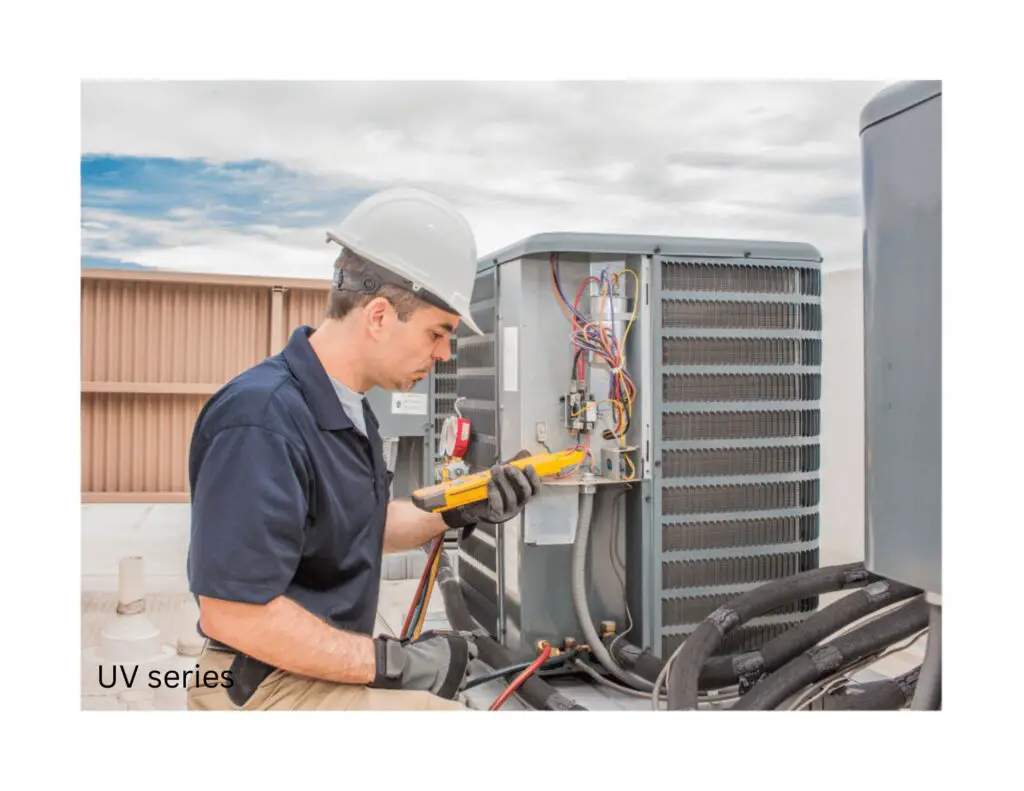
Some HVAC systems include ionizers, electrostatic air cleaners, ultraviolet accessories, or other electronic air-treatment equipment that may produce ozone or an ozone-like odor.
Ozone may also be generated unintentionally by electrical arcing, a failing motor, damaged wiring, or another electrical fault inside the system.
If the smell appears only when the HVAC system starts, check whether any electronic air-cleaning accessories are installed. Turn the system off and request service if the odor is unusually strong, smells burnt, or is accompanied by abnormal sounds.
What Ozone Usually Does Not Smell Like
Ozone is generally described as sharp, electrical, metallic, or chlorine-like.
It is less likely to be the source when an odor smells like:
- Wet carpet, earth, or a damp basement: Often related to humidity, moisture, mildew, or damp materials.
- Rotten eggs: May indicate sewer gas, sulfur compounds, or a fuel-gas odorant.
- Dead animal or rotting food: Usually biological decomposition rather than ozone.
- Fishy or hot plastic: May indicate overheated electrical components.
- Smoke or burnt dust: May come from heating equipment, wiring, motors, or accumulated dust.
When the smell does not match ozone’s sharp electrical character, investigate other household odor sources instead of assuming ozone is present.
Why Can Some People Smell Ozone Better Than Others?
One person may notice ozone immediately while another person standing nearby smells nothing unusual.
That does not necessarily mean either person is mistaken.
People vary considerably in their sensitivity to odors. Genetics, age, congestion, previous exposure, environmental conditions, and individual differences in smell perception can all affect how easily ozone is detected.
Important:
Some people can detect ozone at relatively low concentrations, while others may not notice it as easily. This is one reason professionals do not use smell alone to determine whether ozone remains in an area.
Repeated exposure can also make an odor seem less noticeable over time. This does not necessarily mean the ozone has disappeared.
If you smell ozone and someone else does not, your nose may simply be more sensitive—but smell should never replace proper treatment procedures, ventilation, manufacturer instructions, or testing.
Frequently Asked Questions About Ozone Smell
Why does ozone smell like bleach?
Many people compare ozone to chlorine bleach because both have a sharp, clean, chemical odor.
Ozone and bleach are different substances, but the smell can seem similar enough that chlorine is one of the most common comparisons.
Why does ozone smell like electricity?
Ozone can be produced by electrical discharges, sparks, lightning, electrical arcing, motors, printers, and certain air-cleaning devices.
Because ozone is often encountered around electrical activity, many people associate it with the smell of electricity or static in the air.
Does smelling ozone mean the air is dangerous?
Smell alone cannot tell you whether an ozone concentration is safe or unsafe.
A noticeable odor confirms that something deserves attention, but people differ in their ability to detect ozone and may become less aware of the smell over time.
When ozone is being produced intentionally, follow the equipment manufacturer’s safety, waiting, ventilation, and re-entry instructions rather than relying on smell.
Why does my air purifier smell like ozone?
Some ionizers, electrostatic cleaners, and electronic air purifiers produce ozone as a byproduct.
If a chlorine-like or electrical smell appears only while the unit is running, check whether the device uses ionization, electrostatic collection, or another electronic air-cleaning process.
How long does the smell of ozone last?
The noticeable odor may fade quickly outdoors.
After an ozone-generator treatment, the smell may remain for hours or longer depending on the amount produced, ventilation, room size, materials in the space, and how long the machine operated.
Do not treat the disappearance of the odor as proof that the area is ready for re-entry. Follow the manufacturer’s instructions and ventilate the space thoroughly.
Why does my house smell like ozone?
Possible sources include an ozone generator, ionizing air purifier, electrostatic cleaner, HVAC accessory, laser printer, copier, electric motor, power tool, nearby storm, or electrical problem.
If the source is unknown, identify where the odor is strongest and whether it begins when a particular device turns on.
What does ozone smell like in a car?
After an ozone treatment, people often describe the smell inside a vehicle as a combination of chlorine, electricity, fresh rain, warm plastic, or a strong chemical odor.
Because a vehicle is a small enclosed space, the odor may be much more noticeable than it would be outdoors.
Why does a room smell strange after an ozone treatment?
Ozone may react with smoke residue, fragrances, carpet, upholstery, rubber, plastics, oils, and other materials inside the space.
Those reactions can create odors that seem sweet, sour, stale, rubbery, or chemical even after the strongest ozone smell begins to fade.
Can some people smell ozone better than others?
Yes. Genetics, age, congestion, exposure history, and individual smell sensitivity all affect how easily ozone is detected.
One person may notice it immediately while another barely detects it.
Can I use smell to tell when ozone is gone?
No. Smell is not a reliable safety test.
People vary in sensitivity and may experience temporary odor fatigue. Always use the required waiting period, ventilation procedure, manufacturer instructions, and any appropriate monitoring method instead.
Read More About Ozone and Ozone Generators
If you are researching ozone generators, ozone safety, or odor treatment in homes and vehicles, these guides may be helpful:
Final Thoughts
What does ozone smell like?
Most people describe it as a combination of chlorine bleach, electricity, static, warm metal, burnt electronics, or the air around a thunderstorm.
But identifying the smell is only the beginning.
The same sharp electrical odor can come from a natural storm, an ozone generator, an air purifier, a laser printer, a power tool, an HVAC accessory, or an electrical problem.
Pay attention to where the smell is strongest, when it appears, and which equipment is operating at the time.
An expected odor from known equipment should still be handled according to the manufacturer’s safety instructions. An unexpected indoor ozone smell—especially one accompanied by heat, buzzing, crackling, smoke, or a burning odor—should be investigated promptly.
Ozone has a distinctive smell, but your nose cannot measure concentration or determine whether a space is safe. Use the odor as a clue to locate the source, not as the final safety test.