Ozone Machine Rental: When It Makes Sense (and When to Buy Instead)

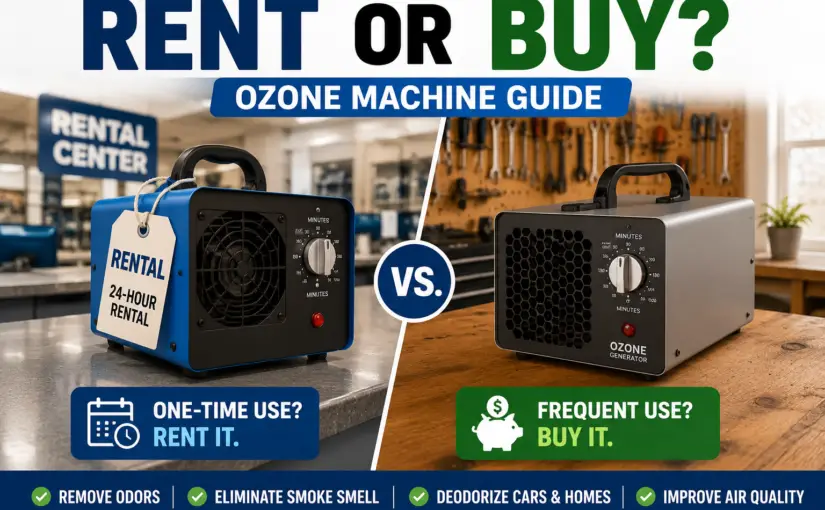
Quick Answer: For most homeowners, renting an ozone machine is the best choice for one-time odor problems. But if you regularly deal with pet odors, smoke, rental properties, or musty spaces, buying an ozone generator can pay for itself surprisingly quickly.

If you’re trying to decide whether to rent or buy an ozone machine, this guide lays out the real-world situations where each option makes sense — with safety tips most rental stores never mention.

When Renting an Ozone Machine Makes Sense

Ozone machines are powerful tools for eliminating odors, smoke damage, mold smells, pet odors, and more — but they’re not always cheap to buy. That’s where renting comes in.

This guide breaks down when renting an ozone machine is the best move, when buying is smarter, and how the rental process works. We’ll also cover safety tips (most places never mention these), real-world examples, and the rental-vs-buy cost math.

For a deeper look at how ozone actually works, see my article: What Is an Ozone Machine? Benefits and Risks Explained.

Renting is perfect when you only need an ozone machine occasionally or for a one-time situation. Here are the most common cases where renting makes the most sense.

✔ One-Time Odor Emergencies

  • Smoke smell after a small fire — for example, a kitchen flare-up that leaves the whole house smelling burned.
  • Lingering pet odor in a bedroom, rental property, or inherited home.
  • Severe trash, food, or spill smells that normal cleaning can’t remove.

Mini-case example: A landlord had a tenant move out and leave behind a strong cat urine smell. One 24-hour rental completely cleared the odor before showing the unit.

✔ Car Odor Treatment

Car ozone treatments are one of the biggest reasons people rent machines. Smoke smell, flood odor, wet carpet smell, and even “gym bag stench” can often be removed in 30–60 minutes.

red corvette with ozone generator running to remove odors


✔ After a Fire or Flood

If you’re dealing with light smoke damage or post-flood mustiness, renting a high-output commercial ozone machine can help speed up cleanup.

✔ Airbnb or Rental Property Turnover

  • Fast removal of cigarette smell from guests
  • Pet odor after long-term tenants
  • Leftover cooking odors (curry, fish, grease, etc.)

✔ Cost of Renting

Most local rentals fall between:

  • $25–$40 per hour (restoration companies)
  • $40–$80 per day (hardware stores like Home Depot or local shops)

When Buying an Ozone Machine Is Better

If you expect to use an ozone machine multiple times a year, buying one is usually more cost-effective. Some home units cost the same as two or three rentals.

✔ You Have Ongoing Odor Problems

  • Multiple pets in the home
  • Smoking indoors
  • Persistent basement or crawlspace odors
  • Moldy or musty rooms

Mini-case example: A homeowner with three large dogs bought a $90 ozone generator and saved hundreds compared to renting every time the house needed a deep deodorizing.

✔ You Run a Small Business

  • Car detailers
  • Apartment maintenance staff
  • Home flippers
  • Property managers

✔ Cost Comparison

Option Typical Cost Best For
Renting $40–$80 per day One-time use
Budget Ozone Machine $60–$120 Occasional use
Professional Ozone Machine $150–$400 Businesses & heavy use

Whether you rent or buy, the proper way to operate the machine remains the same. If you’re new to ozone generators, start with our Ozone Generator Starter Guide. It explains how ozone works, when to use it, and how to use it safely before choosing a machine.

How Ozone Rentals Work (Step-by-Step)

If you’ve never rented an ozone generator before, here’s what to expect:

  1. Call local hardware stores — Home Depot, equipment rental centers, and restoration companies often carry them.
  2. Place a reservation — Daily rentals are the most common.
  3. Pick it up and pay a deposit — Expect a small refundable deposit.
  4. Follow safety instructions — Leave the building while it runs.
  5. Return it clean and on time — Many charge late fees.
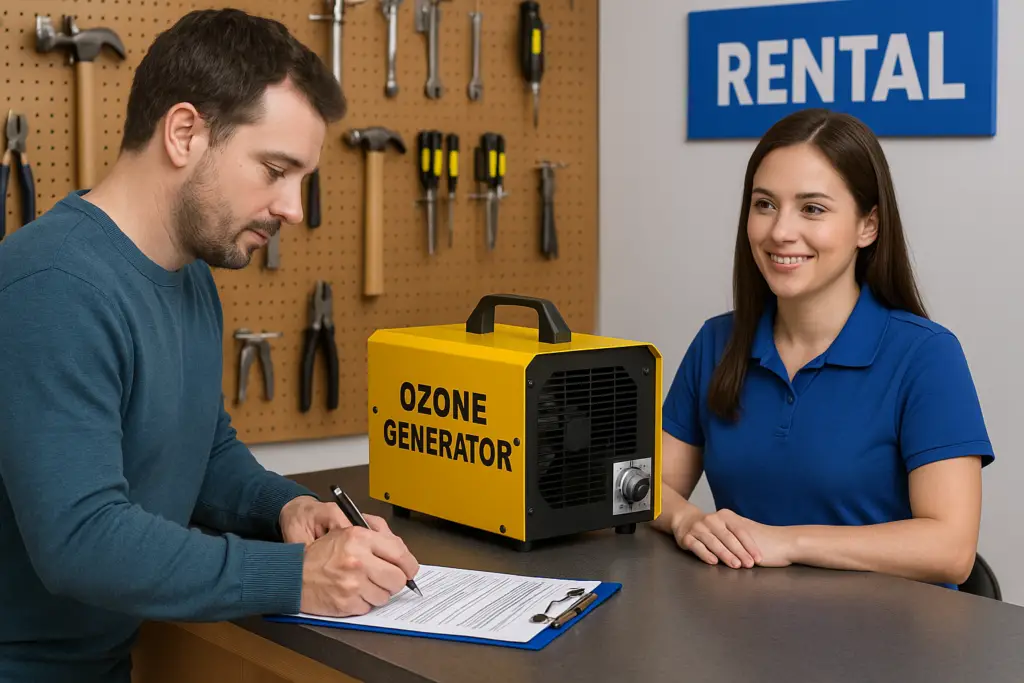
Ozone machine rental counter at a hardware store


Safety Rules Most Rental Stores Don’t Explain

This part matters — ozone is powerful, and misuse can be dangerous. Most stores hand you a machine with minimal guidance.

  • No people, pets, or plants inside the treated space.
  • Remove houseplants — ozone damages them quickly.
  • Seal the room if possible to keep ozone concentrated.
  • Set a timer and leave the area immediately.
  • Wait 30–60 minutes after it shuts off before re-entering.
  • Avoid breathing ozone directly — it is an upper-airway irritant.

For full safety details, see: What Is an Ozone Machine? Benefits and Risks Explained.
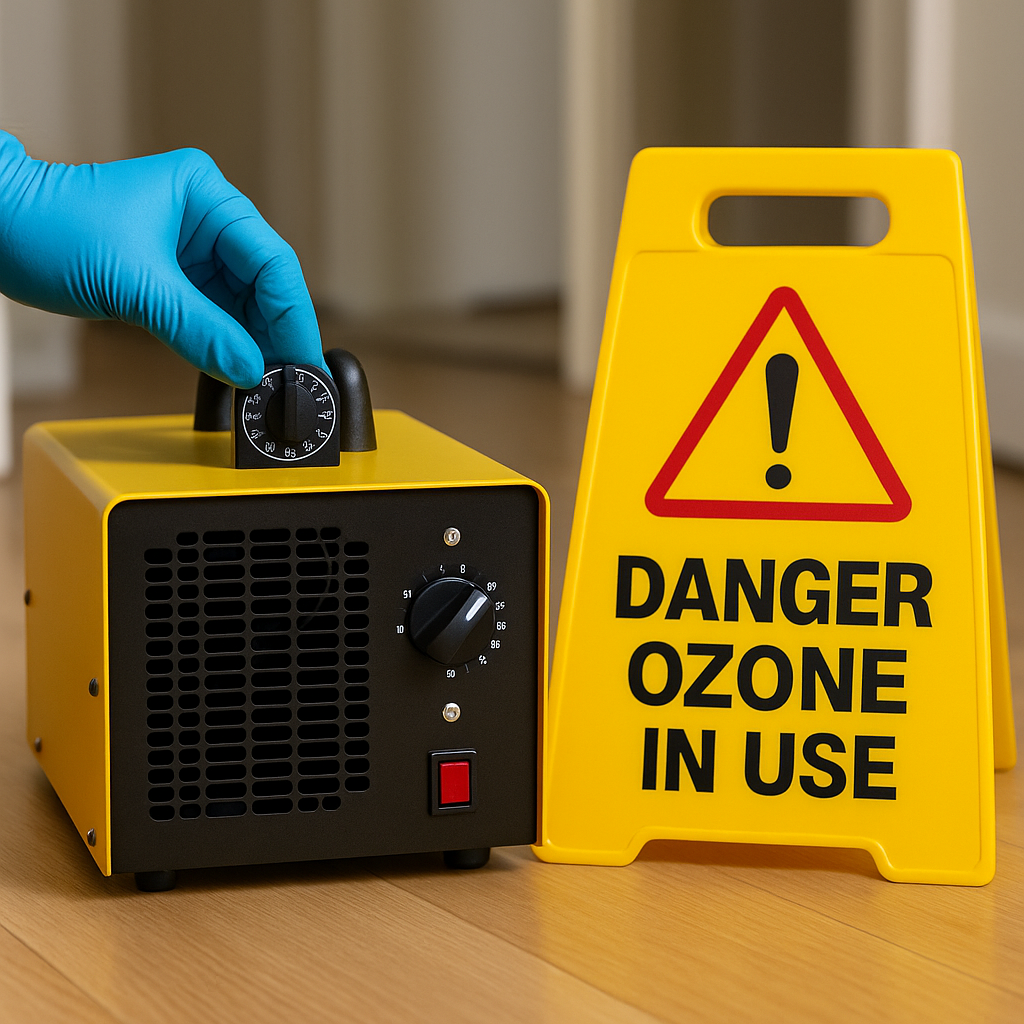
Person adjusting the timer on an ozone generator with gloves on next to a yellow ‘Danger: Ozone In Use’ warning sign


Cost Breakdown: Rent vs. Buy

Here’s an easy way to decide:

  • If you only need ozone **once or twice**, renting is cheaper.
  • If you’ll need it **three or more times**, buying is cheaper.

Most homeowners who buy a $90–$150 machine recover the cost within the first year.


Mini Case Study: When Renting Saved Money

A couple bought a home that reeked of cigarette smoke. They rented a commercial-grade ozone generator for $75 and ran two sessions. They never needed ozone again — so renting was the perfect choice.


Mini Case Study: When Buying Was the Better Choice

A car detailer was paying $40 per rental, three times per week during busy season. He bought a $250 professional-grade machine — paid for itself in one week.


Best Ozone Machines to Buy Online (Affiliate Picks)

These are the types of ozone generators people buy most often:

    • Budget Home Units: $60–$120 — good for small rooms and cars.
    • Medium Units: $120–$200 — ideal for full houses or basements.
    • Commercial Units: $200–$400 — best for cleaning businesses.

If you have determined that purchasing a unit is a better long-term value than a rental, you can compare our top-rated ozone generators for home use to find a model that fits your specific needs.
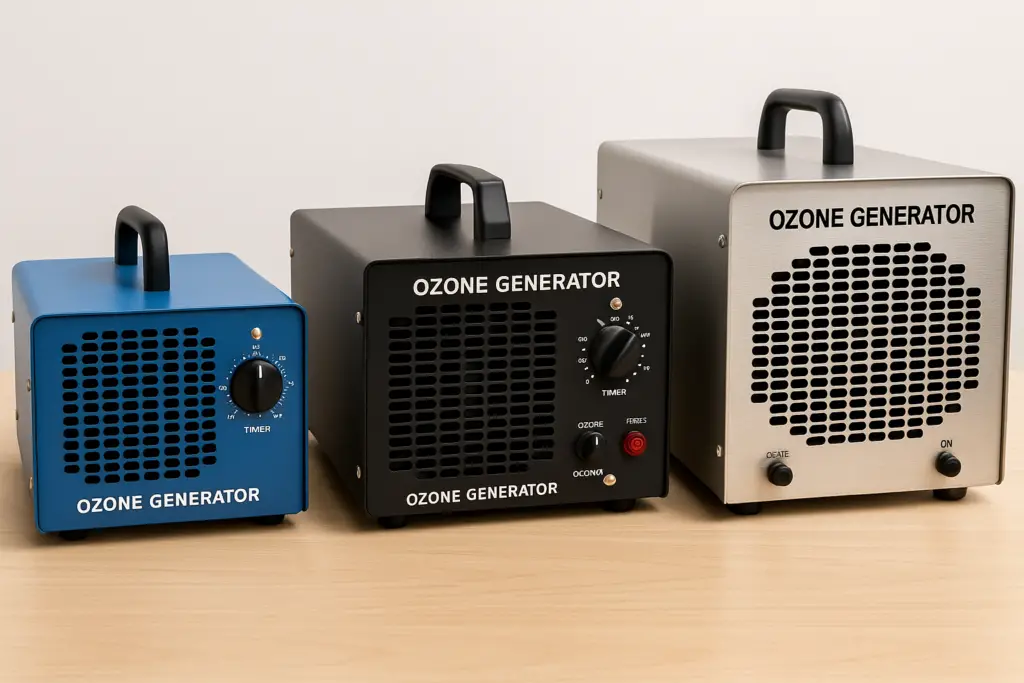
Three ozone generator units in small, medium, and commercial sizes displayed side by side on a table


What Ozone Can’t Do (Common Misunderstandings)

Ozone is strong, but it isn’t magic. And a lot of rental companies oversell what it can actually accomplish. Here are the most important limitations to understand before you rent or buy a machine.

Ozone does not remove visible mold

It can temporarily reduce the musty smell, but it doesn’t kill mold growing inside drywall, insulation, carpet padding, or HVAC duct dust. Mold needs physical removal, not just ozone.

Can ozone kill mold? Here’s what it can and can’t do »

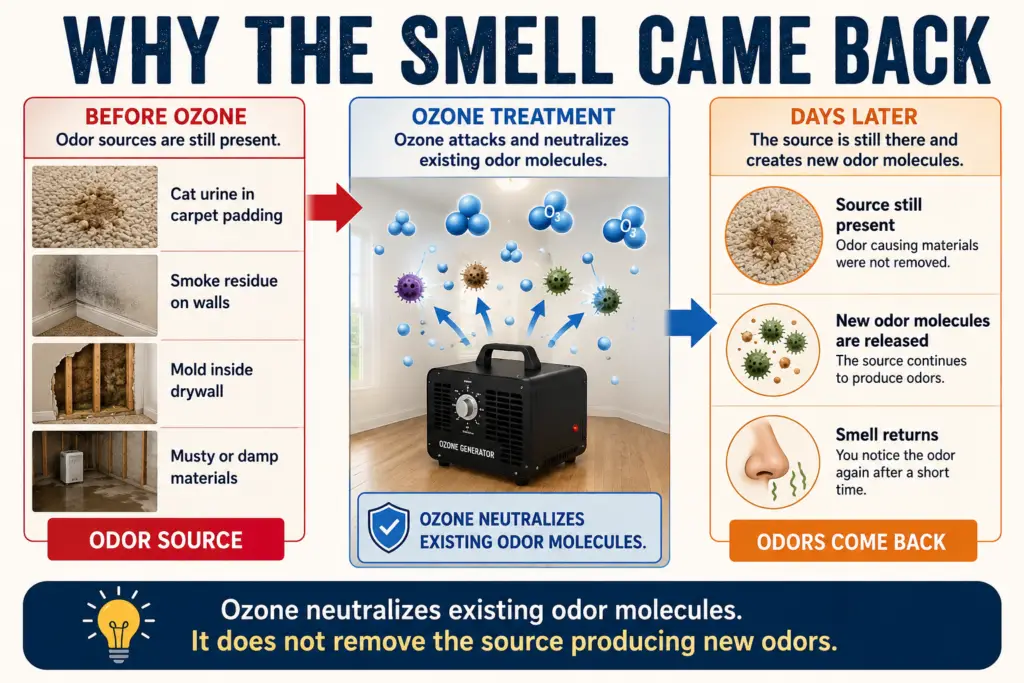
Ozone doesn’t work well if the source of the odor is still present

If something is still wet, decaying, or actively growing bacteria, ozone might knock the smell down for a day — but it comes back. The source has to be cleaned or removed.

Ozone won’t remove stains, residue, or physical contamination

People sometimes assume ozone “cleans” carpets, furniture, or fabrics. It doesn’t. Ozone only affects odor molecules in the air and top layers of surfaces.

Ozone can’t fix deep smoke damage on its own

If smoke has soaked into cabinets, insulation, or plastics, ozone may help the smell, but you still need cleaning, sealing, or removal in bad cases.

Does ozone really remove smoke smell? Complete guide »

Ozone cannot run while you’re in the room

No humans, pets, or houseplants can be inside the treated area. This makes ozone unsuitable for treating occupied spaces or for long-term running.

Ozone risks explained here »

Ozone can’t fix odors trapped inside clothes unless treated properly

Clothes usually need to be washed. Ozone helps with lingering odor in closets or dressers, but it won’t penetrate thick fabrics.

Ozone smell on clothes — why it happens & how to fix it »

Bottom line: ozone is a powerful deodorizing tool — but it only works when the odor source is stable, dry, and accessible. For everything else, physical cleaning is still required.

Ozone Rental FAQ

How long should you run an ozone machine?

Most rooms need 1–4 hours. Cars usually need 30–60 minutes.

Do ozone machines really remove smoke smell?

Yes — ozone is one of the most effective smoke odor treatments because it breaks down the molecules causing the smell.

Can ozone kill mold?

It removes the smell but does not kill mold growing inside walls or carpets. You still need physical removal.

If you’re still unsure how ozone fits into your cleanup or odor-removal plan, these quick FAQs may help clear things up:

How do I find an ozone machine near me?

Search for:

  • “ozone machine rental near me”
  • “equipment rental center ozone machine”
  • “ozone generator Home Depot rental”

Final Thoughts: Rent or Buy?

Renting is perfect for one-time emergencies and quick odor removal. Buying is better if you expect to treat odors multiple times a year, have pets, smoke indoors, or run a business that deals with smells frequently.

Whatever route you choose, ozone is a powerful tool — just make sure you use it safely and correctly.

Read More About Ozone Generators

If you’re researching ozone generators, ozone safety, or ozone treatments for homes and vehicles, these articles may be helpful:

How Many Watts Does a Fan Use? (7 Fan Types Examined)

Right now, we are at the beginning of the month of March. We are just starting to feel warmer days and relief from the winter. Some days are cooler and some almost summer like. But windy to be sure.

This is about the time of the year people began to pull out the fans.

In our house, We have fans in every room, except the kitchen and the bathrooms.

We have a ceiling fan in every bedroom and in the living room, that stays on constantly. And in the master bedroom there is two tower fans on each side of the bed that run almost all year long.

You would think with all the fans running that we must be using a ton of energy and our electric bill is outrageous.

But comparably, when you look at the wattage of an average fan which is usually around a 100 w and compare it to say a space heater that uses up to 1500 w on high, the difference is quite striking.

how many watts does a box fan useHow many watts does a fan use?

40 w up to 120 w is the average.

How much does it cost to run a 120 w fan 24 hours a day?

23 cents a day or 7 dollars a month.
$3.50 if you only run it at night for the entire month.

But that is a estimate based on the average price per kilowatt hour in the United States per state. Which is 12.8 cents per kilowatt hour.

Those numbers can vary greatly if you live in say Hawaii. Where the price per kilowatt hour is 29.14 cents. Which means the cost to run a 120 watt fan for 24 hours in the aloha state is more like 83 cents a day and $26 a month.

You can figure out how much energy any of your appliances use by using a simple formula.

Watts x Hours(used) ÷1000 x cents per kilowatt hour

How many watts does a ceiling fan use?

The average wattage of a standard 52″ ceiling fan is anywhere from 50 to 120 w.

For instance the Hampton Bay classic 52-in ceiling fan with remote and lights uses only 53 Watts on high, 23 Watts on medium, in 10 watts on low.
7
Where as the similarly sized Casablanca luxurious Correne 56″ uses 100 w on high.

Hint: Does running a ceiling fan help your AC?

Using a ceiling fan in conjunction with your AC can actually help lower your overall cooling cost because it will help circulate the cool air coming from your AC much easier.
It will also spread out the cool air coming from your air conditioner much faster which in turn will take a load off of your AC unit.


How many watts does a 20″ box fan use?

A 20-in box fan uses anywhere from 50 to 90 Watts.

The typical Lasko box fan that you see piled on pallets in the middle of Walmart is rated at 54 Watts.

The same exact style by Comfort Zone uses 75 w.

Hint: Box fans are the most economical for the amount of air that they blow for the money.
But they’re not the easiest to find a good place for.
helpful hint: If someone in your house is a guitar player, guitar stands make a excellent DIY solution to adjusting the placement of a box fan.

How many watts does a tower fan use?

The average wattage of a 42-in tower fan is 54 to 82 Watts.

A side-by-side comparison of the Lasko 42-in tower fan with the Vornado 42-in tower fan shows that the Lasko uses 54 w on high whereas the Vornado uses 82 Watts on high.

How many watts does a Stand (pedestal) fan use?

Standing Pedestal fans are usually a little less powerful than a box fan and for the same reason use less energy than other kinds of fans.

The 16 inch pedestal fan by Lasko only uses 42 Watts.

How many watts does a 20″ floor fan use?

Floor fans typically move a lot more air than a pedestal fan and the amount of wattage that they use reflects that.
The average 20 inch floor fan uses 120 w

The Lasko 20 inch floor fan uses 127 Watts where is the Toshiba comes in at 120 watts on high.
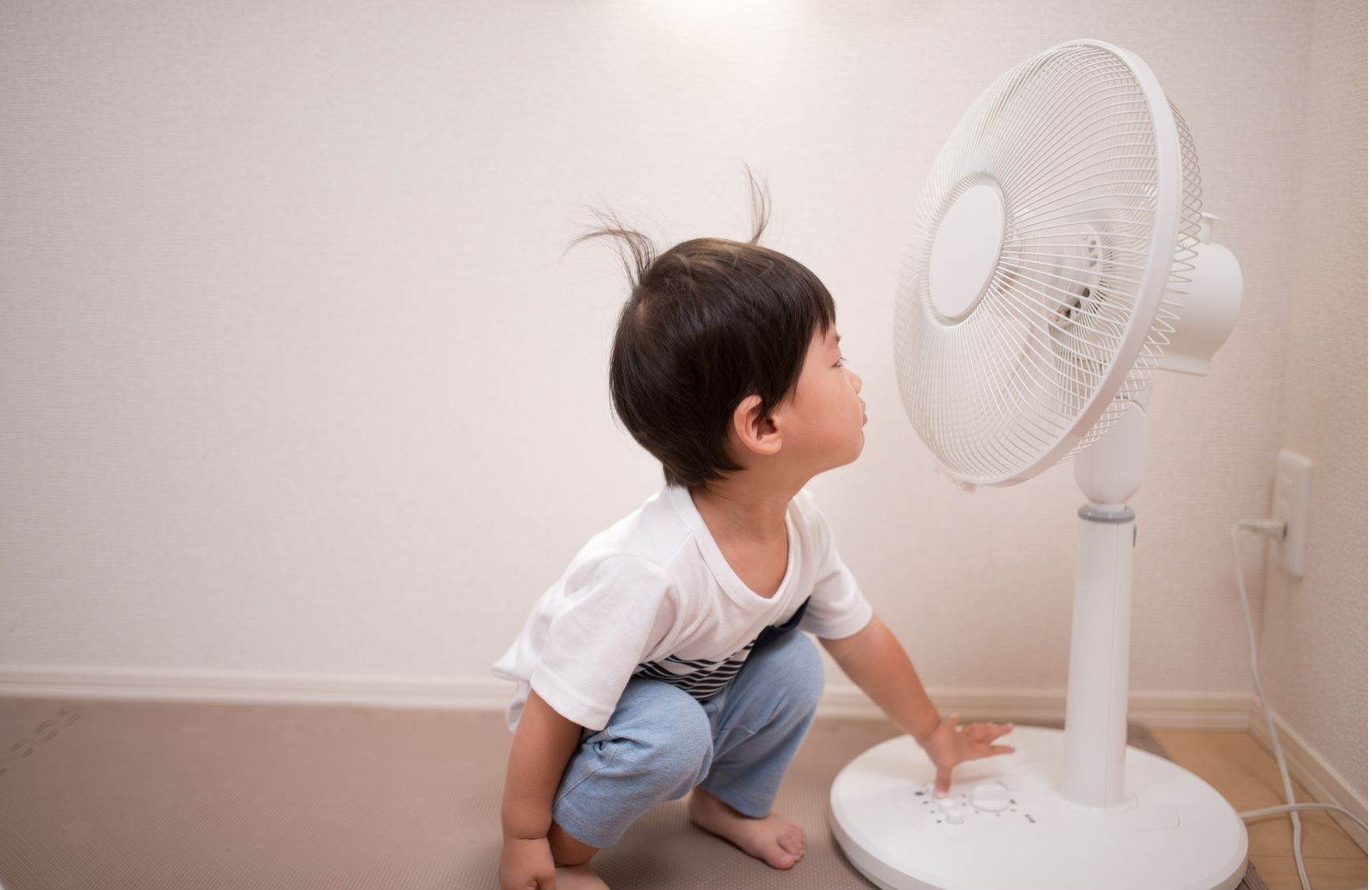

What is the wattage of a table fan?

Table fan wattage ranges from 30 to 50 w

The most energy efficient table fan we found was the Hunter retro 12″ that uses 35 Watts.
The runner-up was the comfort zone at 40 Watts.
And in last place surprisingly, was the Lasko at 48 w

How many watts does a 24″commercial fan use?

240 w is the average.
Once you get into the commercial fan and professional air mover area, the amount of energy it takes to run these becomes quite a bit higher.
Air movers are designed to push a great deal of air into an area in a short amount of time.
Out of every type of fan, air movers use the most energy by far.

How many watts does an air mover use?

About 400 w is the average.
The Rigid air mover uses exactly that.

how many watts does a box fan use

How do you position a fan to get the best out of it?

How you position the fan and where you put it can make all the difference in how effective a fan is regardless of the wattage that it is using.

In the springtime, putting a box fan in the window and blowing the cool air from the outside into the inside is a great way to cool the house off. The humming of the fan also has the unintended effect of discouraging insects from coming through the window.

Placing a fan where it can easily pull in air is the trick to getting the air moving. Many times people will want to place a fan closer to the wall or the drapes to get it out of the middle of the room, but that has the effect of limiting the amount of air that can move through the fan. Thus the fan should always be in an open area where air can easily enter it.

Keeping the fan clean is also a easy way to get a lot better effectiveness out of it.

Though you will not find this problem with the ceiling fan, every other type of fan has a tendency to gather dust and Lent on the back grill. If the dirt and dust are allowed to get thick enough, they will keep air from flowing through the fan.
By cleaning the grime and dust off the back of a fan, you will be amazed at how well that old fan works.

Most of time you view a fan as a way to cool off the air inside of a room or inside of a computer, etc.

But a fan is simply a way to move air from one place to another and can be used to move the warm air from the ceiling down by simply switching the direction of the ceiling fan from counterclockwise to clockwise.

This works because as you know, heat rises.
By reversing the direction of the blades you can pull the heat from the ceiling into the room.

Ozoning a House: Effective Bug Control Method?


Key Takeaways

  • Ozoning a house with ozone generators can be an effective bug control method for pests like bed bugs, spiders, roaches, and fleas.
  • Ozone treatment disrupts pests but may not guarantee complete eradication, requiring additional pest management practices.
  • Safety precautions, including occupant evacuation, proper ventilation, and monitoring, are crucial when using ozone generators.
  • Ozone treatment can also affect plants, necessitating protection or removal during the process.

Introduction:

In the quest to maintain a pest-free living space, many homeowners are exploring alternative methods of insect control.

One approach is the use of ozone generators.

From bed bugs to spiders, roaches, and beyond, we explore the capabilities of ozone generators and provide essential guidance on safe and responsible usage.

does ozone kill bed bugsOzone and Bed Bugs

What’s not to hate about bed bugs? Who doesn’t love getting bit in their sleep? bed bugs are one of the hardest things to get rid of. A lot of people want to know if using an ozone generator can help. let’s see if using ozone to fight bed bugs is a good idea?

Can Ozone Kill Bed Bugs?

Bed bugs are notorious for their resilience and ability to hide in the tiniest of cracks and crevices. While ozone generators can be effective in eliminating bed bugs, it’s crucial to understand their limitations. Ozone primarily works by oxidizing the outer shells and respiratory systems of bed bugs, ultimately killing them. However, here are some key considerations:

    • Hiding Spots: Bed bugs often hide deep within mattresses, furniture, and wall voids, where ozone may have difficulty reaching.
    • Eggs: Ozone may not effectively target bed bug eggs, which are well-protected and hidden.

For a more realistic walkthrough on why gas treatments often fail to reach hidden nests, see our dedicated guide on using ozone for bed bugs and what methods actually work.

Tips for Using Ozone Against Bed Bugs:

  • Thorough Inspection: Identify bed bug hiding spots and focus ozone treatment on these areas.
  • Multiple Treatments: Ozone treatment may need to be repeated to ensure all stages of bed bugs are eliminated.
  • Complement with Other Methods: Combine ozone treatment with other bed bug control strategies, such as cleaning, vacuuming, and the use of bed bug-proof covers.

does ozone kill spidersSpiders and Ozone

Spiders are an unwelcomed guest in most people’s homes.
I happen to live in a house with 4 women who go into a panic episode at the sight of the smallest spiders. I know the madness. If you’re seeking a way to deter these eight-legged intruders, you might have considered the use of ozone generators.

Does Ozone Kill Spiders:

Ozone can disrupt spider webs and create a less inviting environment for spiders, making it an effective tool in controlling various species. Here’s its effectiveness against some common spiders:

  1. Black Widow Spider (Latrodectus spp.): Ozone can deter black widow spiders by disrupting their webs and nesting areas. However, exercise caution, as black widow bites can be medically significant.
  2. Brown Recluse Spider (Loxosceles spp.): Ozone can help deter brown recluse spiders, but these spiders are often elusive and hide in secluded places.
  3. Common House Spider (Parasteatoda tepidariorum): Ozone can be highly effective against common house spiders, which are frequently found indoors.
  4. Cellar Spider (Pholcidae): Cellar spiders, often found in dark, damp areas, may be deterred by ozone treatment.
  5. Wolf Spider (Lycosidae): Ozone can disrupt wolf spider habitats, reducing their presence in treated areas.

Limitations of Ozone for Spider Control:

While ozone can be effective against various spider species, it’s essential to understand its limitations:

  • Species Variability: The effectiveness of ozone may vary depending on the spider species and their sensitivity to ozone.
  • Web Regeneration: Spiders may attempt to rebuild their webs after ozone treatment, requiring ongoing efforts to deter them.

does ozone kill roachesRoaches and Ozone

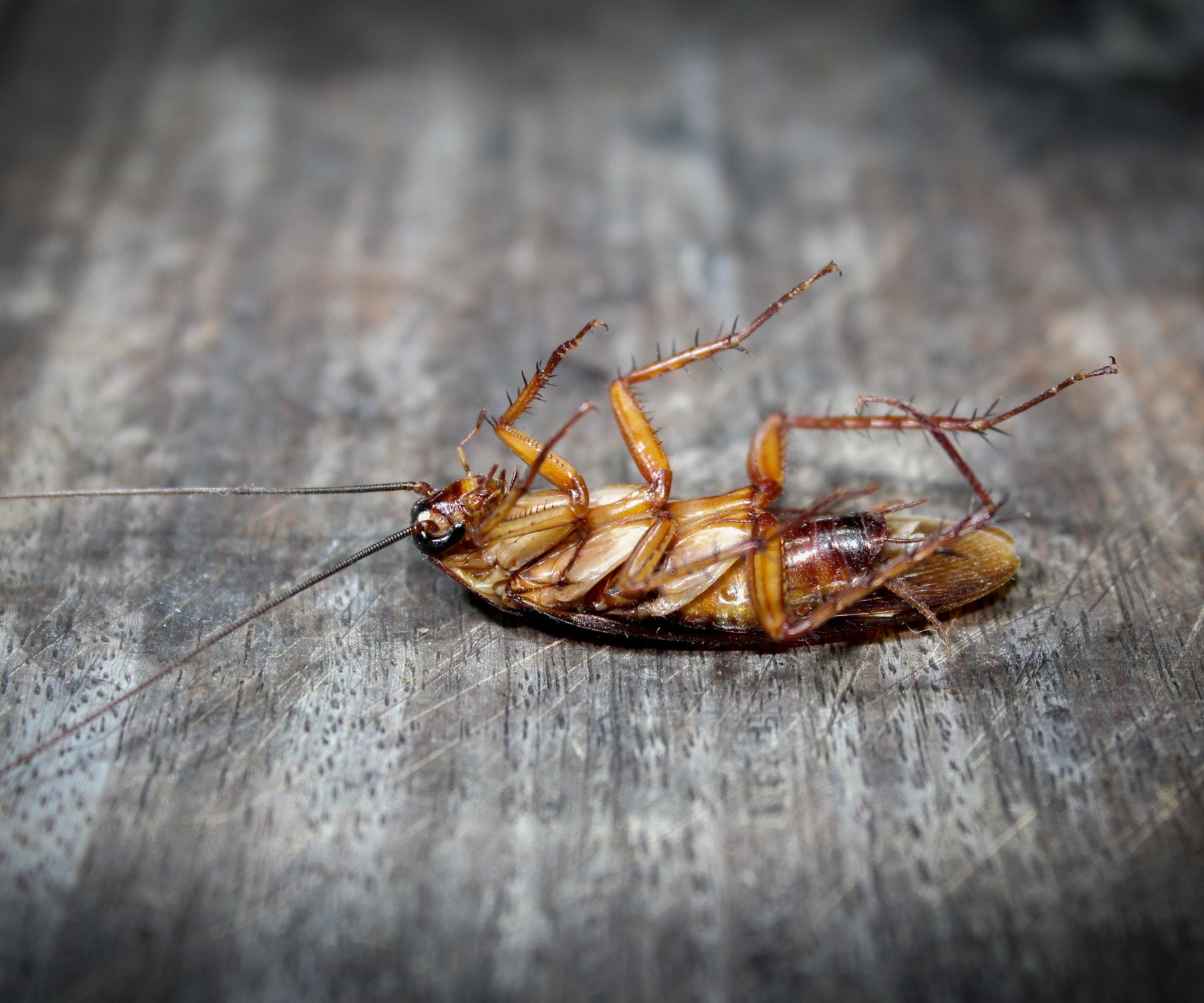
Roaches are notorious scavengers that can infest homes and create unsanitary conditions. If you’re dealing with a roach problem, you might be exploring various methods for effective control. In this section, we delve into the potential of using ozone generators to combat roach infestations.

How Ozone Kill Roaches:

Roaches often inhabit hidden areas within homes, making it challenging to reach and eliminate them. Here’s how ozone can be effective in controlling roaches:

  • Nest Disruption: Ozone can disrupt roach nests and hiding spots, making it difficult for them to establish colonies.
  • Repellent Effect: Ozone’s strong scent and reactivity can act as a repellent, discouraging roaches from frequenting treated areas.

Tips for Using Ozone Against Roaches:

  • Targeted Treatment: Identify roach-prone areas and focus ozone treatment on these spaces to maximize effectiveness.
  • Repeat as Needed: Roach infestations may require multiple ozone treatments over time to ensure comprehensive control.
  • Combine with Other Methods: Use ozone treatment in conjunction with other roach control strategies, such as sanitation, sealing entry points, and eliminating food sources.

does ozone kill fleasFleas and Ozone

Fleas are tiny but persistent bloodsuckers that can infest both your pets and your home, making life uncomfortable for everyone. When it comes to flea control, homeowners seek effective and non-toxic solutions. In this section, we’ll explore the role of ozone generators in combatting flea infestations.

Does Ozone Kill Fleas?:

Fleas can be particularly challenging to eradicate due to their life cycle and ability to hide in various areas. Here’s how ozone can be effective in controlling flea populations:

  • Killing Fleas: Ozone can penetrate flea hiding spots and kill adult fleas on contact.
  • Interrupting the Life Cycle: Ozone can disrupt the pupae stage of fleas, preventing them from developing into biting adults.

Tips for Using Ozone Against Fleas:

    • Thorough Treatment: Ensure comprehensive ozone treatment, targeting areas where fleas are likely to hide, including carpets, pet bedding, and upholstered furniture.
    • Repeat as Necessary: Flea infestations may require multiple ozone treatments to address all life stages of fleas.
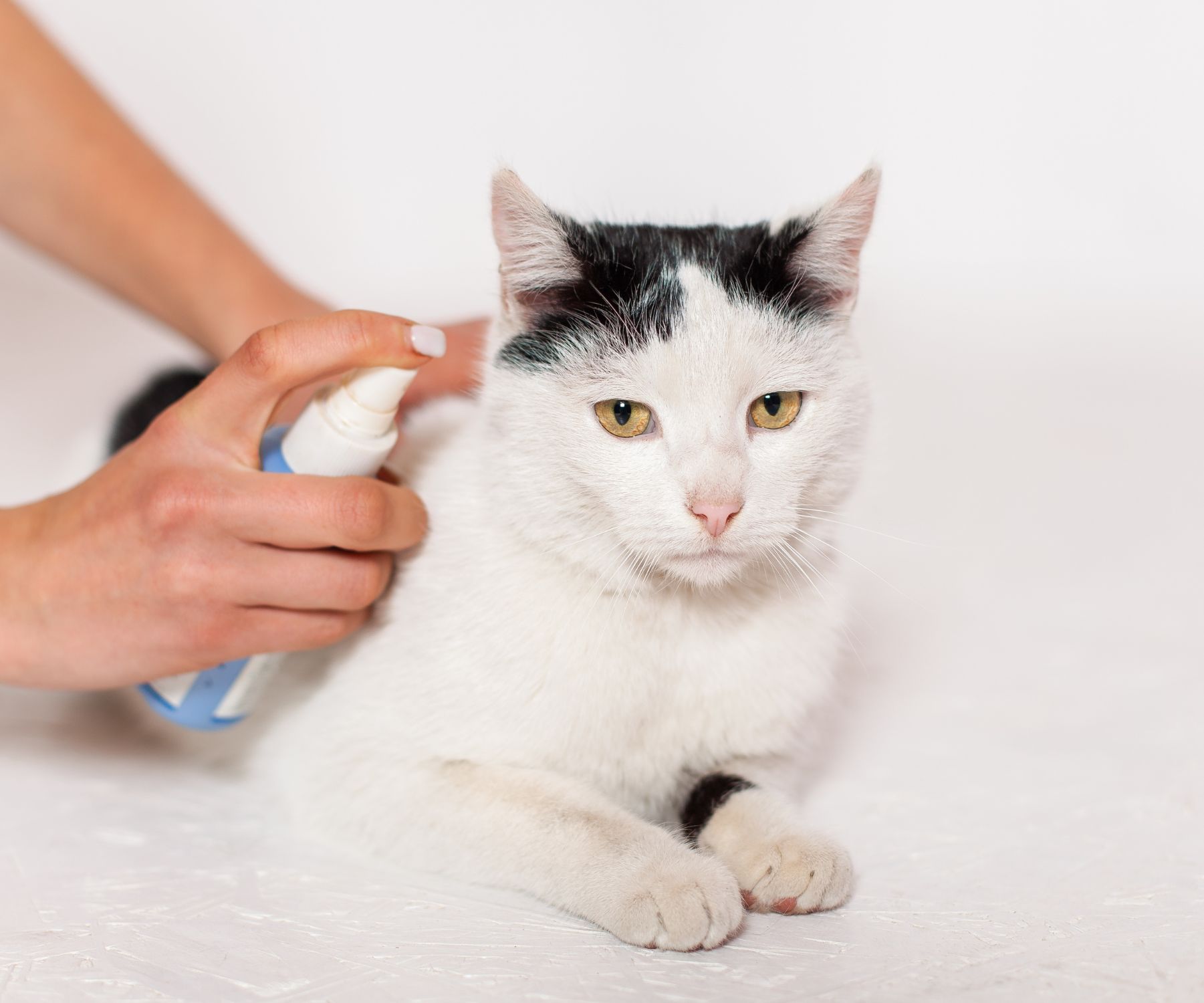
    • Complement with Pet Care: Concurrently treat pets for fleas to prevent reinfestation. Consult your veterinarian for flea control options for your pets.

FAQ Section: Various Insects and Ozone

Q1: Can Ozone Kill Termites?

A: Ozone generators can affect termites when used correctly. Ozone may penetrate termite nests and disrupt colonies. However, termite control usually requires a specialized approach, and ozone should be considered as a supplementary method.

Q2: Does Ozone Kill Ticks?

A: Ozone can have an impact on ticks, particularly in their nymph stages. However, effective tick control may involve other strategies, such as tick repellents and habitat modification.

Q3: Does Ozone Kill Ants?

A: Ozone may deter ants, especially when applied directly to ant trails or nests. However, it’s important to identify and address the source of the ant infestation for long-term control.

Q4: Does Ozone Kill Dust Mites?

A: Ozone can help reduce dust mite populations in mattresses and bedding by oxidizing their exoskeletons. Regular ozone treatment, combined with thorough cleaning, can be effective in managing dust mites.

Q5: Do Ozone Generators Work Against Flies?

A: Ozone can deter flies by disrupting their breeding sites and deterring them from treated areas. Proper sanitation and waste management are essential for effective fly control.

Q6: Can Ozone Kill Head Lice Infestations?

A: Ozone may be less effective for head lice control, as these parasites reside on the human scalp. Traditional methods like medicated shampoos and combing are typically more suitable for lice removal.

Q7: Does Ozone Kill Mosquitoes?

A: Ozone may deter mosquitoes from treated areas, but it’s typically not a primary method for mosquito control. Mosquito control often involves repellents, traps, and habitat management.

Q8: What About Moths in Closets and Pantries?

A: Ozone can help deter moths by breaking down their eggs and disrupting their life cycle. Regular ozone treatment in storage areas can assist in moth control.

Q9: Can Ozone Get Rid of Mice and Rodents?

A: Ozone generators are not effective against rodents like mice. Rodent control requires specialized traps and exclusion methods.

Q10: How long does it take ozone to dissipate after you use a ozone generator?

A: The best answer is to err on the safe side and give it a few hours to ensure your safety. As you may guess, the answer varies with both strength of the generator and the length of time it is operated. That being said, ozone has a short life and most experts agree that it will revert back to breathable oxygen in about 30 minutes

Q11: Do ozone generators remove cigarette smoke odor?

A: Yes. Ozone will oxidize the over 4000 chemicals that make up cigarette smoke and eliminate the lingering smell.

Cigarette and cigar odors tend to travel to every nook and cranny they can find.
And because of the tar residue that that is part of tobacco smoke, it adheres to everything, especially carpets, drapes, and furniture.

Ozone will travel in a similar path as cigarette smoke and break down the the molecules that are causing the odor, even the molecules that have glued their self to your furniture.

Q12: Will Ozone kill Mold?

A: An Ozone generator will kill any exposed mold or fungus in the room it is operated in. But similarly to the effect you get with insects is what you get with mold. If you have a problem with mold before you use the ozone generator, you will still have a problem afterwards. It will not do any physical cleanup or identify and fix the original problem.

Q13: Will Ozone Get Rid of the Smell of Cat Urine?

A: The answer is mostly no. Cat urine typically gets deep down into the carpet underneath the floorboards. Ozone is a topical oxidizer and doesn’t get underneath the carpet or inside the walls. There are different oxidizer solutions you can put on cat urine if the problem is not too extreme.

Q14: What Are Ozone Generators Used For?

A. Ozone generators have diverse applications, including:

  • Hotel Rooms: Transforming smoking rooms into non-smoking rooms, restoring rooms with smoke odors, and eliminating cooking smells and harmful germs.
  • Vehicles: Removing persistent cigarette and cigar odors, especially in the cab of cars or trucks, making them smell fresh.
  • House Flipping and Rental Remediation: Removing lingering smoke smells left behind by previous occupants, enhancing property value.
  • Mold Remediation: Clearing mold spores and musky odors from homes after identifying and fixing the source of mold issues.

How To Get The Best Results From A Ozonator?
1.Use the appropriate size generator for your area.

Too small of an ozone machine will not accomplish much and only make the air unbreathable.
To find a machine capable of reaching the high concentrations needed for pest suppression, you can compare our recommended high-output ozone generators for home use.

Using too large of an ozone generator will increase the amount of time you will need to wait before re-entering the area.

2. Vacuum the carpets. getting the smell out of the carpets will be much easier if there is not debris and dust all over them.

3. Mop floors and wipe down surfaces.

The same principle as vacuuming the floors. Ozone will have a much easier time getting rid of deep smells if it doesn’t have to get through a film of dirt or grime. Skipping this deep cleaning phase is the biggest mistake people make when using an ozone generator, as the gas cannot reach pests buried under layers of physical debris.

4. Center the ozone machine in the middle of the room.

5. Start small. It is always better to use the machine for a shorter time then check the results.

6. You can always run it again and turn it up a little if you need.

The problem with ozone not dissipating the way it should can linked to too much ozone being blasted for too long.

According to some experts, you can get into an arena where VOCs begin to break up and form other types of gases when exposed to heavy ozone too long.

This is not result you’re after. It is much better to start small then have to deal with a problem like that.

Safety Precautions When Using Ozone Generators for Insect Control:

Using ozone generators for insect control is a practical and non-toxic approach, but safety should always be a top priority. Ozone is a powerful oxidizing agent that can have health risks if not used correctly. Follow these safety precautions to protect yourself, your loved ones, and your pets when using ozone generators:

1. Read the User Manual:

  • Before operating an ozone generator, thoroughly read and understand the manufacturer’s user manual. Each machine may have specific instructions and safety guidelines.

2. Occupant Evacuation:

  • Always evacuate people, pets, and plants from the treated area during ozone exposure. Ensure that the space is completely empty.

3. Ventilation:

  • After ozone treatment, ventilate the area by opening windows and doors to allow fresh air to circulate. This helps in dissipating any remaining ozone.

4. Safety Gear:

  • When setting up the ozone generator or adjusting its settings, wear appropriate safety gear, including gloves and safety glasses, to protect yourself from direct exposure.

5. Timer Usage:

  • Use an outlet timer to control the ozone generator’s operation. This prevents overexposure and allows for safe intervals between treatments.

6. Sealing Gaps:

  • Seal any gaps or openings that may allow ozone to escape into adjacent living spaces. Ensure a proper seal for maximum ozone concentration in the treated area.

7. Remote Operation:

  • If your ozone generator supports remote control, use it to turn the machine on and off from outside the treated area.

8. Monitor Ozone Levels:

  • Consider using an ozone monitor to measure ozone levels during and after treatment. This provides a clearer understanding of when it’s safe to re-enter the treated area.

9. Limit Duration:

  • Avoid excessive ozone exposure by limiting the duration of treatment. Longer treatment times may lead to unwanted chemical reactions.

10. Children and Pets:

  • Ensure that children and pets cannot access the treated area during and after ozone treatment. Ozone exposure can be harmful to their respiratory systems.

11. Health Considerations:

  • If you have respiratory issues, consult a healthcare professional before using an ozone generator. People with asthma or other respiratory conditions should exercise extreme caution.

12. Maintenance:

  • Regularly maintain and clean your ozone generator according to the manufacturer’s recommendations to ensure safe and effective operation.
  1. Protecting Plants:
    • While ozone exposure can be harmful to plants, take extra precautions to shield them during treatment. Cover delicate or sensitive plants with plastic sheeting or move them to an ozone-free area. After treatment, thoroughly ventilate the space to help clear any lingering ozone that may affect your plants.

Whenever you use ozone for non-traditional purposes, the risk of operator error increases. If you’re new to ozone generators, start with our Ozone Generator Starter Guide. It explains how ozone works, when to use it, and how to use it safely before choosing a machine.

Remember that ozone generators should be used as part of a comprehensive pest control strategy, and safety should always come first. Following these precautions will help you use ozone generators effectively and protect the well-being of everyone in your household.

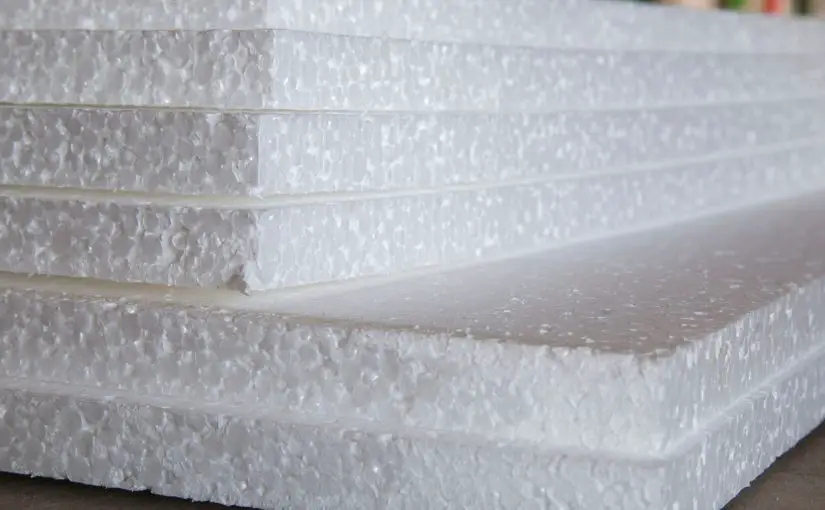
Why Is There Mold On The Styrofoam In The Air Conditioner?

Mold growth happens where there is a lack of light and lot of moisture and nutrients to feed it. Most mold strains are common to leaves and grass and more specifically the soil that is feeding the grass.

So how does mold get on the Styrofoam in the air conditioner?

1. The Styrofoam is dirty.
2. There is standing water inside the air conditioner.

Styrofoam is one of the most unlikely places for mold to grow. The reason is it has absolutely no ability to absorb moisture and it has zero nutrients.
But given the right circumstances even Styrofoam can have mold growing on it.

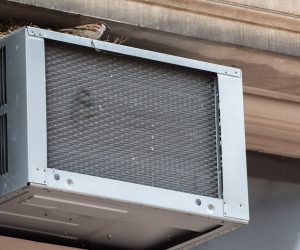
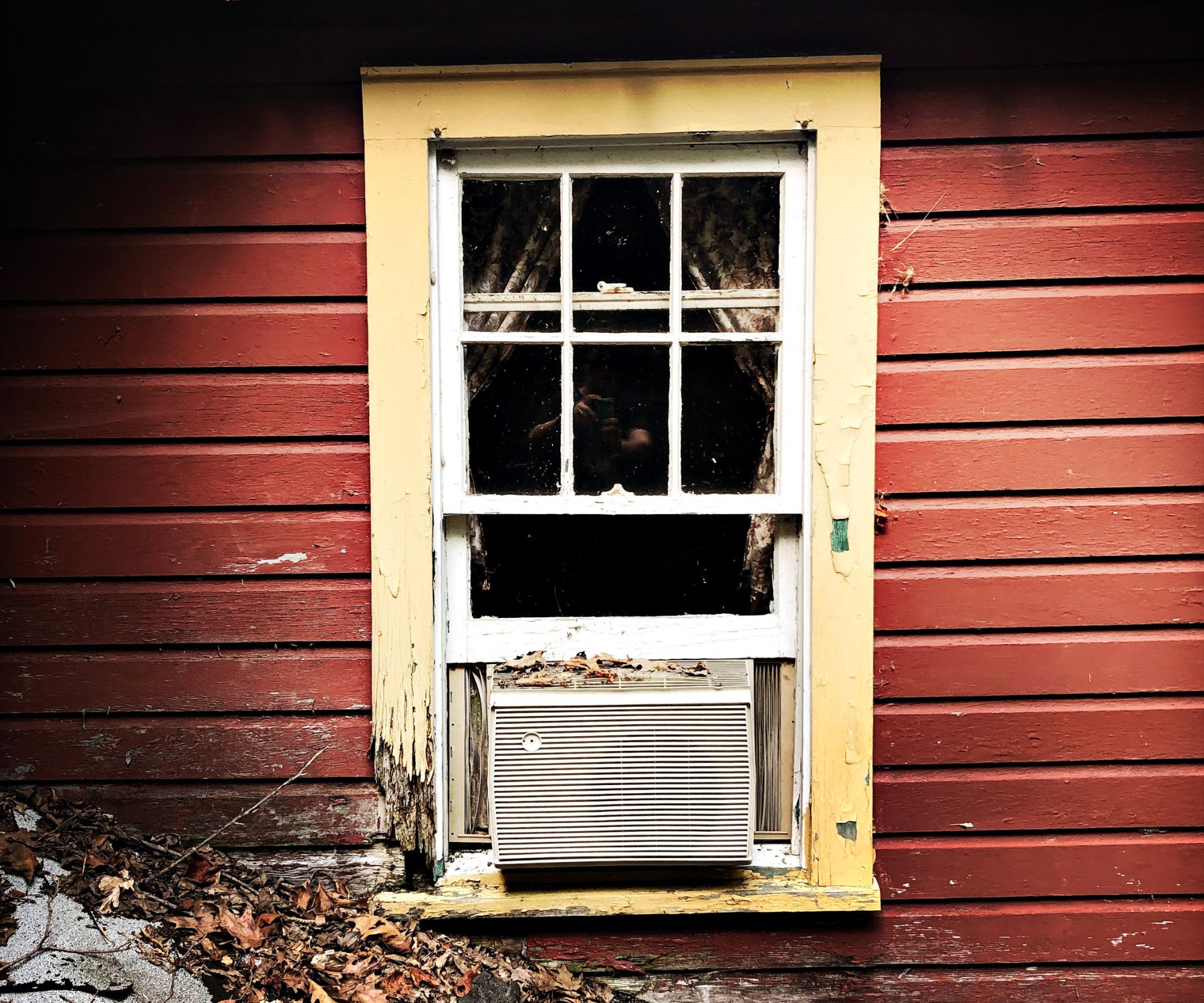
window ac covered in leaves


MIDEA EasyCool. Air Conditioner, Dehumidifier, and Fan.12,000 BTU, Rooms up to 550 Sq. Ft. Learn More Here

1.It is dirty.

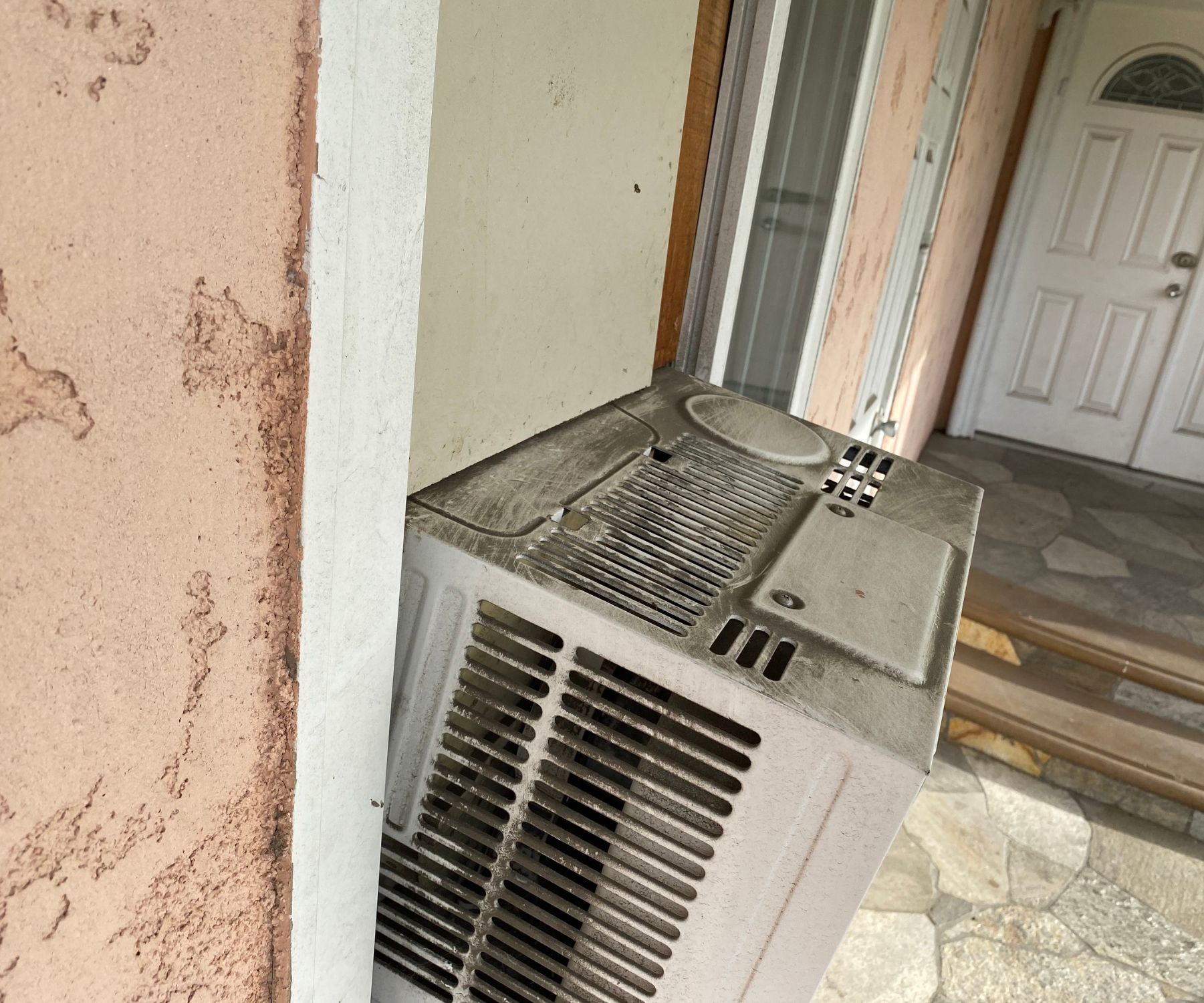
If there is mold growing on the Styrofoam inside of your window air conditioner, it is most likely because the Styrofoam is dirty and there is either rain or humidity droplets supplying moisture to it. All inside a dark humid space.

The outside of the window air conditioner is in fact outside in the elements.

Overtime dirt is going to get into the machine and get on the Styrofoam.
Combine the nutrients of the dirt with the humidity and darkness inside of the housing of the air conditioner and you have the ingredients of mold production.

2. There is standing water inside of the air conditioner.

All household molds have one thing in common, they all thrive in standing contaminated water.

Condensation from the cooling coils inside of the air conditioner is meant to drip freely to the outside of the machine so as the inside of the machine stays dry.

If the inside of the machine is unnaturally filled with debris, the drip hole could be clogged to the point where there is standing water inside of the air conditioner.

This could explain why there is a continuing water supply for the Styrofoam.
Again creating the essentials for mold production which are nutrients, moisture and darkness.

Unlevel AC

Another reason why there may be standing water is that the Window air conditioner is not level and condensation water is able to gather to the lower side of the unleveled unit. Its important to note that not all Window ACs are meant to be level. Some require a slight tilt for the condensation water to drain towards the drainage hole. Check your manual for for your specific info.
dirty window ac


TOSOT 8,000 BTU Portable Air Conditioner Quiet, Remote
Control, Built-in Dehumidifier, Fan – Cool Rooms Up to 300 Square Feet. See a Picture of it Here

Where is the air conditioner located?

If the inside of the air conditioner has mold and you’ve already determined that the recipe for mold is nutrients, moisture, and darkness, then the question is , how is the source of nutrients getting inside of the machine?

Some of the possibilities include that it is located under a tree, or it is in an area like a wind tunnel where dirt is easily kicked up and can get into the machine.

There are many reasons why an air conditioner can be exposed to extra dirt and debris. Also if the air conditioner has been recently brought in from storage, the likelihood of it being dusty inside is more than a little high.

Storage areas have a tendency to be humid, whether it be the Attic, the basement, or a storage building outside, they almost always seem to be moist.

Again you have all the components necessary for the production of mold in one spot. Humidity, dust, and no light. Taking apart your air conditioner when you bring it out of storage is a great time to examine it and make sure that there is no debris inside the block the drainage hole and to clean off any dirt and dust on the Styrofoam.

But regardless of whether you’re taking it out of storage or not, it is time to take apart the air conditioner and completely clean out any mold, debris, and dirt.

Another additional tip at this juncture is to add a mold inhibitor.

A mold inhibitor is a specific product that is manufactured to add to livestock feed. It keeps mold from being able to grow in their food.

It is also sold as a spray or solution to keep decks from mold growth.

While your air conditioner is taken apart for cleaning and maintenance, spraying a mold inhibitor on the Styrofoam as well as the other components inside the machine before you reassemble it is a great way to help ensure that your air conditioner and more importantly your air is free of mold and mold spores.

Della 6000 Smart Window AC. 250 square ft. See it Here.

Black Mold In Air Conditioner

Dealing with black mold on Styrofoam within an air conditioning unit is a concern that requires careful attention, primarily due to the potential health risks associated with certain types of mold, such as Stachybotrys, commonly referred to as “black mold.” This particular mold is notorious for its toxic properties and the potential health risks it poses when its spores are inhaled. I

t thrives in moist, damp environments, which can easily occur within the components of an air conditioner, especially if there’s stagnant water or excessive moisture.

Here’s a more detailed guide on how to address this issue:

Understanding the Environment for Mold Growth

  • Moisture Source: Black mold needs a constant moisture source to grow. In air conditioners, this can be due to standing water or high humidity levels within the unit.
  • Material: Styrofoam within air conditioning units can easily retain moisture, providing an ideal environment for mold growth.

Health Risks

  • Toxicity: Certain molds that appear black can be particularly harmful. Stachybotrys chartarum is one such mold known for producing toxins that can be dangerous when inhaled.
  • Symptoms: Exposure to toxic molds can lead to various health issues, including respiratory problems, headaches, fatigue, and in severe cases, neurological damage.

Safe Cleaning Guidelines

  • Preparation: Wear protective gear such as gloves, N95 masks, or respirators, and eye protection to prevent direct contact with mold and inhalation of spores.
  • Cleaning Solution: Use a mixture of water and mild detergent, or a solution specifically designed for mold removal. For non-porous surfaces, diluted bleach (1 cup of bleach in 1 gallon of water) can be effective, but it should be used with caution due to its corrosive nature.
  • Cleaning Process: Gently clean the affected Styrofoam areas to avoid breaking it and releasing more spores into the air. Avoid using excessive water, which can exacerbate the moisture problem.
  • Drying: Ensure the cleaned area is thoroughly dried to prevent mold from returning. Increased ventilation, the use of dehumidifiers, or air movers can accelerate the drying process.
  • Professional Help: If the mold infestation is extensive or if you’re unsure about handling it yourself, consider hiring a professional mold remediation service.

Preventive Measures

  • Regular Maintenance: Regularly inspect and maintain your air conditioning unit to prevent water buildup and ensure proper drainage.
  • Humidity Control: Use dehumidifiers or ensure adequate ventilation in areas prone to high humidity to keep moisture levels in check.
  • Prompt Repairs: Address leaks and water damage promptly to prevent the conditions that foster mold growth.

By understanding the conditions that lead to mold growth and following safe cleaning practices, you can effectively address mold issues in your air conditioner while minimizing health risks. If ever in doubt, don’t hesitate to consult with a professional to ensure the safety and well-being of your household.

Summary

Even though Styrofoam is a material that does not facilitate the growth of mold easily. Any material given the right circumstances can develop mold growth.

If there is mold on the Styrofoam in your air conditioner, then more than likely the Styrofoam is dirty.

Mold needs nutrients, and without there being something like dirt on the Styrofoam, there is no way that mold could grow on Styrofoam.

Mold also needs moisture, if there is something blocking the exit of the moisture inside the air conditioner, like mud or leaves, then you have all the components of mould and the perfect environment for it to grow in.

In order to find out if you have these issues, you may have to take apart your air conditioner to clean and maintain it.

Taking apart and cleaning an air conditioner is a very easy thing to do and there are plenty of tutorials and YouTube videos available to take you through the process.

But before you put the air conditioner back together and reinstall it, it is the perfect time to consider spraying a mold inhibitor on the Styrofoam and all the other components inside of the air conditioner.


Do Air Purifiers Dry Out the Air or Affect Humidity? (2026 Update)

Air purifiers do not dry out the air. They remove pollutants like dust, pollen, and pet dander but have no mechanism to add or remove humidity. If your air feels dry, it’s usually caused by heating or air conditioning, not the purifier itself.

Do Air Purifiers Make the Air Dry?

If you’ve ever woken up with a dry throat or irritated sinuses, it’s natural to wonder if your air purifier is the culprit. The good news: air purifiers like Levoit or BlueAir don’t add or remove moisture from the air. Their only job is to pull air through filters and capture pollutants like dust, allergens, smoke, or pet dander.

When indoor air feels dry, the real culprit is almost always your heating or cooling system. Heaters act like giant hair dryers, while air conditioners condense moisture as they cool. Both can leave a room feeling arid, but your purifier is just along for the ride.

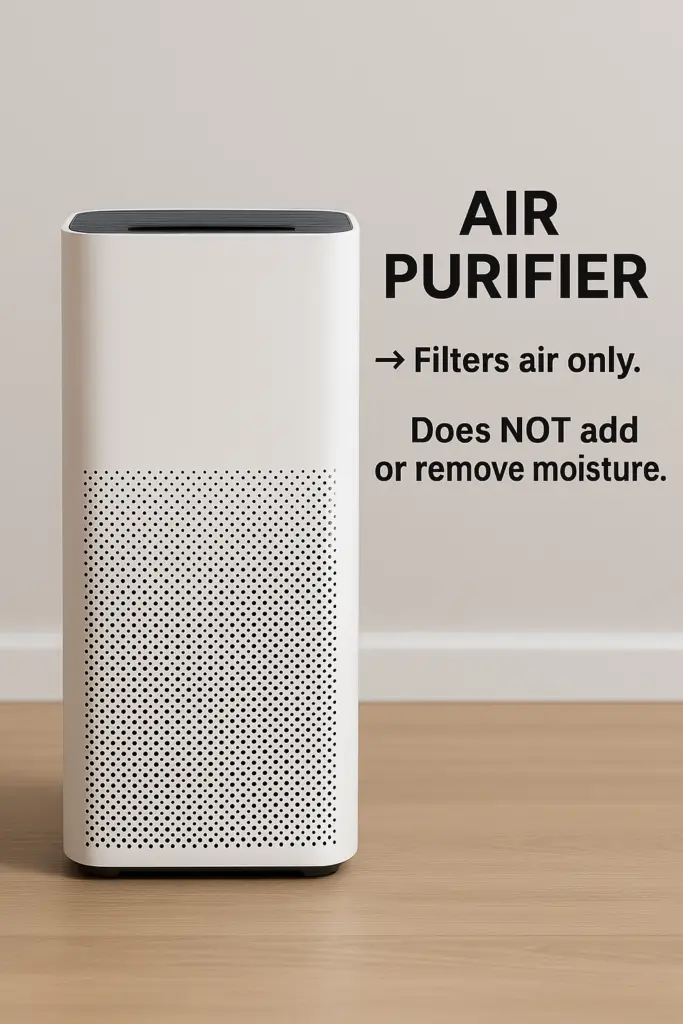
Modern air purifier with text showing it only filters air and does not affect humidity levels.Why Do People Think Air Purifiers Dry Out the Air?
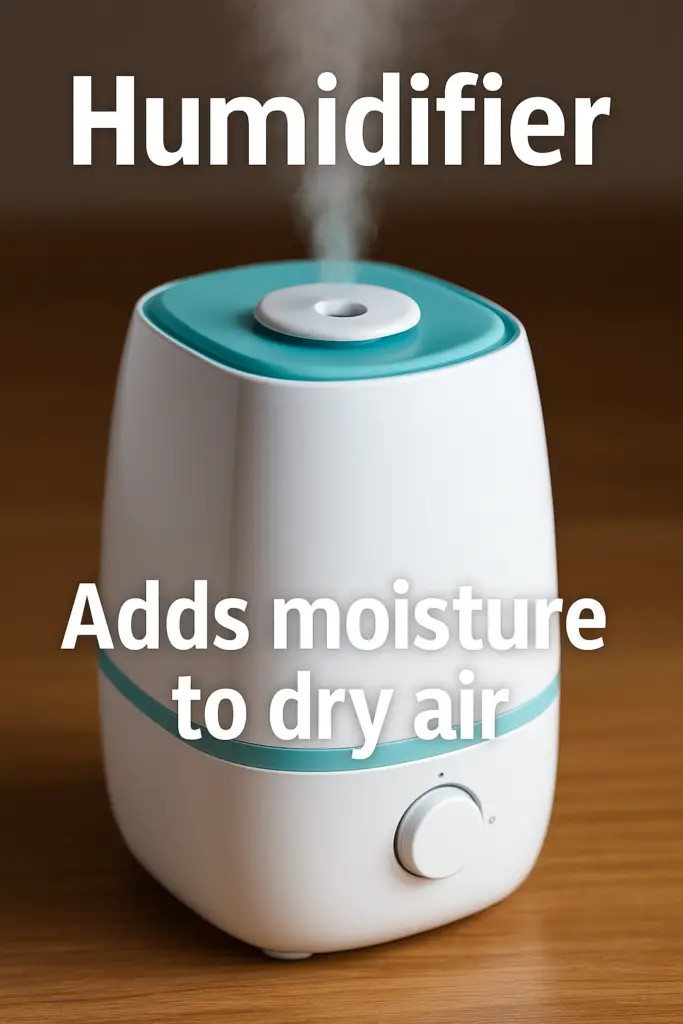
There are a few reasons this myth sticks around:

  • Device confusion: The names sound similar. A humidifier adds moisture, a dehumidifier removes it, and an air purifier just cleans the air.
  • Misattribution: People already struggling with dry air may notice it more after buying a purifier and connect the dots incorrectly.
  • Marketing jargon: Ads often say things like “breathe healthier air,” which can make people assume it also affects humidity.

Do Air Purifiers Cause Dry Throat or Sinus Problems?

No — an air purifier itself doesn’t dry out your throat or sinuses. What often happens is this:

  • Winter heat: Constant heating pulls moisture from the air, leaving sinuses dry and scratchy.
  • Summer AC: Air conditioning naturally removes humidity and can create desert-like conditions indoors.
  • Sitting too close to the purifier: The air around the machine is where dust and allergens are being pulled in. Sitting directly next to it can feel irritating even though the purifier isn’t drying the air.

Think of it like standing near a vacuum cleaner — it’s not changing humidity, but you’re in the middle of airflow.

Realistic humidifier releasing visible mist with text explaining it adds moisture to a room.Air Purifiers vs. Humidifiers vs. Dehumidifiers
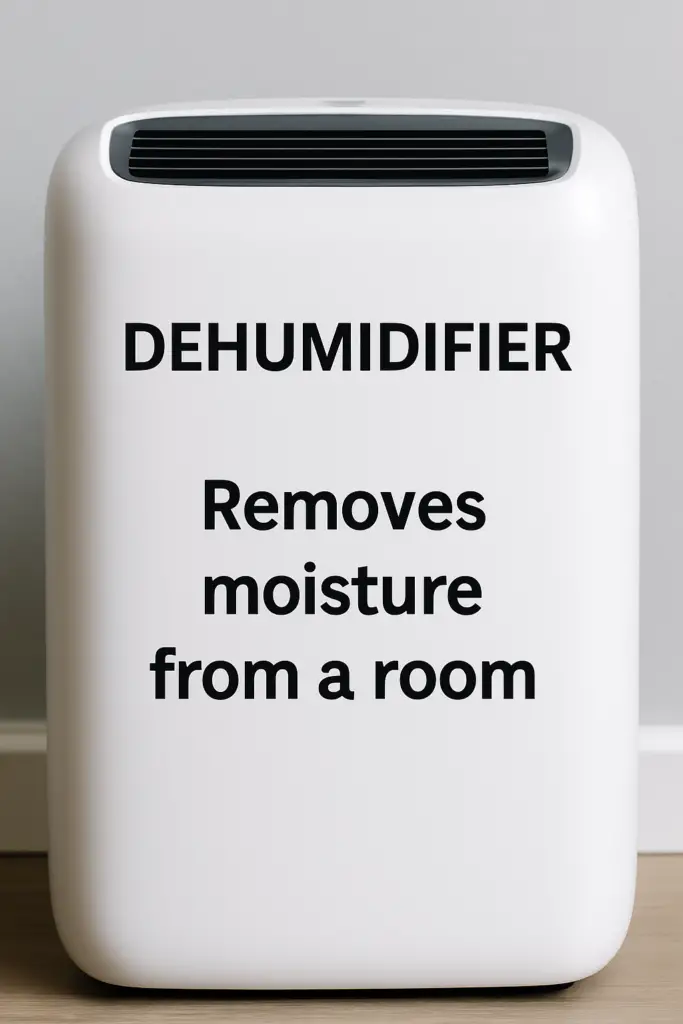
It helps to lay out the differences clearly:

Device What It Does What It Doesn’t Do
Air Purifier Removes dust, pollen, allergens, smoke Add or remove moisture
Humidifier Adds moisture to dry air Remove pollutants or allergens
Dehumidifier Removes excess humidity from damp air Clean or filter airborne particles

That’s why confusion happens so often: the words sound related, but their functions are completely different.

Realistic dehumidifier with text showing it removes excess moisture from indoor air.Do These Devices Ever Overlap?

On the surface, air purifiers, humidifiers, and dehumidifiers look like three machines with totally separate jobs. And for the most part, that’s true. But there are a few cases where their functions can cross over — and that’s where the confusion often comes in.

  • Humidifiers can have a “washing” effect: As they push mist into the air, some humidifiers also trap dust and particles in the water chamber. It’s not the same as a true HEPA filter, but it can make the air feel fresher.
  • Dehumidifiers help air quality indirectly: By pulling excess moisture out of the air, dehumidifiers make it harder for mold spores and dust mites to thrive. In that sense, they act a little like an air purifier by reducing allergy triggers.
  • Air washer combos exist: These are hybrid units that use water to both filter air and add moisture. They can be great if you need a humidifier and some level of purification, but they usually don’t clean air as well as a dedicated purifier, and they can make a room too damp in summer.

So while each device has its specialty, there are overlaps that can be useful. Understanding these crossovers can save you from buying the wrong machine or expecting one device to do a job it wasn’t designed for.

Symptoms, Causes, and Solutions for Dry Air

If you’re dealing with dryness at home, it helps to connect the dots between symptoms, causes, and fixes:

Symptom Likely Cause Solution
Dry throat / sinuses Heater or AC running constantly Add a humidifier
Room feels muggy High humidity levels Use a dehumidifier or AC dry mode
Allergies worse near purifier Too close to the intake airflow Move purifier to the opposite side of the room

This quick breakdown makes it clear: if your air feels uncomfortable, the solution usually isn’t the purifier — it’s balancing your humidity.

Can You Use a Purifier with a Humidifier or Dehumidifier?

Absolutely. In fact, this is often the best setup:

  • Winter: Run a purifier and a humidifier together. The purifier keeps allergens low, and the humidifier adds moisture to combat heating dryness.
  • Summer: Pair a purifier with a dehumidifier. The purifier clears airborne pollutants, while the dehumidifier reduces mold and dust mites that thrive in high humidity.

Just avoid placing them right next to each other. A purifier works best when it pulls in air from across the room, not just what the humidifier or dehumidifier is releasing.

Common Misconceptions About Air Purifiers

Let’s quickly clear up a few other myths:

  • Do they make the room cold? No. Purifiers move air but don’t change temperature.
  • Do they need water? No — unless it’s a special “air washer” combo unit that uses water as part of its filtration process.
  • Do they worsen allergies? Not if they’re placed correctly. Keep them across the room so you’re not sitting in the direct airflow of incoming dust and dander.

FAQ: Common Questions About Air Purifiers and Dry Air

Do air purifiers cause dry throat?
No. Air purifiers don’t remove moisture from the air. A dry throat is usually caused by low humidity from running the heater in winter or air conditioning in summer. A humidifier is the better solution if your air feels too dry.

Do air purifiers dry out sinuses?
Air purifiers don’t affect humidity, so they can’t dry out your sinuses. If you’re experiencing dryness, it’s most likely due to indoor heating or cooling systems. Sitting too close to a purifier’s intake can also make you feel “sinusy,” since that’s where dust and allergens are being pulled through.

Can air purifiers cause breathing problems or make allergies worse?
Not when used correctly. In fact, they usually help. The only time problems may occur is if you sit or sleep right next to the purifier’s intake — that airflow carries contaminants toward the filter, and you don’t want to breathe that in. Place the purifier across the room for best results.

Do air purifiers help with moisture?
No. Air purifiers don’t add or remove humidity. If your air is too dry, you’ll need a humidifier. If it’s too damp, a dehumidifier will solve the problem.

Do air purifiers dehumidify?
No. Dehumidifiers are designed specifically to remove excess moisture. An air purifier cleans the air, but it won’t reduce humidity levels.

Can you use a dehumidifier and an air purifier in the same room?
Yes. In fact, they often complement each other. A purifier removes allergens like dust and pollen, while a dehumidifier lowers humidity, which helps prevent mold and dust mites.

Do air purifiers make the room cold?
No. Air purifiers only circulate air through filters; they don’t change the temperature of a room. If your room feels cooler, it’s likely because of airflow from your AC or drafts, not the purifier.

Do air purifiers need water?
No — most purifiers use filters, not water. The only exception is a type of hybrid machine called an “air washer,” which uses water to trap particles and add moisture, but these are not common.

Summary: What Air Purifiers Really Do

At the end of the day, air purifiers are designed for one thing: cleaner, fresher air. They trap pollutants and help relieve allergy symptoms, but they don’t change the humidity in your home.

If your air feels dry, look at your heater or AC — or consider adding a humidifier. If your air feels muggy, a dehumidifier will help. But don’t blame the air purifier. Instead, think of it as your year-round partner for reducing allergens and improving indoor air quality.

Ozone Generators and Clothes: The Side Effect Nobody Talks About

To get ozone smell out of clothes, start by airing them outside in fresh air and sunlight. If the odor lingers, wash with baking soda or add a half cup of white vinegar in the rinse cycle. Enzyme-based cleaners can help with stubborn cases. The smell usually fades naturally within days, but these steps speed it up.

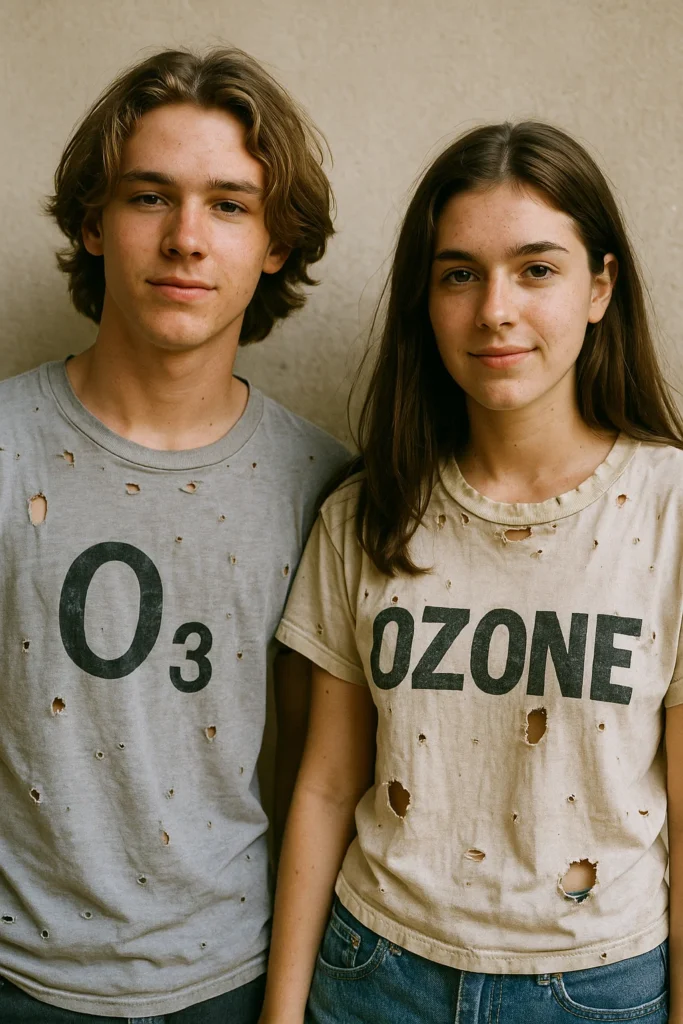
ozone-tattered-t-shirtsHow to Get the Ozone Smell Out of Clothes (and Everything Else It Clings To)
You set up an ozone generator to tackle cigarette smoke, pet odor, or that musty basement smell. The treatment worked, but then a new problem showed up: your clothes stink. Not just a little bit either. Jeans, jackets, even the couch cushions all have that sharp, burnt-wires-meets-swimming-pool odor.

If that’s what you’re dealing with, you’re not alone. Lots of folks are surprised the first time they use ozone. Here’s why it happens and—more importantly—what you can do to get your stuff smelling fresh again.

Real Voices from People Who’ve Been There

  • “It was like chlorine trapped in my jacket for days.”
  • “Smelled like burnt plastic—couldn’t wear my hoodie.”
  • “The car smelled fresh, but my clothes were rough for a week.”

So if your clothes came out worse than before, don’t assume you did anything wrong. This is common.

Why Ozone Smells This Way

Ozone is just oxygen with an extra piece—O3 instead of the O2 we breathe. That third oxygen atom is unstable. It breaks off and reacts with odors, VOCs, bacteria—and yes, even fabric fibers. That’s why ozone is such a strong odor-killer.

Once it’s used up, ozone turns back into plain oxygen. That’s why the smell doesn’t stick around forever. Good news: the ozone smell fades because the ozone itself disappears.

When the Smell Means Damage (Rare but Real)

Short, controlled treatments: the smell fades. Long or repeated heavy blasts: ozone can start to oxidize your stuff.

  • Cotton: can weaken or yellow.
  • Elastic: waistbands lose stretch.
  • Leather: can dry out and crack.
  • Dyes: may fade or shift color.

Bottom line: smell = temporary. Damage = permanent.

What to Do About It (Clothes First)

1) Air them out. Take clothes outside and hang them up. Fresh air and sunlight help the ozone “after-smell” disappear faster.

2) Wash with baking soda. Add about 1/2 cup to the wash. It neutralizes odors instead of just covering them up. (I usually keep a basic box on hand—any brand works.)

3) Rinse with white vinegar. Add ~1/2 cup during the rinse cycle. Vinegar cuts through that chemical tang. Don’t worry—the vinegar smell fades quickly.

4) Try an enzyme cleaner. Enzyme-based laundry additives break down stubborn odor molecules. If you don’t already have one you like, pick a simple fabric-safe option from the store.

5) Repeat if needed. Heavier fabrics (jeans, hoodies) sometimes need more than one round.

It’s Not Just Clothes

Ozone clings to anything soft and porous—your carpet, your curtains, that old recliner in the den, even your cousin’s couch you’re borrowing. If it can hold a smell, ozone will leave its calling card there. Some people even try ozone for bed bugs hiding in fabrics — but that doesn’t work safely. Here’s the detailed explanation.

    • Carpet: sprinkle baking soda, let it sit, then vacuum.
    • Drapes/curtains: wash with a little baking soda or run a rinse with vinegar.
    • Couch cushions: take them outside for sun and airflow if you can.
    • Bedding: hot wash; repeat if needed.

Quick Check: Did You Follow the Rules?

Even if you already ran the treatment, it helps to review the basics—sometimes you’ll spot what stretched the smell out longer than it had to be.

  • Run in short bursts (hours, not days).
  • Remove what you can (clothes, leather, valuables) before treatment.
  • Air out afterwards with open windows and fans.
  • Expect some temporary smell—that’s normal and it fades.

Managing the impact on your personal belongings is a vital part of planning any treatment. If you’re new to ozone generators, start with our Ozone Generator Starter Guide. It explains how ozone works, when to use it, and how to use it safely before choosing a machine.

The Trade-Off (Why This Is Still a Win)

Big picture: cigarette smoke, pet odor, and musty smells are basically permanent unless you treat them. The ozone smell is temporary and fades. The new problem will air out. The old problem won’t come back.

Frequently Asked Questions

Will the ozone smell ever be permanent in clothes?
Almost never. Ozone breaks down quickly, so the smell fades. If it doesn’t, that usually points to damage from overexposure (weakened cotton, faded dyes, brittle leather). At that point, it’s not “lingering ozone,” it’s material that’s been altered.

Does ozone get rid of pet smells in clothes and furniture?
Yes, it’s effective on dog and cat odors in fabrics and rooms. Expect a temporary ozone after-smell that fades with fresh air and a wash cycle.

Can I use ozone to remove cigarette smoke from a car?
Yes. Many folks use it for cars with smoke odor. Just remember anything left inside—like jackets—can pick up that sharp ozone smell. Air out and wash those items afterwards.

Ozone Treatment for Cars

What about fire damage?
Ozone is often part of smoke-odor cleanup after a fire. Same rules: controlled time, remove valuables, and air out well after.

Ozone Generators After Fires

Does ozone help after a flood or water damage?
It can help with musty, moldy odors, but it’s a finishing step—drying and cleaning come first.

Ozone Generators After Flooding

How long does the ozone smell last?
Usually a day or two with good airflow. Thicker fabrics can take longer. Fresh air, sunlight, baking soda, and a vinegar rinse speed it up.

If you’re renting an ozone machine to remove odors from closets or rooms, this guide helps you decide whether rental or ownership makes more sense.

If you decide that owning a unit is the right investment for your home, you can compare the top-rated home ozone generators to find a model with the right output for your space.

Wrap-Up

If your clothes stink after an ozone treatment, don’t panic. Air them out, wash with baking soda, run a vinegar rinse, use an enzyme cleaner if needed, and repeat for heavy fabrics. It’s not permanent—it’s the aftertaste of ozone doing its job. Once it’s gone, it’s gone.

Still wondering what ozone smells like? Learn why people describe ozone as smelling like chlorine, electricity, thunderstorms, and even burnt electronics.


Does Ozone Work for Fire or Smoke Damage?

Yes, ozone can help eliminate lingering fire or smoke odors by breaking down odor-causing molecules—but it won’t remove soot, stains, or restore damaged materials. Use it only in unoccupied areas and always as part of a broader cleanup effort.

Why Smoke Odors Are So Hard to Get Rid Of

Anyone who’s dealt with fire or smoke damage knows that the smell doesn’t just linger—it clings. That acrid scent seeps into drywall, upholstery, vents, carpets, and even electrical components. It’s not just a surface problem; smoke embeds itself in porous materials and air ducts, making it incredibly difficult to treat with air fresheners or simple cleaning products.

Smoke particles are tiny and oily, which makes them stubborn. They’re designed to float—and they do, into every crack and crevice.

This is where ozone generators come in. They don’t just mask the odor. They actually break down the odor molecules using oxidation, a chemical reaction that destroys them at the molecular level.

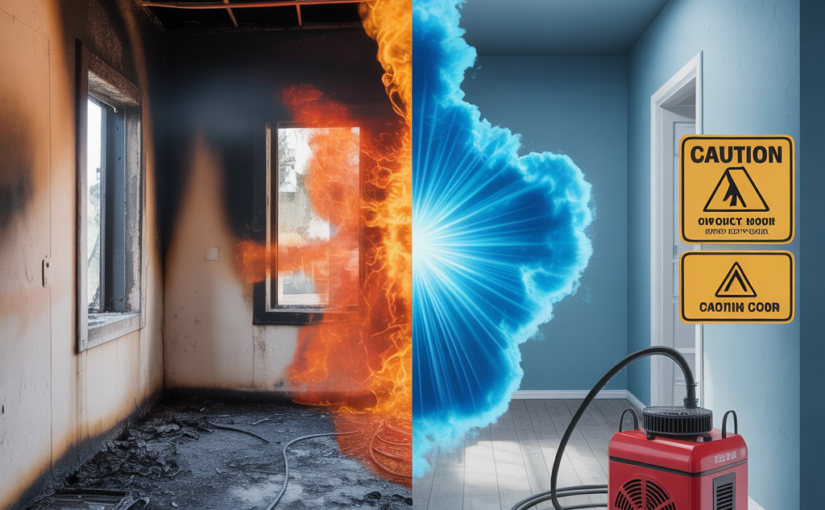
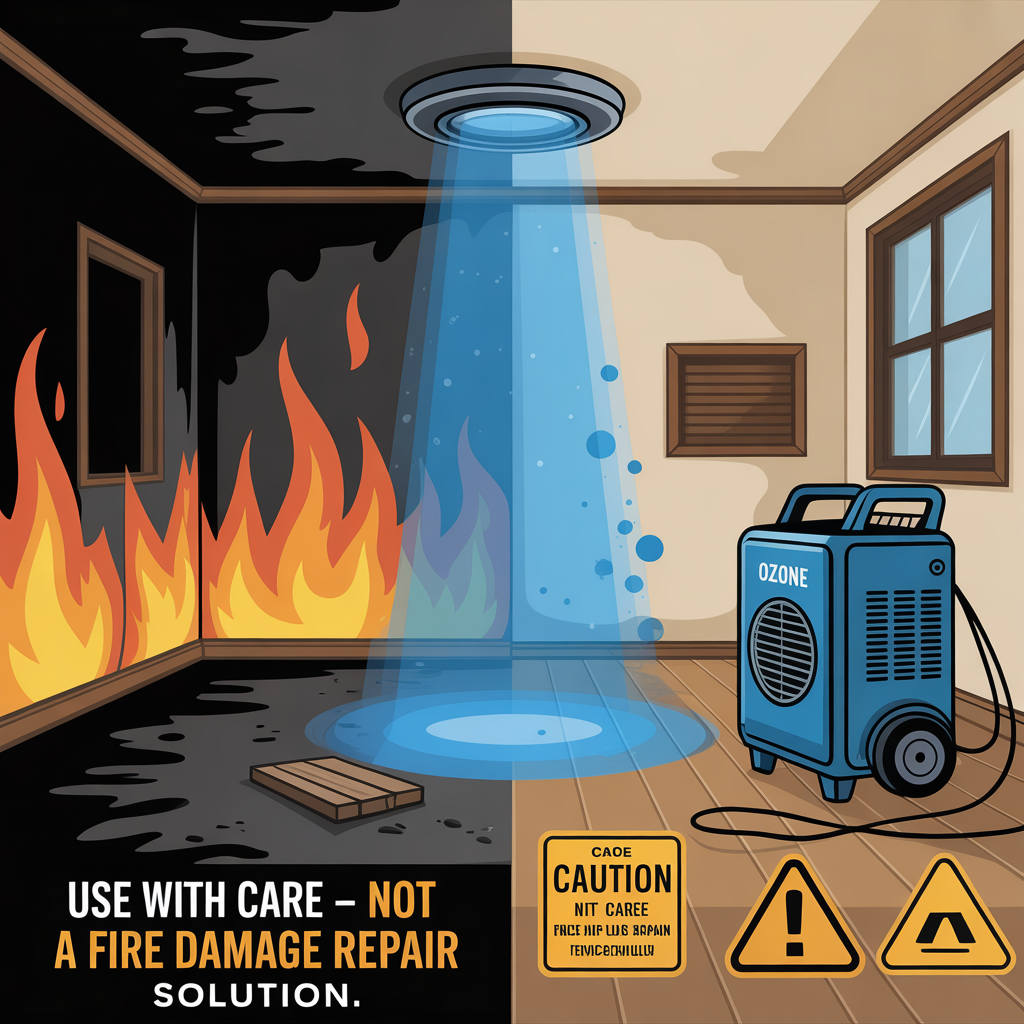
pic showing ozone use before and after fireCan an Ozone Generator Really Help with Fire or Smoke Damage?
Ozone works best for eliminating smoke odor, not cleaning up the damage. That’s an important distinction. If you’re hoping to remove scorch marks, soot, or yellowing on the walls, ozone won’t help with that. But if you’re weeks or even months post-cleanup and your house still smells like a campfire—or worse—it may be time for an ozone treatment.

Many people have turned to ozone after professional cleaning services still left behind a smoky smell. Used correctly, ozone is extremely effective for this specific purpose.

How to Use an Ozone Generator After a Fire: Step-by-Step

⚠️ Important: Ozone is dangerous to breathe. No people, pets, or plants should be inside the space while the machine is running.

  1. Clean First: Remove all soot, ash, and debris. Wipe down walls, furniture, and vents. Ozone is not a substitute for cleaning—only a final step to deodorize.
  2. Ventilate, Then Seal: Air out the space initially, then seal it tight. Close windows, doors, vents, and block return air paths to prevent ozone from escaping.
  3. Place the Generator High: Smoke rises, and so do lingering odors. Put the ozone machine on a table or shelf for even distribution.
  4. Set a Timer: For a small room (under 500 sq ft), 1–2 hours may be enough. For larger or more severe cases, 4–8 hours may be needed. Always refer to your device’s manual or this ozone sizing guide.
  5. Leave the Area: No entry during the cycle. Place warning signs on doors: “Do Not Enter – Ozone Treatment in Progress.”
  6. Air It Out: Once the cycle ends, wait at least 1 hour before opening doors and windows. Let the room ventilate for 2–4 hours before re-entry.

Real-Life Example: When Ozone Saved the Day

After a minor kitchen fire, Dan and Lisa had their apartment professionally cleaned, repainted, and the HVAC filters replaced. Still, a bitter smoky smell clung to the unit. Friends recommended they try an ozone treatment. They sealed the space, set up a mid-sized machine overnight, and left for the weekend.

When they returned, the difference was incredible. No more smoke smell in the curtains, furniture, or even the fridge (which had absorbed some odor too). It was like breathing in fresh air for the first time in weeks.

Ozone vs. Other Smoke Odor Solutions

People often try a lot of things before turning to ozone:

  • Vinegar: Good for light odors, but won’t touch embedded smoke in walls or furniture.
  • Activated Charcoal: Useful as a passive filter, but too slow for severe odors.
  • Air Purifiers: HEPA filters trap particles, but don’t remove existing smells.
  • Enzyme Sprays: Sometimes work on fabrics but don’t treat the whole room effectively.

Only ozone fills the entire space, including hard-to-reach areas like vents and insulation gaps.

When You Shouldn’t Use Ozone

If your home has not yet been cleaned or you still see visible smoke or soot damage, ozone should not be your first step. Also, if anyone in your home has respiratory issues or chemical sensitivities, it’s crucial to allow extra ventilation time and avoid repeat treatments.

Always treat ozone as a follow-up to professional or DIY fire cleanup—not a replacement for it.

DIY vs. Professional: Should You Try This Yourself?

For light smoke damage or one-room issues, DIY is totally doable with a quality ozone machine and proper safety prep. But for whole-home smoke remediation after a fire, you may want to bring in a restoration professional who knows how to balance ozone use with thermal fogging, HVAC duct cleaning, and material replacement.
If you have completed your deep cleaning and are ready to choose a machine for your home, you can view our top-rated ozone generators for fire and smoke odors to find a unit powerful enough for deep-set smells.
You can also read more about general ozoning do’s and don’ts here.

What If Ozone Doesn’t Work?

Sometimes the smoke has been absorbed too deeply—into carpet padding, drywall, or ductwork. In those cases, you might need to replace materials or use ozone in combination with a UV HVAC system that can keep odors from returning.

As a backup plan, consider a whole-house HEPA system or even enzymatic cleaners for spot odor treatment.

Where to Learn More

We have an entire article explaining how ozone generators work, including pros, cons, and safety tips. Be sure to read that if you’re considering ozone for the first time.

For more help choosing the right size machine, check out our Ozone Generator Sizing Guide.

Fire restoration is a complex task that requires the right technical foundation. If you’re new to ozone generators, start with our Ozone Generator Starter Guide. It explains how ozone works, when to use it, and how to use it safely before choosing a machine.

FAQ: Fire and Smoke Odor Removal with Ozone

Can ozone remove smoke smell from furniture?

Yes, but it depends on the material. Ozone can penetrate fabrics and foam to some degree. For deeply soaked items, multiple treatments may be necessary.

Is ozone safe to use after a fire?

Yes, as long as it’s used properly—only in unoccupied spaces, after visible damage is cleaned, and with proper ventilation afterward.

How long does it take to get rid of smoke smell with ozone?

Most rooms need 1–8 hours of treatment depending on size and severity, followed by several hours of ventilation. For whole homes, overnight or multi-day cycles may be used.

Can I sleep in the room the same day I run the ozone machine?

Only if it’s been fully aired out. Wait at least 4–6 hours after treatment before re-entering and ensure there’s no residual smell or irritation.

Read More About Ozone Generators

If you’re researching ozone generators, ozone safety, or ozone treatments for homes and vehicles, these articles may be helpful:

Is It Safe to Use Ozone for Killing Viruses Indoors?

Is It Safe to Use Ozone for Killing Viruses Indoors?

Using ozone to kill viruses indoors can be effective — but only when the space is unoccupied. Ozone is a powerful disinfectant that can neutralize viruses on surfaces and in the air, but it is also harmful to humans and animals when inhaled. For safety, ozone treatments must be performed in sealed, vacant areas with proper airing-out time afterward.

What Makes Ozone Effective Against Viruses?

Ozone (O₃) is a triatomic molecule made of three oxygen atoms. That extra oxygen atom is unstable, making ozone highly reactive. This property allows ozone to:

  • Break down the outer shell of viruses, especially enveloped viruses like influenza.
  • Oxidize viral RNA or DNA, rendering the virus non-infectious.
  • Sanitize both air and surfaces, reaching corners and cracks where sprays and UV light might not.

Ozone has been used in hospital settings, food sanitation, and water treatment for decades — all for its ability to kill pathogens.

Let’s look at what the science actually says about ozone’s virus-killing potential in real-world conditions.

What Do Studies Say About Ozone and Viruses?

There is solid scientific backing for ozone’s ability to kill viruses — but it’s mostly from controlled lab environments. Here’s what the research says:

  • Influenza and SARS-CoV-2: Studies show that ozone concentrations of 1–5 ppm can inactivate viruses like influenza A and even coronaviruses, given enough exposure time and humidity.
  • Ozone’s Mechanism: Ozone disrupts the viral envelope and oxidizes proteins and genetic material. It’s especially effective on enveloped viruses, which include many of the most dangerous airborne pathogens.
  • Surface vs. Air Disinfection: Research confirms that ozone can neutralize viruses on hard-to-reach surfaces like fabric, ceilings, and electronics without wetting them — making it a useful dry-clean method in commercial and medical settings.

However, these studies also make one thing very clear: ozone disinfection only works safely when no humans or animals are present. Ongoing exposure, even at low levels, can harm respiratory health.

In real-world settings like homes or offices, these findings translate to: use ozone like a fogger — quick, strong, and strictly off-limits during use.

So Why Not Use It While People Are Around?

Ozone is not safe to breathe. While it’s powerful at destroying viruses, it doesn’t know the difference between a virus particle and the lining of your lungs.

Breathing in ozone can cause:

    • Irritation of the eyes, nose, and throat
    • Shortness of breath and coughing
    • Asthma flare-ups
    • Lung inflammation or damage at high levels

Because the gas reacts aggressively with lung tissue, it is vital to know the immediate steps to take if you accidentally breathe ozone during or after the disinfection process.

The EPA and OSHA both warn against indoor ozone exposure beyond very small, controlled limits — levels far below what’s needed for effective virus disinfection.

man wondering if ozone is right for virusesHow to Use Ozone Safely for Disinfection
Ozone disinfection can still be a tool in your virus-fighting toolkit — if you use it properly. Here’s a safe approach:

1. Vacate the Area Completely

All people, pets, and plants must be out of the space before ozone is generated. This includes adjacent rooms if air can circulate between them.

2. Seal Off the Treatment Area

Close all windows and doors to contain the ozone and increase its effectiveness. Use towels or weatherstripping to block airflow under doors.

3. Run the Ozone Generator

Set your generator according to the square footage of the space. More ozone does not mean better results — just more risk.
👉 Use our Ozone Generator Sizing Guide to find the right output for your room.

4. Allow for a Dissipation Period

Ozone doesn’t linger forever — it naturally breaks down into regular oxygen. Wait 1–4 hours after treatment (depending on ozone levels and ventilation) before re-entering.

5. Ventilate Before Reentry

Open windows and doors to air out the space. Run fans or your HVAC system to help flush residual ozone.

Ozone vs. Other Whole-Room Disinfection Methods

Even though ozone can work in unoccupied rooms, there are other disinfection methods that may be safer or more convenient for regular use. Here’s how ozone compares to other “no-touch” technologies:

Method Effective Against Viruses? Safe While Occupied? Penetrates Air + Surfaces?
Ozone ✅ Yes (with proper dose) ❌ No ✅ Yes
UV-C Light ✅ Yes (direct exposure) ⚠️ Only in sealed HVAC or shielded units ❌ No (line-of-sight only)
Hydrogen Peroxide Vapor ✅ Yes ❌ No ✅ Yes

Takeaway: Ozone is competitive with hospital-grade methods — but you must follow the safety rules. For daily use, stick with HEPA filtration and UV HVAC systems.

a man reading ozone instruction guideWhen Ozone Works Best for Virus Control
Ozone is especially useful for virus cleanup in situations like:

    • After someone in the household has recovered from illness
    • Before reopening a business or rental space
    • Disinfecting cars, offices, or hotel rooms between guests
    • Treating items like masks, clothing, or tools (in a sealed container or room)

If you are currently comparing different models for a home disinfection project, you can review our top picks for residential ozone generators to see which machines offer the best safety controls and performance.

It is not a daily-use method — more like a deep-clean strategy when thorough disinfection is needed.

Better Daily Alternatives for Virus Prevention

Ozone isn’t your only option. In fact, it’s not the best choice for regular indoor use. Instead, consider:

    • HEPA air purifiers, which trap airborne viruses and allergens
    • UV light systems, which neutralize viruses in HVAC ducts
    • Frequent ventilation, opening windows or using fans to bring in fresh air
    • Surface disinfectants approved by the EPA for virus control

To decide if you need a machine for a one-time treatment or a unit for 24/7 filtration, see our guide on the differences between air purifiers and ozone generators.

👉 Related reading: Pros and Cons of UV Light in HVAC: Is it Worth It?

A Real-Life Example: Post-Illness Cleanup

A BreatheBetterAir reader wrote in about using an ozone generator in their home office after recovering from pneumonia. They followed all safety steps: ran the machine overnight, sealed the room, and ventilated it the next morning. They noticed a distinct “clean” smell afterward, and no one else in the home got sick. While this isn’t proof that ozone killed the virus, it highlights how controlled ozone use can contribute to peace of mind and cleanliness.

Important Warnings

  • Never use ozone in occupied spaces.
  • Don’t use it as a substitute for proper hygiene, air filtration, or ventilation.
  • Always follow your ozone generator’s instructions and safety guidelines.

When misused, ozone can cause more harm than good. But with knowledge and caution, it can be a helpful tool for serious disinfection jobs.

FAQ

Is it safe to run an ozone generator while sleeping?

Absolutely not. Ozone is harmful to breathe and should never be used in a room that is currently occupied — even while you sleep.

How long does ozone last in the air?

Ozone typically breaks down into oxygen within 30 minutes to 4 hours, depending on air circulation and temperature. Ventilation speeds up the process.

Will an ozone machine disinfect surfaces too?

Yes. Ozone can reach surfaces that sprays miss, including walls, ceilings, fabric, and hard-to-reach areas. It oxidizes viral particles on contact.

Bottom Line

Ozone is effective at killing viruses — but only in empty rooms.
Used incorrectly, it’s a health hazard. But used properly, it can be a valuable part of a deep-cleaning protocol after illness or in high-risk spaces.

High-stakes sanitation projects require a deep respect for the power of reactive gases.

Read More About Ozone Generators

If you’re researching ozone generators, ozone safety, or ozone treatments for homes and vehicles, these articles may be helpful:

Can Ozone Remove Dust or Allergens? (Not Exactly)

Can an ozone generator remove dust or allergens?
Not exactly. Ozone doesn’t physically remove dust, pollen, or pet dander from the air. It may neutralize some airborne allergens by altering their chemical structure, but it won’t replace the need for HEPA filters, vacuuming, or regular dusting.

Why People Think Ozone Helps with Allergies

Many homeowners turn to ozone generators hoping for relief from allergies, especially when HEPA purifiers or cleaning alone haven’t worked. That’s understandable — **ozone is marketed as a powerful air “cleaner,” capable of killing mold, bacteria, and odors.**

But dust and allergens are a different kind of challenge. These particles don’t vanish with a zap of ozone. Instead, they *settle* — in your carpet, your couch, and your lungs.

What Ozone Actually Does (And What It Doesn’t)

Ozone is a reactive gas made of three oxygen atoms. When used in a controlled setting, it can:

    • Break down odors like smoke or skunk smell
    • Neutralize surface bacteria on hard-to-clean materials
    • Disrupt mold spores and reduce some VOCs

To ensure you select the right machine for your specific environment, it helps to understand the technical differences between air purifiers and ozone generators

But here’s what ozone **cannot** do:

  • **Capture or remove solid particles** like dust, pollen, or pet dander
  • **Replace proper air filtration** (like HEPA or electrostatic filters)
  • **Work safely when people or pets are present**

If your allergy symptoms are tied to things like dog hair or house dust, **ozone alone isn’t going to cut it.**

The Problem with Dust and Airborne Allergens

Dust and allergens aren’t just floating in the air — they’re stuck in your vents, layered in your rugs, and embedded in your bedding. Even when airborne, these particles are **physical matter**, not gases or biological agents.

**That means you need something that traps or removes them.**

Think:

  • High-quality vacuuming (with sealed HEPA units)
  • HEPA air purifiers for continual filtering
  • Humidity control to reduce dust mite survival

Ozone doesn’t offer a way to “collect” anything. In fact, once it reacts with dust particles, it can sometimes **create secondary pollutants** — such as formaldehyde or ultrafine particles.

When Ozone *Might* Help with Allergies (In Small Ways)

There are a few cases where ozone could support a broader allergy-reduction strategy:

  • It may neutralize some bio-allergens, like mold spores or dust mite waste proteins, by altering their structure enough to reduce immune response.
  • It can deodorize rooms where allergens like pet dander were previously active — giving a “fresher” feel even if dust remains.

But these are indirect benefits. **Don’t expect ozone to replace air purifiers or allergy medication.**

A Better Combo: HEPA Filters + UV Light + Ozone (With Caution)

Some advanced HVAC systems combine **ozone (or ionization), UV light, and HEPA filtration**. In this kind of setup:

– **HEPA handles the particles** (dust, dander, pollen)
– **UV light kills bacteria and mold**
– **Ozone (or ions) handle residual odor or gas-based contaminants**

For more on the UV side of the equation, read:
Pros and Cons of UV Light in HVAC – Is It Worth It?

And for ozone basics:
What Is an Ozone Machine? Benefits and Risks Explained

Safe Use: Don’t Ozone While You’re Home

**Ozone is not safe to breathe in high amounts.** It can irritate your lungs, eyes, and throat — especially for people with asthma or allergies.

If you decide to run an ozone generator to clear out musty odors or sanitize a room:

  1. Remove all people and pets
  2. Close off the space and seal vents
  3. Run the ozone machine for the recommended duration
  4. Wait at least 2–6 hours after it turns off before re-entering
  5. Ventilate thoroughly before staying in the room

For a deeper dive into safe usage, check out:
Ozoning a House: Do’s and Don’ts

Mini-Scenario: What Actually Helped My Friend with Allergies

A friend of mine had two dogs, carpets in every room, and constant sneezing. He tried an ozone machine hoping it would “clear the air” — but nothing changed. It wasn’t until he:

– Switched to a bagged vacuum with a HEPA filter
– Added a portable air purifier in the bedroom
– Used the ozone generator *once a month only* to remove lingering odors

that he finally felt a difference. **Ozone helped with the smell. Filtration helped with the sneezing.**

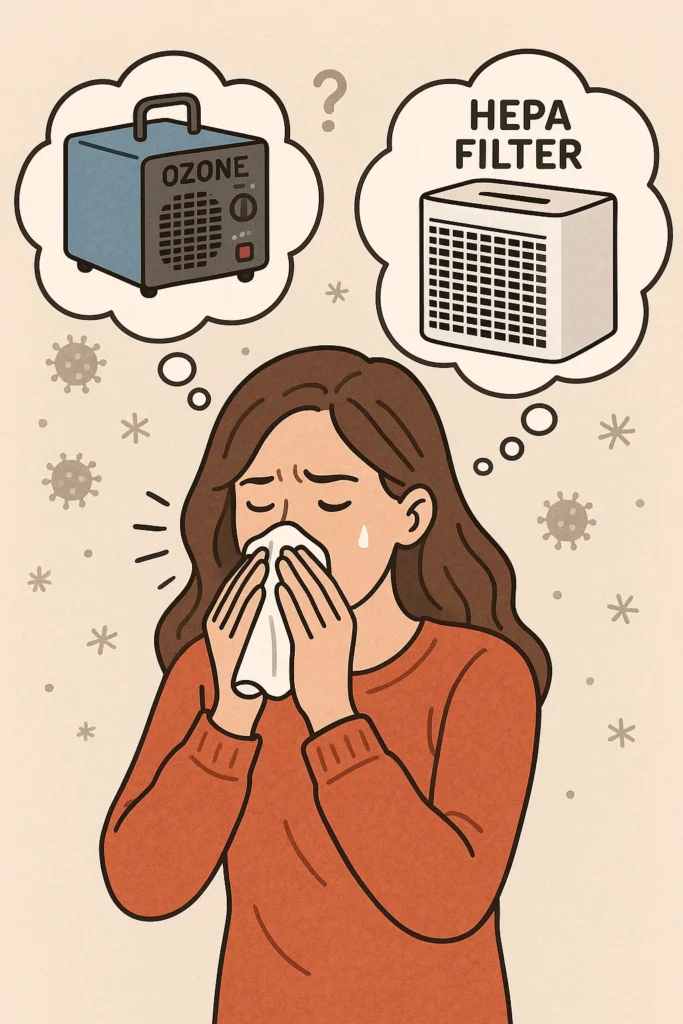
Illustration of a girl wondering if she needs a HEPA filter or a ozone generator for her allergiesOther Tools That Work Better for Dust and Allergies
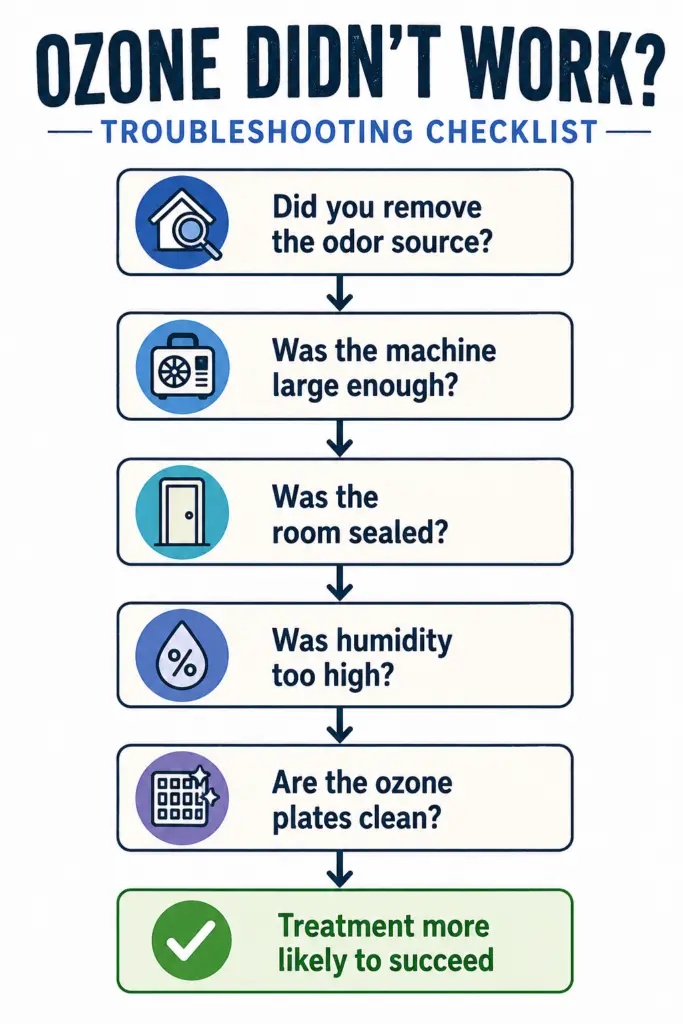
Here’s how ozone stacks up next to more proven methods:

Method Removes Dust? Allergy Relief? Safe for Daily Use?
HEPA Filter ✔️ ✔️ ✔️
Ozone Generator ❌ ❌ (indirect only) ❌
UV-C Light ❌ ✔️ (for bio-contaminants) ✔️ (in ducts)
Vacuuming w/ HEPA ✔️✔️ ✔️ ✔️

When Is Ozone a Good Idea — and When Is It Not?

Ozone isn’t useless — but it’s often misunderstood. If you’re dealing with **stale smells**, **post-flood mildew**, or **leftover odors from pets or smoke**, a short ozone treatment (when the space is empty) can be surprisingly effective.

But if your goals are **better breathing**, **less sneezing**, or **cleaner air** — ozone won’t get you there alone.

Use ozone when:

  • You want to eliminate lingering smells after cleaning
  • You’re treating a space temporarily unoccupied
  • You need to neutralize odors caused by mold, smoke, or cooking

Avoid ozone when:

  • You’re targeting dust, dander, or pollen
  • People or pets will be in the space during or soon after treatment
  • You want 24/7 filtration or allergen reduction

For daily air quality needs, **pair ozone with mechanical filtration and UV light** if desired — but make sure you know what each tool is really doing.

FAQs About Ozone and Allergies

Can ozone kill dust mites?

**Ozone may damage dust mites and their waste proteins**, but not reliably enough to be a standalone solution. Removing bedding and cleaning with hot water is far more effective.

Can ozone clear pet dander from the air?

No. Pet dander is a physical particle. Ozone may neutralize the odor, but it won’t remove the actual allergens without a filter.

Is it safe to run an ozone generator at night while I sleep?

**Absolutely not.** Ozone should never be used while people or pets are present — especially not overnight.

Can I use an ozone generator in my HVAC system to fight allergens?

Some whole-house systems include ozone or ionization, but they’re designed to run in very low amounts. **Consult your HVAC provider and consider safer alternatives** like UV-C and filtration.

The Bottom Line: Use Ozone for Odors, Not Dust

If you’re looking for **cleaner-smelling air**, ozone has a place. But if you’re hoping to reduce allergens, **you’ll need HEPA filters, consistent cleaning, and maybe even duct upgrades**. Ozone just isn’t built for the job.

If you have decided that a one-time treatment is the right choice for your specific odor problem, you can compare our recommended home ozone generators to see which models offer the best safety features and performance.
For more info, check out:

Read More About Ozone Generators

If you’re researching ozone generators, ozone safety, or ozone treatments for homes and vehicles, these articles may be helpful:

Ozone Generator Didn’t Work? Common Reasons the Smell Came Back


Quick Answer: If your ozone generator didn’t work, the problem may not be the machine. In many cases, the odor source is still present, the room wasn’t sealed properly, or the generator wasn’t powerful enough for the space. Understanding why ozone treatments fail can help you avoid repeating the same mistake.

You finally bought an ozone generator to tackle that stubborn smell. You ran the machine, aired out the room, and felt that wave of relief. But a few days later, the familiar odor is back.

It’s frustrating, and it might make you wonder if ozone even works. The truth is, ozone is a powerful tool, but it only works effectively under specific conditions. It’s not a magical eraser; it’s a chemical process that requires the right setup and preparation. If your ozone generator didn’t work, it’s highly likely that one of these common pitfalls is to blame.

Before we dive deeper, let’s quickly diagnose the most likely culprits.

Key Takeaways

  • Ozone is a final step, not a first step. It won’t do its job if you haven’t cleaned the source of the smell.
  • You need the right size machine for your space. A small unit in a large room simply won’t create a high enough concentration.
  • Sealing the room is non-negotiable. Ozone that escapes is ozone that isn’t treating your odor.
  • Humidity is the enemy of ozone. Dry environments yield the best results.
  • A generator’s output degrades over time. Regular maintenance of the ozone plates is critical.
  • If the smell comes back quickly, the source is still there. You haven’t broken the cycle.

Flowchart explaining why an ozone generator didn't work, including odor source removal, room sealing, humidity levels, machine size, and clean ozone plates.

The Most Common Reason Ozone Treatments Fail

The most frequent reason an ozone treatment fails is also the most overlooked: the source of the odor was never physically removed or cleaned.

Ozone is an oxidizing agent. It works by chemically reacting with and breaking down the molecules that cause odors. This is a fantastic process for treating airborne smells and surface odors. However, ozone can only neutralize the odor molecules it can physically reach in the air.

Think of it like this: You wouldn’t paint over a moldy wall without first removing the mold. The paint might cover it up for a while, but the problem will inevitably return. The same principle applies to ozone. If you have a smelly old couch and you simply run an ozone generator in the room, you might neutralize the surface odors for a time. But the source, deeply embedded in the fabric and foam, is still there. Over time, those odors will re-emanate into the room, and the smell will come back.
We have a dedicated deep-dive on the single biggest mistake users make with ozone generators that explains exactly why physical cleaning is a non-negotiable first step.

Real-World Example: The Case of the “Clean” Carpet

A family bought a house that smelled like it had a previous pet. They ran a powerful ozone generator in the empty living room for a full day, and when they returned, the air was crisp and fresh. They moved in, happy the problem was solved. But within a week, during a humid stretch, the musty, faintly animal-like smell returned.

Why? They had treated the air and the carpet’s surface, but the pet urine had seeped through to the carpet padding and possibly the subfloor. Ozone couldn’t penetrate these materials. The source remained, ready to produce new odor when the humidity triggered it. The solution, in this case, was to replace the carpet padding and seal the subfloor before using ozone as a final step. (For more on this, see our guide on cat urine odor removal.)

Was the Ozone Generator Large Enough?

This is a classic sizing error. Homeowners often buy a small, affordable ozone generator intended for a car or a small closet and try to use it to deodorize a large living room or a basement. A machine’s output is typically measured in milligrams of ozone per hour (mg/hr). If the output is too low for the cubic volume of your space, you’ll never reach the concentration needed to eliminate the odor.

Your generator needs to be powerful enough to create a high concentration of ozone that can fill the entire room. You need to calculate the cubic volume of the space: length × width × height. A generator rated for 10,000 mg/h will be appropriate for a large single room or a small apartment, while a unit with a 3,500 mg/h output is better suited for a small bedroom or a car. Using a machine that’s too small means you’ll either get poor results or have to run it for dangerously long periods to compensate. Learn more about ozone machine sizing to avoid this mistake.

If you have realized that your current equipment is underpowered for your square footage, you can compare our recommended high-output ozone generators to find a unit better suited for your project.

Did Humidity Affect the Treatment?

High humidity is a significant factor that can cause an ozone generator to underperform. Ozone is a highly reactive gas, and water molecules (H2O) can interfere with the process in two primary ways:

  • Interfering with production: In corona discharge generators (the most common type), high humidity in the ambient air can affect the electrical discharge process, reducing the overall amount of ozone produced.
  • Blocking the reaction: Moisture and particulate matter can coat the inside of the generator or the ozone plates, hindering their ability to create ozone effectively.

This is why ozone treatments are often less effective in damp basements, after a flood, or when trying to treat a wet carpet. The moisture in the environment is literally fighting against the ozone. For best results, run a dehumidifier to get the humidity level down, ideally below 50%, before you start your ozone treatment.

Did Ozone Escape the Room?

To be effective, ozone must be contained so it can reach and maintain a high concentration in the air. If you haven’t properly sealed the treatment area, ozone is escaping, and your concentration level is plummeting. It’s like trying to fill a leaky bucket with water—you might get some in there, but you’ll never fill it up.

Common Leak Points:

  • Open or poorly sealed doors: A gap under the door is a major escape route. Seal it with a towel or tape.
  • Shared HVAC systems: If you’re treating one room, make sure to close the vents and seal them with plastic. Otherwise, the ozone will be sucked into your ductwork and dispersed throughout the house, treating your whole home (poorly) and losing its punch in the targeted room.
  • Windows, vents, and gaps around pipes: All of these provide pathways for ozone to leave the room and for the concentration to drop.

The goal is to create a sealed “chamber” where the ozone can work at full strength.

Did You Run It Long Enough?

Ozone isn’t magic; it takes time to work. The treatment time depends entirely on the severity of the odor and the size of the space.

  • For cars: A treatment might last anywhere from 30 minutes to 2 hours.
  • For small rooms (e.g., bedrooms): Typically 30 minutes to 2 hours, depending on odor severity.
  • For large rooms or whole houses: 4 hours or more is not uncommon.
  • For severe odors (e.g., heavy smoke, pet urine): You may need to run multiple, shorter treatment cycles (e.g., three 30-minute cycles with an hour of airing in between) rather than one very long run.

Warning Against Excessive Run Times

While you need to run it long enough, there is a point of diminishing returns. Running a generator for 10 hours in a small room will not make it “10 times more effective.” It could, however:

  • Damage materials: High ozone concentrations can degrade rubber, certain plastics, and elastic materials over time.
  • Prolong the airing-out process: The stronger the ozone concentration, the longer it takes to dissipate to a safe, breathable level.

Always check your manufacturer’s guidelines. They are the best starting point for your specific machine.

Diagram explaining why an ozone generator may not work when odor sources such as cat urine, smoke residue, mold, or damp materials remain after treatment.

Ozone vs. Odor Source Removal

This is the single most important distinction to understand: Ozone is not a cleaner; it’s an oxidizer. It is the final step in the odor removal process, not the first.

Problem First Step (Source Removal) Second Step (Ozone)
Cat urine in a room Remove affected carpet, padding, and seal the subfloor. Treat non-porous surfaces with an enzyme cleaner. Run the ozone generator in the empty, sealed room to neutralize any lingering airborne odors.
Cigarette smoke in a car Clean all hard surfaces (windows, dash, plastic) with a degreaser to remove tar residue, which is a major source of the smell. See our guide on cigarette smoke odor removal. Run the ozone generator with the car’s AC system on “recirculate” to let the ozone treat the HVAC system.
Mold or mildew in a basement Identify and fix the source of moisture. Physically remove any moldy drywall, insulation, or wood. Run an ozone generator to help oxidize any remaining mold spores and neutralize the musty smell after repairs are complete.

A common misconception is that ozone can penetrate materials and “clean” them. It cannot. Ozone is a gas that treats the air and surfaces it contacts. For deep-seated contamination, source removal is non-negotiable.

Signs Your Ozone Generator May Need Maintenance

An ozone generator isn’t a “set it and forget it” appliance. Its core components, the ozone plates (or ceramic plates), degrade over time. If the generator is running but you don’t smell that distinct “clean” or “after-rain” scent, the plates might need cleaning or replacing.

  • Dirty Ozone Plates: Dust, grease, and other airborne particles can coat the plates, reducing their surface area and efficiency. Most manufacturers recommend cleaning the plates about once a month.
  • Worn Ozone Plates: The high-voltage electrical discharge that creates ozone also slowly erodes the plates. Their lifespan is often measured in hours, e.g., 20,000 hours for a high-quality unit.
  • Reduced Ozone Output: If you notice a significant drop in performance, the machine is still running, but it’s just not working as well as it used to, it’s a telltale sign.
  • Aging Machine: All electronics have a finite lifespan. An older generator may simply not be able to produce the same output it could when it was new.

What to Do If the Smell Comes Back

If you’ve run an ozone treatment and the odor returns, don’t just give up. Use this step-by-step troubleshooting checklist:

  1. Inspect for an Unaddressed Source: Did you thoroughly clean all surfaces and materials? Is there a hidden problem, like a small leak behind the wall? Did you clean the carpets or just cover them? Physical source removal is key.
  2. Check Your Sizing and Run Time: Was your machine powerful enough for the space? Did you run it for the recommended duration, or did you cut the treatment short?
  3. Evaluate the Environment: Was the room very humid? Consider running a dehumidifier next time.
  4. Review Your Sealing: Was the room truly sealed off? Did you block the gaps under doors, close all vents, and ensure no drafts were pulling ozone out?
  5. Inspect Your Generator: Is your machine working properly? Does it smell like ozone when you run it? If not, check the ozone plates and clean them according to the manufacturer’s instructions. If they are worn out or broken, replace them.
  6. Consider a Professional: If you’ve done all of the above and the smell persists, especially if it’s mold or something else that could be a health hazard, it may be time to call a professional odor remediation specialist. They have more powerful equipment and tools for testing.

FAQ

Q: Why does my room still smell after ozone treatment?

Most likely because the source of the odor was not physically removed. Ozone only neutralizes odors it can reach in the air and on surfaces; it cannot penetrate materials.

Q: Can humidity make ozone less effective?

Yes, high humidity can interfere with the ozone production process in a corona discharge generator and makes it more difficult for ozone to be effective.

Q: Do ozone plates wear out?

Yes, they are a consumable part. They can degrade over time or get covered in dust, reducing ozone output. They often need replacing every six months to a year, depending on use.

Q: Why did the smell come back after a few days?

The ozone treatment only neutralized the existing odor molecules. Since the physical source (like a stain in carpet padding) was never removed, it continued to off-gas and produce new odors, which you noticed when they reached a certain level again. This is a common sign that the ozone smell returned after treatment because the source wasn’t eliminated.

Q: How long should I run an ozone generator?

Run times vary based on the size of the space and the severity of the odor. Typical treatments are 30 minutes for a small room to 4+ hours for a whole house.

Q: Can ozone remove cat urine from carpet padding?

No. Ozone cannot penetrate the carpet and padding. The only way to permanently remove cat urine odors is to remove and replace the contaminated materials. Ozone can be used afterward to neutralize any lingering airborne smells.

Q: Is ozone safe to breathe?

No. Ozone is a lung irritant and can be harmful. You, your pets, and your plants should never be in the room where an ozone generator is running. Wait until the treatment is done and the space is thoroughly aired out before re-entering. Always follow ozone generator safety guidelines.

Remediation success depends on following a proven protocol rather than just turning on a machine. If you’re new to ozone generators, start with our Ozone Generator Starter Guide. It explains how ozone works, when to use it, and how to use it safely before choosing a machine.

Bottom Line

An ozone generator is an incredibly powerful tool for eliminating stubborn odors, but it’s not a one-size-fits-all miracle worker. It works best as a final step in a multi-stage cleaning process. The key takeaways are:

  • Address the source: Clean, remove, or replace the root cause of the smell before you start the machine.
  • Size matters: Ensure your generator is powerful enough for the cubic feet of your space.
  • Seal the room: Create a contained environment so ozone can reach a high concentration.
  • Manage humidity: Dry air is better for ozone generation.
  • Run it long enough: Be patient and use appropriate run times for your space and odor severity.
  • Maintain your machine: Clean and replace ozone plates regularly to ensure your generator is working at peak performance.

If your ozone treatment failed, it’s almost certainly due to one of these points. Correct the mistake, and you can finally get the fresh, clean-smelling space you’re after.