
There’s nothing quite like coming home, opening the door, and being greeted by the smell of mildew. It’s unpleasant enough on its own, but what makes it worse is wondering what’s causing it.
Is there a water leak somewhere? Is moisture collecting where it shouldn’t? Or, worse yet, is mold growing somewhere you can’t see?
Nobody wants to think about having a mold problem in their house, much less having to deal with one.
The good news is that a mildew smell doesn’t automatically mean you have a serious mold problem. But it does mean there’s something worth investigating.
The trick is figuring out where the smell is coming from before spending money trying to get rid of it.
So, why does my house smell like mildew?
Does a Mildew Smell Mean There’s Mold in Your House?
Not necessarily. People often use the words musty, mildew, and moldy to describe similar damp, earthy odors. But the smell alone cannot tell you whether mold is present or what kind of organism might be growing.
A persistent mildew-like odor can be a sign that damp materials or hidden microbial growth need attention. Mold may grow behind drywall, beneath flooring, inside cabinets, or in other places that aren’t immediately visible.
Look for signs such as:
- Water stains or discoloration on ceilings and walls.
- Peeling paint, swollen trim, or warped flooring.
- Damp carpet, upholstery, or stored belongings.
- Condensation around windows, pipes, or air vents.
- A smell that gets stronger after rain or when the AC runs.
If you find water damage, the first priority is correcting the source of moisture. Covering the odor with air fresheners won’t solve the underlying problem.
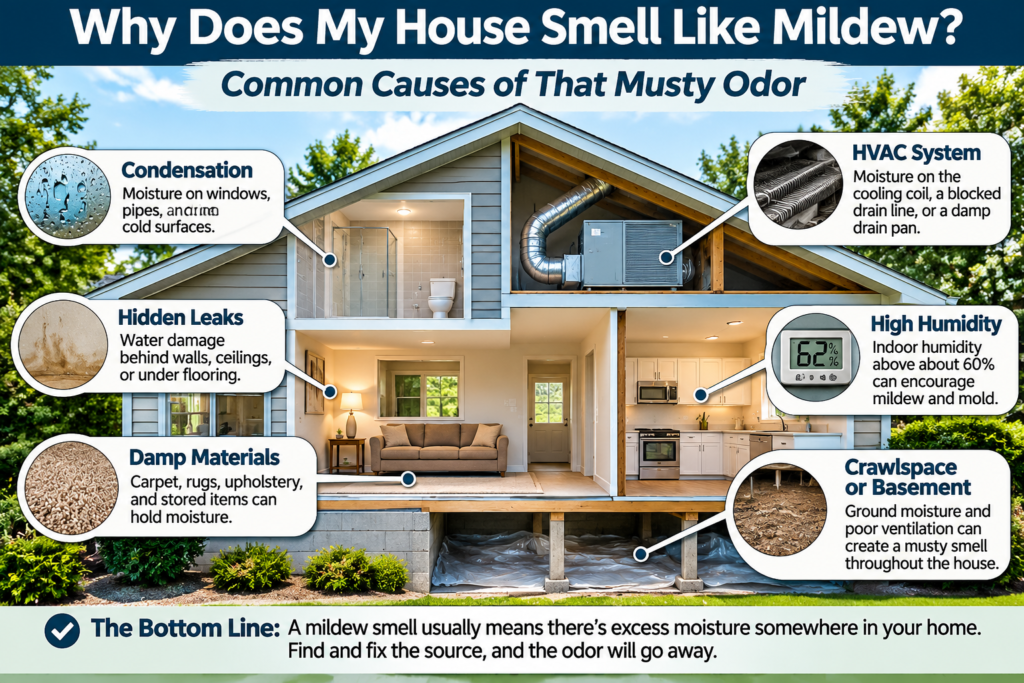 Where Is the Mildew Smell Coming From?
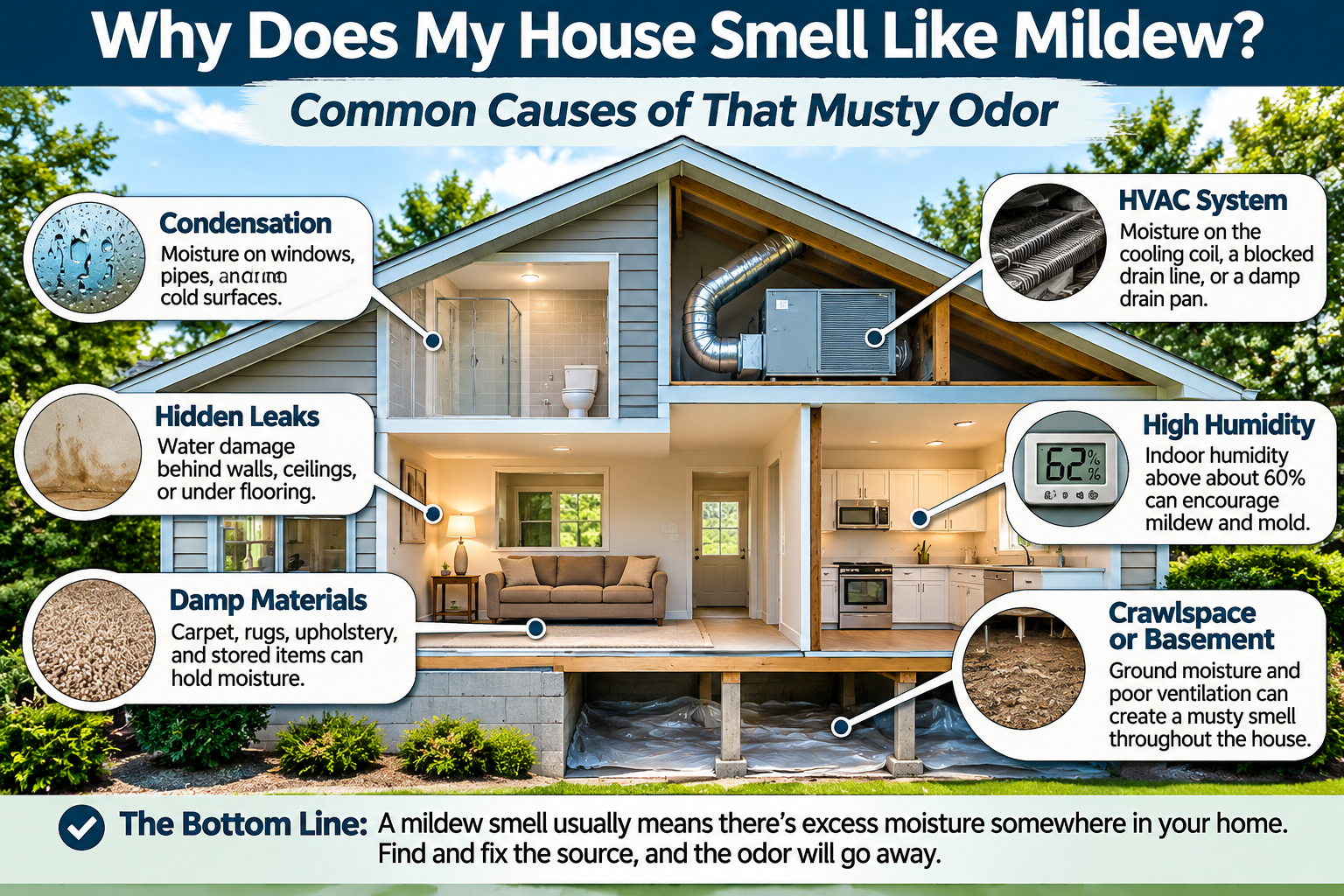
The location and timing of the smell can tell you more than the smell itself. Before buying a product, walk through the house and look for a pattern.
| What you notice | Where to investigate |
|---|---|
| Smell throughout the house | Indoor humidity, HVAC system, basement, crawlspace |
| Smell strongest in one room | Carpet, furniture, exterior walls, windows, hidden leaks |
| Smell when AC starts | Cooling coil, drain pan, air handler, damp duct materials |
| Smell after rain | Roof, windows, foundation, crawlspace, water intrusion |
| Smell in closets or cabinets | Damp belongings, poor circulation, nearby plumbing |
| Smell in basement or crawlspace | Ground moisture, condensation, drainage, damp materials |
These are starting points, not diagnoses. A smell can travel through open doors, wall cavities, and air ducts, so the room where you notice it may not contain the actual source.
Check Your Indoor Humidity
A digital hygrometer is one of the simplest ways to check whether excessive humidity may be contributing to the problem.
The EPA recommends keeping indoor relative humidity below 60%, ideally between 30% and 50% when possible.
Take readings in several rooms, especially where the odor is strongest. Consistently high humidity deserves investigation. However, a normal humidity reading doesn’t rule out a hidden leak or moisture trapped inside building materials.
Also remember that condensation can develop on a cold surface even when the rest of the room doesn’t feel particularly humid.
A Useful First Check: Digital Hygrometer
If you’re unsure whether your home has a humidity problem, a hygrometer can help you measure conditions instead of guessing.

As an Amazon Associate, we earn from qualifying purchases.
Why Does My House Smell Like Mildew When the AC Runs?
If the odor becomes noticeable when your air conditioner starts, the HVAC system is worth investigating.
During normal cooling, moisture condenses on the evaporator coil and drains through the condensate system. That moisture is expected. Trouble can develop when water doesn’t drain properly, debris accumulates, or surrounding materials remain damp.
Possible problem areas include:
- Evaporator coil: Dirt and persistent moisture can support microbial growth.
- Drain pan: Standing water or debris may indicate a drainage problem.
- Condensate drain line: A blockage can prevent water from draining properly.
- Ductwork: Leaks, condensation, or water intrusion can leave materials damp.
- Air handler insulation: Wet porous insulation may need professional evaluation or replacement.
Blocked return vents, restricted airflow, and certain equipment problems can also contribute to cooling and condensation issues. These are reasons to inspect the system, not reasons to assume every mildew odor comes from the ducts.
If the smell consistently appears with HVAC operation, ask a qualified technician to inspect the coil, drain pan, condensate line, and surrounding components.
Would an HVAC UV Light Help?
Possibly, but only in the right circumstances.
UV-C equipment designed for HVAC systems may help inhibit microbial growth on directly exposed surfaces, such as cooling coils. Results depend on the equipment, installation, exposure, and operating conditions.
However, UV light won’t repair a clogged drain, stop a water leak, or dry out contaminated insulation.
If you’re considering UV treatment, read our pros and cons of UV light in HVAC systems before deciding whether the expense makes sense.
Can AC Dry Mode Help With Mildew Smells?
Some air conditioners and mini-split systems have a dry mode designed to reduce indoor humidity. It may help when excessive humidity is contributing to the problem, although its effectiveness depends on the system and operating conditions.
Dry mode is not a repair for a blocked condensate drain or existing water damage.
For more information, see our guide to AC dry mode and when to use it.
Why Does My House Smell Like Mildew After Rain?
If the smell gets stronger after rainfall, look for places where outside water may be entering the house.
Common trouble spots include roof penetrations, window frames, exterior walls, foundations, and crawlspaces.
Look for fresh water stains, peeling paint, damp drywall, wet flooring, and changes in the smell following heavy rain.
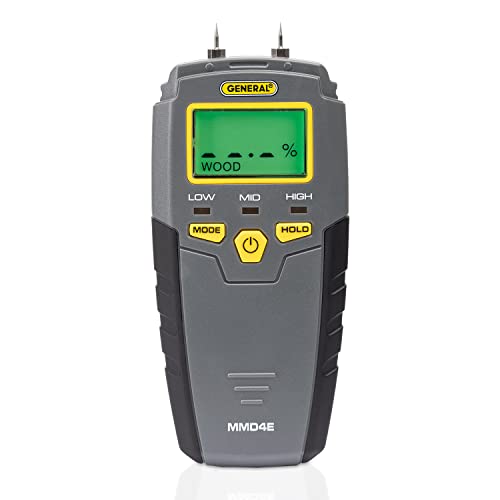
A moisture meter can sometimes help identify damp areas that deserve closer inspection. But readings depend on the material and the instrument. A moisture meter cannot confirm mold or tell you where a leak originates.
Suspect Hidden Moisture?
A moisture meter may help you investigate suspicious drywall, wood, or flooring when water damage isn’t obvious.
As an Amazon Associate I earn from qualifying purchases.
As an Amazon Associate, we earn from qualifying purchases.
Why Does My House Smell Like Mildew in Summer?
Warm, humid weather can increase the amount of moisture entering a house. When humid air contacts a sufficiently cold surface, condensation may form.
That moisture can collect around cold pipes, poorly insulated ducts, windows, and other surfaces.
Air conditioning normally helps remove humidity, but excessive indoor moisture can persist because of outdoor air infiltration, ventilation problems, equipment performance, or other moisture sources.
If humidity remains high even while the AC is running, investigate the reason before purchasing more equipment.
How to Get Rid of a Mildew Smell in Your House
The lasting solution depends on what’s producing the odor. Start with the moisture source instead of trying to cover up the smell.
1. Find and Stop the Moisture
Repair plumbing leaks, correct drainage problems, and investigate damp building materials. Dry wet areas promptly.
The EPA recommends drying wet materials within 24 to 48 hours when possible to help prevent mold growth.
2. Reduce Excessive Humidity
Use a hygrometer to monitor conditions. Address sources of excess moisture, use bathroom and kitchen exhaust ventilation appropriately, and consider dehumidification when necessary.
Don’t overlook cold surfaces and poor air circulation. Moving air may help some surfaces dry, but it won’t repair a leak or remove moisture trapped inside a wall.
3. Clean or Replace Affected Materials
Some hard, nonporous surfaces can be cleaned after the moisture problem is corrected.
Porous materials that remain wet, are heavily contaminated, or cannot be properly cleaned and dried may need replacement.
Extensive water damage, suspected contamination inside HVAC components, or a large mold problem may require professional assistance.
4. Investigate the HVAC System When Appropriate
If the smell appears when the system operates, have the evaporator coil, drain pan, condensate line, and nearby materials inspected.
The EPA does not recommend routine duct cleaning without a specific reason. Don’t buy duct cleaning or an air-treatment device simply because someone assumes the odor must be in the ductwork.
5. Don’t Confuse Odor Removal With Moisture Control
Air fresheners and odor absorbers may temporarily make the house smell better, but they won’t repair water damage.
Air purifiers may help reduce some airborne particles, depending on their filtration systems, but they cannot remove mold growing on damp surfaces.
Avoid using ozone generators in occupied spaces. Ozone can irritate the respiratory system and is not a substitute for correcting the underlying problem.
What Should You Buy to Get Rid of a Mildew Smell?
Before choosing a product, match it to the actual problem.
| Your situation | What may help |
|---|---|
| Not sure whether humidity is high | Digital hygrometer |
| Suspect damp wood or drywall | Appropriate moisture meter |
| Indoor humidity stays excessive | Dehumidifier, after investigating the cause |
| HVAC drainage or coil problems | HVAC inspection, cleaning, or repair |
| Water-damaged building materials | Source correction, cleaning, or replacement |
| Odor persists after moisture correction | Further investigation; filtration may help some airborne particles |
The most expensive solution isn’t necessarily the right one. A homeowner with a plumbing leak needs a repair, not an air purifier. Someone with persistent high humidity may benefit from dehumidification. Someone with a contaminated cooling coil may need HVAC maintenance.
When a Dehumidifier Makes Sense
If your humidity readings remain consistently high after you’ve investigated leaks and other moisture sources, a properly sized dehumidifier may help keep the house drier.

As an Amazon Associate I earn from qualifying purchases.
As an Amazon Associate, we earn from qualifying purchases.
Is a Mildew Smell in Your House Dangerous?
A mildew-like odor doesn’t establish how much mold is present or whether the air is unsafe.
However, persistent dampness and mold growth deserve attention. Exposure to damp and moldy environments can contribute to allergic and respiratory symptoms in some people.
People with asthma, mold allergies, or other respiratory vulnerabilities may be especially sensitive.
If someone has persistent or worsening symptoms, seek appropriate medical advice. If you suspect significant contamination or hidden water damage, consider a qualified professional inspection.
What If Your House Smells Like Mildew but You Can’t Find Anything?
Start with the location and timing of the smell rather than repeatedly spraying odor eliminators.
Check humidity in multiple rooms, look for evidence of past water damage, and notice whether the odor changes after rainfall or when the heating and cooling system operates.
If the odor is confined to one room and you can’t see any mold, our article on why your room smells musty even with no visible mold explores additional possibilities.
If the smell persists and you cannot identify the source, a qualified moisture or building professional may be able to help locate hidden dampness.
The Bottom Line
If your house smells like mildew, don’t assume the answer is an air purifier, a cleaning spray, or an expensive HVAC accessory.
Start by identifying where the smell is strongest, when it occurs, and whether moisture is present.
Those observations can help you distinguish between high humidity, hidden water damage, damp materials, and an HVAC-related odor.
Once you know what’s causing the smell, choosing the right solution becomes much easier.