





Air Purifier vs. Air Cooler: Understanding the Differences for Your Indoor Comfort

Deciphering Air Purifiers vs. Air Coolers: Essential Functions Unveiled

Air purifiers and air coolers serve distinct functions in enhancing indoor comfort; the Air Purifier cleans the air by removing pollutants and allergens, while the Air Cooler cools it through water evaporation.

Choosing between them hinges on your primary need:
Improved air quality or a cooler environment.

This guide breaks down the essentials of each device, helping you make an informed decision for your home.

Comparison Table: Air Cooler vs. Air Purifier

Feature Air Cooler(swamp cooler) Air Purifier
Primary Function Cools the air through water evaporation. Cleans the air by removing contaminants.
How It Works Pulls in hot air and passes it over water-soaked pads, where the air cools as the water evaporates. Draws air through filters to trap dust, pollen, allergens, and other pollutants.
Ideal Use Reducing room temperature, especially in dry, hot climates. Improving indoor air quality, beneficial in any climate, especially for those with allergies or respiratory issues.
Cooling Effect Yes, lowers air temperature. No, does not affect temperature.
Air Quality Improvement Minimal; primarily adds humidity, with some models including basic dust filters. Yes, significantly improves air quality by removing various pollutants.
Added Humidity Yes, increases humidity through the evaporative process. No, does not add moisture to the air.
Energy Efficiency Generally more energy-efficient than traditional air conditioners. Varies by model, but does not use as much energy as cooling devices.
Maintenance Requires regular water refills and pad cleaning/maintenance. Requires periodic filter replacements or cleaning, depending on the filter type.

Winix Air Purifier/ See More Here

Air Purifiers vs. Air Coolers: Navigating the Sea of Home Air Products

In today’s market, where the shelves are brimming with gadgets promising to improve your indoor air quality and comfort, it’s easy to feel adrift.
Two such devices that often get tangled in the nets of consumer confusion are air purifiers and air coolers.

At first glance, they might seem to serve a similar purpose, but they’re as different as fish and birds.

Let’s dive into the clear waters of understanding to help you find the right catch for your home.

Air Purifiers: The Silent Guardians of Air Quality

Imagine an invisible shield around you, filtering out all the unseen particles that could irritate your lungs or trigger allergies. That’s what an air purifier does. It’s your personal air guardian, ensuring that the air you breathe is as clean as possible.

  • What They Do: Air purifiers pull in your home’s air and pass it through a series of filters, capturing everything from dust and pollen to smoke and pet dander.
  • Who Needs It: Ideal for those with allergies, asthma, or anyone who wants to reduce the amount of indoor air pollution in their living spaces.
  • Key Features: Look for HEPA filters for the best particle removal, and consider activated carbon if reducing odors is also a priority.

Air Coolers: The Desert Oasis in Your Living Room

Now, picture a mirage in the desert, an oasis where water brings a refreshing coolness to the scorching heat. That’s the essence of an air cooler, using the natural process of evaporation to cool the air.

  • What They Do: Air coolers, also called swamp coolers, use water-soaked pads and a fan to evaporate water, which cools the air in the process. It’s a simple, energy-efficient way to bring down the temperature in dry climates.
  • Who Needs It: Best suited for those in hot, dry areas where the added humidity can be a comfort rather than a nuisance.
  • Key Features: Portability and low operating costs are significant plus points. Some models might include additional features like dust filters, but they won’t replace an air purifier’s functionality.

HessAire 3100 Air Cooler-See More Here
Casting the Net: Choosing What’s Right for You

Understanding the fundamental differences between these devices can steer you towards the right choice for your home:

  • Air Quality vs. Temperature: If your main concern is reducing allergens and pollutants, an air purifier is your go-to. If you’re looking to cool down your space efficiently, consider an air cooler.
  • Climate Considerations: Air coolers thrive in dry heat but might not be as effective in humid conditions. On the other hand, air purifiers work well in any climate.
  • Health and Comfort: For those particularly sensitive to air quality, such as allergy sufferers, an air purifier might be indispensable. If dry heat is your primary discomfort, an air cooler can provide relief.

The Catch of the Day

While both air purifiers and air coolers improve your living environment, they serve very different purposes. By understanding these differences, you can navigate the vast sea of home air products with confidence, ensuring you bring aboard the right device to meet your needs.

Now that you’ve got a clearer picture of how air coolers and air purifiers stand apart in terms of their core functions, you might be wondering which one is right for your home or perhaps you’re considering if you might benefit from having both.

To help you dive deeper into each device and make the most informed decision, we’ve put together comprehensive guides that cover everything from how to choose the best model to understanding maintenance requirements and more.

Explore Further

  • Air Coolers: Your Guide to Refreshing, Energy-Efficient Cooling
    Want to beat the heat without breaking the bank? Our detailed guide on air coolers will walk you through the best models on the market, how to maximize their efficiency, and tips for maintenance. Dive into the world of air coolers here.
  • Air Purifiers: Breathe Easy with Clean, Healthy Air
    If you’re looking to improve the air quality in your home, especially if you or your loved ones suffer from allergies or respiratory issues, our comprehensive air purifier guide is for you. Learn about the different types of filters, the top-rated purifiers, and how to maintain them for optimal performance. Start breathing easier by exploring our guide here.

Choosing the right air solution can significantly enhance your comfort and health at home. By exploring these dedicated resources, you’ll be equipped with the knowledge to select the perfect device—or combination of devices—that aligns with your specific needs.

Understanding Air Care Devices:
A Beginner’s Glossary

Navigating the world of home air care devices can be overwhelming, with various options each serving a unique purpose.
To help you understand the essentials, we’ve compiled a glossary of key air care devices. Whether you’re looking to cool, purify, or simply circulate the air in your home, this guide lays out the basic functions of each device, providing a clear starting point for making informed decisions about improving your indoor environment.

Glossary of Basic Air Care Devices

Air Cooler: A device that uses the evaporation of water to cool the air, ideal for dry climates. It pulls hot air through water-soaked pads, cooling and humidifying the air in the process.

Air Purifier: An appliance designed to clean the air by removing pollutants, allergens, and other harmful particles through a system of filters, improving indoor air quality.

Air Conditioner: A system that cools and dehumidifies indoor air using a refrigeration cycle, making it comfortable during hot weather. It can be central (for entire buildings) or unit-based (for individual rooms).

Dehumidifier: A device that reduces humidity levels in the air, usually for health or comfort reasons, or to eliminate musty odor. It works by extracting water from the air and collecting it in a tank.

Diffuser (Aromatherapy Diffuser): Used primarily for distributing essential oils into the air for aroma and therapeutic benefits, some diffusers also function as small humidifiers.

Fans: Electric devices with rotating blades used to create airflow. They do not cool the air but can make a room feel cooler by moving air around and aiding in sweat evaporation on the skin.

How to Reduce the Humidity in a Air Cooler?

Can you reduce humidity in an air cooler?

Evaporative air coolers have the advantage of being cheaper to run than a portable or window air conditioner because they don’t use as much energy.

Air coolers are a much simpler design in that they are basically a fan blowing over and through water.

And if you live in a very dry area, the extra moisture that evaporative air coolers create is welcomed. And evaporative air coolers do a very nice job of cooling a house when the air is dry.

But if you live in an area with a normal range of humidity, air coolers have the disadvantage of creating much more humidity in your house then you need.

And the result is the uncomfortable feeling of stickiness, as well his other symptoms like fatigue. Too much humidity can just put you in a bad mood.

So it’s not surprising that one of the first things people want to know about air coolers is how to reduce the humidity in the house when using one.

Unfortunately there is not one magic bullet to reduce the humidity created by an air cooler.

But… There are a few things that can help you reduce the humidity in your home caused by an air cooler.

high humidity remedies1.  Open Windows

There is a misconception that air coolers work best when a room is tightly closed. Not so.

Opening the window or Windows on the other side of the house actually helps pull the air through the house making the air cooler more efficient.

And the open windows let dryer air back into the house which can help lower the humidity caused by the air cooler.

2.  Extra Fans

Adding some extra fans in the house will help dry the air.

Anything that causes rapid air movement, including a fan, can evaporate moisture.

Though the amount of air being moved by a fan may not amount to much drop in the humidity, having air blowing directly on you will help reduce the feeling of humidity.

Think about it this way: if you were to sit in front of a fan with your hair wet, your hair would dry faster.

If your skin is feeling sticky from humidity and you sit in front of a fan, the humidity on your skin would dry out. Using fans along side an air cooler is a super easy and smart solution.

3.  Exhaust Fans

What do you do when after you take a steamy shower and the mirror and the windows are fogged over with condensation?

You turn on the exhaust fan.

Same thing in the kitchen. If the air is getting steamy from cooking and boiling, you flip on the exhaust.

Installing and running a few exhaust fans is an excellent ideal to pull some of the excess humidity caused by your air cooler out of the house.

4. Desiccant Dehumidifier

Desiccant Dehumidifiers are dehumidifiers that do not use a compressor and coil system. Instead they use a silica gel chemical absorbent to absorb moisture out of the air.

Silica gel is known as the little packets that are included in all types of products. Anything from shoes to electronics to help keep moisture out.

Desiccant dehumidifiers are full size units that are able to work spaces up to 480 ft.

And they also come in portable containers that you can place around your house.

Desiccant dehumidifierd are also completely silent because they do not use a compressor or a fan to reduce the humidity.

Can you a run a dehumidifier with an air cooler?

Technically you can use a standard compressor based dehumidifier to help reduce the humidity caused by an air cooler.

But you have to remember they do exhaust heat out of the rear. Which will compete with the cool air coming from the air cooler. And they are loud.

This is a more experimental approach to lowering the humidity caused by an evaporative air cooler. And it’s probably worth a shot if you happen to have a dehumidifier on hand.

But if you were thinking about purchasing a dehumidifier to lower the humidity caused by a evaporative air conditioner, then it begs the question:
Why don’t you just purchase a window air conditioner or portable air conditioner instead of an air cooler?

Other Natural Humidity Remedies

All natural dehumidifiers are a good way to reduce humidity in your house while running an evaporative air cooler.

Some of the most popular are:

  1. Charcoal briquettes
  2. Calcium chloride
  3. Rock salt
  4. Coffee creamer

1.Charcoal Briquettes

Charcoal is a naturally porous absorber that can be used as a do-it-yourself dehumidifier.

Simply filling some containers with about 8 to 10 charcoal briquettes and setting them throughout the house will have a dehumidifying effect that will help dry out your air.

2.Rock salt

Rock salt is also a well-known damp absorber.

The idea is to take two buckets. Drill holes in the bottom of one and put it inside of the other bucket was something in between the buckets to keep them apart. ( It doesn’t matter what you use, I use the lid off of a peanut butter jar that was in the trash)
Then fill the top bucket with rock salt.

3.Calcium Chloride

Calcium chloride is an all natural dehumidifier also.

The ideal here is to take a sock and fill it with calcium chloride then hang the sock somewhere with a bowl or a bucket beneath it to capture the condensation that will begin to drip from it.

4.Coffee Creamer

Cheap coffee creamer is a surprisingly good moisture absorber. And there is really no technique to using it.

Simply purchase the biggest container of cheap white coffee creamer that you can buy and pour it into a bowl.

The coffee creamer will draw moisture.

You’ll know to replace it when the coffee creamer gets too hard.

Dehumidifying Plants

Plants are natural dehumidifiers all on their own.

Anything that pulls moisture out of the air is going to be a dehumidifier and plants certainly qualify. Some plants more than others.

The best plants for dehumidification or plants that have waxy or hairy leaves with a large surface area.

Here’s just a few as an example.

1.  Cactus

Cactus flourish in dry regions because of their ability to draw moisture out of the air.
There’s not an easier plant to take care of than a cactus either.

2.  English ivy

English IVY is a super easy plan to take care of that’s also a great starter plant. It also is a great dehumidifier and thrives off of the humidity in the bathroom.

3.  Spider Plant

Spider plant is an easy indoor favorite. It grows easy and it grows quick in about any circumstance you put it in.

4.  Peace lily

Peace lily is a lovely plant that is not only a dehumidifier, is a air purifier too. This plant removes air pollutants like formaldehyde and xylene and is a addition to your home if you suffer from seasonal allergies or asthma.

Recap

Does air cooler increase humidity?

No doubt an air cooler increases the humidity in the space it is being used in.

Evaporative air coolers or basically a fan blowing over evaporated water as a means of cooling the air off as it’s blowing.

Essentially a giant humidifier.

Can an air cooler cool the room?

An evaporative air cooler can cool the room off nicely in the right circumstances. For instance, if you live in a dry area, then an air cooler can make a room feel very comfortable.

But if you live in an area that is already humid, then an air cooler will just pile on the humidity and add insult to injury.

Is there an air cooler with humidity control?

Unfortunately there’s not really an air cooler that has humidity control since the primary function of an air cooler uses humidity to help cool off a room.

But there are a few ways to help reduce the humidity caused by air coolers that are worth looking into.

Opening the windows on the opposite of the house will create air flow and help dry out the air at the same time.

Exhaust fans will also help pull the moisture out of the air.

Desiccant dehumidifiers or dehumidifiers that absorb moisture out of the air without the noise and the heat of a compressor.

They can be purchased as full size dehumidifiers or as containers of desiccants that you sit around the house.

There are also some nice do-it-yourself dehumidifiers that can do a good job.

Rock salt and calcium chloride make great moisture condensers.

Charcoal briquettes and cheap coffee creamer are also great humidity absorbers.

And don’t forget about the house plants.

House plants are one of nature’s Best dehumidifiers and they add oxygen to your air. Some plants even purify the air as they dehumidify.

Should You Run a Dehumidifier and a Air Conditioner at the Same Time?

If you’re a homeowner, you are well aware of the difference a rainy spring in the summer season can make compared to a dry spring and summer.

And there are a lot of advantages that come with the extra rain. For one you don’t have to spend an arm and a leg watering the grass.

Plus the vehicles get a lot of good washing without going through the car wash or pulling out the hoses and brushes at home too.

But there are definitely disadvantages to having an extra rainy season.

And one of the primary ones is the amount of humidity in the home and how to deal with it.

Dehumidifiers are machines that are designed with excessively humid seasons in mind. But they come with a lot of questions.

Should you run a dehumidifier and air conditioner at the same time?

You shouldn’t have to run a dehumidifier at the same time as an air conditioner in an average rainy season.

The air conditioner dehumidifies as it cools and as long as you’re talking about typical on and off rain, the air conditioner should keep up just fine.

But as you know, there are always exceptions to the rules.

And sometimes a rainy season means that the rain does not let up for days and sometimes for weeks.

And if you’re in Seattle or Florida, the climate may be excessively humid, just because.

The rain and humidity in Northern Texas last year was so high that it looked like the air conditioners were busted and had major leaks going on because of the amount of condensation that was pouring out of them.

The window air conditioners were creating so much condensation that the ground beneath them was basically just saturated mud.

So yes there are times when the humidity can be so high that the air conditioner is going to have a hard time keeping up.

In that case, you can place a dehumidifier or two in your house to help reduce the indoor humidity and take some strain off of the HVAC. (Central heat and air)

And you could possibly be avoiding an expensive service call for your HVAC down the line by helping it out now with a dehumidifier.

where do you put the dehumidifierBut where do you put the dehumidifier?

Good question.

Dehumidifiers expel heat from the rear. So placing them in a room that you are using is not the ideal situation.

But as a means of reducing humidity to take the strain off of the air conditioner running continuously, you don’t necessarily have to have the dehumidifier in the same room that you live in.

Placing the dehumidifier or dehumidifiers in bedrooms or guest rooms that are not being used can still reduce the humidity enough to help the AC.

If you do not have extra rooms, place a dehumidifier, you can minimize the heat by making sure that the filter and the coils are kept clean.

And you do not have to have the heat coming off of the dehumidifier pointed at you.

Just make sure that the unit is not against the wall or draperies, etc.

Can you use a window air conditioner as a dehumidifier?

Most modern window air conditioners have a dehumidifier setting that allows you to run the unit as a dehumidifier (dry mode) without any cold air blowing.

The effectiveness of a window air conditioner to reduce humidity won’t be on the same par as a dehumidifier because the heat that a window air conditioner creates is expelled outside.

And the heat from a dehumidifier is expelled inside and used to create a circle of humidity to extract the humidity out of a room further.

But a window air conditioner does not have to be in dry mode (dehumidifier mode) to dehumidify.

And as a means of reducing the strain on the main air conditioning, you can run the window air conditioner as a supplemental air conditioner.

That way it will be helping with the cooling and the dehumidifying.

Plus there are many times where certain spots in the house are not as well cooled by the HVAC as others because of the amount of vents or distance of the vents from the main air conditioning plenum.

So putting a window air conditioner in or near those areas can actually be a good solution to expanding your central heat and air during the summer.

More and more, you are starting to see window air conditioners that have a heat setting on them too. So provided you have the right window air conditioning, it could be a solution for the low heat in those areas during the winter too.

But remember, the more air conditioners or dehumidifiers you have running, the more amount of energy it’s going to take. And dehumidifiers and window air conditioners are both considered energy hogs.

But neither are considered as much of an energy hog as the main HVAC. And when it is running overtime to keep up with the amount of humidity,

Finally. What if you’re using evaporative air cooling?

Can you run a dehumidifier at the same time as an evaporative cooler?

Evaporative cooling basically amounts to a fan blowing over water to cool off the air as it enters into your room.

In dry areas, they work very well.

In humid areas, not so much.

And one of the main questions that people have about air coolers is how they can reduce the humidity in the house that comes along with using an air cooler.

A dehumidifier will help reduce the humidity caused by running an air cooler.

The purpose of a dehumidifier is to extract humidity from a room. Rooms that are being cooled with evaporative cooling are humid.

But you have to remember that dehumidifiers do expel heat and that the cool air that you get from a water evaporator is not on the same par as running a refrigerated air conditioning system.

So you may find that the heat from the dehumidifier might conflict with the cool air from the air cooler more so.

And the amount of humidity might outpace the dehumidifier.

Evaporative air conditioning even with a dehumidifier is not really going to be ideal if you’re having an excessively humid season.

Can you use a window air conditioner as a dehumidifierRecap

Can you run a dehumidifier at the same time as an air conditioner?

There are times when running a dehumidifier with an air conditioner can actually help take the strain off of the main air conditioning and cool down the house better.

If you’re having an excessively humid season, the air conditioning can run 24/7 trying to keep up with reducing the humidity.

Dehumidifiers can offset the amount of work the air conditioner is having to do.

Window air conditioners used as  dehumidifiers

Window air conditioners typically have a dehumidifier setting called dry mode that allows you to run the unit as a dehumidifier only.

But window air conditioners can also supplement the main air conditioning because they dehumidify and add cold air to the room at the same time.

This can be a good solution especially if you have hot spots around the house where the main air conditioning is not doing the full job.

And window air conditioners can be purchased with a heat setting to offset the cool air from those same spots that are not getting adequate air from the HVAC.

For people using evaporative cooling, dehumidifiers can offset the amount of humidity being introduced into the room by the air cooler.

But air coolers are not necessarily made for regions that can experience high humidity.

And you may find that running dehumidifiers may reduce the humidity in the air enough to make the room comfortable without having to run the air cooler at all.

And since window air conditioners and dehumidifiers, depending on which one you purchase, can be a comparable price, you might decide that the better money is spent on a window air conditioner.

Cooling Off Smartly: Should You Give Your AC a Break This Summer?

Should You Give Your AC a Break?

Giving your AC a break by adjusting the thermostat up a few degrees differs significantly from turning it off, as it maintains a balance between energy efficiency and system strain. While completely turning off the AC can lead to high energy use during re-cooling, moderately increasing the set temperature reduces workload and wear without compromising overall comfort. This approach optimizes energy conservation and prolongs the unit’s lifespan.

Intro

As temperatures soar, so does our reliance on air conditioning to keep our homes cool. But amidst the sweltering heat, one question arises: Is it wise to give your air conditioner a rest?

This question isn’t just about seeking relief from the heat; it’s about finding a balance between immediate comfort and long-term considerations like energy efficiency, system durability, and cost savings.

While the air conditioner is a vital ally during summer, its constant operation raises concerns about its impact on both the machine and our finances. Deciding whether to lower its usage involves weighing various factors, including saving costs, environmental responsibility, and comfort

giving the ac a break

Understanding ‘A Break’ for Your AC

When contemplating the idea of giving your air conditioner a break, it’s essential to first clarify what we mean by “a break.”
In the context of air conditioning, taking a break can manifest in two primary ways:
1. turning off the AC entirely or
2. merely turning it down by adjusting its settings.

Each approach has distinct implications for your home’s comfort, energy consumption, and the AC unit’s longevity.

Turning Off Your AC: This involves completely powering down your air conditioning unit. Homeowners might consider this option during cooler times of the day or when the house is empty. While this can lead to significant energy savings, the drawback is the discomfort you might experience upon returning to a heated home, alongside the energy-intensive process of cooling down a warm space back to a comfortable temperature.

Turning Down Your AC: Alternatively, turning down your AC means adjusting the thermostat to a higher, yet still comfortable, temperature. This reduces the AC unit’s workload by minimizing the number of cooling cycles it performs, leading to energy savings without a substantial compromise on comfort. This approach is about finding a sweet spot where the system operates less frequently but is still ready to maintain a reasonable level of coolness.

What is the Best Approach?

Completely turning off the AC removes the workload entirely but requires a significant effort to re-cool the space later.
On the other hand, turning down the unit lessens the demand while keeping the system engaged, allowing for more consistent management of indoor temperatures and humidity levels.

Understanding these distinctions is crucial in making an informed decision about how to give your air conditioner a break. The goal is to achieve a balance that reduces energy consumption and strain on the AC system while maintaining an environment that remains comfortable and healthy for the occupants.

 Pros and Cons of Turning Off vs. Turning Down AC

Strategy Pros Cons
Turning Off AC Maximizes energy savings during non-use periods. Can lead to discomfort and high energy use when cooling down again.
Turning Down AC Reduces energy use while maintaining a base level of comfort. Might still consume more energy than turning off if not managed well.

The Case for Turning Down Instead of Turning Off

Deciding between turning off your air conditioner and merely adjusting its settings can significantly impact both your comfort and energy bills. This is why turning down the AC, rather than switching it off entirely,  is often the preferable strategy.

Energy Efficiency During Re-cooling: When an AC is turned off in the heat of the day and then turned back on, it has to work overtime to reduce the indoor temperature to a comfortable level.

This catch-up can consume more energy than maintaining a steady, slightly elevated temperature. By turning down the thermostat instead—raising the set temperature by a few degrees—you allow the AC to maintain a more consistent and energy-efficient operation.

Reduced Strain on the System: Constantly cycling an air conditioner on and off can put additional strain on the system, particularly on its compressor. This can lead to increased wear and tear over time, potentially shortening the lifespan of the unit.
Turning down the AC reduces the frequency of these on-off cycles, thereby lessening the strain and possibly extending the system’s operational life.

Maintaining Baseline Comfort: Completely turning off the AC can lead to significant increases in indoor temperatures and humidity levels, creating an uncomfortable environment, especially in regions with high heat and humidity.

By setting the thermostat to a higher but still comfortable level, you can maintain a more consistent and pleasant indoor climate, avoiding the discomfort of returning to an overly hot and stuffy home.

Mitigating Humidity Issues: Air conditioners do more than cool the air; they also reduce humidity levels, which is a critical component of comfort during hot weather. Turning the AC off allows humidity to build up, potentially leading to discomfort, mold growth, and other moisture-related problems.
A moderate thermostat setting helps manage humidity effectively while providing a break to the system.

Practicality and Convenience: Programmable thermostats and smart home systems have made it easier than ever to control your AC’s operation effectively. These technologies can adjust the indoor temperature based on your daily schedule, weather conditions, and personal preferences, optimizing comfort and efficiency without the need to manually turn the system on and off.

 How to Effectively Give Your AC a Break

To maximize the efficiency of your air conditioning while ensuring your home remains comfortable, consider these strategies for effectively giving your AC a break without turning it off completely.

Using Programmable Thermostats:

  • Programmable thermostats allow you to set your AC to operate less when you are away or during cooler times, and resume normal cooling when you’re home or during the hottest parts of the day.

    Programmable Thermostat Settings Examples

    Time of Day Setting When Home Setting When Away Notes
    Daytime (Active) 78°F (25°C) 85°F (29°C) Adjust based on personal comfort and outdoor temperature.
    Nighttime (Sleep) 75°F (24°C) Consider using fans for added comfort without lowering the temperature.
    Away for Work 85°F (29°C) Set to start cooling 30 minutes before returning home.

Supplementary Cooling Strategies:

  • Utilize Fans: Ceiling or oscillating fans can make a room feel cooler through the wind-chill effect, allowing for higher thermostat settings. Remember, fans cool people, not rooms, so turn them off when the room is unoccupied.
  • Enhance Insulation: Improve insulation in your home to keep cool air in and hot air out. This can include adding insulation to attics and walls, using thermal curtains, and sealing leaks around windows and doors.
  • Shade and Ventilation: Use natural shade or create it with awnings and curtains to reduce solar heat gain. Ventilate your attic and other hot areas to prevent heat buildup that your AC has to counteract.
  • Mindful Appliance Use: Avoid using heat-generating appliances during the hottest parts of the day. For example, cook during cooler hours, or opt for outdoor grilling.

Optimizing Home Layout and Behavior:

  • Close Off Unused Areas: If possible, close doors to unused rooms to prevent cooling areas that don’t require it.
  • Smart Ventilation: Use windows and ventilation strategies during cooler parts of the day to allow fresh, cool air to circulate through the home, reducing the need for AC.

Supplementary Cooling Strategies

Strategy Benefit Implementation Tips
Utilize Fans Enhance comfort with less energy use. Use ceiling or oscillating fans to circulate air.
Enhance Insulation Prevent cool air from escaping. Add insulation to attics/walls, and use thermal window treatments.
Shade and Ventilation Reduce heat gain and improve indoor air quality. Use natural shade, awnings, and ventilate during cooler hours.
Mindful Appliance Use Avoid adding heat during peak temperatures. Use heat-generating appliances during cooler parts of the day.

Maintenance Tips for Optimal Performance

Regular maintenance is crucial to ensure that your air conditioning system remains efficient, effective, and capable of providing comfort without unnecessary strain.
Here are some essential maintenance tips to keep your AC in top condition:

Task Frequency Notes
Filter Cleaning/Replacement 1-3 months More frequently in high use periods or if you have pets.
Condenser Unit Inspection Annually Remove debris and ensure adequate space around the unit.
Professional Service Check Annually Include coolant level checks, system controls, and thermostat function.
Duct Inspection and Sealing As needed Look for leaks or damage, especially in unconditioned spaces like attics.

Final thoughts

Navigating the balance between keeping your home comfortably cool and managing energy use during the hot months is no small feat.

But the strategy of giving the AC a rest by turning down the settings, coupled with regular maintenance and mindful usage, can significantly enhance the performance and longevity of your air conditioner.

Employing programmable thermostats to manage your cooling needs automatically allows for a seamless integration of energy efficiency into your daily life, ensuring your home remains comfortable when needed while conserving energy when possible.

Regular maintenance remains a cornerstone of efficient air conditioner operation. Simple tasks like cleaning or replacing air filters, ensuring the outdoor unit is free from debris, and scheduling annual check-ups with a professional can prevent common issues that lead to inefficiency and discomfort.1

Call to Action

As we move forward into the warmer months, take a moment to evaluate your current air conditioner usage habits. Consider implementing the strategies discussed, from installing a programmable thermostat to embracing regular maintenance routines.

If you’ve noticed any warning signs that your AC might be underperforming, don’t hesitate to consult a professional for a thorough assessment. Embracing these practices ensures that your air conditioner serves you effectively, providing a cool and comfortable sanctuary in your home throughout the summer season.

Should AC Drip Water Outside? Here’s Why It’s a Good Thing

Should AC Drip Water Outside?

Yes indeed, it’s common for an air conditioner to release water outside, and it’s a natural part of its operation. As the air conditioner cools the indoor air, it acts as a dehumidifier, extracting moisture from the atmosphere. This moisture condenses and is collected, eventually dripping outside the unit. This process is crucial for maintaining indoor comfort levels and preventing excess humidity, which can lead to issues like mold growth and discomfort.

Air conditioning is essential for comfort during hot weather, but many people are confused by the water that seems to drip from their AC units.
So, is it normal for an AC to drip water outside? In short, the answer is yes.
 In this article, we will delve deeper into this topic and answer some common questions that people have about AC water dripping.

Is it normal for AC to drip water outside?

Air conditioners typically release water outside as part of their normal operation.

During the cooling process, air conditioners remove moisture from the air, which must be drained away.

To accomplish this, the water that is produced is typically drained through a pipe that runs from the AC unit to the outside of the home.

Therefore, it is normal for an AC unit to drip water outside.

How much should AC drip outside?

The amount of water that an AC unit drips outside can vary depending on factors such as the size of the unit, the humidity in your home, and the temperature outside.

Typically, an AC unit should produce around 5 gallons of water per day. If you notice that your unit is producing an excessive amount of water, it could indicate a problem that needs to be addressed.

Do air conditioners always drip water?

While it is normal for AC units to drip water, not all AC units are designed to do so.
Some models are designed to collect the water that is produced by the unit and recycle it, while others may use the water to help cool the compressor.

When is it not normal for an air conditioner to be dripping water outside?

If you notice that your AC unit is producing an excessive amount of water or is leaking water inside your home, it could indicate a problem with the unit.

Common causes of this problem include clogged drain lines, a malfunctioning condensate pump, or a refrigerant leak.

What if your AC is not dripping outside? What to check?

If your AC unit is not dripping water outside, it could indicate a problem with the unit.

Check the drain line to make sure it is not clogged or blocked.
You should also check the air filter to ensure that it is clean, as a dirty air filter can cause the unit to produce less water.

If these checks do not resolve the issue, it may be time to call a professional to inspect the unit.

What Is Leaking – Water or Refrigerant?

If you notice that your AC unit is leaking, it is important to determine whether it is water or refrigerant that is leaking.

Water leaks are generally not a cause for concern, while refrigerant leaks can be dangerous and should be addressed immediately.

Signs of a refrigerant leak include a hissing sound coming from the unit, ice forming on the coils, and a decrease in cooling performance.

In conclusion, Should AC water drip outside?

it is normal for an AC to drip water outside as it is a natural byproduct of the cooling process.
However, if you notice excessive water or a leak inside your home, it may indicate a problem that needs to be addressed.

If you are unsure about any issues with your AC unit, it is best to call a professional to inspect and diagnose the problem.

FAQ

Question Answer
Why does my air conditioner drip water outside? Air conditioners cool and dehumidify the air inside your home, and as a result, they produce condensation that needs to be drained away. This is why air conditioners drip water outside.
How much water should my air conditioner produce? The amount of water produced by an air conditioner can vary based on factors such as the size of the unit, the humidity in your home, and the temperature outside. A typical air conditioner produces around 5 gallons of water per day.
Is it normal for an air conditioner to produce excessive amounts of water? No, it is not normal for an air conditioner to produce an excessive amount of water. If you notice that your air conditioner is producing more water than usual, it could indicate a problem with the unit.
What should I do if my air conditioner is producing an excessive amount of water? If you notice that your air conditioner is producing an excessive amount of water, you should check the drain line and condensate pump to make sure they are working properly. If the problem persists, it may be time to call a professional.
Should I be worried if my air conditioner is not producing any water? If your air conditioner is not producing any water, it could indicate a problem with the unit. You should check the drain line and air filter to make sure they are not clogged or blocked. If the problem persists, it may be time to call a professional.
Why is my air conditioner leaking water inside my home? If your air conditioner is leaking water inside your home, it could indicate a problem with the unit. Common causes of this problem include clogged drain lines, a malfunctioning condensate pump, or a refrigerant leak.
Can a dirty air filter cause my air conditioner to produce less water? Yes, a dirty air filter can cause your air conditioner to produce less water. This is because a dirty air filter can restrict the flow of air through the unit, which can reduce the amount of moisture that is removed from the air.
What should I do if my air conditioner is leaking refrigerant? If your air conditioner is leaking refrigerant, it is important to address the problem immediately. Refrigerant leaks can be dangerous and can also cause damage to the unit. You should call a professional to diagnose and repair the problem.
How can I prevent my air conditioner from producing excessive amounts of water? To prevent your air conditioner from producing excessive amounts of water, you should make sure that the drain line and condensate pump are working properly. You should also make sure that the air filter is clean and that the unit is properly sized for your home.
Can I stop my air conditioner from dripping water outside? No, you cannot stop your air conditioner from dripping water outside. This is a natural byproduct of the cooling and dehumidifying process, and the water must be drained away to prevent damage to the unit and your home.

What is an Ionizing Air Conditioner? Unveiling the Power of Plasma Technology

Interestingly the ion/anion symbol on an ion air cooler is a pine tree. A reference to fact that negative ions exist in abundance in the forest.

Negative ions are prevalent in certain natural environments, including:

Forests: The dense vegetation, especially in pine forests, contributes to the high concentration of negative ions. The process of photosynthesis, along with the movement of water from rainfall and streams, facilitates the generation of ions.
Beaches: The constant crashing of waves and the presence of salt water facilitate the production of negative ions, making beach environments particularly rich in these particles.
After Thunderstorms: Lightning is a powerful natural phenomenon that generates a significant amount of negative ions, leading to the fresh and clean feeling in the air following a storm.

What is an Ionizing Air Conditioner?

An ionizing air conditioner, also known as an ionizer or ionic air purifier, is a type of air conditioning unit that incorporates technology to purify the air as it cools.

The use of ionization in air conditioners serves both purposes:

Cleaning the air and preventing the growth of mold and bacteria on the air conditioner itself.

Cleaning the Air: Ionization in air conditioners helps to purify the air by generating negative ions, which attach to airborne particles such as dust, pollen, allergens, and some microorganisms.

These particles then become too heavy to remain airborne and are either captured by the air conditioner’s filters or fall to surfaces where they can be cleaned away. This process helps reduce the concentration of harmful pollutants in the indoor air, contributing to a healthier environment.

Preventing Mold and Bacteria Growth: The ionization process also helps prevent the growth of mold and bacteria within the air conditioner unit itself. The ions can neutralize bacteria and mold spores, reducing their ability to grow on the air conditioner’s coils and other internal components.

This not only contributes to better air quality but also helps maintain the efficiency and lifespan of the air conditioner by preventing the buildup of biological contaminants that can hinder its performance.

What is a Plasma Air Conditioner?

While ionizing air conditioners are effective in improving air quality and maintaining unit cleanliness, plasma air conditioners represent a more advanced form of ionizing technology.
A plasma air conditioner utilizes a high-voltage electrical discharge to create plasma, a highly ionized gas that contains not only ions but also free electrons and neutral particles. As air passes through the plasma field generated within the unit, the plasma actively neutralizes a wide array of airborne contaminants, including viruses, bacteria, VOCs, and allergens, without the risk of producing harmful ozone.
This makes plasma air conditioners exceptionally efficient at purifying indoor air, offering a comprehensive solution to both particulate and microbial pollutants. The integration of plasma technology in air conditioning systems is seen as a significant advancement, providing superior air purification while still fulfilling the core function of cooling indoor environments.

Exploring Plasma Technology in Air Conditioning: A Detailed Overview

Feature Description Benefits Applications Considerations
Technology Utilizes electrical energy to create plasma, comprising ions, electrons, and neutral particles. Offers broad-spectrum air purification. Suitable for split ACs, central HVAC, and commercial systems. Opt for models designed to minimize ozone production.
Mechanism The generated plasma interacts with airborne contaminants, neutralizing particulate matter, VOCs, and microbes. Enhances energy efficiency by using existing airflow. Ideal for residential spaces, offices, and healthcare facilities. Regular maintenance is essential for optimal performance.
Target Pollutants Effective against a wide range of pollutants, including bacteria, viruses, dust, and odors. Safe for indoor use with minimal harmful byproducts. Used to improve overall indoor air quality. Ensure compatibility with existing HVAC systems.
Safety Engineered to be safe for indoor environments, with controlled ozone levels. Improves air quality without significant health risks. Recommended for areas with high air quality requirements. Verify safety with certifications and manufacturer standards.

Here are examples of Well-known Air Conditioner brands equipped with ionizing and plasma technologies:

Ionizing Air Conditioners:

  • Portable Air Conditioner: The LG LP1419IVSM portable unit is noted for its “Dual Inverter” technology and features that reduce bacteria and odors, akin to ionizing capabilities.
  • Window Air Conditioner: Frigidaire Gallery FGRC0844U1 is a smart window air conditioner with Wi-Fi and an ionizer to capture dust and enhance efficiency.
  • Split Air Conditioner: Panasonic XE12SKUA-1 from the Exterios XE series includes an advanced “nanoe-G” air purifying system that uses nano-technology to eliminate airborne particles.
  • Central Air Conditioning System: Systems like Trane CleanEffects™ Air Cleaner can be integrated into HVAC systems, providing high-efficiency air cleaning with ionizing technology.
  • Smart Air Conditioner: LG LW1817IVSM is a smart window unit with dual inverter technology, known for its ability to tackle bacteria and odors, suggesting ionizing functionality.

Plasma Air Conditioners:

  • Split Air Conditioners: Brands like Sharp offer split air conditioners with “Plasmacluster” technology, which employs plasma to combat airborne contaminants such as bacteria and viruses.
  • Portable Air Conditioners: Certain portable models, like those from Plasma Air, include plasma technology for air purification, offering a portable solution for improving air quality.
  • Central HVAC Systems: Reme Halo by RGF and Phenomenal Aire’s Cold Plasma Generators (CPG) are integrated into central HVAC systems, providing comprehensive air purification throughout the home or building.
  • Commercial Air Conditioning Systems: Plasma Air offers solutions for larger commercial and industrial HVAC systems to ensure high air quality standards in various spaces, including offices and hospitals.

These air conditioning brands showcase the integration of ionizing and plasma technologies to enhance air purification and improve indoor air quality in different types of air conditioners, including portable, window, split, central, and commercial systems.


In-Duct Ionizer and Plasma Solutions for HVAC Systems

In-duct ionizer and plasma solutions are innovative air purification technologies designed to be integrated directly into the ductwork of HVAC (Heating, Ventilation, and Air Conditioning) systems. These solutions offer a seamless way to improve indoor air quality throughout an entire building or home. Here’s a closer look at how they work and their benefits:

In-Duct Ionizers:

  • How They Work: In-duct ionizers release a high concentration of positive and negative ions into the circulating air within the HVAC ducts. These ions attach to airborne particles like dust, pollen, and microbes, causing them to clump together and become too heavy to stay airborne, thus removing them from the air you breathe.
  • Benefits: This system is particularly effective at reducing airborne allergens and pathogens, making it an excellent choice for environments where health and hygiene are paramount. Additionally, it operates silently and is hidden from view, maintaining the aesthetic appeal of the interior space.

In-Duct Plasma Solutions:

  • How They Work: Plasma air purifiers generate a plasma field within the HVAC ducts. Plasma, being a highly ionized gas, contains a mixture of ions, electrons, and neutral particles. When air passes through this plasma field, the reactive species within the plasma neutralize a broad range of contaminants, including volatile organic compounds (VOCs), odors, bacteria, and viruses.
  • Benefits: Plasma solutions are known for their broad-spectrum effectiveness, capable of addressing both particulate and gaseous pollutants. They can significantly improve the air quality in a space without introducing harmful byproducts like ozone, making them a safe choice for indoor environments.

Both in-duct ionizers and plasma solutions are low maintenance and energy-efficient, as they utilize the existing airflow within the HVAC system to purify the air, eliminating the need for additional fans or power sources. They are also scalable, making them suitable for small residential systems as well as large commercial buildings.

Incorporating these technologies into your HVAC system can dramatically enhance indoor air quality, creating a healthier and more comfortable environment for occupants. Whether you opt for an ionizer or plasma solution depends on your specific air quality needs and the types of contaminants you’re looking to target.

Deciding Between Ionizer and Plasma Air Conditioning Solutions

Feature Ionizers in Air Conditioners Plasma in Air Conditioners
Pros
  • Effective at removing particulate pollutants like dust, pollen, and pet dander.
  • Generally quieter operation.
  • Low maintenance, as many do not require filter replacements.
  • Can improve energy efficiency by keeping the air conditioner coils cleaner.
  • Broad-spectrum purification capable of neutralizing particulates, VOCs, bacteria, and viruses.
  • Typically produces less or no ozone, making it safer for indoor use.
  • Can handle both particulate and gaseous pollutants effectively.
  • Often integrated into advanced HVAC systems for whole-home or building purification.
Cons
  • May produce low levels of ozone, which can be a respiratory irritant.
  • Less effective against gaseous pollutants and VOCs.
  • The effectiveness can diminish if not maintained properly (e.g., cleaning of ionizing wires).
  • Can be more expensive due to advanced technology.
  • May require professional installation, especially for in-duct systems.
  • Maintenance and operational costs could be higher.
  • The effectiveness can vary based on the design and quality of the plasma system.

When it comes to enhancing indoor air quality through your air conditioning system, both ionizer and plasma technologies offer compelling benefits. However, choosing the right solution depends on your specific needs, preferences, and the nature of your indoor environment. Here’s a comparison to help you decide:

Ionizer Air Conditioning Solutions:

  • How They Work: Ionizers emit charged particles (ions) into the air, which attach to and neutralize airborne pollutants, making them heavier so they settle out of the air or are captured by filters.
  • Key Benefits: Effective at reducing particulate pollutants like dust, pollen, and pet dander. Often quieter and require less maintenance.
  • Best For: Those with allergies or respiratory issues who need relief from particulate allergens. Ideal for residential settings where particulate pollution is the primary concern.
  • Considerations: May produce low levels of ozone as a byproduct. Not as effective against gases or VOCs.

Plasma Air Conditioning Solutions:

  • How They Work: Plasma technology uses a high-voltage electrical discharge to create a plasma field that neutralizes a broad range of airborne contaminants, including VOCs, bacteria, and viruses.
  • Key Benefits: Broad-spectrum air purification capabilities. Can handle both particulate matter and gaseous pollutants. Generally safe with minimal ozone production.
  • Best For: Environments requiring comprehensive air purification, including commercial spaces, healthcare facilities, and homes in areas with high pollution levels.
  • Considerations: May come with a higher price tag. Requires proper installation and occasional maintenance to ensure optimal performance.

Making Your Decision:

  • Assess Your Needs: Evaluate the primary air quality concerns in your space. Is it particulate matter, gaseous pollutants, or a combination of both?
  • Consider Your Space: The size and function of your space can influence your choice. Plasma solutions might be more suitable for larger or more polluted environments.
  • Budget and Maintenance: Consider your budget not just for the initial purchase but also for ongoing maintenance. Ionizers might be more cost-effective and require less maintenance.
  • Safety Concerns: If ozone production is a concern, research models carefully to choose solutions that minimize or eliminate ozone output.

Ultimately, both ionizer and plasma air conditioning solutions can significantly improve indoor air quality, but the right choice depends on your specific air quality challenges, space requirements, and personal preferences.

But which is Creates Less Ozone?

Plasma air purification technology typically poses less risk of ozone production compared to some ionizer technologies. This is because plasma air purifiers are designed to target and neutralize contaminants without necessarily producing ozone as a byproduct. Plasma technology uses electrical discharges to create a plasma field that can effectively break down pollutants, bacteria, and viruses in the air without generating significant ozone levels.

Faq

Do you have to leave the fan running on your HVAC to have an in-duct ionizer or plasma air purifier going?

Yes, for optimal performance, it’s recommended to leave the fan running on your HVAC system to ensure proper circulation of the purified air throughout your space.

Where do you install an in-duct air purifier or ionizer in an HVAC?

In-duct air purifiers or ionizers are typically installed within the ductwork of your HVAC system, preferably near the air handler. This allows them to treat the air as it passes through the ducts before being distributed into your living space.

Does having an in-duct air purifier in the HVAC create less ozone or make it less noticeable?

In-duct air purifiers, especially plasma-based ones, typically produce minimal ozone compared to some standalone ionizers. They are designed to neutralize contaminants without significantly contributing to ozone levels, making them safe for indoor use. Additionally, proper installation and maintenance can help minimize any ozone production.

What is an ionizing air conditioner?

An ionizing air conditioner, also known as an ionizer or ionic air purifier, is a type of air conditioning unit that incorporates technology to purify the air as it cools by emitting charged particles, or ions, into the air.

How does an ionizing air conditioner work?

Ionizing air conditioners work by generating negative ions, which attach to airborne particles such as dust, pollen, allergens, and some microorganisms. These particles then become too heavy to remain airborne and are either captured by the air conditioner’s filters or fall to surfaces where they can be cleaned away.

What are the benefits of using an ionizing air conditioner?

Ionizing air conditioners help purify indoor air by reducing the concentration of airborne pollutants, contributing to a healthier environment. Additionally, they can help prevent the growth of mold and bacteria within the air conditioner unit itself, improving overall air quality.

What is a plasma air conditioner?

A plasma air conditioner utilizes plasma technology, which involves creating a highly ionized gas containing ions, electrons, and neutral particles, to purify the air. Plasma air conditioners are known for their comprehensive air purification capabilities, effectively neutralizing a wide array of airborne contaminants.

How does a plasma air conditioner differ from an ionizing air conditioner?

While both ionizing and plasma air conditioners aim to purify indoor air, plasma air conditioners use a more advanced form of ionizing technology, generating plasma to actively neutralize contaminants such as viruses, bacteria, VOCs, and allergens.

Do ionizing or plasma air conditioners produce ozone?

Plasma air conditioners typically produce minimal ozone compared to some ionizing air conditioners. However, it’s essential to choose models designed to minimize ozone production and ensure safe indoor air quality.

Where can ionizing and plasma air conditioners be installed?

Ionizing and plasma air conditioners are available in various types, including portable, window, split, central, and commercial systems, catering to different indoor environments and air quality needs.

Are ionizing and plasma air conditioners safe for residential use?

When installed and operated according to manufacturer guidelines, ionizing and plasma air conditioners are safe for residential use. They are designed to improve indoor air quality without posing significant health risks to occupants.

Do ionizing and plasma air conditioners require regular maintenance?

Yes, like any other air conditioning unit, ionizing and plasma air conditioners require regular maintenance to ensure optimal performance. This may include cleaning the unit, replacing filters or components as needed, and periodic inspections by qualified technicians.

Can ionizing and plasma air conditioners help with odors in the home?

Yes, ionizing and plasma air conditioners are effective at neutralizing odors by targeting the particles and microbes that cause them. Thiscan help freshen the air in your home and create a more pleasant indoor environment.

Are ionizing air conditioners safe for indoor plants and pets?

Ionizing air conditioners are generally safe for indoor plants and pets when operated within recommended guidelines. However, some sensitive plants may be affected by the increased concentration of negative ions, while certain pets, particularly birds, may be sensitive to ozone. It’s advisable to monitor plant and pet reactions and consult with a veterinarian or horticulturist if concerns arise.

Do ionizing air conditioners produce harmful levels of ozone?

While ionizing air conditioners may produce ozone as a byproduct of ionization, reputable models are designed to minimize ozone production and maintain safe indoor air quality levels. It’s essential to choose ionizing air conditioners certified by regulatory bodies and follow manufacturer recommendations for safe operation. Regular maintenance and proper ventilation can also help mitigate ozone levels.

Air Ionizer
What Does Ozone Smell Like?

Can You Be Allergic to Air Conditioning? Unveiling the Hidden Allergens in Your AC

Can You Be Allergic to Air Conditioning?

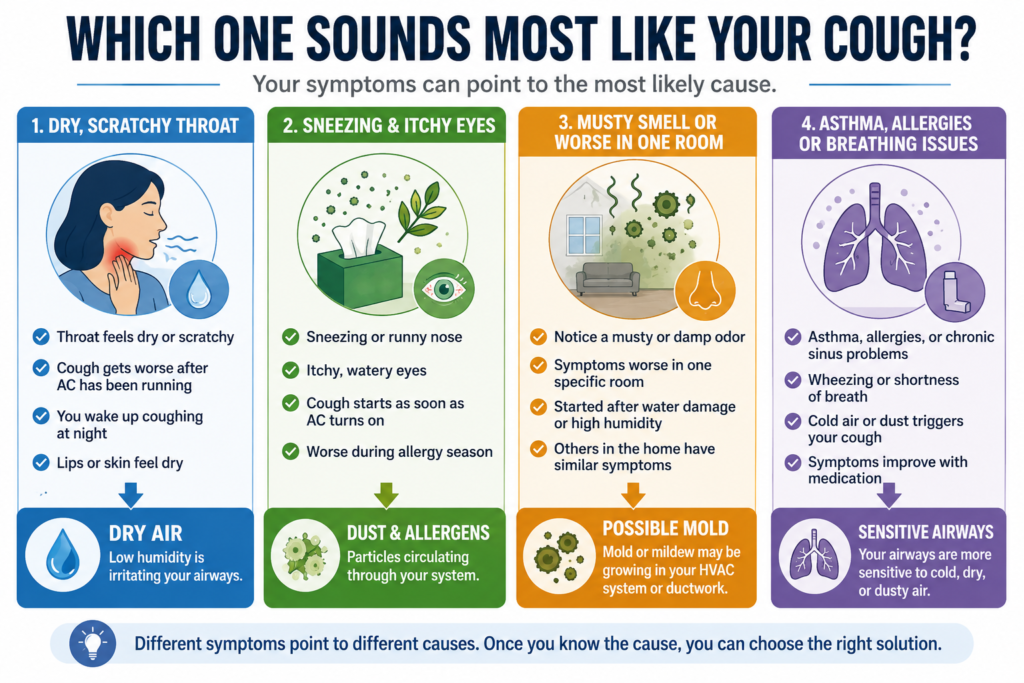
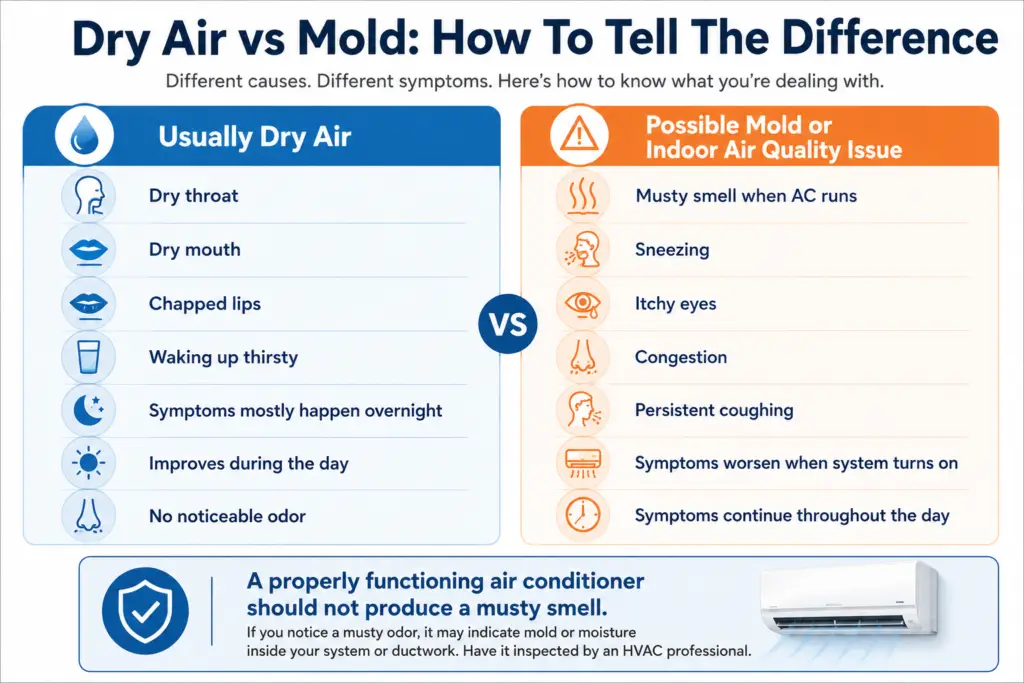
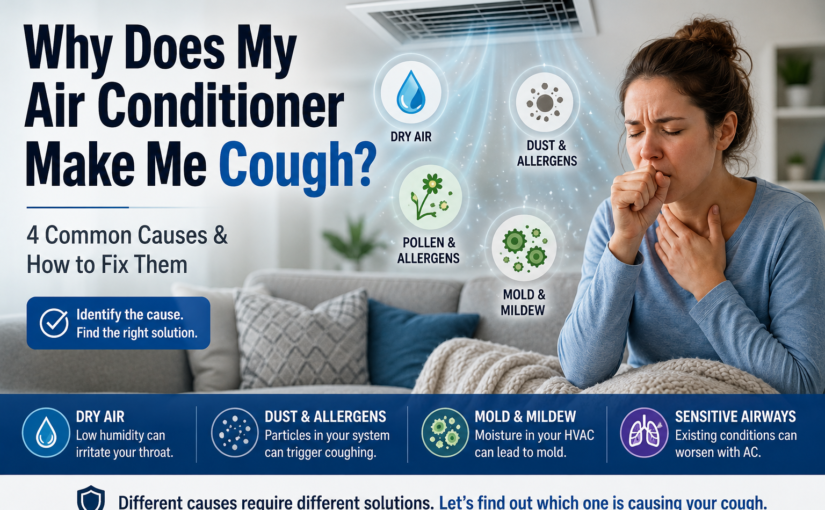
Yes, people can experience allergy-like symptoms in response to air conditioning, but these symptoms are not due to an allergy to the air conditioning itself. Instead, the symptoms may be triggered by various factors associated with air conditioning use, such as:

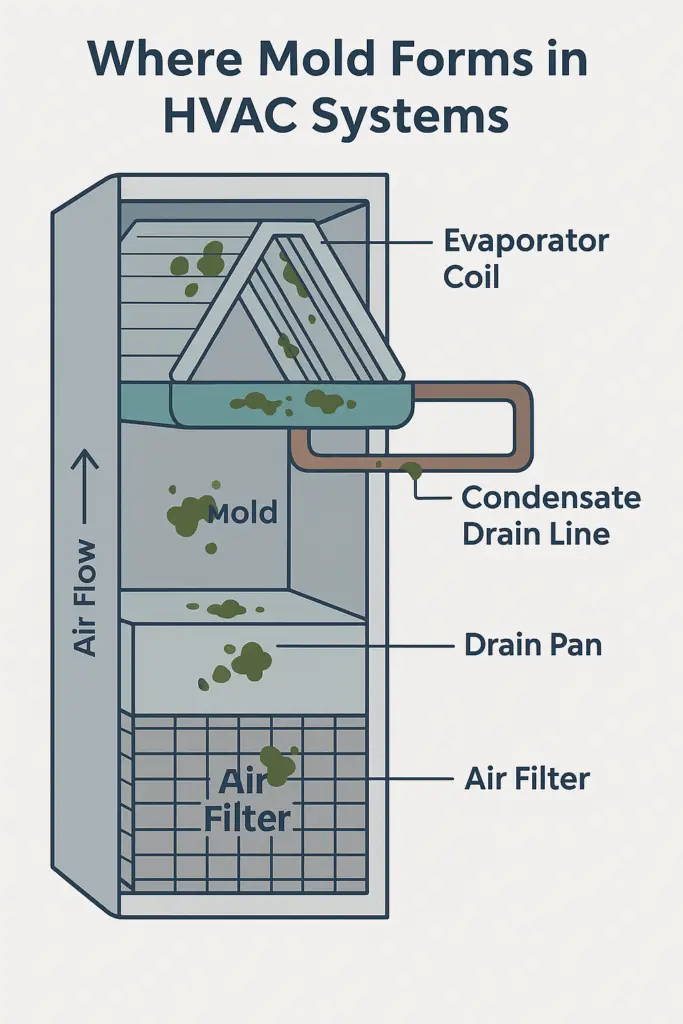
  1. Mold and Mildew: Air conditioning systems can harbor mold and mildew, especially if they are not properly maintained. When the AC is in use, it can circulate these allergens through the air, potentially causing allergic reactions in sensitive individuals.1
  2. Dust and Dust Mites: Dust can accumulate in the filters and ducts of air conditioning systems. When the system is turned on, these particles can be dispersed into the indoor environment, which might trigger allergies.2
  3. Pollen: For systems that pull in outside air, pollen can be introduced into the indoor environment through the air conditioning system, which could trigger symptoms in individuals with pollen allergies.
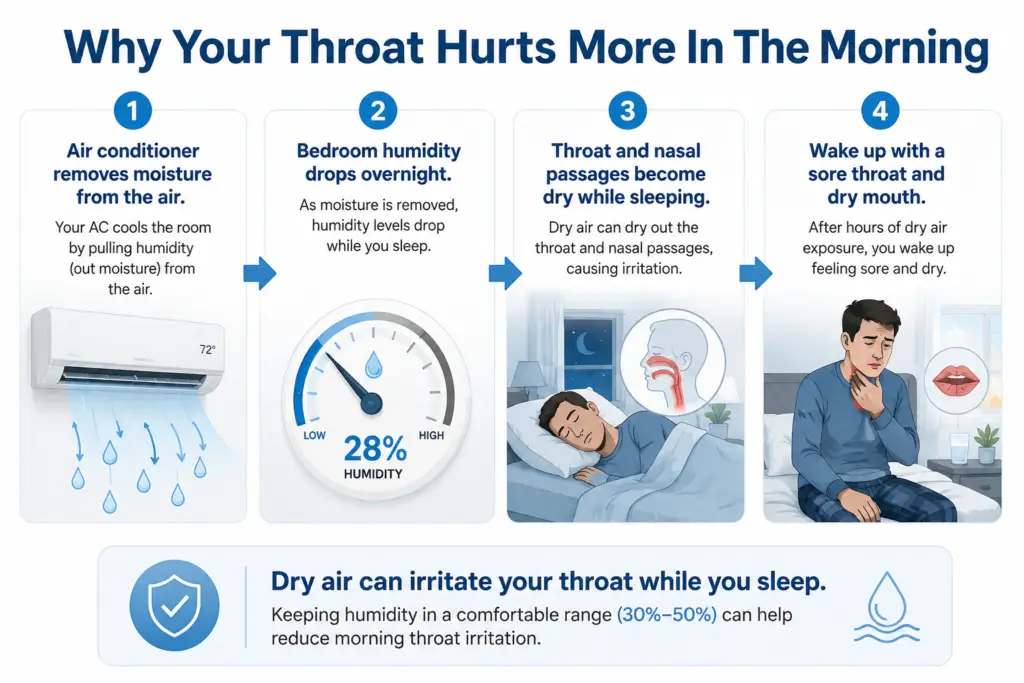
  4. Dry Air: Air conditioning can reduce indoor humidity levels, which might lead to dry air. This can irritate the mucous membranes of the nose and throat, leading to symptoms that resemble an allergic reaction, such as a sore throat, itchy eyes, and nasal irritation.
  5. Cooling Agents and Chemicals: While less common, some individuals might be sensitive to certain chemicals used in air conditioning systems, including refrigerants. However, this is not a true allergy but rather a sensitivity or irritation caused by exposure to these chemicals.

    What Are Some AC Allergy Symptoms?

Symptom Description
Respiratory Issues Sneezing, coughing, runny or stuffy nose, asthma attacks, difficulty breathing.
Allergic Reactions Itchy, watery eyes, sneezing, nasal congestion, triggered by allergens like mold, dust mites, or pollen.
Dryness Dry skin, dry eyes, sore throat, itchy eyes due to reduced indoor humidity.
Headaches and Fatigue Headaches, dizziness, fatigue, possibly due to temperature and humidity changes or chemicals.
Skin Irritations Dry, irritated skin, exacerbation of eczema or dermatitis due to dry air.


  1. Respiratory Issues: This can range from sneezing, coughing, and a runny or stuffy nose to more severe symptoms like asthma attacks or difficulty breathing, especially in individuals with pre-existing respiratory conditions.
  2. Allergic Reactions: Symptoms similar to those experienced with common allergies, such as itchy, watery eyes, sneezing, and nasal congestion. These reactions can be triggered by allergens like mold, dust mites, or pollen that might be circulated by the air conditioning.
  3. Dryness: Air conditioning can reduce indoor humidity levels, leading to dry skin, dry eyes, and irritation of the mucous membranes in the nose and throat. This can result in a sore throat, itchy eyes, and general discomfort.
  4. Headaches and Fatigue: Some people may experience headaches, dizziness, or fatigue when exposed to air conditioning for prolonged periods, possibly due to changes in temperature and humidity or to certain chemicals used in air conditioning systems.
  5. Skin Irritations: Dry air produced by air conditioning can lead to dry, irritated skin, and in some cases, may exacerbate conditions like eczema or dermatitis.

It’s important to note that these symptoms can also be caused by other factors and are not exclusively related to air conditioning.

While anyone can experience discomfort from air conditioning, certain individuals may be at a higher risk of developing symptoms. Understanding these risk factors can help in identifying and implementing appropriate preventive measures.

  • Individuals with Respiratory Conditions: People with pre-existing respiratory issues, such as asthma or chronic obstructive pulmonary disease (COPD), may find that air conditioning exacerbates their symptoms due to the circulation of cool, dry air, which can irritate sensitive airways.
  • Allergy Sufferers: Those with allergies to dust, pollen, mold, or pet dander might experience heightened symptoms in air-conditioned environments if the system circulates or exacerbates these allergens.
  • People with Weakened Immune Systems: Individuals with compromised immune systems, including the elderly and those undergoing treatments that weaken immunity, might be more susceptible to infections from airborne pathogens that can proliferate in poorly maintained AC systems.
  • Individuals with Skin Conditions: People with eczema, dermatitis, or other skin conditions may find that the dry air produced by air conditioning aggravates their skin issues.
  • Contact Lens Wearers: The reduced humidity in air-conditioned environments can cause discomfort for contact lens wearers, leading to dryness and irritation of the eyes.

Preventive Measures and Solutions

Recognizing the groups at higher risk for air conditioning-related symptoms underscores the importance of maintaining indoor air quality. Regular maintenance of air conditioning systems, including filter changes and duct cleaning, can mitigate many of the issues. Additionally, integrating air purifying technologies, such as UV and induct air purifiers, can further enhance indoor air quality, benefiting all occupants, especially those at higher risk.


Mitigating Air Quality Issues: The Role of UV and Induct Air Purifiers

While air conditioning can inadvertently contribute to indoor air quality issues, modern technology offers effective solutions to mitigate these concerns. Two such innovations are UV (Ultraviolet) and induct air purifiers, which can significantly enhance the quality of indoor air by targeting the pollutants that contribute to the symptoms listed above.

UV Air Purifiers: A Shield Against Microorganisms

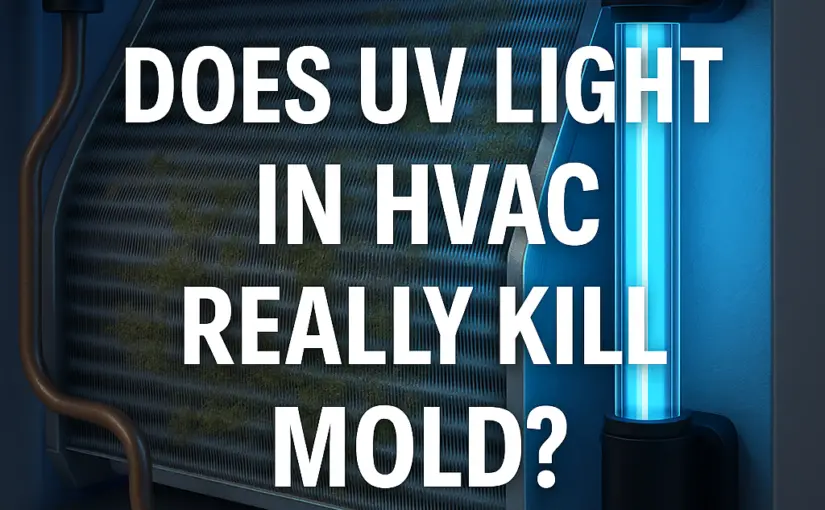
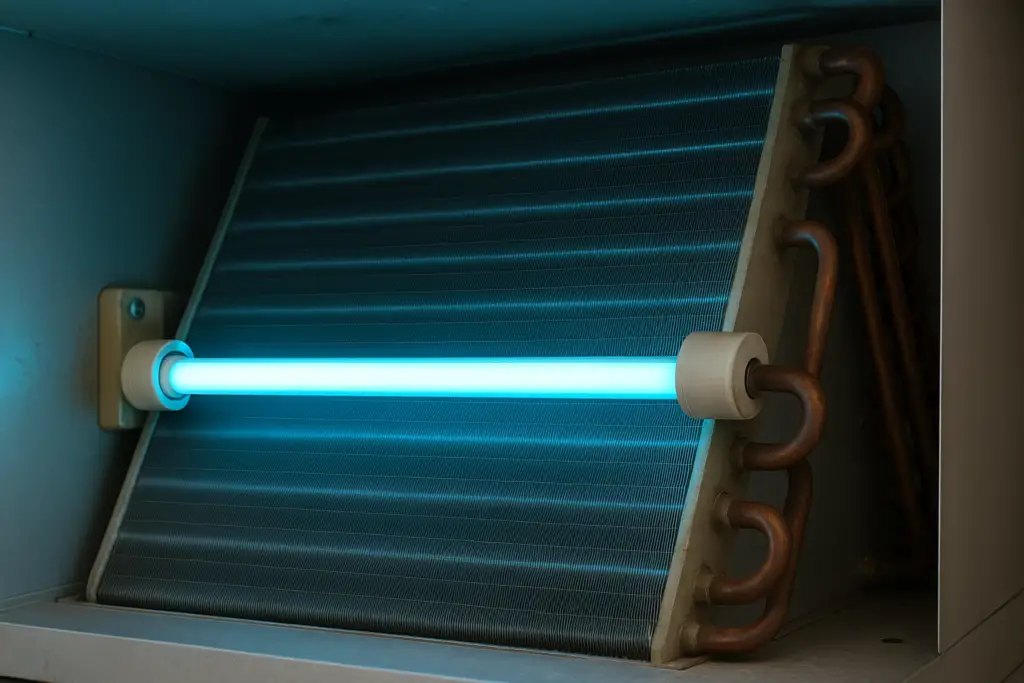
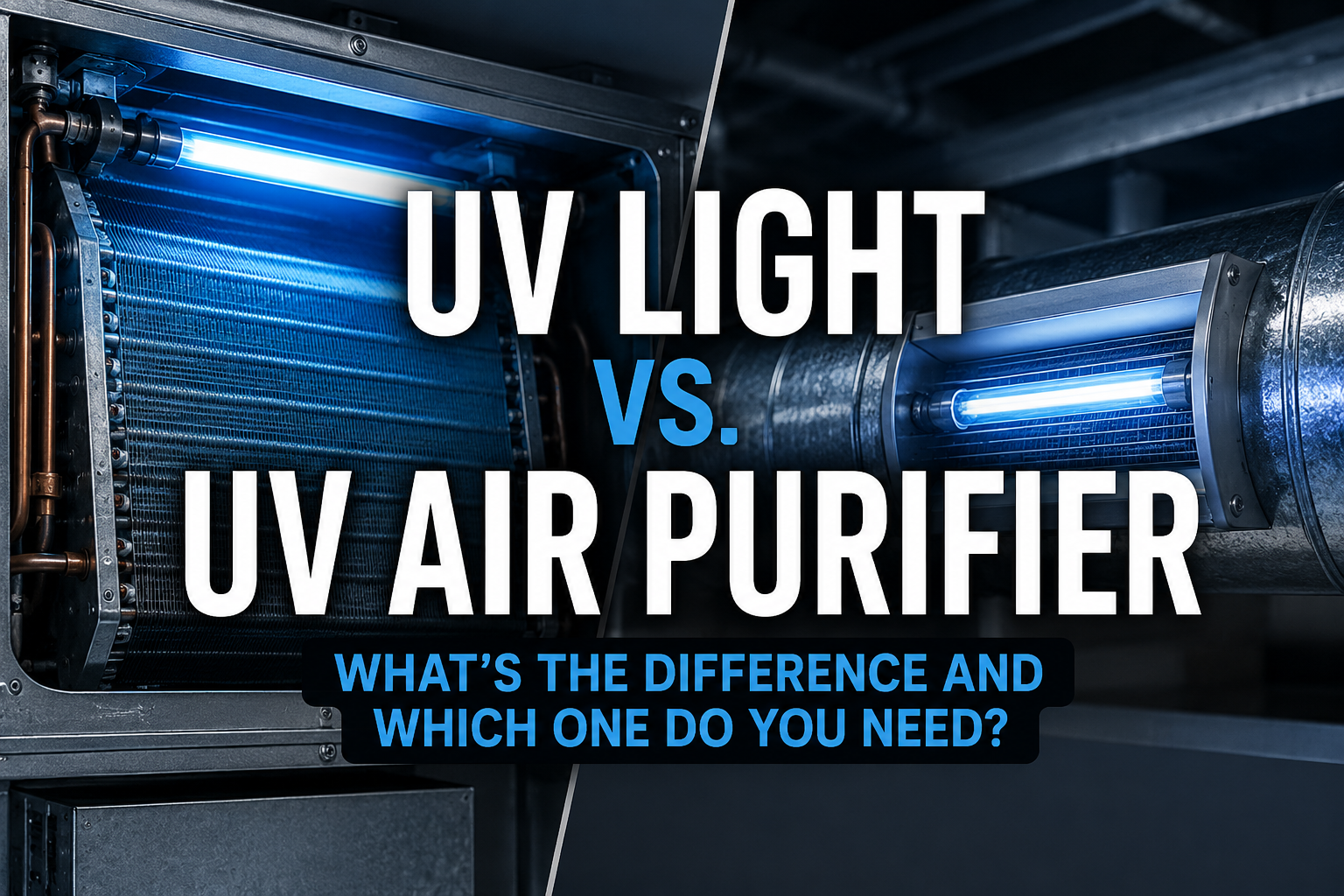
UV air purifiers utilize ultraviolet light to deactivate airborne pathogens such as bacteria, viruses, and mold spores. By incorporating UV-C light, known for its germicidal properties, these purifiers can disrupt the DNA or RNA of microorganisms, effectively neutralizing them as they pass through the air purification system. This process not only sanitizes the air but also reduces the likelihood of microbial-induced allergies and respiratory issues.

Induct Air Purifiers: Whole-House Purification

Integrated directly into the HVAC system’s ductwork, induct air purifiers ensure that the air circulating throughout your home or office is consistently purified. These systems can leverage multiple technologies, including UV light, to tackle a broad spectrum of air pollutants. The continuous purification process helps in maintaining optimal air quality, thereby addressing concerns like dust, pollen, and other allergens that might be distributed by the air conditioning system.

The Combined Approach for Healthier Indoor Air

Employing UV and induct air purifiers can create a more comprehensive air quality management strategy. By addressing airborne microorganisms and pollutants at the source, these systems work in concert with regular HVAC maintenance to ensure that the air in your environment remains clean and healthy. This holistic approach not only mitigates the potential negative impacts of air conditioning but also contributes to a healthier indoor environment, reducing the risk of allergy symptoms, respiratory issues, and other air quality-related health concerns.

Installation Insights: Integrating UV and In-Duct Air Purifiers into Your HVAC

Deciding to enhance your indoor air quality with UV or in-duct air purifiers involves a straightforward installation process, typically carried out by HVAC professionals. Here’s what you can expect:

UV Air Purifiers

  • Placement: UV air purifiers are usually installed in the ductwork near the HVAC system’s air handler. This placement ensures maximum exposure of the air passing through the system to the UV light.
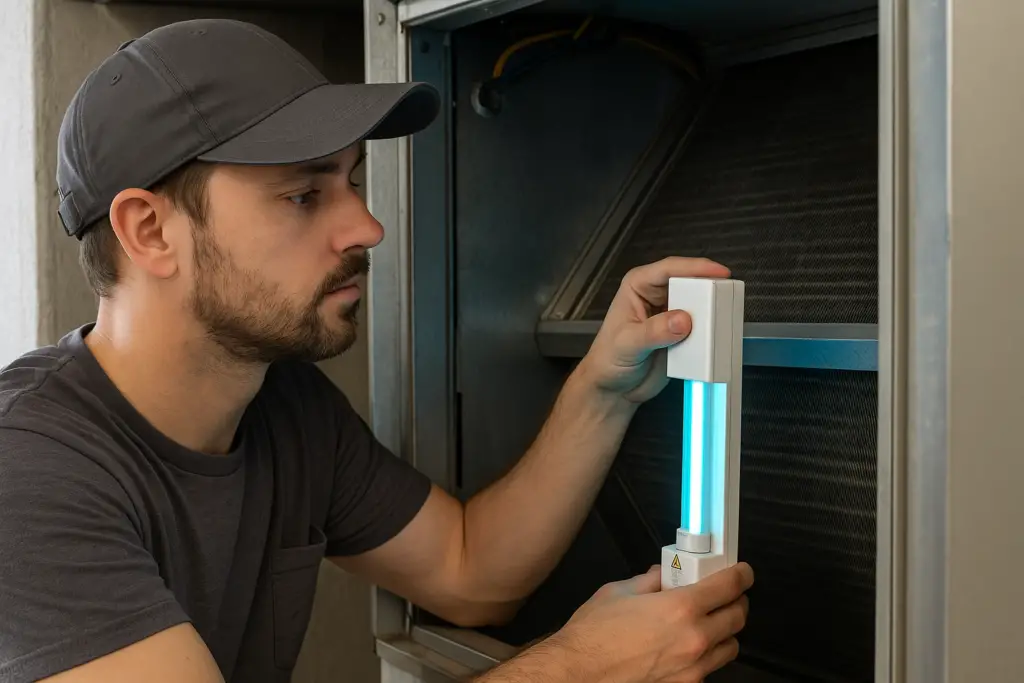
  • Installation Process: A professional will cut a small opening in the ductwork to mount the UV light unit. The unit is then connected to the HVAC system’s electrical supply, ensuring it operates only when the system is active.
  • Considerations: It’s important to choose a UV purifier that is compatible with your HVAC system in terms of size and capacity. Regular maintenance, including bulb replacement, is necessary to ensure effectiveness over time.

In-Duct Air Purifiers

  • Integration Point: These purifiers are installed directly into the HVAC system’s ductwork and are designed to treat the air as it circulates through the system.
  • Installation Steps: The process involves cutting an opening in the ductwork to accommodate the air purifier unit. The unit is then securely mounted and connected to the HVAC system, ensuring it purifies the air throughout the entire system.
  • Key Considerations: Selecting the right size and type of in-duct air purifier is crucial for effective air purification. The system should be compatible with the existing HVAC setup and have the capacity to handle the volume of air being circulated.

What to Expect

  • Professional Assessment: An HVAC technician will assess your current system to determine the most suitable type and placement of the air purifier.
  • Minimal Disruption: Installation is relatively quick and should not require significant changes to your existing HVAC system.
  • Maintenance Needs: Like any HVAC component, these purifiers require periodic maintenance to ensure optimal performance, including filter changes or bulb replacements for UV purifiers.

By understanding the installation process and what it entails, homeowners can make informed decisions about integrating air purification solutions into their HVAC systems. Such enhancements not only improve indoor air quality but also contribute to a healthier living environment, especially for those at higher risk of air quality-related symptoms.

Type Primary Function Best For Considerations
UV Air Purifiers Destroys microorganisms (bacteria, viruses, mold) Reducing airborne pathogens Does not remove particulates; often used with other filters
HEPA Air Purifiers Captures particulate matter (pollen, dust, pet dander) Allergy and asthma relief Regular filter replacement needed; does not remove gases or odors
Activated Carbon Purifiers Absorbs odors, smoke, and VOCs Odor and chemical removal Primarily for gases and odors; not effective for particulate matter
Ionic Air Purifiers Removes particles from the air using ions Dust and allergen removal in small areas May produce ozone; effectiveness varies
Window Air Exchangers Introduces fresh air and improves ventilation Rooms where air conditioning can’t be used or is insufficient Depends on outdoor air quality; may not filter incoming air


Alternative Air Purification Solutions for Apartments and Workspaces

Not everyone has the ability to modify their HVAC systems with in-duct or UV air purifiers, particularly those living in rental properties or dealing with workplace systems. Fortunately, there are effective standalone air purification options that can significantly improve indoor air quality without the need for HVAC integration.

Portable Air Purifiers

  • Versatility: Portable air purifiers come in various sizes, making them suitable for different room sizes, from compact units ideal for personal spaces to larger models designed for living rooms or open-plan areas.
  • Technology: Many of these units utilize HEPA filters, which are highly effective at capturing a wide range of airborne particles, including dust, pollen, mold spores, and pet dander. Some models also incorporate activated carbon filters to reduce odors and VOCs, and even UV-C light to kill germs.
  • Placement: For best results, place the air purifier in areas where you spend the most time or where air quality concerns are greatest. Ensure the unit is not obstructed by furniture to allow for unimpeded air flow.

Desktop and Personal Air Purifiers

  • Convenience: Smaller air purifiers can be placed on desks or bedside tables, providing clean air directly in your personal breathing space, which is particularly useful in shared environments like offices or dorm rooms.
  • Functionality: These compact units often include HEPA and carbon filters, and while they have a smaller coverage area, they can be effective at improving the air quality around your immediate vicinity.

Window Filters and Air Exchangers

  • Fresh Air Introduction: For those who can open windows, window filters can help by filtering out pollen and dust from incoming air. Air exchangers, which replace indoor air with filtered outdoor air, can also improve indoor air quality without needing to alter the HVAC system.

Considerations for Non-HVAC Solutions

  • Maintenance: Portable and personal air purifiers require regular maintenance, such as filter replacements, to maintain their effectiveness.
  • Noise Level: Consider the noise level of the unit, especially for use in bedrooms or quiet spaces.
  • Air Purification Capacity: Check the unit’s Clean Air Delivery Rate (CADR) to ensure it is adequate for the size of the room where it will be used.

By exploring these alternative air purification options, individuals can take proactive steps to enhance their indoor air quality, regardless of their living or working situation. These solutions offer flexibility and can be particularly beneficial for renters, office workers, or anyone unable to modify existing HVAC systems.

Frequently Asked Questions

Q1: Can air conditioning cause respiratory problems?

A1: Yes, air conditioning can contribute to respiratory problems, especially if the system is not well-maintained. Circulating air can spread dust, mold, and other allergens, potentially exacerbating conditions like asthma and allergies.

Q2: What are common symptoms of air conditioning-related issues?

A2: Common symptoms include coughing, sneezing, congestion, headaches, dry skin, and eye irritation. These can result from exposure to allergens or the dry, cool air produced by AC units.

Q3: Are some people more at risk from air conditioning-related symptoms?

A3: Yes, individuals with pre-existing respiratory conditions, allergies, weakened immune systems, skin conditions, and contact lens wearers may be more susceptible to symptoms.

Q4: How do UV air purifiers work?

A4: UV air purifiers use ultraviolet light to kill or inactivate airborne pathogens, such as bacteria and viruses, as air passes through the HVAC system.

Q5: What’s the difference between an in-duct air purifier and a portable air purifier?

A5: An in-duct air purifier is integrated into the HVAC system’s ductwork and treats air throughout the entire system. A portable air purifier is a standalone unit designed to clean the air in a specific room or area.

Q6: Can portable air purifiers be effective in managing air quality?

A6: Yes, portable air purifiers, especially those with HEPA filters, can effectively remove particulate matter, allergens, and some odors from indoor air, improving air quality in individual rooms or areas.

Q7: How often should HVAC systems and air purifiers be maintained?

A7: HVAC systems should generally be inspected and maintained at least annually, with filter changes as recommended by the manufacturer. Portable air purifiers may require more frequent filter checks and replacements depending on usage.

Q8: Are there any air purification options for people living in apartments or unable to modify their HVAC systems?

A8: Yes, portable or personal air purifiers are great options for apartments or rented spaces. They don’t require modifications to existing HVAC systems and can be placed in any room.

Q9: What should I look for in a portable air purifier?

A9: Key features to consider include the type of filters used (HEPA, activated carbon), the size of the area the purifier can effectively cover, noise level, and maintenance requirements.

Q10: Can opening windows help improve indoor air quality?

A10: Opening windows can introduce fresh air and improve ventilation, which may help reduce indoor pollutants. However, it may also allow outdoor allergens like pollen to enter, which could be a consideration for allergy sufferers.


Why Is There Mold On The Styrofoam In The Air Conditioner?

Mold growth happens where there is a lack of light and lot of moisture and nutrients to feed it.  Most mold strains are common to leaves and grass and more specifically the soil that is feeding the grass.

So how does mold get on the Styrofoam in the air conditioner?

1. The Styrofoam is dirty.
2. There is standing water inside the air conditioner.

Styrofoam is one of the most unlikely places for mold to grow. The reason is it has absolutely no ability to absorb moisture and it has zero nutrients.
But given the right circumstances even Styrofoam can have mold growing on it.

window ac covered in leaves


MIDEA EasyCool. Air Conditioner, Dehumidifier, and Fan.12,000 BTU, Rooms up to 550 Sq. Ft. Learn More Here

1.It is dirty.

If there is mold growing on the Styrofoam inside of your window air conditioner, it is most likely because the Styrofoam is dirty and there is either rain or humidity droplets supplying moisture to it. All inside a dark humid space.

The outside of the window air conditioner is in fact outside in the elements.

Overtime dirt is going to get into the machine and get on the Styrofoam.
Combine the nutrients of the dirt with the humidity and darkness inside of the housing of the air conditioner and you have the ingredients of mold production.

2.  There is standing water inside of the air conditioner.

All household molds have one thing in common, they all thrive in standing contaminated water.

Condensation from the cooling coils inside of the air conditioner is meant to drip freely to the outside of the machine so as the inside of the machine stays dry.

If the inside of the machine is unnaturally filled with debris, the drip hole could be clogged to the point where there is standing water inside of the air conditioner.

This could explain why there is a continuing water supply for the Styrofoam.
Again creating the essentials for mold production which are nutrients, moisture and darkness.

Unlevel AC

Another reason why there may be standing water is that the Window air conditioner is not level and condensation water is able to gather to the lower side of the unleveled unit. Its important to note that not all Window ACs are meant to be level. Some require a slight tilt for the condensation water to drain towards the drainage hole. Check your manual for for your specific info.
dirty window ac


TOSOT 8,000 BTU Portable Air Conditioner Quiet, Remote
Control, Built-in Dehumidifier, Fan – Cool Rooms Up to 300 Square Feet. See a  Picture of it Here

Where is the air conditioner located?

If the inside of the air conditioner has mold and you’ve already determined that the recipe for mold is nutrients, moisture, and darkness, then the question is , how is the source of nutrients getting inside of the machine?

Some of the possibilities include that it is located under a tree, or it is in an area like a wind tunnel where dirt is easily kicked up and can get into the machine.

There are many reasons why an air conditioner can be exposed to extra dirt and debris. Also if the air conditioner has been recently brought in from storage, the likelihood of it being dusty inside is more than a little high.

Storage areas have a tendency to be humid, whether it be the Attic, the basement, or a storage building outside, they almost always seem to be moist.

Again you have all the components necessary for the production of mold in one spot. Humidity, dust, and no light. Taking apart your air conditioner when you bring it out of storage is a great time to examine it and make sure that there is no debris inside the block the drainage hole and to clean off any dirt and dust on the Styrofoam.

But regardless of whether you’re taking it out of storage or not, it is time to take apart the air conditioner and completely clean out any mold, debris, and dirt.

Another additional tip at this juncture is to add a mold inhibitor.

A mold inhibitor is a specific product that is manufactured to add to livestock feed. It keeps mold from being able to grow in their food.

It is also sold as a spray or solution to keep decks from mold growth.

While your air conditioner is taken apart for cleaning and maintenance, spraying a mold inhibitor on the Styrofoam as well as the other components inside the machine before you reassemble it is a great way to help ensure that your air conditioner and more importantly your air is free of mold and mold spores.

Della 6000 Smart Window AC. 250 square ft. See it Here.

Black Mold In Air Conditioner

Dealing with black mold on Styrofoam within an air conditioning unit is a concern that requires careful attention, primarily due to the potential health risks associated with certain types of mold, such as Stachybotrys, commonly referred to as “black mold.” This particular mold is notorious for its toxic properties and the potential health risks it poses when its spores are inhaled. I

t thrives in moist, damp environments, which can easily occur within the components of an air conditioner, especially if there’s stagnant water or excessive moisture.

Here’s a more detailed guide on how to address this issue:

Understanding the Environment for Mold Growth

  • Moisture Source: Black mold needs a constant moisture source to grow. In air conditioners, this can be due to standing water or high humidity levels within the unit.
  • Material: Styrofoam within air conditioning units can easily retain moisture, providing an ideal environment for mold growth.

Health Risks

  • Toxicity: Certain molds that appear black can be particularly harmful. Stachybotrys chartarum is one such mold known for producing toxins that can be dangerous when inhaled.
  • Symptoms: Exposure to toxic molds can lead to various health issues, including respiratory problems, headaches, fatigue, and in severe cases, neurological damage.

Safe Cleaning Guidelines

  • Preparation: Wear protective gear such as gloves, N95 masks, or respirators, and eye protection to prevent direct contact with mold and inhalation of spores.
  • Cleaning Solution: Use a mixture of water and mild detergent, or a solution specifically designed for mold removal. For non-porous surfaces, diluted bleach (1 cup of bleach in 1 gallon of water) can be effective, but it should be used with caution due to its corrosive nature.
  • Cleaning Process: Gently clean the affected Styrofoam areas to avoid breaking it and releasing more spores into the air. Avoid using excessive water, which can exacerbate the moisture problem.
  • Drying: Ensure the cleaned area is thoroughly dried to prevent mold from returning. Increased ventilation, the use of dehumidifiers, or air movers can accelerate the drying process.
  • Professional Help: If the mold infestation is extensive or if you’re unsure about handling it yourself, consider hiring a professional mold remediation service.

Preventive Measures

  • Regular Maintenance: Regularly inspect and maintain your air conditioning unit to prevent water buildup and ensure proper drainage.
  • Humidity Control: Use dehumidifiers or ensure adequate ventilation in areas prone to high humidity to keep moisture levels in check.
  • Prompt Repairs: Address leaks and water damage promptly to prevent the conditions that foster mold growth.

By understanding the conditions that lead to mold growth and following safe cleaning practices, you can effectively address mold issues in your air conditioner while minimizing health risks. If ever in doubt, don’t hesitate to consult with a professional to ensure the safety and well-being of your household.

Summary

Even though Styrofoam is a material that does not facilitate the growth of mold easily. Any material given the right circumstances can develop mold growth.

If there is mold on the Styrofoam in your air conditioner, then more than likely the Styrofoam is dirty.

Mold needs nutrients, and without there being something like dirt on the Styrofoam, there is no way that mold could grow on Styrofoam.

Mold also needs moisture, if there is something blocking the exit of the moisture inside the air conditioner, like mud or leaves, then you have all the components of mould and the perfect environment for it to grow in.

In order to find out if you have these issues, you may have to take apart your air conditioner to clean and maintain it.

Taking apart and cleaning an air conditioner is a very easy thing to do and there are plenty of tutorials and YouTube videos available to take you through the process.

But before you put the air conditioner back together and reinstall it, it is the perfect time to consider spraying a mold inhibitor on the Styrofoam and all the other components inside of the air conditioner.


Will a Window AC Work in the Rain? What to Know.

Will a Window AC Work in the Rain?

Sure, a window air conditioner (AC) can work in the rain, but it’s important to keep a few things in mind.

First, you’ll want to make sure the unit is properly sealed and protected from the elements. If rainwater gets inside the unit, it could cause damage and stop the AC from working properly.

Another thing to consider is that the AC unit will need to be able to drain any water that does get inside.
Most units have a drainage system in place to do this, but it’s still a good idea to check and make sure it’s clear and working properly.

Maintenance Checklist Table

Task Frequency Purpose
Inspect and clean filters Monthly Ensure efficient airflow and cooling
Check drainage system Before rainy season Prevent water buildup and potential damage
Inspect seals and weather stripping Annually or before rainy season Prevent water ingress and improve efficiency
Clean external unit Every 6 months Remove debris and prevent rust/corrosion
Professional inspection Annually Ensure optimal operation and address potential issues

And finally, you’ll want to keep an eye on the electrical connections. If they get wet, it could be dangerous and could cause a short circuit. So, if you see any water near the connections, turn off the AC unit and unplug it until the connections can dry out.

Now, It is not good idea to use window AC unit in heavy rain, as it may cause damage to the unit. If you know that it’s going to rain heavily, it’s better to turn off the AC unit and unplug it until the storm passes.

But, If you happen to forget and it starts raining while the AC is still running, don’t panic. Just keep an eye on it and make sure the unit is working properly. If you notice any problems, turn it off and unplug it until you can get it checked out by a professional.

Troubleshooting Guide Table

Symptom Possible Cause Suggested Action
Unit not cooling efficiently High humidity from rain Check and clean filters; consider using a dehumidifier
Water leaking inside Blocked drainage or poor sealing Clear drainage system; inspect and repair seals
Unit making unusual noises Debris in unit from storm Inspect and clean external unit; remove any foreign objects
Electrical issues Wet electrical connections Turn off and unplug unit; allow to dry; consult a professional

Effect of Rain on Performance:

When it rains, you might wonder how it impacts your trusty window AC unit. The main issue here is the increase in humidity that comes with rain. Your AC has to work harder to remove the extra moisture from the air, which might make it seem less efficient. It’s a bit like trying to jog with extra weight; you can still do it, but it takes more effort.

Long-term Exposure to Rain:

Consistent exposure to rain can lead to problems like rust and corrosion over time. It’s similar to what happens when anything is left out in the rain too often. Ensuring your AC unit is well-sealed and protected is key. It’s about giving it the right care to withstand those rainy days.

FAQ Section:

Q: Can I run my window AC unit during a light rain?
A: Yes, using your AC during a light rain shouldn’t cause any immediate issues. Just ensure it’s properly sealed and the drainage system is clear.

Q: What should I do if my AC is drenched after a heavy rain?
A: If your unit gets thoroughly soaked, it’s wise to turn it off and unplug it. Let it dry completely before using it again. It’s like giving it a little time to recover after a soaking.

Q: Does rain affect the lifespan of my window AC?
A: Yes, continuous rain exposure can shorten your AC’s lifespan. Regular maintenance and protection can help it last longer.

Q: Should I cover my AC unit in the rain?
A: Covering your AC during heavy storms or when not in use can help, but it’s not strictly necessary. Just make sure to remove the cover before turning it back on to ensure proper air flow.

AC Protection Measures Table

Measure Application Time Description
Install a protective cover During heavy rain or when not in use Shields unit from direct rain, leaves, and debris
Use a support bracket At installation Ensures unit is tilted slightly outward for proper drainage
Apply weather stripping Annually or as needed Enhances seal around the unit to prevent water ingress
Regularly inspect and maintain unit Before and during rainy season Prevents rust and ensures efficient operation

In conclusion

Will a Window Ac work in the Rain?

While your window AC can indeed operate during rainy conditions, it’s crucial to prioritize its protection and maintenance. Ensuring the unit is well-sealed, the drainage system is functional, and the electrical connections are safeguarded against moisture will help mitigate any potential rain-related issues.

For those times when the rain turns from a drizzle to a downpour, it’s advisable to play it safe by turning off and unplugging your AC unit to prevent any damage. By taking these precautions, you can help ensure that your window AC continues to provide comfort, rain or shine.

Air Conditioning Symbols and Modes Explained

Symbols and Modes on an Air Conditioner

Have you taken a good look at a modern AC thermostat? If your like me, you don’t know what half of the symbols and modes on the air conditioner do.

Chances are, You are sitting on a goldmine of awesome settings if you just knew how to decipher them.

Honestly a thermostat can be confusing to look at and understand how to operate for anyone. So hopefully this brief guide can give you a little bit of the knowledge you need to operate your air conditioning system a little easier.

Air conditioner mode symbols

Some air conditioner mode symbols are very easy to identify but others are far from it. They range from simple fans and raindrops to pine trees in a forest.
How in the world would you ever know what a pine tree symbol on an AC it supposed to represent? Not exactly intuitive.

Fan mode in AC

fan-mode-in-acFan Mode symbol is simply a fan. The fan mode on an AC when set to the “on” position runs the AC fan continuously even when the compressor is off.

A few reasons you may want to use this are:
1.  Helps eliminate hot and cold spots in house. The fan blowing continuously will help move the air and keep the temperature more even as the AC cycles on and off.
2.  Helps thaw a frozen AC out faster.
when you have a problem with the AC freezing over, turn the fan on will help fall out the condenser coils quicker.
3. Air purifiers are installed in the system that need continuous air flow.

Auto mode in AC

auto-mode-in-acAuto mode on the AC, when set to the “on” position turn the fans on automatically when the AC is is in cooling mode.

Benefits of using auto mode on the AC include

  1. Lowers utility bill.
  2. Less humidity. Auto mode allows for the condensation to drain out, rather than be evaporated back into your home.
  3. Fewer filter replacements.

Cool Mode Symbol in AC 

cool-mode-in-ac
The snowflake is the common symbol for Cool Mode in an AC. Cool mode on the AC is the default mode for an air conditioner.

It is the setting that you want to turn on when you need cool air flowing through your home. To operate simply , make sure that cool mode is on the “on” position and scroll up or down to choose your desired room temperature.

Air conditioner modes explained

Heat mode in AC

heat mode in acHeat Mode on a AC is represented by the Sun.
The heat mode on an AC is the opposite of cool mode.

Central heat and air systems incorporate both air conditioning and heating so that you can have cool air in the summer and warmer in the winter.

Heat mode on the AC operates exactly the way the cool mode does.
Simply place heat mode into the “on” position and scroll up or down to the desired temperature you want the air to be.

Dry Mode symbol in air conditioner

dry-mode-in-ac
Dry mode on an AC operates the air conditioner as a dehumidifier while it is on. Dehumidifiers reduce the relative humidity inside of a house.

Some reasons you may want to use this setting are:
The weather is muggy but not too hot.

When the humidity is high, the temperature can feel much hotter than it actually is. During these times, dry mode on the AC will increase the comfortability of your home without the ac cooling.

  1. Lower utility bill.
  2. Helps keep condensation off of the windows

Sleep mode in AC

sleep-mode-in-ac
Sleep mode symbol on AC remote is a crescent Moon.
Sleep mode on your AC is an energy saving mode designed to raise the setting of the thermostat gradually while you are sleeping.

While the AC is in sleep mode,  the temperature of the house will rise every hour till the house is 2to 3 degrees warmer than when you went to sleep.

Plasma ion mode in AC

ion-mode-in-acIon mode on an AC turns on a built-in ionic air purifier that disperses plasma ions( ions that have both a negative and a positive polarity) throughout your home.

Reasons that you may want to use the plasma ion setting are.

  1. Reduces airborne bacteria and viruses
  2. Keeps dust out of the ambient air
  3. Improve air quality and reduces airborne household allergens

Turbo mode in AC

Turbo mode on your AC is the mode you want to use when you need the house to cool off quickly.

What it actually does is run your fan on full speed for approximately 30 minutes to move the cool air throughout the house faster.

Turbo mode or “quick cool” as it is found on many thermostats, is the most energy consuming mode on your AC. It’s the equivalent of pressing the gas pedal all the way down to speed up.

Timer in AC

The timer on an AC is used to set your AC to go on or off at a specific time.

When the AC is in auto mode, it goes on and off according to the temperature in the room.
But there are times when you do not want your air conditioner on regardless of the temperature in the room.

The timer on the AC can be used to schedule when you want your AC to come on or turn off.

Some applications for this are:

1.You want your air conditioner to be running a little bit before you get home
2. You have pets.

Tree Symbol on AC Remote

health-mode-in-acThe Tree symbol on a AC remote is Health Mode. Health mode on an AC is similar to ion mode.


 Health mode is put in place to help reduce bacteria and mold inside of your AC. This function not only helps clean the inside of your unit, it helps your unit deliver cleaner air.

Swing mode air conditioner

swing-mode-air-conditionSwing mode is a setting on some air conditioning remotes the controls the flaps on an air conditioner.
This function basically pushes Cool Air one direction then after about 30 seconds pushes it the other direction.

Eco mode in AC

Eco Mode in AC stands For Economy. This is the setting that uses less energy by combining different percentages of fan air and cooled air to achieve comfort in the home and still use less energy. Similar to the economy setting in a modern car, the cooling result is good but not intended to be the best.

FAQ: Understanding Your Air Conditioner’s Symbols and Modes

Q1: What do the symbols on my air conditioner mean?
A1: Air conditioner symbols can range from straightforward to perplexing. You might see symbols like fans, raindrops, or even pine trees. Each symbol represents a different mode or function, such as fan mode, cool mode, or a special feature like a built-in air purifier.

Q2: What is Fan Mode on my AC?
A2: Fan Mode is symbolized by a fan icon. In this mode, the AC’s fan runs continuously to circulate air, even when the cooling function is off. This can help even out room temperatures and assist in defrosting a frozen AC unit.

Q3: What does Auto Mode do?
A3: Auto Mode automatically turns the fan on and off based on the cooling needs of your space, helping to reduce energy use, lower humidity levels, and decrease the frequency of filter replacements.

Q4: How does Cool Mode work?
A4: Indicated by a snowflake symbol, Cool Mode is the default setting for air conditioners, designed to cool your home. Just select this mode and adjust the temperature to your comfort.

Q5: What is Heat Mode?
A5: Represented by a sun symbol, Heat Mode turns your air conditioner into a heater, providing warm air instead of cool.

Q6: Can my AC dehumidify my home?
A6: Yes, Dry Mode operates your AC as a dehumidifier, removing excess moisture without significantly cooling the room. This is ideal for muggy but not overly hot days.

Q7: What’s Sleep Mode?
A7: Sleep Mode, symbolized by a crescent moon, gradually increases the thermostat setting overnight to save energy while maintaining comfort.

Q8: What does Plasma Ion Mode do?
A8: Plasma Ion Mode activates a built-in ionic air purifier, improving air quality by reducing airborne bacteria, viruses, and allergens.

Q9: What is Turbo Mode?
A9: Turbo Mode cools your space quickly by running the fan at full speed for a short period. It’s great for rapid cooling but is more energy-intensive.

Q10: How does the Timer function work?
A10: The Timer allows you to set your AC to turn on or off at specific times, offering convenience and energy savings.

Q11: What is the Tree Symbol on my AC remote?
A11: The Tree symbol stands for Health Mode, which works to reduce bacteria and mold, ensuring the air blown by your AC is cleaner.

Q12: What is Swing Mode?
A12: Swing Mode adjusts the direction of airflow, alternately directing air to different parts of the room for more even cooling.

Q13: How does Eco Mode save energy?
A13: Eco Mode reduces energy consumption by optimally balancing fan air and cooled air, similar to an economy setting in vehicles.