Can a Humidifier Make a Cough Worse? -More Like When

Can a Humidifier Make Me Cough?

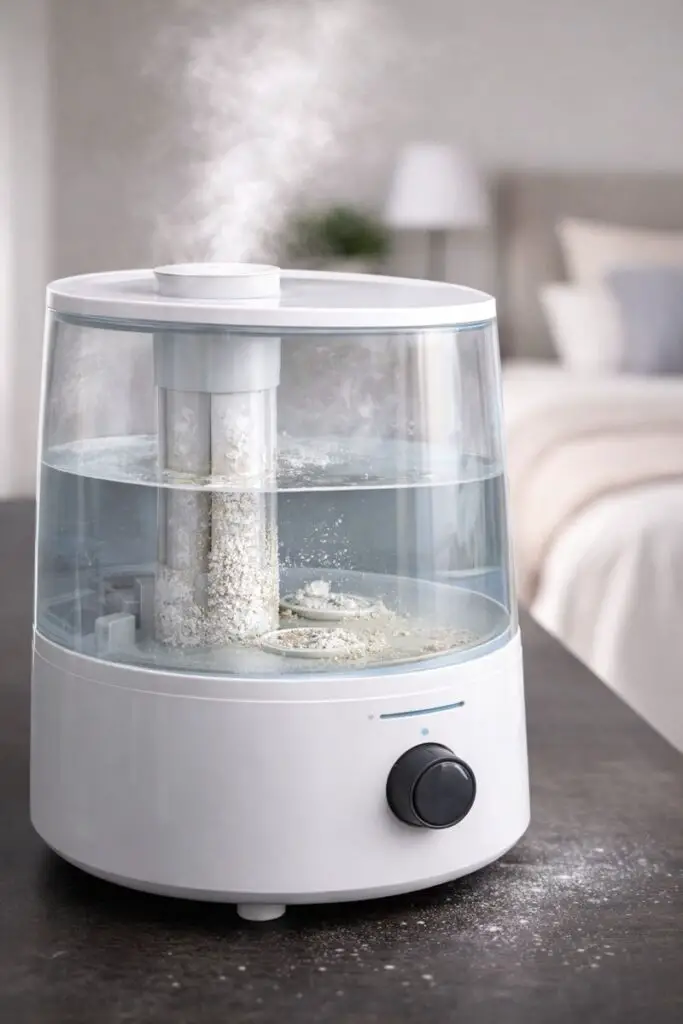
Yes, a humidifier can potentially make you cough if it’s not properly maintained. A dirty humidifier can disperse bacteria and mold into the air, while excessive humidity can promote the growth of mold and dust mites, all of which can trigger coughing.

You’ve set up a humidifier in your room to combat the dry air, hoping for relief from the dryness. But instead of feeling better, you’ve started coughing more.

Could your humidifier be the culprit? Surprisingly, the answer might be yes. Here’s how and why a seemingly beneficial device can turn problematic.

The Problem with Humidifiers

1. It’s Dirty: Misting Bacteria into the Air

A humidifier can be a breeding ground for bacteria and mold if not cleaned regularly. These microorganisms can then become part of the mist the humidifier emits, leading to potential respiratory issues when inhaled. The Environmental Protection Agency (EPA) suggests regular cleaning to prevent these issues.

2. Humidity is Too High Already: Inviting Mold and Dust Mites

The ideal indoor humidity level is between 30-50%. Beyond this range, you’re inviting mold growth and dust mite infestation. Both mold spores and dust mite allergens can exacerbate respiratory conditions, leading to coughing and other symptoms.

3. Compound Problem: A Dirty Humidifier in an Already Humid Room

Using a dirty humidifier in a room that’s already too humid compounds the problem. The excess moisture supports more microbial growth in the device, which then gets dispersed into the air, doubling the risk of respiratory irritation.

Health Implications of Dirty Humidifiers:

A dirty humidifier doesn’t just slack off on the job—it can actively do harm, misting out a cocktail of bacteria and mold right into your breathing space. This can lead to everything from a nagging cough to a full-blown asthma flare-up. Keep it clean to keep your air safe.

Can a humidifier make a cough worseSolutions for a Healthier Indoor Environment

Before you take any steps, turn off your humidifier and check the room’s humidity level. A hygrometer can be a handy tool for this purpose. If the humidity is within the ideal range and you’re still coughing, the humidifier might need a clean-up.

Cleaning Your Humidifier

How to Clean It:

    • Disassemble and Empty: Start by unplugging and disassembling your humidifier. Empty any standing water from the tank and base.
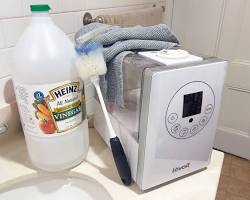
    • Vinegar Soak: Use white vinegar to fill the tank, letting it sit for at least 30 minutes to break down mineral deposits. Meanwhile, wipe down other parts with a vinegar-dampened cloth.
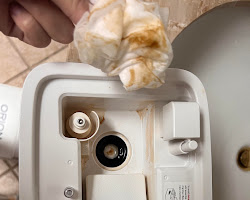
    • Scrub and Rinse: Scrub any visible grime with a soft brush or sponge, then rinse all parts thoroughly with clean water.
    • Dry Completely: Ensure all components are completely dry before reassembling to prevent mold growth.

      Types of Humidifiers and Maintenance Challenges:

Type Description Maintenance Challenges
Ultrasonic Uses vibrations to create mist. Quiet and efficient. Prone to white dust from minerals in water. Needs frequent cleaning to prevent microbial growth.
Evaporative Uses a fan to blow air through a wet wick/filter. Filter needs regular replacement to prevent mold and bacteria buildup.
Steam Vaporizers Boils water to produce steam. Requires regular descaling to remove mineral buildup. Can be hot to the touch, so use with caution.

Products That Help Keep It Clean:

  • Antimicrobial Cartridges: These can be placed in the water tank to reduce microbial growth.
  • Descaling and Cleaning Solutions: Specially formulated for humidifiers, these can help remove mineral buildup and sanitize the device.

Humidifiers with Self-Cleaning Features:

  • Look for models with UV light sanitization or built-in hygrometers to automatically maintain optimal humidity levels, reducing the risk of microbial growth.
    The Honeywell HCM-350 is a notable example of a humidifier designed with ease of maintenance in mind.
    It features UV technology to kill up to 99.9% of bacteria, mold, fungus, and virus in the water, ensuring that the mist expelled into your room is clean and healthy.
    This model combines the benefits of evaporative humidification with innovative technology to provide a comfortable and safe indoor environment, effectively reducing the risk of microbial growth and the need for frequent manual cleaning. Check it out here.
  • Alternatives to Humidifiers:

    Not keen on getting a humidifier? No problem. Houseplants can naturally add moisture to your air, and cracking open a window can help balance indoor and outdoor humidity levels. Sometimes the best solution is the simplest one. Consider adding these moisture-loving plants to your home:

    • Spider Plant (Chlorophytum comosum): Easy to care for and great at improving indoor air quality.
    • Peace Lily (Spathiphyllum): Not only adds moisture to the air but also blooms beautiful flowers.
    • Areca Palm (Dypsis lutescens): Known for its excellent humidifying properties and tropical aesthetic.
    • English Ivy (Hedera helix): A versatile plant that can be hung or placed on a ledge, adding greenery and moisture.
    • Boston Fern (Nephrolepis exaltata): Classic fern that thrives in humid conditions and adds a lush look to any room.

    Incorporating these plants into your living space can help maintain a comfortable humidity level naturally, adding both beauty and health benefits to your home.

Conclusion

While humidifiers can greatly improve indoor air quality, they require regular maintenance to ensure they remain beneficial to your health. By keeping your device clean and monitoring indoor humidity, you can enjoy the benefits without the unwanted side effects.
Remember, the key to benefiting from a humidifier without the downside of coughing or other respiratory issues lies in regular maintenance, monitoring humidity levels, and choosing the right humidifier for your needs.

FAQ

Q: How often should I clean my humidifier?
A: Clean your humidifier at least once a week during heavy use, and always empty and dry it between uses.

Q: Can I use tap water in my humidifier?
A: It’s best to use distilled or demineralized water to prevent mineral buildup and reduce the risk of bacteria and mold growth.

Q: What should I do if I notice mold in my humidifier?
A: Stop using the humidifier immediately. Clean it thoroughly with a disinfectant, ensuring to remove all traces of mold. Consider replacing the humidifier if the mold persists.

Q: Is it safe to add essential oils to my humidifier?
A: Only add essential oils if your humidifier is designed for it. Using oils in a regular humidifier can damage the device and pose health risks.


What is a Humidifier Ionizer?

Lately a mysterious button has started to pop up on a variety of different appliances.

The “ION” button has made its way onto air conditioners, tower fans, and dehumidifiers. Another appliance that has gotten the Ion treatment is the Humidifier.

What is a Humidifier Ionizer?

An Humidifier Ionizer or sometimes called “Anion” humidifier is a humidifier that disperses negative ions and also disperses moisture. Essentially it is a combination appliance that incorporates a humidifier and an ionic air purifier.

An article in the US National Library of Medicine states that when:

Based on the “Lenard effect”, water shearing appliance has been designed to generate NAIs. Water shearing produced only superoxide ions (O2−) which was bound to clusters of water molecules to form the structure O2−(H2O)n , and was essentially regarded as a natural source of NAIs. NAIs generated by the “Lenard effect” might improve erythrocyte deformability, thereby aerobic metabolism. Also “The ionizer had the ability to kill the bacteria, and ion capture dramatically reduced its bactericidal effect”

In Layman’s terms:

Negative Ions can help reduce airborne bacteria

“Think of negative ions as tiny air cleaners. Just like a magnet attracts metal filings, these ions attach to airborne particles like bacteria. Once attached, the particles become too heavy to stay airborne and settle down, effectively cleaning the air around you.”

What does an ion humidifier do?

An ionizer on a humidifier serves two purposes.

  1. Clean the surrounding air as the humidifier adds moisture to the air. 
  2. Reduce the level of mold and bacteria associated with humidifiers.

Humidifiers are notorious for the amount of cleaning and maintenance they need to ensure that they do not become a breeding ground for mold and other organisms.

Adding an ionizer function to a humidifier can reduce and even destroy much of the contamination related to this issue.

Anion humidifier benefits

  1. Cleaner air
  2. Comfortable humidity levels
  3. Less chance of the humidifier becoming a germ farm
  4. Negative ions make the atmosphere feel lighter

What does an ionizer do in a humidifierHumidifier vs. Ionizer

The purpose of a humidifier is to add moisture to a room. Low humidity is usually associated with winter because the climate is typically more dry during those months.

It’s not only the climate dictating the humidity in the winter, it’s also the fact that the house is usually closed up with the furnace running non stop and drying out the air.

And having the house closed up in the winter introduces more problems than one.

Not only does the air become very dry and miserable especially when you have a cold, the air quality begins to become very unhealthy too.

The first place people start with to solve the problem is buying a humidifier.

A humidifier is a must in the winter. Keeping a cool mist humidifier near your bed in the winter can be the difference between getting a good night’s rest or not.

But a humidifier does not solve the problem of the recirculated air quality in your home becoming a breeding ground of germs on its own.

And compounding the issue is the fact that the humidifier must be cleaned often to keep it from becoming a mold distribution machine all on its own.

When a humidifier gets dirty with mold and other organisms then turned on, it disperses mold spores and bacteria into the air and is able to travel further because it is contained in humidity droplets that act like small vehicles for the germs.

An ionizer is a machine that cleans the air by emitting ions. this works because ions have both negative and positive polarities.

When the ions are dispersed from the ionizer they snap together and trap anything in their way inside of the new bond.

As the new bonds clump together, they become too heavy to float and fallout of the ambient air. (The air you breathe)

Can you use an air purifier and humidifier together?

Absolutely, and you should. Indoor air pollution and dry air are both associated with keeping a house closed up with the heater running.

When the furnace is running non-stop it dries out the air which dictates the need of a humidifier.

Keeping the doors and windows shut to keep the furnace doing its job means that the indoor air quality is suffering.

The air in your house must be kept clean as much as the relative humidity kept in the 30 to 50% range.3 ways a humidifier actually performed as an air purifier.

3 Ways a Humidifier can Clean Air

A Humidifier actually affects the air in more ways than just adding moisture. Humidifiers can also have a cleaning effect on the air, alongside adding humidity.

  • Dust: When the air is dry, dust control can be much more problematic. Adding humidity to the air in a room through a humidifier moistens the dust, causing it to fall to the surface, similar to the cleansing effect of a rainstorm.
  • Viruses and Bacteria: While humidifiers can be a source of germs if not properly maintained, adding humidity can also encapsulate bacteria in humidity droplets, making them too heavy to float and thus removing them from the air.
  • The Lenard Effect: Water can be a source of negative ions through the Lenard effect, which involves the formation of negative ions through shearing water. Although the number of negative ions produced by a humidifier may be small, the potential for ion creation exists.

Humidifier vs. IonizerRecap

Have you ever wondered what the ion button on a humidifier is for? Some humidifiers include an ionizer along with their moisturizing function, dispersing ions into the air to make airborne contaminants too heavy to remain suspended. This means they fall out of the air, effectively cleaning it.

An Anion or Ion humidifier not only adds moisture to the air but also offers the option to add ions, enhancing the air quality. But do they work? Ionizer humidifiers are considered beneficial, especially in closed spaces during winter, combining the benefits of both a humidifier and an ionizer.

These devices often use the plasma cluster ion system, one of the most effective ionizing technologies available. The combination of a humidifier and an ionizer can be more synergistic than, for example, a fan ionizer that might not be as effective due to its fast and hard airflow.

Although ion humidifiers are not widely popular, their unique combination offers a specialized solution for air quality improvement, making them a good option for travelers or for use in environments with varying climates.

Devices like the revitalizer, which uses water shearing similar to the “Lenard effect”, and air washers that use water as a filter, also serve as natural humidifiers with added benefits like aromatherapy.

We cover all the common questions and solutions in our full humidifier guide.

Best Water for Humidifier-Distilled, Bottle, Boiled or Tap?

What is the Best Water for a Humidifier?

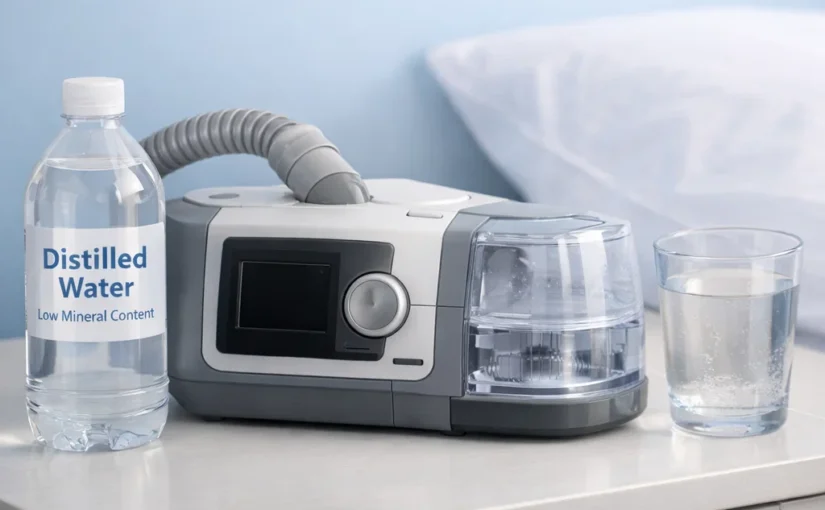
Distilled water is the best water to use in a humidifier because:

The use of distilled water helps keep your humidifier in good condition. Because of the process in which distilled water is made, It lacks minerals like calcium and magnesium, as well as sodium that can build up inside your humidifier and make it less effective.

Dry air in the Winter causes an array of issues. The skin breaks, the lips shrink and swell, and your nose becomes congested. The worst part is that these issues result from the air you breathe and are surrounded within your home, your own domain.
A humidifier is a device that can help avoid these issues. It can help bring the humidity to a level that is comfortable and much more healthy for the people in your home.
However, there are some disadvantages to using a humidifier incorrectly. It can increase maintenance expenses. It can also affect the quality of air in your home.
If you want to use your humidifier properly, the first thing you’ll need to be aware of is the kind of water you should be filling it with.
More questions? Visit our complete Humidifier Guide.

 Infographic comparing distilled, bottled, boiled, and tap water for humidifier use, showing distilled as the best choice and tap water as not recommended, with pros and cons for each type.Water Types Compared

Water Type Pros Cons
Distilled Water
  • No minerals → prevents scaling
  • Lower mold/bacteria risk
  • Minimizes white dust
  • Must be purchased
  • Not always convenient
Bottled Water
  • Filtered — fewer contaminants than tap
  • Easy to find
  • Still contains minerals
  • Can cause scaling over time
Filtered Water
  • Better than tap water
  • Removes some chlorine & sediments
  • Still has minerals & some chemicals
  • Possible mold/bacteria growth
Boiled Water
  • Kills bacteria & microorganisms
  • Can be made at home
  • Minerals remain
  • Must cool before use
  • Can damage plastic tanks if too hot
Tap Water
  • Convenient
  • Free
  • High mineral content → scaling
  • May contain chlorine, fluoride
  • Increases white dust
  • Encourages mold growth

Distilled Water for Humidifier

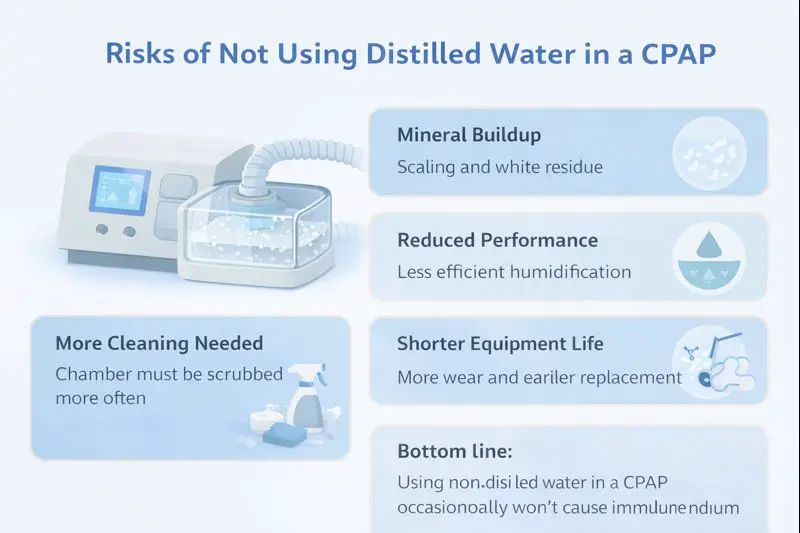
Distilled drinking water is the most suitable kind of water to use in a humidifier. It has been processed to get rid of contaminants like bacteria and minerals. Particles that you do not want in your air or your humidifier.

Think about it…

The bacteria in your water can end up being in the air that you are breathing since it’s going through a humidifier. And Minerals and other particulates can end up damaging your unit and reducing the life of your humidifier.

Distilled water is produced when boiling water evaporates into steam and then cools.  The process causes the impurities in the water to be left behind as it turns into condensation. The condensation is collected and bottled as “distilled water”

Mold Prevention. Mold growing in a humidifier is one the biggest problems people face when using one. Distilled water is less likely to have mold spores present in it. Which will help keep mold and bacteria from taking root as quickly in the humidifier.

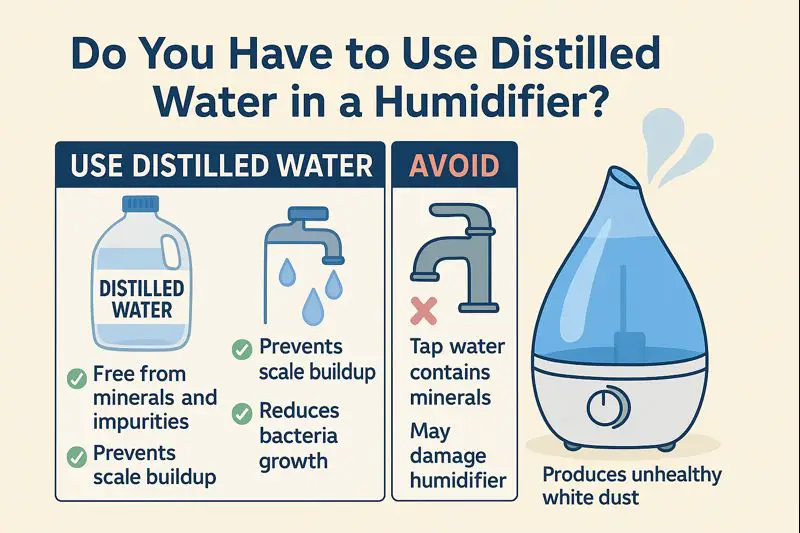
Less Dusty Humidifier dust is caused by the minerals that are in tap water and drinking water.  Because distilled water is treated to eliminate the minerals, it will help keep the problem of “humidifier dust” to a minimum.

Bar chart showing the mineral content in distilled, bottled, boiled, and tap water in ppm, highlighting that distilled water has the lowest mineral content and tap water the highest.Tap water in a humidifier?

Tap water for humidifiers is not advised. Tap water is typically a source of solids and minerals that could harm your humidifier. Tap water can result in calcium deposits developing inside of your humidifier.

Utilizing tap water for your humidifier can cause also lower the quality of your ambient air. It is is loaded with chemicals like fluoride that when moved through a humidifier become part of the air you breathe.

Also the white “humidifier dust” that appears on the surfaces around the humidifier can be kicked up into the air. Which will not only inhibit your breathing, will dry out your skin. One of the very things that you wanted a humidifier for in the first place. 

In order for mold to grow, it requires three different ingredients; water, low light, and a food source.

Tap water is loaded with minerals that can be considered the food source for mold to grow.

Though It is recommended to clean or replace the humidifier’s filter frequently and also clean the inside of any mineral build-up, using tap water will increase the frequency of replacing filters and increase your cleaning schedule..

Demineralization cartridges are available on many humidifiers and can be bought separately if you decide that using tap water is worth the risk.

bottled water for humidifierBottled Water in a Humidifier?

Using bottled water in a humidifier is only slightly better than using tap water. It is filtered but not to the point that it is free of the minerals that can cause deposits in your humidifier. 

A lot of bottled drinking water that you find on the shelf is natural spring water or at least that’s supposed to be the origin.

Natural spring water naturally has a lot of minerals and solids that will end up making your humidifier less effective.

If you read the label good on most bottled water, you will see that it says that minerals have been put back into the water for consumption.

But not to the point or the quantity that you will get from just putting plain tap water into your humidifier. So even though bottled water may not be the best water for a humidifier, it is a step up from tap water.

Should I use filtered water in my humidifier?

Using filtered water in a humidifier is better than using water straight out of the tap. But even filtered water is not 100% pure of minerals and other solids that can end up doing damage to your humidifier. 

And water filters are not able to get rid of all the fluoride and chlorine that is in tap water.

Though it is better than using tap water, filtered water still has much of the mineralization and propensity to develop mold and bacteria.

Should I boil the water I use in my humidifier?

 Boiling water is a do it yourself technique for humidifying your home without the use of a humidifier. When water is boiled it turns into steam and evaporates.

 Boiling water also kills any microorganisms in the water. 

But, the pot that you boil the water in is full of deposits and minerals left behind from the tap water.

If you pour the water directly out of the pot into the humidifier, much of the deposits that have been boiled out of the water will get back into the water.

The very thing you’re trying to avoid.

Much is made about how vaporizers and warm mist humidifiers are not as likely to develop mold and bacteria in them because the water is brought to a boiling point that kills the organisms. 

But you have to remember that minerals and deposits are left behind when you boil water.

Even in the case of vaporizers, distilled water is going to be the best water to use in your warm mist humidifier.

Caution:  And remember that the humidifier is made out of plastic. Pouring boiling water into it, is going to melt it. Let it cool first if you decide to do it this way.

Should I put hot or cold water in my humidifier?

Humidifiers do not need to have the water brought to any certain temperature before pouring it into the basin. 

 Normal room temperature is adequate. 

Some might get the idea of that because a vaporizer uses steam to humidify, that you have to put boiling water in it for it to work.

 Not so. The humidifier is built to warm the water on its own and does not require you to do anything besides fill it with room temperature distilled water. 

But by the same token, if you pour cold drinking water out of the refrigerator into a vaporizer, it’s going to take that much longer to work because it takes longer for cold water to get to a boiling point.

So just stick with room temperature.

And excessive cold or hot temperatures are not good for plastic and will eventually cause plastic to crack.

Recap

Distilled water is the best water to use in a humidifier because it goes through a process that eliminates the most minerals and microorganisms that can damage your humidifier and get into the air you breathe when you put them through a humidifier. 

It also is the best water to avoid the white dust that builds up around humidifiers.

 Bottle drinking water is a little better than using straight tap water in a humidifier but it’s still contains a great deal of the minerals that can cause a humidifier to scale up and be less effective.

And it is the minerals in the water that eventually become the white dust that you see settling around a humidifier.

 Boiled water does have the advantage of killing the spores and bacteria that can be in your average tap water, but when you boil water, the mineral deposit settle at the bottom. 

If you pour that water into a humidifier, you still have the problem of the mineral deposits getting into the humidifier.

Lastly, tap water is easily the worst water you can use in a humidifier. 

It is full of minerals and chemical treatments that will not only eventually damage your humidifier, will become part of the air you breathe when you use the water to humidify the air.

Tap water also becomes moldier faster and leaves the white dust that you were trying to avoid around your humidifier faster.

Comparing the Canopy Humidifier and Levoit LV600HH: A Detailed Review

Key Takeaways

In this comprehensive review, we compare the Canopy Humidifier and the Levoit LV600HH Hybrid Ultrasonic Humidifier. Both are top-of-the-line devices designed to enhance air quality and promote health, but they have distinct features and benefits that cater to different needs.

Canopy Humidifier

  • Price Range: $150-$172.
  • Strengths: Compact design, UV light for mold and bacteria prevention, beneficial for skin and respiratory health.
  • Weaknesses: Automatic restarting issues, noise on higher settings, reports of mold growth, and maintenance challenges.
  • Best for: Users looking for a compact humidifier with health benefits, especially for smaller rooms.View Canopy Humidifier Here

Levoit LV600HH

  • Price: Around $99.99.
  • Strengths: Efficient humidity increase, quiet operation, warm/cool mist options, easy setup.
  • Weaknesses: Build quality concerns, maintenance and cleaning challenges, smart feature connectivity issues, mixed customer service experiences.
  • Best for: Users needing a versatile humidifier for larger spaces, with a preference for quiet operation and additional mist options.

    View Levoit Here

Value Assessment

  • Cost-Effectiveness: The Levoit LV600HH is generally more affordable than the Canopy Humidifier. If budget is a key factor, Levoit offers more features (like warm/cool mist options) at a lower price.
  • Performance in Space: Levoit has a better coverage area and is more suited for larger rooms, making it more versatile.
  • Additional Features: Levoit’s additional features like warm and cool mist options provide added value for its price.
  • Maintenance and Longevity: Both have maintenance challenges, but the Canopy’s issues with mold might be a more significant concern for some users.

Table of Differences

Feature Canopy Humidifier Levoit LV600HH
Type Evaporative Humidifier Ultrasonic Humidifier
Runtime Up to 36 hours Up to 60 hours
Room Coverage Up to 500 square feet 430–753 square feet
Price Range $150-$172 Around $99.99
Aromatherapy Included Included
Inhibits Contaminants UV light for mold and bacteria prevention Filterless, requires regular cleaning
Design Compact, nightstand-friendly Larger, versatile design
Additional Features Self-Cleaning, anti-mold technology Warm & Cool mist options, Dual control, Auto mode

canopy vs Levoit Infographic

Understanding Evaporative vs. Ultrasonic Humidifiers: Canopy vs. Levoit

When choosing between the Canopy and Levoit humidifiers, understanding the fundamental differences between evaporative and ultrasonic humidifiers is crucial. Here’s a breakdown to help you grasp these differences:

Evaporative Humidifiers (Canopy)

  • Working Principle: Evaporative humidifiers, like the Canopy model, work by drawing in air from the surrounding environment and passing it through a moistened wick or filter. As the air moves through this wick, it picks up moisture and then is circulated back into the room.
  • Humidity Control: These humidifiers are self-regulating. As the humidity in the room increases, the process of evaporation naturally slows down, preventing the over-humidification of the space.
  • Maintenance: They typically require regular cleaning and wick/filter replacement to prevent mold and bacteria buildup.
  • Noise Level: Evaporative humidifiers are often louder than ultrasonic models due to the fan used to blow air through the wick.
  • Ideal Usage: Perfect for those who want a more controlled humidity environment and don’t mind some maintenance and noise.

Ultrasonic Humidifiers (Levoit LV600HH)

  • Working Principle: Ultrasonic humidifiers, like the Levoit LV600HH, use high-frequency sound vibrations to create a fine mist of water, which is then expelled into the air. They can produce either cool or warm mist.
  • Quiet Operation: These models are generally very quiet since they do not use a fan.
  • Maintenance: They require regular cleaning to prevent mineral buildup, especially if using tap water. However, they don’t need replacement filters.
  • Risk of Over-Humidification: Without a built-in humidistat, ultrasonic humidifiers can sometimes over-humidify a room, potentially leading to condensation and mold growth.
  • Ideal Usage: Best suited for those who prefer a quieter operation and less maintenance, and are vigilant about monitoring room humidity levels.

Both evaporative and ultrasonic humidifiers have their pros and cons. The choice between the Canopy (evaporative) and Levoit LV600HH (ultrasonic) should be based on your specific needs, including the desired noise level, maintenance preferences, and humidity control requirements. Understanding these differences can significantly influence your satisfaction with the product you choose.

Canopy and Levoit Humidifier Reviews

In this summary, we take a close look at lots of reviews from Amazon customers about the Canopy and Levoit humidifiers. We gathered information from many different people’s opinions to give you a good idea of what each humidifier is like. This summary includes what people liked and didn’t like about each product, based on their real experiences. By reading this, you can get a quick view of what many people think about these humidifiers, which can help you decide which one might be right for you, based on what actual users have said.

Canopy Humidifier Reviews Summary

Positive Aspects

  1. Improved Sleep and Skin Moisture: Kaycie Hajduk (Reviewed on Nov 29, 2023) reports better sleep and increased skin moisture, enjoying the white noise and scent.
  2. Design and Operation: James Young (Reviewed on Nov 23, 2023) praised its compact design, quiet operation, easy assembly, and the added benefit of being a diffuser.
  3. Aesthetics and Performance: Appreciated for its aesthetics and effectiveness in small bedrooms (Review by darwin4lunch on Oct 15, 2023).

Negative Aspects

  1. Automatic Restart Issue: Vanda Marlow (Reviewed on Sep 30, 2023) complained about the humidifier turning back on by itself.
  2. Noise Level: Criticized for being too loud on higher settings (Feedback from K. C. on Nov 26, 2023).
  3. Mold Concerns: Xylo2929 (Reviewed on Nov 8, 2023) reported mold growth, raising hygiene and maintenance issues.
  4. Ineffectiveness: Mommy2717 (Reviewed on Nov 12, 2023) found it ineffective in raising humidity levels.
  5. Design and Quality Issues: Disappointment in its design and overall performance (Feedback by Claire Lamberth on Oct 15, 2023).

Levoit Humidifier Reviews Summary

Positive Aspects

  1. Performance: Fisher (Reviewed on Nov 15, 2023) appreciated Levoit’s efficiency in increasing humidity levels in large spaces.
  2. Quiet Operation: Bernard Shakey (Reviewed on Nov 7, 2023) and others highlighted its super quiet operation, ideal for use in bedrooms and quiet spaces.
  3. Ease of Use: T. Strayer (Reviewed on Nov 25, 2023) found the setup and operation straightforward.
  4. Design: The modern and stylish design was well-received, fitting well in various settings.
  5. Feature-Rich: Noted for including warm/cool mist options, remote control, and easy maintenance.

Negative Aspects

  1. Build Quality: Steve (Reviewed on Nov 20, 2023) raised concerns over the durability and quality of internal components.
  2. Maintenance Challenges: Difficulties in cleaning and maintaining certain parts were reported by multiple users.
  3. Smart Feature Issues: Problems with WiFi connectivity and smart feature functionality were mentioned by various customers.
  4. Ineffectiveness in Large Spaces: Nathan (Reviewed on Oct 18, 2023) found that the humidifier did not effectively maintain desired humidity levels in larger rooms.
  5. Customer Service: Several reviews, including from John Sears (Reviewed on Mar 29, 2023), expressed frustration with Levoit’s customer service, citing unresponsiveness and difficulty in resolving issues.

Overall Conclusion

Both the Canopy and Levoit humidifiers have unique strengths and weaknesses.

The Canopy Humidifier, beneficial for smaller rooms, faces issues like noise and mold growth.

Conversely, the Levoit models, especially the LV600S, are praised for quiet operation, ease of use, and sleek design but face challenges in build quality and customer service.

Considering the balance between price, features, and user feedback, the Levoit LV600HH appears to offer better overall value.

It provides more features at a lower price point and is suitable for a wider range of room sizes.

However, if the compact design and specific health-related features of the Canopy Humidifier align more closely with your needs, it might justify its higher price for you.

FAQ: Canopy and Levoit Humidifiers

  1. What type of humidifier is the Canopy Humidifier?
    • The Canopy Humidifier is an evaporative humidifier.
  2. What is the maximum runtime of the Canopy Humidifier?
    • The Canopy Humidifier can run for up to 36 hours on a single tank of water.
  3. Does the Canopy Humidifier have any features to prevent mold and bacteria?
    • Yes, it has a UV light feature to inhibit the growth of mold and bacteria.
  4. What is the room coverage capacity of the Canopy Humidifier?
    • It is suitable for spaces up to 500 square feet.
  5. What type of humidifier is the Levoit LV600HH?
    • The Levoit LV600HH is an ultrasonic humidifier.
  6. How long can the Levoit LV600HH run on a full tank?
    • It has a 1.5-gallon tank that allows it to run for up to 60 hours.
  7. Does the Levoit LV600HH offer both warm and cool mist options?
    • Yes, it can produce both warm and cool mist.
  8. What is the effective range of the Levoit LV600HH in terms of room coverage?
    • The Levoit LV600HH can effectively cover a range of 430–753 ft².
  9. Does the Canopy Humidifier include any aromatherapy features?
    • Yes, it includes a feature for aroma diffusion.
  10. Is there a remote control or smart feature included with the Levoit LV600HH?
    • The Levoit LV600HH includes a remote control and has smart features for ease of use.


AprilAire 600 vs Honeywell HE 280A: A Detailed Humidifier Showdown

AprilAire 600 vs Honeywell HE 280A

Whats the Best Whole House Humidifier Solution For Your Home?

Key Takeaways:

  • AprilAire 600 is a high-capacity, whole-house humidifier ideal for larger homes, featuring automatic humidity control and relatively simple maintenance.
  • Honeywell HE 280A is more energy-efficient and easier to install, suitable for medium-sized homes, with a focus on cost-effectiveness.
  • In terms of performance, both maintain optimal humidity but AprilAire covers a larger area.
  • Installation and maintenance are more straightforward with the Honeywell, while AprilAire requires more involved setup but less frequent maintenance.
  • Cost-wise, Honeywell is more affordable upfront but consider AprilAire for long-term investment and efficiency in larger spaces.
  • Customer reviews indicate high satisfaction with both, but preferences vary based on home size and individual needs.
Feature/Aspect AprilAire 600 Honeywell HE 280A
Type Whole-house humidifier Whole-house humidifier
Coverage Area Up to 4,000 sq. ft. Suitable for medium to large-sized homes
Dimensions Approx. 15.75″H x 15.5″W x 10.25″D 18.5″H x 16.25″W x 9.75″D
Water Capacity 17 gallons per day Typically around 12-16 gallons per day
Filter Replacement Frequency Annually or as needed based on water conditions Every 30-60 days
Filter Cost Varies depending on type and supplier Varies depending on type and supplier
Floor Drain Required Yes Yes
Electrical Specifications 24V, 0.5 amp 24V, 0.5 amp (similar in most whole-house humidifiers)
Weight Approx. 8-10 pounds 14 pounds
Humidity Control Automatic Manual
Installation Professional recommended DIY-friendly
Energy Efficiency Moderate High
Maintenance Frequency Less frequent (seasonal checks) Regular (filter changes, cleaning)
Noise Level Low Low
Initial Cost Higher Lower
Long-term Cost Higher upfront, efficient in large spaces Economical in the long run
Pros – Superior area coverage
– Automatic humidity control
– Less frequent maintenance
– Energy-efficient
– Easier and cheaper installation
– Lower upfront cost
Cons – Higher initial cost
– More complex installation
– Lower coverage area
– Manual humidity control
– More frequent maintenance

Introduction

Maintaining the right humidity level in your home is crucial for comfort and health. In this article, we compare two popular humidifiers: the AprilAire 600 and the Honeywell HE 280A, to help you decide which suits your needs best.

Overview of AprilAire 600

The AprilAire 600 is a whole-house humidifier designed for larger homes. It boasts a comprehensive automatic humidity control system, ensuring consistent comfort. Its high capacity makes it suitable for spaces up to 4,000 square feet.

Overview of Honeywell HE 280A

The Honeywell HE 280A, on the other hand, is designed for medium-sized homes. It stands out for its energy efficiency and user-friendly installation process. Though it covers less area than the AprilAire, it’s an economical choice for many homeowners.

Performance Comparison

The AprilAire 600 excels in larger spaces, maintaining stable humidity levels efficiently. The Honeywell HE 280A, while effective, is more suited to smaller areas. Both operate quietly and are reliable in performance.

Ease of Installation and Maintenance

The Honeywell scores higher in ease of installation, making it a favorite among DIY enthusiasts. Maintenance-wise, the AprilAire requires less frequent attention despite a more complex setup.

Performance: Efficiency Meets Affordability

AprilAire 600: Known for its high efficiency, the AprilAire 600 stands out with its impressive coverage area of up to 4,000 square feet and an evaporation capacity of 17 gallons per day.

The highlight is its automatic operation with dual sensors, adjusting the humidity based on external temperatures and internal moisture levels. This feature ensures optimal humidity levels throughout your home, regardless of changing weather conditions.

Honeywell HE280A: The Honeywell HE280A earns praise for its cost-effectiveness, consuming 33% less water than its counterparts.

Though it features a plastic construction that requires careful handling, its efficiency in operation makes it a strong contender, especially for budget-conscious consumers.

Price: Balancing Cost and Quality

AprilAire 600: Priced around $302.86, the AprilAire 600 is a pricier option but justifies its cost with superior performance and extensive coverage.

Honeywell HE280A: Available for around $200, the Honeywell model is more wallet-friendly, offering efficient humidification for those on a tighter budget.

Pros and Cons

  • AprilAire 600 Pros: Superior coverage, automatic control. Cons: Higher price, complex installation.
  • Honeywell HE 280A Pros: Energy efficiency, ease of installation. Cons: Smaller coverage area.

User Experience and Reviews

Customers of both models report high levels of satisfaction. The choice often comes down to house size and specific humidity needs.

Final Thoughts

In conclusion, the AprilAire 600 is an excellent choice for those seeking high performance and efficiency without constraints on budget. Its wide coverage and automated operation make it a standout option.

On the other hand, the Honeywell HE280A is a solid alternative for budget-conscious consumers, providing efficient humidification with a more affordable price tag. Your decision will ultimately hinge on your specific needs, preferences, and willingness to invest in long-term home comfort.

Drum HumidifiersSummary Review of the AprilAire 600 Humidifier

The AprilAire 600 Whole Home Humidifier has garnered a remarkable reputation among users, particularly for its efficacy in transforming indoor air quality in various climates. Here’s a summarization of user experiences and evaluations:

Positive Aspects:

  1. Transformation of Indoor Air Quality: Users from dry climates like Colorado have experienced significant improvements in indoor air comfort, with the humidifier effectively battling dryness and associated discomforts.
  2. Ease of Installation: Despite its sophisticated technology, many users have found the installation process straightforward, with clear instructions making it manageable even for those not particularly handy.
  3. Automatic Humidity Control: A standout feature is the automatic control, which adeptly maintains optimal humidity levels without the need for constant adjustments, contributing to better sleep and reduced static electricity.
  4. Overall Performance: Notably, the humidifier quickly and efficiently improves home comfort. Users report less dry skin, improved allergies, and a beneficial impact on wooden furniture and floors.
  5. Energy Efficiency and Cost-Effectiveness: Several users appreciated the energy savings, especially when connected to on-demand water heaters, as the unit doesn’t trigger unnecessary heating.
  6. Compatibility and Improvements Over Previous Models: The newer model boasts enhancements like easier access, a built-in summer/winter valve, digital controls, and an outdoor temperature sensor.

Challenges and Considerations:

  1. Documentation: Some users mentioned the documentation could be improved, particularly regarding different wiring solutions and troubleshooting codes.
  2. Installation Complexity: Although many found installation manageable, others noted it can be time-consuming and challenging, especially for those without prior experience in plumbing and electrical work.
  3. Warranty Conditions: A few users pointed out that the warranty only applies if installed by a licensed professional, a crucial factor for DIY installers to consider.
  4. Water Flow Control and Adjustments: The lack of a precise flow control was a minor issue for some, necessitating careful adjustment to achieve the desired humidity levels without causing window condensation.
  5. Compatibility with Older Furnaces: In a few cases, additional work like installing a relay was necessary to integrate the humidifier with older furnace
    models.</

    Summary Review of the Honeywell HE280A Humidifier

    The Honeywell HE280A humidifier has received a mix of positive and critical feedback from users. Here’s a comprehensive summary of their experiences:

    Positive Feedback:

    1. Overall Comfort Improvement: Many users report a significant enhancement in home comfort after installing the HE280A, particularly in terms of alleviating dry air issues.
    2. Upgraded Features: Customers who replaced older models with the HE280A appreciated its advanced features and compatibility with other systems like the Aprilaire Thermostat.
    3. Effective Humidification: Users noted the humidifier’s efficiency in maintaining desirable humidity levels, especially in homes around 2400 sq ft in size.
    4. Ease of Installation for DIYers: Several users found the installation manageable, with clear instructions provided, making it a good fit for intermediate-level DIY enthusiasts.
    5. Value for Money: The humidifier was often mentioned as a great value, offering good performance at a competitive price compared to other market options.

    Critical Feedback:

    1. Complex Installation Process: Some users found the wiring and installation process moderately complex, requiring specific tools and a good amount of time to complete.
    2. Incompatibility Issues: There were reports of incompatibility with certain digital controls, like the Honeywell T6, which caused frustration among some users.
    3. Poor Customer Support: Users expressed dissatisfaction with the manufacturer’s customer support, citing experiences of rudeness and unhelpfulness.
    4. Quality and Durability Concerns: Several reviews mentioned issues with parts like the solenoid valve failing after a couple of years, leading to additional expenses and inconvenience.
    5. Design Flaws: Some users pointed out design flaws in the unit, such as its placement of valves and the overall system design, which hindered efficient operation.

    Overall Verdict:

    The Honeywell HE280A humidifier offers notable benefits in terms of improving home comfort and humidity levels, and it is often praised for its value. However, potential buyers should be aware of the possible challenges in installation, compatibility with certain thermostat models, and concerns about parts’ durability and customer service. The mixed reviews suggest that while the HE280A can be a good choice for some, it may not be the best fit for every scenario, especially where high-end digital control systems are involved or in situations where long-term durability is a priority.

Overall Verdict:

The AprilAire 600 is highly recommended by users for its effective humidity control, ease of use, and significant impact on improving indoor air quality. While installation might pose a challenge for some, the benefits of enhanced air comfort, reduced heating costs, and maintenance of home furnishings make it a worthwhile investment for many homeowners.


Frequently Asked Questions: AprilAire 600 vs Honeywell HE 280A

  1. What type of homes are best suited for the AprilAire 600?
    • Ideal for larger homes up to 4,000 sq. ft.
  2. Is the Honeywell HE 280A suitable for small apartments?
    • The Honeywell HE 280A, like most whole-house humidifiers, is designed for homes with a central HVAC system. It may not be suitable for apartments unless they are equipped with a compatible HVAC system. In typical apartment settings, a portable humidifier might be a more practical choice.
  3. How often do I need to replace filters in the AprilAire 600?
    • It varies based on usage, but generally once per season.
  4. Can I install the Honeywell HE 280A myself?
    • Yes, it’s designed for easy, DIY installation.
  5. Which model is more energy-efficient?
    • The Honeywell HE 280A is known for its energy efficiency.
  6. Do these humidifiers come with a warranty?
    • Both models typically come with a manufacturer’s warranty. Check specifics upon purchase.
  7. How do I control the humidity level with the AprilAire 600?
    • It features automatic humidity control for ease of use.
  8. Is manual control available with the Honeywell HE 280A?
    • Yes, it allows for manual control of humidity levels.
  9. Which humidifier is quieter in operation?
    • Both models are designed to operate quietly.
  10. Are there any additional costs to consider after purchase?
    • Consider maintenance costs like filter replacements and energy usage.
  11. Can I use these humidifiers in areas with hard water?
    • Yes, but it may increase maintenance frequency due to mineral buildup.
  12. How do I clean and maintain these humidifiers?
    • Regular cleaning and filter changes are recommended. Follow the manufacturer’s guidelines.
  13. Which model is better for allergy sufferers?
    • Both are effective, but the AprilAire 600’s larger coverage might be more beneficial.
  14. Can these humidifiers be integrated with smart home systems?
    • It depends on the specific model and smart home system. Check compatibility before purchasing.
  15. Where can I buy these humidifiers?


Do You Put Hot Water in a Humidifier? Understanding Common Misconceptions

Do You Put Hot Water in a Humidifier?

No, you don’t need to put hot water into a humidifier. While it may seem logical, humidifiers like vaporizers that use steam have an internal mechanism to heat the water safely.
Adding hot water is not only unnecessary but can also pose safety risks, such as burns or damaging the humidifier. These devices are specifically designed to eliminate the need and hazard of using externally heated water.

Understanding Hot Water Usage in Humidifiers: Clarifying Common Misconceptions

Key Takeaways:

Aspect Detail
Hot Water in Humidifiers Not required; humidifiers heat water themselves.
Warm Mist Humidifiers Use internally heated water for steam.
Bacteria and Mold Warm mist humidifiers reduce mold and bacteria risk.
Water Type Room temperature or cold water is recommended.
Maintenance Regular cleaning is key for health and efficiency.

Demystifying Hot Water Use in Humidifiers

A question often arises among users of warm mist humidifiers: “Do you put hot water into a humidifier?” It’s a logical query, especially for those who understand that these humidifiers use steam to humidify a room. This article aims to clarify this point and guide proper humidifier usage.

The Role of Warm Mist Humidifiers

Warm mist humidifiers, also known as steam vaporizers, play a unique role in air quality control. Unlike other humidifiers, they heat water to produce steam, which then cools slightly before being released into the air. This process inherently makes the use of hot water redundant, as the device is designed to heat water internally.

Key Points:

  1. Self-Heating Mechanism: These humidifiers are equipped to heat water, negating the need for pre-heated water.
  2. Health Benefits: By boiling water, these devices reduce the risk of bacteria and mold, ensuring cleaner moisture output.

Why Adding Hot Water Isn’t Necessary

It might seem intuitive to add hot water to aid the process, but here’s why it’s unnecessary and potentially problematic:

  1. Design Efficiency: The humidifiers are designed to efficiently heat room temperature or cold water.
  2. Safety Concerns: Adding hot water can pose risks, such as burns or damage to the humidifier.
  3. Optimal Performance: These devices are calibrated to work best with water at room temperature.

Water Quality and Maintenance

Regardless of the humidifier type, the quality of water used is crucial. Room temperature distilled or demineralized water is often recommended to minimize mineral buildup and microbial growth.
Additionally, regular maintenance, including daily emptying and wiping, as well as weekly deep cleaning, is vital for health and efficiency.

Warm Mist vs. Cool Mist Humidifiers: A Comprehensive Comparison

In the pursuit of improved air quality and comfort, understanding the differences between warm mist and cool mist humidifiers is essential. Let’s delve into the pros and cons of each type, backed by authoritative insights, to help you make an informed decision.

Warm Mist Humidifiers: Pros and Cons

  • Pros: Alleviates cold and flu symptoms, enhances sleep quality, maintains healthy skin, preserves furniture and houseplants, provides heat in winter.
  • Cons: Safety risks (burns), requires frequent cleaning.

Cool Mist Humidifiers: Pros and Cons

  • Pros: Relieves sinuses, decreases asthma triggers, keeps skin healthy, aids in flu prevention, and protects your voice.
  • Cons: Requires regular maintenance, and potential allergen triggers.

Authority Insights: Mayo Clinic notes that both warm-mist and cool-mist humidifiers are equally effective in humidifying the air. Healthcare Business Today highlights the health benefits of cool mist humidifiers.

Specific Uses: Vicks Warm Mist Humidifier is ideal for quick relief from sinus congestion, but can make the room muggy for sleeping. Cool Mist Humidifier is better for continuous, overnight use.

Feature Warm Mist Humidifier Cool Mist Humidifier
Alleviates Cold/Flu Symptoms Yes Yes
Sleep Quality Improvement Yes, but can be uncomfortable due to warmth Better for continuous use, less likely to cause discomfort
Skin Health Maintains skin hydration Prevents dryness in skin
Furniture and Plant Health Preserves wooden furniture, aids plant growth Not specifically noted
Room Heating Can warm up the room slightly No heating effect
Safety Risk of burns Safer, no burn risk
Efficiency May increase heating costs Generally more energy-efficient
Noise Level Operates quietly May use a fan, potentially noisier
Maintenance Requires frequent cleaning Needs regular cleaning and filter changes
Health Risks Lower risk of dispersing bacteria/mold Can disperse allergens if not maintained
Comfortability Can make the room muggy, less comfortable for sleeping Generally more comfortable for continuous, overnight use


Warm Mist vs. Cool Mist Humidifiers: A Comprehensive Comparison

In the pursuit of improved air quality and comfort, understanding the differences between warm mist and cool mist humidifiers is essential. Let’s delve into the pros and cons of each type, backed by authoritative insights, to help you make an informed decision.

Warm Mist Humidifiers: Pros and Cons

Pros:

  1. Alleviates Cold and Flu Symptoms: They release warm moisture, soothing sore throats, clearing congested nasal passages, and relieving dry coughs.
  2. Enhances Sleep Quality: Prevents dryness in the throat and nasal passages, reducing snoring and contributing to uninterrupted sleep.
  3. Maintains Healthy Skin: By maintaining optimal humidity, they keep skin hydrated and glowing.
  4. Preserves Furniture and Houseplants: Balances moisture levels, prolonging the life of wooden furniture and aiding plant growth.
  5. Provides Heat in Winter: Can warm up a room slightly, contributing to a cozier environment and lower heating costs.

Cons:

  • Safety Risks: The hot water or steam can pose a burn risk, particularly around children.
  • Maintenance: May require more frequent cleaning due to the heating process.

Cool Mist Humidifiers: Pros and Cons

Pros:

  1. Relieves Sinuses: Loosens thick mucus, easing congestion and sinusitis, especially during winter.
  2. Decreases Asthma Triggers: Adds moisture to the air, lubricating airways and reducing asthma symptoms.
  3. Keeps Skin Healthy: Prevents dry, itchy, or flakey skin caused by dry air.
  4. Aids in Flu Prevention: Maintains humidity levels to curb the spread of germs.
  5. Protects Your Voice: Helps prevent a dry, hoarse throat and supports better sleep for those who snore.

Cons:

  • Requires Regular Maintenance: Needs cleaning and filter changes to prevent the dispersion of bacteria and molds.
  • Potential Allergen Triggers: If not properly maintained, can disperse allergens like dust and pollen into the air.

Authority Insights

Mayo Clinic: Notes that both warm-mist and cool-mist humidifiers are equally effective in humidifying the air, and by the time the water vapor reaches your lower airways, it’s the same temperature regardless of its initial state.

Specific Uses

  • Vicks Warm Mist Humidifier: Ideal for quick relief from sinus congestion, with a compartment for Vicks to add medicinal effects.
  • Drawback: Can make the room muggy, less suitable for continuous overnight use.
  • Cool Mist Humidifier: Better for continuous, overnight use, maintaining a comfortable humidity level without over-saturating the air.

Conclusion

Choosing between warm mist and cool mist humidifiers depends on personal needs and preferences. Warm mist humidifiers offer therapeutic benefits, especially in cold weather, but require caution around children and regular maintenance.
Cool mist humidifiers are safer and beneficial for respiratory issues but need diligent cleaning to prevent mold and allergen dispersion. Understanding these nuances ensures that you select a humidifier that aligns with your health, comfort, and safety requirements.

Essential Oils in Humidifier? What Are The Alternatives?

Essential oils in humidifier? What are the alternatives?

Most of the time you will find that essential oils are not recommended to put into the water of a humidifier.

Most experts agree that essential oils will eventually degrade the gaskets and the materials that your humidifier is made of. And clog it up so that it will not mist as efficiently. All which will significantly lower the lifetime of your humidifier.

That’s unless of course you have a humidifier That has been designed with a separate compartment for putting the essential oils.

And the caveat to that is, you usually have to purchase and use the blend of essential oil that the humidifier company supplies and sells. And not surprisingly, cost more than your typical drugstore variety.

You can of course dilute essential oils enough that you will not likely see too much deterioration in your humidifier, at least for a good long while.

But the amount you have to dilute the oils, can water them down to the point that they’re really not worth using in the first place.

That’s why we produced this article.

Alternatives to using essential oils in humidifier

Here we will give you a few suggestions for alternatives to using essential oils in a humidifier. We will also give you a description with the benefits that you may expect to get when using them.

Alternatives to using a humidifier for essential oils

Alternative Use Benefits Considerations
Vaporizer 5-10 drops per use Disperses aromatic vapors Use vaporizer designed for oils; don’t inhale too directly
Boiling Pot Humidifier 3-5 drops per large chamber Scent spreads through steam Clean frequently to remove oil residue
Diffuser 5-10 drops per use Ambiance, therapeutic benefits Protects oils from degradation
Candles/Oil Warmers Few drops in melted wax or oil Gradual aromatic ambiance Don’t oversaturate, may clog wick
Potpourri Few drops mixed into dry ingredients Provides room fragrance over time Monitor scent, add more oil as needed
Personal Inhalation, Baths, Cleaners Few drops diluted appropriately Direct aroma exposure Use proper ventilation and dilution


  1. Vaporizer
  2. Boiling pot humidifiers
  3. Diffusers
  4. Candles/oil warmers
  5. Poutpouri
  6. Baths, homemade cleaners, personal inhalation

1. Vaporizers

Vaporizers can disperse essential oils into the air. Use 5-10 drops per use. Provides aromatic benefits. Be sure to get a vaporizer designed for oils and don’t breathe the vapors too directly.

2. Boiling pot humidifiers

Old-fashioned boiling pot humidifiers allow adding oils to the boiling water. Use 3-5 drops per large chamber. The heat helps spread the scent. Clean frequently to remove oil residue.

3. Diffusers

Diffusers are designed for essential oils allow aroma dispersal. Use 5-10 drops per use. Provides ambiance and potential therapeutic benefits. Diffusers protect oils from degradation compared to humidifiers.

4. Candles and candle warmers

Adding a few drops of essential oil to melted candle wax or lamp oil disperses scent as the candle burns. Provides gradual aromatic ambiance. Be careful not to add too much oil as it may clog the wick.

5. Potpourri

Mixing a few drops of essential oils into dry potpourri ingredients helps provide aroma as the mixture releases the scent over time. Adds pleasant fragrance to rooms. Monitor scent levels and add more oils as needed.

6. Baths, cleaners, personal inhalation

Adding essential oils to bath water, homemade cleaners, or inhaling from a cotton ball allows personal direct aroma exposure. Take proper safety precautions like ventilation and dilution. Provides therapeutic aromatherapy benefits.

Alternatives to using essential oils in a humidifier

Category Options Amounts to Use
Water Soluble Oils Vegetable glycerin, jojoba oil, olive oil, grapeseed oil, sunflower oil, sesame oil, avocado oil 1-2 tbsp or tsp per gallon
Carrier Oils Fractionated coconut oil, sweet almond oil, apricot kernel oil, argan oil, grapeseed oil, olive oil, jojoba oil, avocado oil 3-10 drops per gallon
Herbs/Potpourri Lavender, rosemary, spearmint, peppermint, eucalyptus, lemon balm, chamomile, thyme, rose petals 1-4 tbsp per gallon
Fruits/Vegetables Lemon, orange, lime, cucumber, apple slices 2-4 slices or tbsp per gallon
Flowers Rose petals, jasmine, chamomile 1-3 tbsp per gallon
Spices Cinnamon sticks, cloves, star anise, vanilla beans 1-5 items per gallon

Water Soluble Oils:

What are water soluble oils?

Water soluble oils are plant-derived oils that can dissolve in water and provide aroma and humidity benefits when added to humidifiers.

Popular options include:

  • Vegetable glycerin – Derived from plant oils like coconut, palm, or soybean oil. Helps add moisture to the air. Use 1-2 tablespoons per 1 gallon of water. Has a mild, sweet flavor.
  • Jojoba oil – Liquid plant wax extracted from jojoba seeds. Has a light nutty aroma. Use 5-10 drops per gallon of water.
  • Olive oil – Adds moisture, has a mild herbal scent. Use 1-2 teaspoons per gallon of water.
  • Grapeseed oil – Very light scent, helps retain moisture. Use 1-2 tablespoons per gallon of water.
  • Sunflower oil – Light odor, high in vitamins E, A, D. Use 1-2 tablespoons per gallon.
  • Sesame oil – Has a nutty aroma, soothing for skin. Use 1-2 teaspoons per gallon.
  • Avocado oil – Has a rich texture and faint scent. Use 1-2 tablespoons per gallon.

Carrier Oils:

What are carrier oils?

Carrier oils are plant-based oils that can be combined with essential oils to diffuse their aroma. Carrier oils have mild scents and gentle properties that make them suitable for humidifier use.

Good options include:

  • Fractionated coconut oil – Extracted from coconut oil. Won’t solidify at room temperature. Has anti-bacterial and moisturizing properties. Use 5-10 drops per gallon.
  • Sweet almond oil – Extracted from almonds. Easily absorbed by skin, faint nutty scent. Use 5-10 drops per gallon.
  • Apricot kernel oil – Pressed from apricot seeds. Has a light, nutty aroma, good for softening skin. Use 3-5 drops per gallon.
  • Argan oil – Extracted from argan tree nuts. Easily absorbed, has a mild nutty smell. Use 5-7 drops per gallon.
  • Grapeseed oil – Very light, nearly odorless. Use 4-6 drops per gallon.
  • Olive oil – Has an herbal scent, smooths skin. Use 3-5 drops per gallon.
  • Jojoba oil – Mimics natural skin oils, has a faintly nutty scent. Use 4-7 drops per gallon.
  • Avocado oil – Rich and nourishing for skin and hair. Use 5-8 drops per gallon.

Herbs/Potpourri:

Dried herbs and potpourri ingredients can provide natural fragrance:

  • Lavender – Has a fresh, floral scent. Steep 2-3 tablespoons of dried buds per gallon of water.
  • Rosemary – Provides an energizing aroma. Steep 1-2 tablespoons of dried leaves per gallon.
  • Spearmint or peppermint – Helps open airways with a cooling scent. Steep 1 tablespoon of dried leaves per gallon.
  • Eucalyptus – Has an open, medicinal scent. Steep 2-3 leaves per gallon.
  • Lemon balm – Provides an uplifting citrus aroma. Steep 2-4 tablespoons per gallon.
  • Chamomile – Has a delicate, soothing scent. Steep 2-4 tablespoons per gallon.
  • Thyme – Earthy, herbal aroma. Steep 1-2 tablespoons per gallon.
  • Rose petals – Offer a fragrant, floral scent. Add 1-2 tablespoons per gallon.

Other Natural Additions:

Fruits, vegetables and flowers can provide pleasant natural fragrances:

  • Lemon, orange, or lime slices – Bright, citrusy aroma. Add 2-3 washed slices per gallon.
  • Cucumber slices – Cool, watery scent. Add 3-4 washed slices per gallon.
  • Apple slices – Fresh, crisp aroma. Add 2-3 washed slices per gallon.
  • Rose petals – Sweet floral scent. Add 1-2 tablespoons per gallon.
  • Jasmine – Rich, exotic floral aroma. Add 1-2 tablespoons per gallon.
  • Chamomile flowers – Delicate, soothing fragrance. Add 2-3 tablespoons per gallon.

Spices like cinnamon, cloves, star anise, and vanilla beans provide stronger scents so use sparingly:

  • Cinnamon sticks – Warm, spicy aroma. Add 1 stick per gallon.
  • Cloves – Strong, pungent fragrance. Add 3-5 whole cloves per gallon.
  • Star anise – Has a licorice-like scent. Add 2-3 pods per gallon.
  • Vanilla beans – Provide a soothing, warm aroma. Add 1-2 beans per gallon.

Start with small amounts of any additives and adjust based on scent strength and humidifier performance. Always monitor closely to prevent clogging issues.

vodka in humidifierWhat can you put in a humidifier to clean the humidifier while it’s running?

Here are some additional options that can be used in humidifiers to freshen and clean the air:

  • Vinegar – Helps kill bacteria and fungi. Use 1 tablespoon white vinegar per gallon of water. Provides a light, tangy scent.
  • Vodka – Has disinfecting properties. Use 1-2 tablespoons per gallon of water. Will provide a light alcohol aroma.
  • Hydrogen peroxide – Natural oxidizing agent helps clean the air. Use 1-2 teaspoons of 3% solution per gallon of water. Little to no scent.
  • Essential oil blends – Look for antibacterial/disinfectant blends, like thyme, tea tree, rosemary, lemon, eucalyptus. Use 5-10 drops per gallon of water.
  • Dried herbs – Rosemary, lavender, mint provide light scent and cleansing properties. Steep 1-2 tablespoons per gallon of water.
  • Spices – Cinnamon sticks, cloves, give air cleaning benefits. Use 1-2 items per gallon of water.
  • Citrus peels – Lemon, grapefruit, orange peels help purify air. Add 2-3 peels per gallon of water.
  • Baking soda – Natural deodorizer and air purifier. Use 1-2 tablespoons per gallon of water.

Avoid using synthetic fragrances like perfume, fabric softener, and vanilla extract as they can clog up the humidifier.

Can you put perfume in a humidifier?

It’s usually not suggested to put anything synthetic and so humidifier because it can clog it up.

But there is an alternative that can work well with perfume and vanilla extract as well as fabric softener.

Old fashioned boiling humidifiers

When I was a kid, My family always had water boiling on the stove and on the floor furnace (Yes I realize that dates me somewhat badly)

Old-fashioned humidifiers that work by boiling water are a bit more forgiving when it comes to adding scented items. However, there are still some precautions to take:

  • Synthetic fragrances like perfumes, fabric softeners, and vanilla extract should still be avoided or used very sparingly. Just 1-2 drops per large boiling chamber.
  • Essential oils can be added more freely to boiling water, but still use caution – 3-5 drops per large boiling chamber is sufficient. The heat can break down the oils over time.
  • Dried herbs, citrus peels, cinnamon sticks and other natural items can be boiled along with the water to provide fragrance. Use 1-2 tablespoons or 1-2 pieces per large boiling chamber.
  • For vintage metal kettle-style humidifiers, ingredients can be placed inside the kettle as the water boils. Use a tea infuser to hold herbs.

The main thing is to use caution even with boiling humidifiers. Still start with minimal amounts of any scented additions. And give the boiling chamber a thorough cleaning regularly when adding anything other than plain water.

Christmas additives!

It’s starting to look low like Christmas again. Of course Christmas comes earlier every year.

If you got an old fashion boiling humidifier or you’re just boiling water on the stove to use as a humidifier, Here are some festive recipe ideas for sending the water to give your home a awesome holiday aroma:

Winter Spice:

  • 2 cinnamon sticks
  • 1 tablespoon whole cloves
  • Orange slices or peels from 1 orange
  • Dash of nutmeg

Peppermint Candy:

  • 1/2 cup crushed peppermint candies or candy canes
  • A few drops of peppermint extract (optional)

Forest Pine:

  • 1 cup pine needles
  • 2 tablespoons fir or cedar branches
  • 2-3 drops pine essential oil (optional)

Cranberry Orange:

  • 1 cup fresh cranberries
  • Orange slices or peels from 2 oranges
  • 1/2 teaspoon vanilla extract

Gingerbread:

  • 1-2 tablespoons ground ginger
  • 1 tablespoon ground cinnamon
  • 1/2 teaspoon nutmeg
  • 2-3 tablespoons molasses

Standard humidifier Christmas scents

Many of the recipes for stovetop boiling humidifiers can also be adapted for use in standard cool mist and ultrasonic humidifiers with some slight adjustments:

  • Use smaller amounts of the ingredients since the water reservoirs are much smaller than old boiling chambers. Start with about 1/4 to 1/2 the amounts listed.
  • Avoid anything that could clog the humidifier filter or mechanism, like pine needles, cranberries, and pulp/rind from citrus fruits. Strain or blot these ingredients.
  • Skip the spices and extracts that contain oils, like cinnamon, nutmeg, and peppermint extract. The essential oils can leave residue in non-boiling humidifiers.
  • Crush hard ingredients like cinnamon sticks and candy canes so they will dissolve in the water more. Or place in a tea infuser.
  • Citrus peels, herbs, vanilla beans, and molasses can be steeped right in the water reservoir like tea.
  • Change the water daily to avoid buildup of oils from ingredients leaching into the water over time.

Some revised cool mist humidifier recipes:

  • Orange and clove peels
  • Crushed peppermint candies
  • Fresh rosemary sprigs
  • Cranberries and sliced ginger
  • Molasses and vanilla beans

Conclusion

Unless you have a humidifier that has a specific compartment to use essential oils in, it’s usually best not to put essential oils in the water of any humidifier. They can clog your humidifier as well as degrade the materials. See our full humidifier guide.

Expert Tips for Sizing and Installing Flow-Through Humidifiers


Introduction to Flow-Through Humidifiers

Welcome to our comprehensive guide on residential humidification systems, with a focus on flow-through humidifiers, an essential category of whole-home humidification.

Flow-through humidifiers are highly effective in evenly distributing moisture throughout an entire house, seamlessly integrating with your existing HVAC system.

In this article, we’ll delve into the world of flow-through humidifiers, covering their operation, types, installation, maintenance, troubleshooting, and more.

If you’re new to the topic of residential humidification, consider starting with our main guide. Also, explore our series of articles that delve into different humidifier technologies, such as ultrasonic, evaporative, and steam models.

Now, let’s dive into the world of flow-through humidifiers, which offer automation, efficiency, and optimal indoor air humidity when properly installed and maintained. Don’t miss our in-depth Humidifier Guide.

What is a Flow-Through Humidifier?

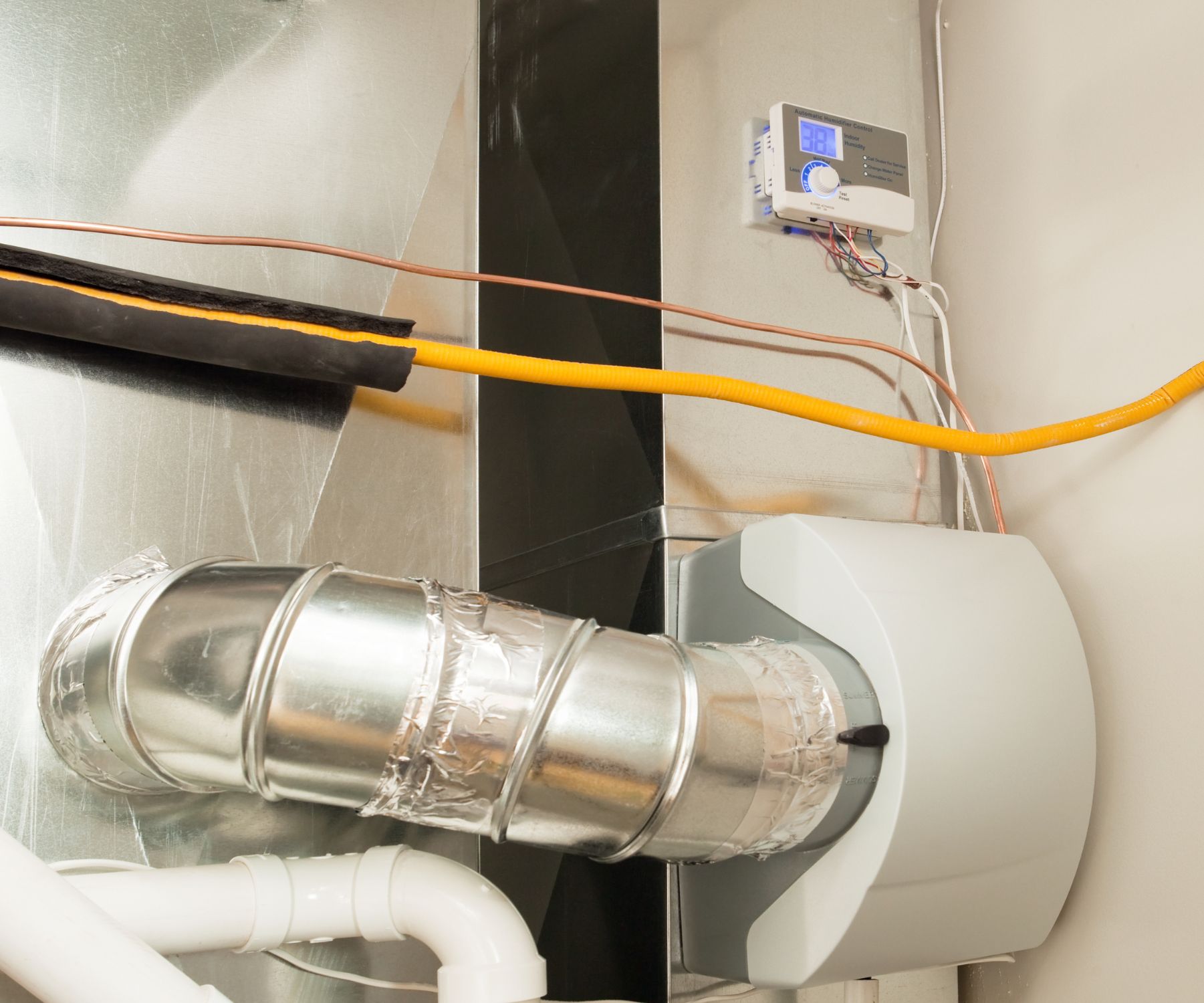
A flow-through humidifier is a type of humidifier that connects directly to your home’s plumbing and HVAC system, adding moisture to the air. The process involves water flowing through the humidifier, where a filter, wick, or membrane absorbs the water and exposes it to the HVAC system’s airflow.

How Does a Flow-Through Humidifier Work?

Here’s a simplified overview of how a flow-through humidifier operates:

  1. Water enters the humidifier from your home’s plumbing system.
  2. The water passes through a filter, wick, or membrane that absorbs it.
  3. Air from the HVAC system flows over the moistened filter/wick/membrane.
  4. Moisture evaporates from the filter/wick/membrane into the airflow.
  5. The humidified air continues through the HVAC system into your home.

Benefits of Using a Flow-Through Humidifier

Flow-through humidifiers offer various advantages:

  • Evenly distribute moisture throughout your entire home.
  • Require less maintenance than portable humidifiers.
  • Do not take up space in your living areas.
  • Can provide automatic humidistat control.

Who Can Benefit from Using a Flow-Through Humidifier?

Flow-through humidifiers are ideal for:

  • Homeowners in dry climates.
  • Individuals with respiratory conditions aggravated by dry air.
  • Homes with forced air heating systems.
  • Large homes that are challenging to humidify with portable models.

Types of Flow-Through Humidifiers

Flow-through humidifiers come in two main types:

Bypass Humidifiers

  • Description: A portion of the air is diverted through a wetted pad or filter.
  • Pros: Less likely to breed bacteria, no water boiling required.
  • Cons: Require more maintenance than power models.

Power Humidifiers

  • Description: Air is blown through a rotating disk that disperses water into the airflow.
  • Pros: Require less maintenance, no stationary wick or filter to clean.
  • Cons: May allow more bacterial growth, require a boiling water reservoir.

Installation and Maintenance

How to DIY Install a Flow-Through Humidifier

  1. Determine the optimal location on your home’s HVAC system for installation.
  2. Shut off the water supply and power to the HVAC system.
  3. Follow the manufacturer’s instructions to mount the humidifier and connect it to the water and HVAC ductwork.
  4. Seal all connections with tape to prevent air leaks.
  5. Turn the water and power back on and test for leaks.

How to Clean a Flow-Through Humidifier

  1. Turn off the water supply and power.
  2. Remove any scale buildup.
  3. For bypass models, replace the wick/filter per the manufacturer’s instructions.
  4. Remove and clean the rotating disk on power models.
  5. Reassemble and turn the water and power back on.

Maintenance Requirements for Flow-Through Humidifiers

  • Perform annual cleaning as described above.
  • Regularly replace the filter every 1-2 months.
  • Check for leaks and test the humidistat calibration.

Troubleshooting Common Problems

Why Isn’t My Flow-Through Humidifier Working?

  • Check if the water supply valve is turned on.
  • Test if the humidistat is set high enough.
  • Clean the filter or wick if it’s dirty.
  • Replace any defective parts like solenoid valves.

How Do I Fix a Leaky Flow-Through Humidifier?

  • Tighten any loose fittings.
  • Replace worn-out gaskets and seals.
  • Clean limescale buildup around fittings.
  • Repair any cracks in the evaporation chambers.

How Do I Get Rid of White Dust from My Flow-Through Humidifier?

  • Regularly clean and replace filters.
  • Use distilled or demineralized water.
  • Consider installing a reverse osmosis pre-filter.

Sizing Guide

Choosing the right-sized flow-through humidifier for your home is crucial to provide adequate moisture without over-humidifying. Follow these tips:

  • Calculate the square footage of your living space (generally, you need 1 gallon of moisture per 100 square feet).
  • Consider the number of occupants (around 10 gallons of moisture per person).
  • Check the capacity of your HVAC system and size the humidifier to the air handler’s specifications.
  • Select a model with an adjustable humidistat for fine-tuning moisture output.
  • For very dry climates or large, open floor plans, consider larger units or multiple units.

Humidistat Settings

The humidistat controls the level of moisture that the flow-through humidifier adds to your home. Follow these guidelines:

  • Start at 35% relative humidity and monitor comfort.
  • Slowly increase to 45% if more humidity is needed.
  • For infants and health conditions, 30-40% is recommended.
  • To prevent mold, keep it under 50% maximum.
  • Adjust seasonally to account for changes in climate.
  • Allow 24 hours for the humidistat to stabilize at a new setting before readjusting.

Health Benefits

Proper humidity levels between 30-50% can offer numerous health and comfort benefits, such as:

  • Alleviating symptoms of allergies, asthma, sinusitis, and other respiratory issues.
  • Preventing dry skin, cracked lips, bloody noses, and skin irritation.
  • Reducing the likelihood of cold and flu virus spread.
  • Soothing irritated eyes and contact lens discomfort.
  • Lowering the chances of vocal cord strain and respiratory infections.
  • Preventing dryness that can damage musical instruments.

Energy Savings

Maintaining proper humidity with a flow-through humidifier can improve your HVAC system’s efficiency:

  • Humidity allows the air to retain heat better, enabling a lower thermostat setting.
  • Humid air feels warmer, allowing you to lower the thermostat by 2-3°F without sacrificing comfort.
  • Fewer cycles of the HVAC system lead to improved moisture retention.
  • Estimated annual savings on heating and cooling costs range from 5-15%.

Sizing Recommendations

Here’s a general guideline for the humidity output needed based on home size:

  • 500 sq ft: 1-2 gallons per day
  • 1000 sq ft: 2-4 gallons per day
  • 1500 sq ft: 3-6 gallons per day
  • 2000 sq ft: 4-8 gallons per day
  • 250

0+ sq ft: 5-10+ gallons per day

Remember to consider climate and the number of occupants when sizing the humidifier.

Humidity Level Guidelines

Here are some recommended humidity ranges and their associated benefits:

  • 30-40%: Ideal for infants and allergy/asthma sufferers.
  • 35-45%: Comfortable for most homes.
  • 45-50%: Maximum humidity level before risking mold growth.

Monitor the humidity with a hygrometer and adjust the humidistat seasonally.

Frequently Asked Questions

What is the ideal humidity level for a home?
Between 30-50% relative humidity is recommended. Levels lower than 30% can be unhealthy, while levels higher than 50% encourage mold growth.

How do I know if my home needs a humidifier?
Signs include static electricity shocks, dry skin, cracked wood furniture, and windows fogging up. You can use a hygrometer to test your home’s humidity levels.

What size flow-through humidifier do I need?
Consider the square footage of your home and your HVAC system’s capacity to determine the appropriate moisture output, typically 20-30 gallons per day for an average home.

Can I install a flow-through humidifier myself?
Flow-through humidifiers require integration into your HVAC system, which should be done by an HVAC professional for optimal performance and safety.

How often do flow-through humidifiers need maintenance?
In general, it’s recommended to clean and replace filters annually before the heating season. Refer to the manufacturer’s guidelines for specific model maintenance recommendations.

How much does it cost to run a flow-through humidifier?
Operating costs are low, similar to running a furnace blower. Newer computerized models can optimize moisture output for even more efficiency.

What temperature should the water be for a flow-through humidifier?
Cold tap water is suitable in most cases. Some evaporative types may require warmer water. Check your specific humidifier’s manual for guidance.

Can flow-through humidifiers over-humidify a home?
Yes, a malfunctioning unit or incorrect humidistat setting can make the air too damp. The ideal relative humidity is 30-50%.

How can I improve the air quality from my flow-through humidifier?
Use distilled water to reduce mineral dust. Replace filters as per the manufacturer’s schedule. Regularly disinfect evaporative tanks.

Are flow-through humidifiers safe for pets and children?
When installed correctly by an HVAC professional and maintained properly, flow-through humidifiers are safe and hygienic.

Conclusion

Pros and Cons of Using a Flow-Through Humidifier

Pros:

  • Evenly distribute moisture throughout the entire home.
  • Automatic control with a humidistat.
  • Do not take up space in living areas.

Cons:

  • Higher upfront cost.
  • Requires professional installation.
  • Additional maintenance is required.

Alternatives to Flow-Through Humidifiers

  • Portable humidifiers.
  • Built-in evaporative systems.
  • Steam vaporizers.
  • Smart WiFi-enabled humidifiers.


Vaporizer vs Warm Mist Humidifier ( 21 Answers-Updated )

Two peas in a pod. Six of one half dozen of the other. Looks like a duck, quacks like a duck, must be a duck…
These are all phrases that remind me of a Vaporizer vs Warm Mist Humidifier compared.

What is the difference between a Vaporizer and a Warm Mist Humidifier?

A warm mist humidifier is essentially the same product as a vaporizer.
Only a Vaporizer typically comes with a chest rub additive to disseminate a soothing vapor into the air.
Both the warm mist humidifier and a vaporizer use the method of boiling water to create steam.
And steam happens to be a warm mist…
A cool mist humidifier on the other hand does not create steam like a warm mist humidifier or vaporizer.
It is a system of basically dispersing a cloud of fine water droplets into the air that are cool or at least room temperature.

Humidifier vs Vaporizer

Cool mist humidifiers according to Mayo clinic offer more relief for congestion and cold symptoms than warm mist humidifiers or vaporizers.
Conclusion:
Warm mist humidifier and vaporizer are two appliances that do the same thing. As humidity to the air through the creation of steam. A cool mist humidifier adds humidity to the air by dispersing cool humidity droplets into the air.

difference between Warm Mist Humidifier vs VaporizerWhat is a waterless vaporizer?

Imagine if you combined Vicks vapor rub with a Glade plug-in air freshener,
That’s essentially what a waterless vaporizer is.

If you are looking for a way to disperse Vicks vapor rub into the air without adding humidity through the air,
Waterless vaporizers or an excellent product.
And because most parents do not want to have a machine that is boiling water in their children’s room, waterless vaporizers are an excellent way to help your little ones breathe easier at night.
Warning: Waterless vaporizers may not be safe for infants under 6 months old because they can be too strong and irritate their airways.
Waterless vaporizers can also combine with a cool mist humidifier with no issues.

What’s the difference between a waterless vaporizer and a diffuser?

Both a waterless vaporizer and a diffuser disperse vapors into the air that can be beneficial and help with breathing.
But the difference in price is somewhat significant.
A waterless vaporizer is a convenient plugin that can be refilled easily for a small price. $12.
On the flip side
Although the diffuser itself is usually inexpensive, it does require essential oils to add in order to have something to disperse.
That’s where the real price is.
Some essential oils that are known to be good for colds and breathing like peppermint can run in the $30 range.
Frankincense, another essential oil known for being very beneficial but can run in the $70 range just for the one oil.

Diffuser vs. HumidifierDiffuser vs. Humidifier

Do you get the feeling we’re going around in circles?
Humidifiers and diffusers can share in a few functions but they are made for two different things.
The humidifier is made to add humidity to the air and that is its primary function.
A diffuser is made to disperse essential oils into the air and that is its central purpose.
Where they have commonalities is that they are both made to help you breathe easier.
And there are certain humidifiers that come with a tray to add essential oils making it essentially an essential oil diffuser / humidifier. Essentially…
But though you can purchase a humidifier that can double as a diffuser, not all diffusers can return the favor.
Here is the table comparing ultrasonic diffusers and nebulizers formatted in HTML:

Ultrasonic Diffuser Nebulizer
Mechanism of Action Uses ultrasonic vibrations to break down essential oils into micro-particles dispersed into the air. Uses compressed air to atomize medications into an inhalable mist.
Intended Use Aromatherapy – disperses essential oils into the air. Medical device to deliver medications directly to the lungs.
What They Diffuse Water and essential oils. Medications prescribed by a doctor, like asthma medications.
Particle Size Micrometer range. <5 microns to reach lower airways.
Treatment Effects Provides aromatherapy benefits. Delivers medications deeper into lungs to treat respiratory conditions.
Portability Available in portable, handheld battery or electric models. Available in portable, handheld battery or electric models.
Noise Level Very quiet. Noisier due to compressed air.


Ultrasonic diffuser vs nebulizer

Diffusers come in two different types.
Ultrasonic and Nebulizer.

Ultrasonic diffusers have a water basin that you fill with water and add your aromatherapy oils into.
And just like a cool mist humidifier, it mist the air with tiny droplets of water.
The difference is the water is combined with the scents.
An ultrasonic diffuser can be used as a humidifier simply by leaving the oils out of the water.
But..
A nebulizer diffuser does not use water and since the oils are not diluted in water, the nebulizer diffuser is much stronger.
The takeaway is that if you’re wanting to combine the moisture of a humidifier with the therapeutic and medicinal effects of a diffuser,
The only choice is the ultrasonic diffuser.
What’s the Best choice?
The Ultrasonic diffuser combines all the functions of a humidifier, a waterless vaporizer, and a essential oil diffuser.
Of course, individually these appliances may have their strengths when bought separately, an ultrasonic diffuser who’s the best combination device to get the best out of all worlds.
Do you want us to take it a step further?
There is a device called a “Revitalizer”
A revitalizer is a combination humidifier, essential oil diffuser, and air purifier.
Imagine a humidifier that pulls air into a basin, slushes the water around to clean the air, then releases the air combined with essential oil aroma.
That’s what a Revitalizer is and does.
Still with me?
How about an “Air washer”?
Air washers are air purifiers that can clean the air up to about 250 square feet by using water as a filter.
Air washers are also available with essential oils and double as humidifiers.
But the caveat here is that both revitalizer and air washers supply their own essential oils that are formulated to not gum up any working parts on the machines.
Sum it up
So many machines that are so similar.
Vaporizers, warm mist humidifiers, ultrasonic diffusers, waterless vaporizers, revitalizers, and air washers
all share most of the same functions.

They all add humidity to the air and they all diffuse aromas into the air.
And with the revitalizer and air washer, you also have an air purifier to boot.
As you can imagine, these machines all have their strengths when used individually.
For instance, a vaporizer uses boiling water to create steam. That makes it a much cleaner machine and offers the benefits of steam to help with congestion.
Ultrasonic diffuser vs nebulizerA nebulizer diffuser as an individual product is a much stronger aromatherapy diffuser than an ultrasonic diffuser that is combined with other functions.
And a air washer is primarily an air purifier that can double as a humidifier with essential oil additives.
But as a combination product I would choose an ultrasonic diffuser because it offers a good balance between humidifier and diffuser.
And I would leave the air purification to other technologies that are much better at improving air quality than revitalizers.
Q&A

Do warm mist humidifiers leave white dust?

Warm mist humidifiers do not release or leave white dust? The reason is, warm mist  humidifiers or vaporizers boil the water to create steam which essentially puts it through a distillation process. White dust from humidifiers comes from minerals and deposits in undistilled water.
Do warm mist humidifiers use a lot of electricity?
Warmest humidifiers or vaporizers compared to other types of humidifiers are the most expensive energy wise. But the initial cost is usually less expensive for a standalone vaporizer that doesn’t combine lots of extras.

Do warm mist humidifiers make the room warm?

Warm mist humidifiers or vaporizers create a sauna type atmosphere around the humidifier that can raise the temperature of the room, making the room feel warm, especially in the area surrounding the humidifier.

Do warm mist humidifiers cause mold?

Warmest humidifiers do not cause mold when correctly used. The purpose of a humidifier is to add moisture to the air when the atmosphere is too dry. Mold is caused by excessive humidity. A humidifier should be shut off when the humidity has reached 32-50%. A warm mist humidifier combined with a hydrometer or used with a hygrometer will not produce enough humidity for mold to take root.

Do warm mist humidifiers breed bacteria?

Warmest humidifiers or vaporizers breed less bacteria than other types of humidifiers because they boil water as a method of creating steam. The boiling process kills most bacteria in the process. But like any appliance that uses water that has a potential to sit, it must be clean regularly and emptied when not in use.

Does a cool mist humidifier make the room cold?

Cool mist humidifiers create a cool breeze directly in front of the humidifier. But the amount of cool mist it creates is not enough to change the temperature or cool off an entire room.

Can you overuse a humidifier?

The way to overuse a humidifier is to keep it running once the optimal humidity in a room is reached. Continuing to use a humidifier when the humidity is already adequate, you risk over humidifying which can lead to mold production and dust mites.

Can a vaporizer cause headaches?

A vaporizer will not cause headaches because it is basically a machine that emits steam.
But some people can be sensitive to the additives like Vicks or eucalyptus because they contain camfor which is a strong methylated smell.

Can I add lemon juice to my humidifier?

Lemon juice is a great additive to put in humidifier water because it will not gum up any parts  and will add a fresh citrus fragrance to the air. It will also aid with hindering mold and bacteria growth and is an excellent natural way to reduce mold and bacteria.

Does a vaporizer increase humidity?

Vaporizers increase the humidity in a room by manufacturing and emitting steam into the air. Vaporizers are also called warm mist humidifiers. The primary function of a humidifier is to increase the humidity in a room.

Can I use essential oil in an ultrasonic humidifier?

You can put essential oils in an ultrasonic humidifier provided the humidifier is outfitted with an oil scent tray. Putting oils directly into the water is not advised because of the chance and likelihood of clogging.

What’s the difference between a Waterless vaporizer and a humidifier?

The difference between a humidifier and a waterless vaporizer is that the primary function of a humidifier is to add moisture to the air in a room. Whereas the primary function of a waterless vaporizer is to disperse medicated aromas is like Vicks into the air. A waterless vaporizer does not add any moisture to the air whatsoever.

What is the healthiest type of humidifier?

The healthiest type of humidifier is a humidifier that:

  • Uses Anti-Mold Materials or is equipped with ultraviolet light
  • Is equipped with a hygrometer and automatically shuts off when the optimal humidity level is reached.
  • Is capable of producing cool mist humidity or warm mist humidity
  • Has an aromatherapy tray to medicinal oils such as eucalyptus

Is warm or cool Mist humidifier best for sinuses?

Both a warm mist humidifier and a cool mist humidifier has their advantages when it comes to helping with sinus relief.
A cool mist humidifier can help ease a dry nasal cavity quickly. But a warm mist humidifier can be used with essential oils that add medicinal properties to the air that aid with sinus relief.
Cool mist humidifiers are usually better for sleeping but also have the greater advantage of producing mold and bacteria which can be an irritant to your sinuses.

Can a warm mist humidifier make you sick?

A warm mist humidifier has a lesser chance of making a person sick because it is able to keep mold and bacteria from growing in it easier than a cool mist humidifier.
Any humidifier has a chance of making a person sick when it is under maintained or has been allowed to have water sit stagnant in it.
Humidifiers require astute attention to maintenance and cleaning or they can become a source of illness and discomfort other than being the relief they are intended to be.
Using a humidifier, regardless of whether it is a warm mist or a cool mist,  when the humidity is already adequate can also add too much humidity to a room which can promote mold and become a source of food for dust mites. Which both are known to be household allergens.

Does a vaporizer help sore throat?

A vaporizer can help a sore dry throat because it adds moisture to the air and dry air can be a big component of a sore throat.
Furthermore, Vaporizers usually have an aromatherapy tray or compartment that you can add a medicinal oil or salve. Many essential oils that provide relief from cold symptoms are menthol based and can be compared to the same ingredients in throat lozenges. Vaporizers can supply a similar type of relief from sore throat.

Drum Humidifiers: A Buyer’s Guide

Drum Humidifiers: A Buyer’s Guide

This article on drum humidifiers is part of a series examining the different types of whole house humidification systems.

Our main guide provides an overview of the key differences between all the major whole house options.

This specific guide will provide a buyer’s guide focused on drum humidifiers – how they work, pros and cons, maintenance tips, and recommendations.

Please check our other individual humidifier type articles to help determine the best whole home humidification solution for your needs.

How Drum Humidifiers Work

Drum humidifiers contain a drum or cylinder that holds replaceable evaporative filter pads or belts.

A motor rotates the drum to expose the pads or belts to the air flow. A fan then blows air through the moistened pads, releasing water vapor into the home’s ductwork to humidify the air.

Component Function
Rotating drum Holds evaporative media pads or belts
Evaporative media Absorb and release water vapor when air passes through
Fan Blows air through media to add moisture
Water supply Auto-filled from home’s water line
Humidistat Senses and controls humidity levels

Water is automatically refilled from the home’s supply line via a solenoid valve.

The humidistat senses humidity and activates the drum and fan to maintain the desired level.

Where You’re Most Likely to Find Drum Humidifiers

Drum humidifiers are more commonly used in commercial and industrial settings than in residential homes.

Some examples where drum units are typically installed:

  • Warehouses, manufacturing facilities, and fabrication shops where a rugged humidifier is needed. The drum design is durable in these environments.
  • Greenhouses, nurseries, and agricultural grow facilities that require supplemental humidity over large spaces.
  • Museums, archives, and art galleries, as the evaporative technology doesn’t over-humidify sensitive collections.
  • Commercial office spaces, schools, churches and theaters for cost-effective humidification.

When to Choose a Drum Humidifier

Drum humidifiers can make sense in these residential or commercial circumstances:

  • Humidifying large, open floor plan spaces. The drum units can effectively disperse moisture over an expansive area.
  • In spaces where regular maintenance access is possible. The frequent pad changes are easier with readily available access.
  • For supplemental, seasonal humidity rather than continuous year-round humidification.
  • When a humidifier needs to be mounted separate from existing ductwork. Drum units use exterior hoses.
  • Cost is a significant factor. Drum models are cheaper than most other types.
  • Easy installation is desired. Drum humidifiers require minimal duct modifications.

Benefits and Drawbacks

Drum humidifiers have some pros but also come with downsides:

Pros Cons
Don’t need duct integration Frequent pad replacement
Easier for DIY install Can breed mold/bacteria
Lower upfront cost <$500 Allow mineral buildup
Affordable replaceable parts Prone to leaks
Adjustable humidistat Noisier operation
Limited moisture output
Less precise control
More parts to replace
Shorter lifespan
Not for large homes

Maintenance Tips

Proper maintenance is crucial to extend the lifespan of a drum humidifier and avoid issues. Recommended maintenance includes:

  • Replace pads/belts – This is needed every 1-2 seasons, more often if micobial growth observed.
  • Clean fill valve – An annual flush and cleaning prevents valve clogs.
  • Clean fan/housing – Wipe down and remove dust/debris from fan and drum housing.
  • Flush supply lines – Periodically flush supply lines to reduce mineral buildup.
  • Check for leaks – Inspect around joints, seals, and drains. Repair leaks immediately.

Troubleshooting Problems

Some common drum humidifier problems and their causes:

Problem Cause
Pads drying out quickly Clogged fill valve not refilling
Mineral deposits/dust Hard water, lack of flushing
Water overflow Stuck fill valve or solenoid
Fluctuating humidity Dirty humidistat sensor
Fan not spinning Jammed drum, faulty motor

Replacement Parts

With periodic maintenance, drum humidifiers can operate for 5-10 years.

Eventually parts wear out and need replacement. Common replacement parts include:

  • Evaporative pads/belts
  • Water solenoid fill valves
  • Humidistat control boards
  • Fan motors
  • Drum motor and bearings
  • Cabinet housing<

    How to Clean a Drum Humidifier

    Regular cleaning and maintenance is key to extend the life of a drum humidifier. Follow this process to thoroughly clean your drum humidifier:

    1. Turn off power to the unit at the breaker.
    2. Remove the front cover of the drum housing.
    3. Carefully slide out the drum, removing it from the motor shaft.
    4. Remove old evaporative pads/belts and discard.
    5. Rinse and clean the drum cylinder thoroughly with a hose.
    6. Use a stiff brush to scrub out any mineral deposits.
    7. Rinse and wipe down the humidifier housing interior.
    8. Install new replacement pads or belts.
    9. Slide drum back into place and replace housing.
    10. Turn power back on and test operation.

    Key Takeaway

    If you need an affordable whole home humidification option and want to tackle installation as a DIY project, a drum humidifier may be a suitable choice.

    The ability to mount the drum units externally without duct integration provides more flexibility for installation. Just be prepared for frequent maintenance like changing evaporative pads and belts.

    However, for larger homes needing maximum moisture output or for those wanting a true set-and-forget solution, other types like steam, warm mist, or flow-through humidifiers would likely be better options.

    Though at a higher upfront investment, they provide higher capacity humidification and less long-term maintenance when properly installed.

    Carefully weigh the pros, cons, and your specific needs when choosing between drum humidifiers and other types.
    For moderate humidification needs on a budget, drum models can potentially get the job done.
    But they require more diligent care and have performance limitations compared to other available technologies.

Conclusion

Drum humidifiers can be an affordable DIY-friendly option.

However, weigh the pros and cons carefully.

Their high maintenance needs, potential for leaks, and limited moisture output make drum models less ideal for large, multi-room homes.

With proper care and part replacement, they can sufficiently provide supplemental humidity.

But other types like bypass and steam may be better long-term solutions.

Frequently Asked Questions

How often do drum humidifier pads need replacement?

Pads typically need replacement every 1-2 seasons, or more frequently if microbial growth is observed.

What causes leaks in drum humidifiers?

Leaks most often occur due to worn seals or improper installation. Checking for cracks and ensuring tight seals prevents leaks.

Do all drum humidifiers have a humidistat?

Most models have a built-in humidistat to control moisture output. Some basic units lack this feature.

How often should I clean the water supply valve?

Cleaning the fill valve annually is recommended to prevent sediment buildup and ensure proper water flow.

What causes mineral dust from a drum humidifier?

Mineral dust results from hard water not being properly filtered. Annual flushing and using distilled water can help.

How can I reduce noise from the drum humidifier?

Check for debris stuck in fan intake or drum. Lubricate motor bearings. Replace worn out fan motor if needed.

How do I check for leaks?

Inspect seals, gaskets, and drain connections for moisture and cracks annually. Leaks will require new seals or parts.

What is the lifespan of a drum humidifier?

With proper maintenance, a drum humidifier typically lasts 5-10 years before needing replacement.

How long do replacement belts last?

Evaporative belts need replacement every 1-2 humidifying seasons, or more frequently if heavy mineral buildup occurs.

What causes humidity fluctuations?

A dirty or malfunctioning humidistat sensor can lead to improper humidity control and fluctuations.