Standalone vs Whole House Humidifiers. How Do You Choose?

Standalone vs Whole House Humidifiers: A Complete Buying Guide

Maintaining proper indoor humidity levels between 30-50% is important for health, comfort and protecting your home. Humidifiers raise moisture levels to alleviate issues caused by excessively dry air. 1

There are two main types – standalone humidifiers designed for single room use, and whole house humidifiers integrated into a home’s HVAC system to humidify the entire space.

Standalone humidifiers are compact, self-contained units that can be moved room to room. They contain water tanks requiring manual refills and cleaning. Whole house units are installed by HVAC professionals and have automated features to humidify throughout a home.

This guide covers the key differences between standalone and whole house humidifiers to help you choose the best system.

Don’t miss our complete in-depth Humidifier Guide.

Key Differences at a Glance

Coverage Standalone Whole House
Cost $30-$200 $500+ installation
Maintenance Manual refilling and cleaning Automated
Convenience Portable, targeted use Set and forget
Installation Plug into outlet Professional HVAC integration

How Humidifiers Work

Humidifiers contain reservoirs that are filled with water, which is dispersed into the air to increase humidity. Standalone units use internal fans to circulate moisture. Whole house systems integrate with existing ductwork to humidify through vents. The added moisture helps alleviate issues caused by dry air.

Standalone Room Humidifiers

Standalone humidifiers are designed for use in single rooms or spaces up to 500 square feet. They contain tanks/reservoirs ranging from 1-5 gallons that requires manually refilling with water when empty. Types of standalone humidifiers include:

  • Cool mist – Absorbs water into a wick filter to humidify. Does not heat water.
  • Warm mist – Heats water to produce visible steam vapor. Provides soothing humidification.
  • Ultrasonic – Uses high-frequency vibrations to create microfine water droplets.
  • Evaporative – Fan blows air through a wet wick to add moisture.

Benefits of Standalone Units

  • Compact and portable design allows use in any room based on need. Great for bedrooms and nurseries.
  • Affordable price point between $30-$200 makes them accessible to most homeowners.
  • Variety of cool/warm mist options suit different preferences and rooms. Some have aromatherapy features.
  • Can target problem areas in a home rather than humidifying empty rooms. Uses less energy.

Drawbacks of Standalone Units

  • Small tank capacity requires frequent manual refilling every 1-2 days. Ongoing daily maintenance.
  • Only humidifies the room it is placed in. Not effective for whole home coverage.
  • Ultrasonic and warm mist models consume more electricity.
  • Evaporative types require regular replacement of wick filters.

Standalone Humidifier Pros and Cons

Pros Cons
Compact and portable design Small tank capacity requires frequent refilling
Affordable price point $30-$200 Only humidifies room they are in
Variety of warm/cool mist options Some models use more energy
Can target problem areas selectively Evaporative options require filter replacement

Whole House Humidifier Systems

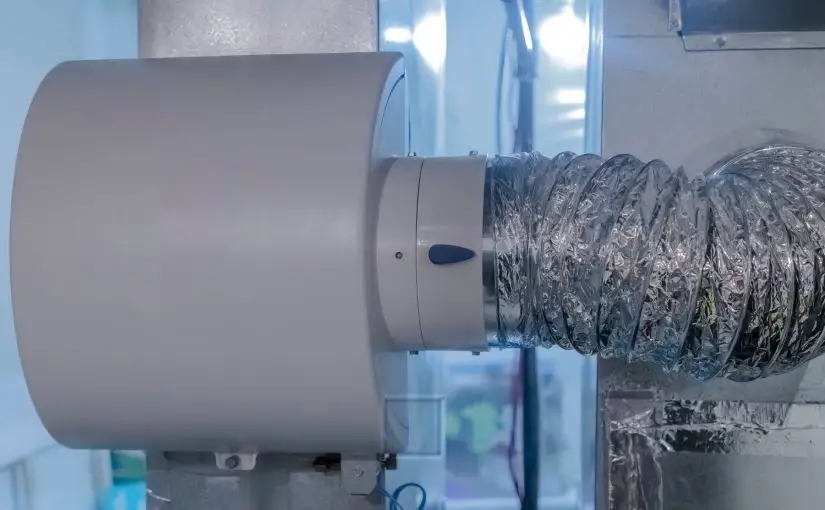
Whole house humidifiers integrate with a home’s forced air heating and cooling system to humidify the entire space.

Models include:

  • Bypass – Installed on supply ductwork with a bypass duct to humidify air.
  • Fan Powered – Has internal fan to distribute moisture into air ducts. Allows precise humidity control.
  • Steam – Generates steam to humidify air. Provides even coverage in all weather.
  • Ultrasonic – Uses high-frequency vibration to create water droplets to distribute.
  • Flow Through – Mounted inline on supply ducts with wetted media that humidifies passing air.

Benefits of Whole House Units

  • Provides balanced humidity throughout the home by integrating with existing ductwork.
  • Convenience of set and forget automated operation. Less daily maintenance than standalone models.
  • Single unit can humidify a large multi-room home of any size and layout.
  • Steam types increase efficiency of home heating systems.
  • Reduce need for frequent refilling compared to portable humidifiers.

Drawbacks of Whole House Units

  • Higher upfront equipment and professional installation costs.
  • Ongoing maintenance like replacing pads/filters has higher labor costs.
  • Not as customizable as portable models – can’t adjust room-by-room.
  • Risk of leaks and overflow if not properly maintained.
  • Ultrasonic types may produce white dust requiring drain line cleaning.

Whole House Humidifier Pros and Cons

Pros Cons
Provides balanced humidity throughout home Higher upfront installation cost $500+
Set and forget automated operation Higher maintenance costs and labor
Single unit can humidify large homes Not as customizable room-by-room
Some types increase heating efficiency Can cause HVAC issues if not maintained
Reduce need for frequent refilling Ultrasonic models produce white dust

Key Factors in Choosing a Humidifier

There are several factors to help determine if a standalone or whole house humidifier is right for your situation:

  • Home size – Standalone units suited for smaller spaces up to 1,500 sq ft. Whole house models better for larger homes.
  • Number of levels – Multi-level homes benefit more from whole house systems for even floor-by-floor coverage.
  • Problem rooms – If only need to humidify 1-2 rooms, a standalone can selectively target those spaces.
  • Allergies and health issues – Whole house models provide complete air quality control for issues like asthma.
  • Dry climate – In arid regions, whole house integration necessary to combat very low baseline humidity.
  • Existing HVAC system – Age and capacity of heating/cooling system affects whether it can accommodate a whole house humidifier.
  • DIY installation – Some whole house models like drum or flow-through types are feasible for handy homeowners to self-install.2

Recommended Humidifier Products

Here are some top humidifier models to consider:


Standalone Humidifiers


Whole House Humidifier Systems

Whole House Humidifier Installation

Installing a whole house system requires hiring an HVAC professional to integrate the unit into your existing ductwork. Costs average $800-$1200 including labor for a 2-4 hour install. Ongoing maintenance like replacing filters and water panels is also required annually, around $100-250 per service call.

DIY installation is possible depending on model but requires HVAC expertise and care working on ducts. Bypass, flow-through, drum and some ultrasonic humidifiers are the most DIY-friendly options.

Sizing Your Humidifier Properly

To size your humidifier, measure current moisture levels in your home using a hygrometer. Calculate the recommended moisture output for your square footage at 30-50% relative humidity. Also factor in features like runtime, tank output, coverage area and automatic controls when selecting a model. Undersizing and oversizing are common problems that lead to poor humidity control and higher energy costs.

Conclusion

Choosing between a standalone and whole house humidifier depends on your specific needs and home details. Evaluate your humidity goals, layout, problem rooms, climate and budget. Standalone humidifiers provide affordable, targeted room solutions. Whole house models are an investment but deliver convenience and whole home coverage. With proper selection and maintenance, you can enjoy ideal humidity levels year-round.

Frequently Asked Questions

Q: How often do you need to change humidifier filters?

A: Standalone humidifiers need weekly cleaning. Whole house replace filters 6-12 months.

Q: Where is the best place to install a whole house humidifier?

A: They are typically installed on a home’s supply plenum or ductwork to humidify air before circulation.

Q: What humidity level is best for my home?

A: Ideal indoor humidity is 30-50%. Use a hygrometer to measure and adjust humidistat accordingly.

Q: Can I install a humidifier myself?

A: Some standalone and whole house models allow DIY install if you have HVAC expertise. Otherwise hire a pro.

Q: How do I know if my HVAC system can accommodate a whole house humidifier?

A: Consult an HVAC technician to assess your existing system capacity and design to see if it is compatible.

Q: Should I run a humidifier 24/7?

A: Most should run constantly during dry months to maintain humidity. Adjust the humidistat to desired range.

Q: What causes white dust from my humidifier?

A: Ultrasonic and evaporative models can spread mineral deposits. Change filters regularly and use distilled water.

Q: How often does a whole house humidifier need maintenance?

A: Annual service by an HVAC technician is recommended to check, clean, and replace parts as needed.

Q: Can too much humidity cause issues?

A: Yes, mold and mildew growth can occur if humidity exceeds 60%. Keep levels 30-50%.

Q: Can I install a whole house humidifier myself?

A: Some DIY-friendly models like drum, flow-through, and bypass humidifiers allow self-installation with HVAC expertise. But professional installation is recommended for optimal performance.

Q: Do whole house humidifiers cause mold?

A: If humidity levels exceed 60%, it can lead to mold growth. Proper maintenance to keep 30-50% humidity prevents mold issues.

Q: Are there types of whole house humidifiers that don’t cause mold and bacteria?

A: Steam humidifiers that boil water before dispersing moisture minimize mold/bacteria concerns. Models with UV lights also help.

Q: Does a whole house humidifier work off the regular thermostat or do I need a separate thermostat for it?

A: Most whole house humidifiers have a built-in humidistat. Some can connect to a Nest or smart thermostat to integrate humidity and temperature control.

Q: Does having a whole house humidifier raise the value of the house?

A: Yes, whole home humidification systems can increase property value 1-4% by appealing to buyers and being flagged on home inspections.


Does a Humidifier Help With Phlegm?

Does a Humidifier Help With Phlegm?

Yes, using a humidifier can help reduce phlegm and relieve coughing caused by dry air.
Dry winter air allows less moisture into the nasal passages and throat, causing mucus membranes to dry out. The body reacts by overproducing mucus to compensate for the lack of moisture. Thicker, stickier phlegm builds up and is harder to clear from the airways, leading to coughing as the body tries to expel the excess phlegm.
By adding moisture back into the air, humidifiers can thin out mucus secretions and make them easier to cough up and eliminate.

According to the EPA, ideal indoor humidity levels during colder months should be between 30-50%. Using a humidifier is one of the most effective ways to increase moisture in the air when indoor environments become excessively dry.

How Does Dry Air Cause Phlegm Buildup?

In order to understand how a humidifier can help with phlegm, it helps to first look at how dry air leads to excess mucus production and coughing in the first place:

  • Dry air allows less moisture into the nasal passages and throat, causing mucus membranes to dry out.
  • The body reacts by overproducing mucus to compensate for the lack of moisture.
  • Thick, sticky phlegm builds up and is harder to clear from the airways.
  • Coughing is the body’s attempt to expel and clear the excess phlegm.

During colder months when indoor heating systems are running frequently, the air becomes exceptionally dry. This leads to dried out, irritated airways and increased phlegm production. Using a humidifier helps reverse these issues by adding moisture back into the air.

How Can a Humidifier Help?

There are several key ways that humidifiers can provide relief when you’re dealing with excess phlegm and coughing:

  • Thins out mucus secretions – The added moisture from a humidifier helps thin out mucus in the nasal passages, throat, and lungs. Thinner phlegm is much easier to cough up and eliminate.
  • Relieves coughing – By thinning out phlegm and keeping airways lubricated, a humidifier can provide relief from persistent coughing caused by thickened mucus.
  • Soothes irritated airways – The moist air from a humidifier hydrates and soothes respiratory tracts irritated by dryness. This calms coughs and eases discomfort.
  • Loosens congestion – The hydration provided by a humidifier also helps loosen mucus plugs and congestion in the nose and chest, promoting drainage.

Other Ways Humidifiers Help With Phlegm:

Benefit Explanation
Hydrates nasal passages and throat Moisture prevents dry, cracked membranes that trigger excess mucus production.
May clear sinuses Added moisture can help loosen and drain sinus congestion.
Alleviates cold & flu symptoms Humidified air soothes cough, congestion, and sore throats from respiratory illnesses.
Relieves allergies & asthma Hydration helps minimize allergy triggers and asthma attacks.
Aids chronic conditions COPD, cystic fibrosis, and other conditions involve excess phlegm. Humidifiers provide hydration and thinning of secretions.

What Type of Humidifier Is Best?

The type of humidifier you choose can make a difference in how effectively it thins mucus and relieves coughing and congestion:

  • Cool mist humidifiers are typically best for phlegm reduction. They provide hydration without raising room temperature. This makes them ideal for use in bedrooms and throughout flu season.
  • Warm mist humidifiers can also provide relief by loosening sinus and chest congestion through moist, warm mist. Just be aware they may raise room temperatures.
  • Ultrasonic and impeller humidifiers that disperse either cool or warm mist over large areas are ideal for providing moisture through multiple rooms.
  • Look for humidifiers with tanks over 1 gallon to allow extended runtimes before needing refills.

Tips for Using a Humidifier to Relieve Phlegm

Follow these tips to use your humidifier most effectively for minimizing coughing and congestion:

  • Place near your bed – Run your humidifier in the bedroom overnight to maximize relief when coughing and congestion tend to worsen.
  • Clean and refill daily – Change water and clean the tank daily to inhibit mold, bacteria, and mineral deposits that can circulate in the mist.
  • Use distilled water – To prevent white dust from mineral deposits, use only distilled or purified water.
  • Run continuously – For optimal moisture levels, run your humidifier continuously rather than intermittently.
  • Monitor humidity – Use a hygrometer to keep humidity around 30-50%. Too much moisture can encourage mold growth.
  • Use alongside other remedies – Use a humidifier along with cough medicine, decongestants, etc. for comprehensive relief.
  • See your doctor if symptoms persist – Consult your doctor if phlegm and coughing lasts more than 10 days.

The Bottom Line

Using a humidifier can be an effective way to thin out mucus secretions, relieve coughing, and aid in clearing phlegm from the airways. The added moisture soothes respiratory irritation and hydrates the nasal passages and throat. Combining a humidifier with other remedies provides comprehensive relief for phlegm and coughing caused by dry indoor air.

Look for a cool mist or ultrasonic humidifier with at least a 1 gallon tank to provide extended relief throughout multiple rooms. Place it in the bedroom overnight and be diligent about daily cleaning and refilling. Monitor humidity levels to keep them ideal without allowing excessive moisture. Used properly, a humidifier can be a simple way to minimize frustrating phlegm issues when indoor heating dries out the air.

Here is a 7 question FAQ in HTML formatting:

FAQ

1. Why does dry air cause more phlegm and coughing?

Dry air allows less moisture into the nasal passages and throat, causing the mucus membranes to dry out. This triggers the body to overproduce mucus to compensate for the lack of moisture.

2. What’s the ideal humidity level for minimizing phlegm?

The ideal indoor humidity range during colder months is 30-50%. Using a humidifier helps maintain these optimal moisture levels.

3. Are warm mist or cool mist humidifiers better?

Cool mist humidifiers are typically best since they provide moisture without raising temperatures. But warm mist can also provide relief by loosening congestion.

4. How often should you clean a humidifier?

It’s important to clean and refill a humidifier’s tank daily to prevent buildup of mold, bacteria, and mineral deposits in the moisture that’s dispersed.

5. Can using a humidifier too much encourage mold growth?

Yes, excessive humidity over 50% can lead to condensation and mold growth. Use a hygrometer to monitor humidity and keep levels below 50%.

6. What size humidifier is best?

Look for humidifiers with tanks over 1 gallon to allow for extended runtimes before needing a refill. Models with large tank capacities are ideal for providing moisture through multiple rooms.

7. Can humidifiers help with snoring or sleep apnea?

Yes, by keeping nasal passages and throat tissues moist, humidifiers can help reduce snoring and ease some mild sleep apnea symptoms. But they aren’t a cure for moderate to severe sleep apnea.

Can Humidifiers Actually Relieve Dry, Irritated Throat? The Answers May Surprise You

Can a Humidifier Help With Dry Throat?

Yes, using a humidifier can help relieve a dry, sore throat by adding moisture back into the air. Dry throat is often caused by low humidity levels in the home, typically below 40%, which allows the mucus membranes in the throat to become parched and irritated. Humidifiers work by increasing the moisture in the air through cool mists or warm steam. This added moisture coats the throat area and provides lubrication, which can soothe inflammation and irritation. The increased level of moisture also helps thin mucus secretions and allows the body to more effectively fight illness.

According to the EPA, proper humidity levels between 40-50% are ideal for relieving dry throat discomfort and preventing further irritation in the throat tissues.

What Causes Dry Throat?

There are a number of potential causes for waking up with a dry, raspy throat:

  • Low humidity – Dry indoor air deprives throat tissues of moisture
  • Allergies – Postnasal drip from allergies can irritate the throat
  • Illness/Infection – Colds and flu cause congestion and throat inflammation
  • Medications – Antihistamines, antipsychotics, hypertension drugs can cause dryness
  • Smoking – Smoke exposure dries out throat membranes
  • Dehydration – Not drinking enough fluids deprives the throat of moisture
  • Mouth breathing – Sleeping with your mouth open dries out the throat

Benefits of Using a Humidifier for Dry Throat

Using a humidifier provides many benefits for relieving a sore, irritated throat:

Benefit Explanation
Adds moisture back into the air Increasing moisture in the air hydrates and coats throat membranes
Soothes irritated throat and relieves cough The added moisture can lubricate the throat and reduce inflammation
Helps thin mucus The humidity loosens mucus secretions in the throat for easier expulsion
Prevents dryness that can lead to infection Keeping throat tissues moist helps prevent painful infections
Allows body to fight illness more effectively Proper moisture improves the immune response to viruses and bacteria
Reduces allergy symptoms Humidifiers can minimize throat irritation from postnasal drip
Improves sleep quality Moisture soothes nighttime throat discomfort for better rest

“Using a humidifier at the first signs of a cold or throat irritation provides moisture to help thin out mucus secretions and keep my throat hydrated,” says Dr. Elizabeth Miller, an ENT-otolaryngologist with Mercy Medical Center.

How Does a Humidifier Help With Dry Throat?

Humidifiers work in two main ways to soothe a sore, dry throat:

  1. Increasing moisture in the air: Humidifiers raise the moisture level in the air through evaporation or steam. This moisture gets deposited into the throat area through normal breathing.
  2. Coating and lubricating the throat tissues: The added humidity particles adhere to the lining of the throat to coat the irritated membranes. This moisture acts as a lubricant and provides cooling relief.

Additionally, the hydration provided by a humidifier can help thin out mucus and sinus secretions. This makes it easier to expel them from the throat instead of allowing them to collect and cause further irritation.

picture of a dog with his nose in the cool mist coming from a humidifierWhat Type of Humidifier is Best?

There are a few different types of humidifiers to choose from:

Cool Mist Humidifiers

  • Use a filter or wick to emit water vapor into the air
  • Do not heat the water, provide a visible mist
  • Safer for use around kids and pets
  • Can provide up to 24 hours of moisture before refilling
  • May require more cleaning to prevent mold

Warm Mist Humidifiers

  • Use heating elements to boil water and emit warm steam
  • Provide visible steam and heat which can feel soothing
  • Can kill up to 99% of bacteria in tap water
  • Typically provide less moisture time between refills
  • Steam and heat may be too much for some rooms

In general, cool mist humidifiers tend to be the best option for bedrooms since they provide quiet, high-output moisture without getting too warm. The warm steam from heated humidifiers may feel relaxing, but can interfere with sleep.

Some top-rated humidifier options for dry throat relief include:

  • Crane Drop Cool Mist Humidifier
  • Pure Enrichment MistAire Ultrasonic Cool Mist Humidifier
  • Vicks Warm Mist Humidifier
  • Honeywell Germ-Free Cool Mist Humidifier

Tips for Using a Humidifier to Soothe Dry Throat

Follow these tips to maximize the benefits of using a humidifier for dry throat:

  • Place near bed for overnight relief – Position the humidifier on a nightstand near your bed to maximize exposure while sleeping.
  • Maintain 40-50% humidity – Use a hygrometer to monitor the humidity level and adjust the humidifier output accordingly.
  • Clean and replace filters regularly – Change water tank, wicks and filters as directed to prevent microbial growth.
  • Use distilled water – This will help prevent mineral residue buildup inside the humidifier.
  • Add essential oils – Menthol, eucalyptus and tea tree oil provide soothing relief.
  • Watch for condensation – If windows or walls become wet, lower humidifier output to prevent mold.

Other Ways to Soothe a Dry Throat

While humidifiers are very effective, there are also some other remedies worth trying:

  • Drink warm fluids – Sipping warm broths, teas and lemon water can provide hydration.
  • Use throat lozenges – Look for soothing ingredients like menthol, honey or licorice root.
  • Try throat sprays – Lidocaine or phenol throat sprays can numb irritation.
  • Run a vaporizer – Add a menthol vaporization tablet for breathing relief.
  • Use a saline nasal spray – This can moisturize nasal passages and minimize postnasal drip.
  • Ingest demulcents – Honey, slippery elm and marshmallow root coat and soothe mucus membranes.
  • Take a steamy shower – The moist environment can provide temporary relief.
  • Use a nasal strip when sleeping – This prevents mouth breathing that dries the throat.

It can also be helpful to identify and treat any underlying cause of chronic throat dryness, such as allergies or acid reflux. Using a humidifier along with other remedies provides comprehensive relief.

When to See a Doctor About Dry Throat

While temporary dry throat is normal, especially during peak allergy and cold season, there are some circumstances when it warrants medical evaluation:

  • Dry throat lasts longer than 2 weeks
  • Difficulty swallowing liquids or solids
  • Fever over 101 F
  • Blood in mucus
  • Voice changes like raspiness or loss of voice
  • Frequent need to clear your throat
  • Ear pain
  • Unexplained weight loss

“A dry throat that persists longer than a couple weeks or one that is accompanied by severe pain, trouble swallowing, or voice changes should be evaluated by an otolaryngologist to check for potential infections or medical conditions causing the symptoms,” advises Dr. Neil Chheda, Director of Ambulatory ENT at Massachusetts General Hospital.

The Bottom Line

Using a humidifier is an excellent way to relieve a dry, raspy, irritated throat. The added moisture provided by the humidifier hydrates throat tissues, reduces inflammation, and allows the body to heal itself more quickly.

While dry throat can result from multiple conditions, maintaining proper humidity levels between 40-50% is key to keeping throat membranes optimally hydrated. Cool mist humidifiers are generally the best suited for bedroom use. Along with a humidifier, additional remedies like throat sprays, herbal teas, and essential oils can provide soothing relief.

With comprehensive at-home treatment, most cases of temporary dry throat can resolve within a week or two. But if severe pain or other concerning symptoms develop, it is important to see a doctor to rule out potential infections or medical issues. Get all the tips and answers in our complete humidifier guide.

Are There Any Health Risks Associated With Using a Humidifier?

Are there any health risks associated with using a humidifier?

Yes, there are some potential health risks to be aware of when using a humidifier. The stagnant water inside the tank can promote the rapid growth of mold, fungi, bacteria and other microorganisms. When dispersed into the air, these contaminants can cause ill health effects if inhaled or come into contact with lungs and airways. It’s essential to take proper precautions to minimize risks and safely operate your humidifier.

According to the Environmental Protection Agency (EPA), humidifiers can cause indoor air quality issues due to dispersing microorganisms, minerals, and other pollutants into the air if not properly maintained and disinfected. Want to learn more? Check out our full Humidifier Guide here.

Main Health Risks of Humidifiers

Mold and Bacteria Growth

The number one risk with humidifiers is microbial growth in the water tank. The warm, stagnant water provides ideal conditions for the rapid reproduction of mold, fungi, and bacteria such as pseudomonas species, serratia species, and nontuberculous mycobacteria (NTM).

When these microorganisms become aerosolized in the mist output by the humidifier, they can be easily inhaled. This puts you at risk for lung infections, hypersensitivity pneumonitis, “humidifier fever”, and other respiratory issues.

Babies, children, the elderly and those with compromised immune systems or lung diseases are most vulnerable to these health risks.

To prevent microbial growth, it’s crucial to:

  • Clean and disinfect the tank daily
  • Rinse and dry all parts after use
  • Follow manufacturer guidelines for maintenance
  • Use distilled or filtered water
  • Keep humidity levels below 50%

Dispersion of Minerals and Sediments

Certain types of humidifiers, especially ultrasonic and impeller (cool mist) models, can disperse white mineral dust into the air. This comes from minerals naturally present in tap water that get extracted and atomized by the humidifier.

Inhaling the mineral dust particles can cause respiratory issues like:

  • Coughing
  • Congestion
  • Asthma attacks
  • Lung inflammation
  • Increased infections

Children and those with pre-existing lung diseases are at higher risk. To reduce mineral dust, use distilled, demineralized or filtered water in your humidifier.

Excess Moisture and Allergies

Humidifying the air too much can create an environment inside your home that exacerbates allergies and asthma. High humidity promotes growth of mold, dust mites, and other allergens.

Additionally, breathing air that is too humid can make it more difficult for lungs to clear mucus in some individuals. This can trigger increased coughing, chest tightness, and wheezing.

Use a hygrometer to monitor humidity levels and keep your home between 30-50% relative humidity. Also monitor for any worsening allergy or asthma symptoms and adjust humidifier use accordingly.

Burns from Steam Vapor

Warm mist humidifiers work by heating water to produce steam vapor. This hot steam can cause burns if you come into direct contact with it.

Keep humidifiers out of reach from children to avoid accidental burns. Do not touch steam vents or attempt to handle or refill a warm mist humidifier while it is turned on and still hot.

Type of Humidifier Main Associated Health Risks
Ultrasonic Dispersion of mineral dust particles; Microbial growth
Impeller (Cool Mist) Dispersion of mineral dust particles; Microbial growth
Warm Mist Burns from hot steam vapor; Microbial growth
Evaporative Microbial growth; Allergen accumulation on wicks

Tips for Safe and Proper Humidifier Use

When used with care, cleaned properly and maintained well, humidifiers can safely and effectively relieve dry air. Here are some tips for minimizing health risks:

Choose the Right Model

Consider the pros and cons of each humidifier type:

  • Cool mist ultrasonic: Quiet and energy-efficient but can disperse mineral dust. Look for built-in filters.
  • Warm mist: Provides soothing visible vapor but risk of burns. Disperses less mineral dust.
  • Evaporative: Uses natural evaporation, less risk of dispersing minerals. But requires frequent wick changes.

Clean and Disinfect the Tank

Clean the tank thoroughly every day with a dilute bleach solution or vinegar and water mixture. Rinse well and allow all parts to dry completely between uses to prevent microbial growth.

Change Filters and Wicks

If your humidifier has a filter, replace it as often as recommended by the manufacturer. For evaporative models, change the wick frequently to avoid buildup of minerals and allergens.

Use Purified Water

Fill your humidifier with cool, distilled or demineralized water. This will prevent dispersion of minerals through the mist. Do not use untreated tap water.

Monitor Humidity Levels

Use a hygrometer to keep the humidity between 30-50%. Too high can promote microbial growth. Too low will make the air feel overly dry.

Allow Proper Clearance

Place the humidifier at least 2 feet away from walls, furniture, bedding and belongings. This prevents moisture damage like mold/mildew growth.

Follow Instructions

Carefully read and follow manufacturer directions for filling, cleaning, maintenance and cautions for safe operation.

Top Pick For Anti Microbial Humidifiers

PureGuardian H5450BCA

The Bottom Line on Humidifier Health Risks

Humidifiers can benefit health when used properly by relieving dryness and congestion. However, take precautions to minimize risks like:

  • Clean and disinfect the tank daily
  • Use purified water to reduce mineral dust
  • Monitor humidity levels with a hygrometer
  • Allow proper clearance from walls and furniture
  • Choose models with antimicrobial and filtration features
  • Be attentive to allergies or asthma getting worse
  • Keep humidifiers out of reach of children

With attentive care and maintenance, you can safely add moisture to the air using a humidifier and avoid potential health hazards.

Are There Any Disadvantages to Using a Humidifier?

Are There Any Disadvantages to Using a Humidifier?

In short, yes there can be some potential downsides to using a humidifier. However, most risks can be avoided with proper maintenance and care.

Humidifiers work by increasing moisture levels in the air. This can help relieve issues caused by dry indoor air, such as static electricity, dry skin, sinus congestion, and more. But adding moisture also comes with some possible drawbacks that should be considered.

According to the EPA, the main potential risks of humidifiers include:

Mold growth Dispersing minerals into the air
Bacteria buildup in stagnant water Noise
Child safety hazards Hard water residue

However, the EPA notes these risks can generally be avoided by following manufacturer instructions for cleaning and maintenance. Let’s look at each potential disadvantage in more detail:

A New Generation of Humidifiers That Clean the Water as they Humidify.

PureGuardian H5450BCA Ultrasonic Warm and Cool Mist Humidifier UVC

Mold and Mildew Growth

One of the biggest concerns with humidifiers is increased mold and mildew growth. Mold spores thrive in damp environments. So if a humidifier raises moisture levels too high, it can create ideal conditions for mold.

The EPA recommends keeping indoor humidity under 50% to discourage mold growth. Anything over 60% for an extended time risks major mold issues. Using a hygrometer to monitor humidity levels is advised.

To help prevent mold with a humidifier:

  • Don’t over-humidify rooms
  • Change water daily
  • Clean and dry tanks thoroughly
  • Use distilled or filtered water
  • Don’t let moisture build up on surfaces
  • Check for leaks or standing water

Dust and Mineral Dispersion

Some humidifiers, especially ultrasonic and impeller types, can disperse minerals and dust into the surrounding air. This includes naturally occurring mineral dusts.

As the humidifier vaporizes water, small mineral particles get released. Using filtered or distilled water instead of tap water can help reduce this effect.

Bacteria Buildup in Stagnant Water

Stagnant water left sitting in a humidifier tank can breed bacteria and microorganisms. These then get blown out into the air by the humidifier.

To prevent bacteria growth:

  • Change water daily
  • Disinfect tank weekly
  • Don’t let water sit for long periods
  • Follow cleaning instructions

Noise

Some types of humidifiers, especially ultrasonic and impeller models, can produce bothersome white noise. This sound is created from high frequency vibrations that turn water into a mist.

The humming or buzzing may disrupt sleep if the humidifier is used in a bedroom. Look for units specifically designed to be ultra quiet or whisper silent.

Hard Water Residue

Hard water containing minerals like calcium and magnesium can leave behind white dust or scale around humidifiers. As the water evaporates, the minerals are left behind.

This harmless but unsightly residue can spread through the air. Ways to prevent it include:

  • Use distilled or filtered water
  • Use demineralization filters or cartridges
  • Clean with vinegar or descaling solutions

Child Safety Concerns

Humidifiers can pose some risks to children if used improperly:

  • Burns: Hot steam vapors from warm mist models can cause burns if touched directly.
  • Tipping: Rowdy play may cause a floor unit to tip and spill. Place on sturdy surfaces out of reach.

Properly supervise children around humidifiers and keep floor units on low, sturdy surfaces.

Other Considerations When Choosing a Humidifier

To find the right humidifier and minimize risks, keep these factors in mind:

  • Size and intended coverage area
  • Noise levels, especially for bedroom use
  • Convenience – how easy to fill, clean, and maintain
  • Type of humidifier: warm or cool mist, evaporative, ultrasonic, etc.
  • Any smart features like humidity sensors or auto shut-off

Also look for models with:

  • Automatic shut off when empty
  • Leak protection or overflow prevention
  • Tip over protection
  • Timer and humidity settings
  • Antimicrobial materials that inhibit mold

Proper Care Is Key

While the potential risks may seem concerning, the key is proper maintenance and care of your humidifier.

Be sure to:

  • Read all instructions and safety guidelines
  • Change water daily or every few days max
  • Rinse and scrub tanks to remove film
  • Disinfect tanks weekly with bleach solution
  • Dry out humidifier between uses
  • Use filtered or distilled water
  • Monitor humidity levels with a hygrometer
  • Clean and replace filters regularly

With regular cleaning and care as directed, you can minimize any risks and safely enjoy the benefits of humidifier use.

The Bottom Line

There are some potential downsides to be aware of when using a humidifier:

  • Mold growth in damp environments
  • Dispersing minerals and dust into the air
  • Bacteria buildup in stagnant water reservoirs
  • Noise from some models
  • Hard water residue
  • Safety concerns around children

However, diligent cleaning, filtered water, monitoring humidity levels, and general precautions can minimize any risks.

While no device is risk-free, humidifiers can safely and effectively relieve the problems caused by dry air when used properly. With some care and maintenance, you can unlock all the benefits of humidifier use for your home or office.

Pink Mold in Your Humidifier: Why It’s Dangerous and How to Stop It

Is pink mold in a humidifier dangerous?

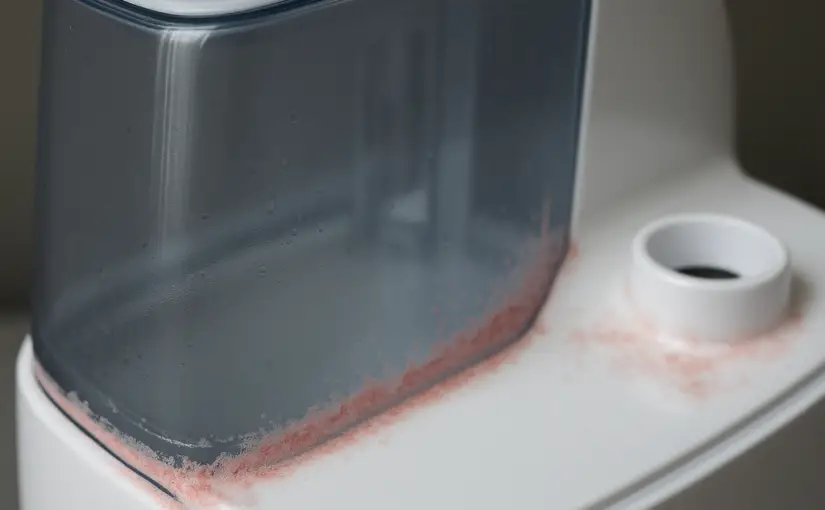
Yes — it can be, especially for people with allergies, asthma, or weakened immune systems. The microbes behind the pink film (often Serratia marcescens bacteria or the yeast‑like fungus Aureobasidium pullulans) can irritate the lungs, skin, and eyes, and may contribute to infections with repeated exposure. The good news is it’s common, very fixable with a thorough clean, and preventable once you dial in your humidity and maintenance routine.

What Pink Mold in a Humidifier Looks Like (and What It Really Is)

Open the tank to top off water and you see it: a salmon‑pink film, maybe a slick ring near the waterline, or a faint stain around the mist outlet. It’s not your humidifier “going bad,” and you don’t need to throw it out. That color usually points to microbes that love damp, mineral‑rich places — exactly what a warm water tank provides. A quick reset (clean, dry, refill) clears it, and a couple of smart habits keep it from returning.

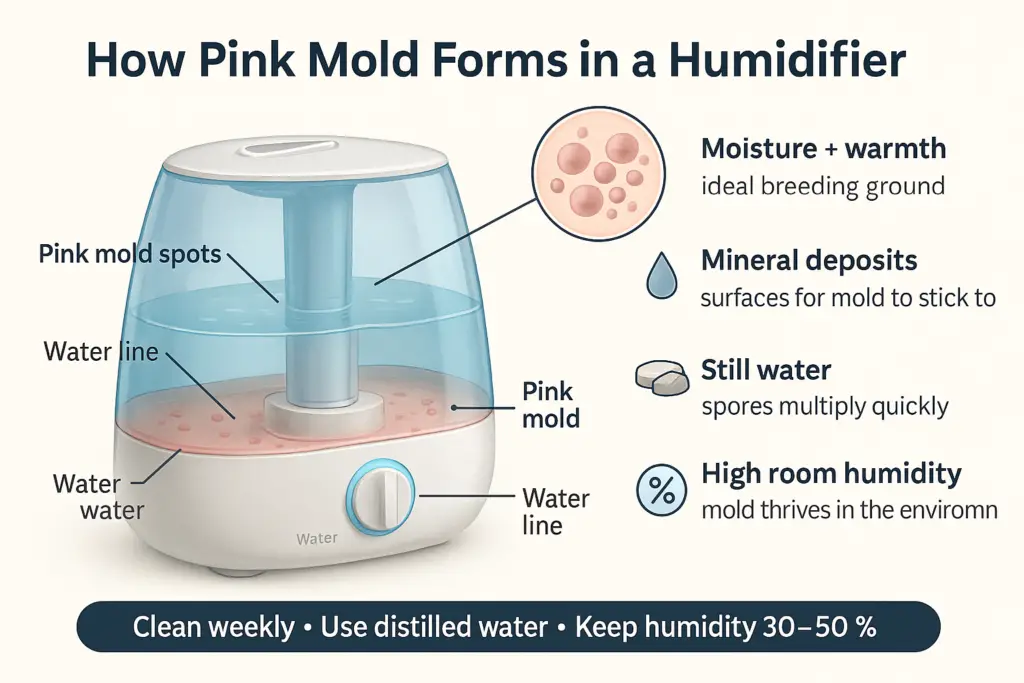
Educational diagram showing how pink mold forms in a humidifier, with labeled causes and prevention tips.Why you’re seeing pink mold now

Pink growth is more likely when indoor air stays moist for long stretches and water sits in the tank between refills. Minerals in tap water leave a light scale that microbes can cling to. If your unit has been running a lot, or the room feels a little “clammy,” your home might simply be running too humid — and the humidifier tank is where that shows up first.

Think of pink mold as a friendly warning flag. It’s your cue to check the broader humidity picture in the room and adjust before the problem spreads beyond the tank.

Do a quick humidity check (takes 30 seconds)

If you have a hygrometer, glance at it. The healthy target is 30–50% relative humidity. When readings sit above 55–60% for hours at a time, you’ve created great conditions for mold and bacteria — in the tank and around the house.

No meter handy? Look for simple clues: persistent condensation on windows, a faint musty smell, towels that don’t quite dry, or allergies that seem worse when the humidifier runs. Any of those point to “a little too damp.”

Easy ways to nudge humidity back into the sweet spot

You don’t need a renovation — just a few friendly habits:

Let fresh air help. On mild days, crack a window for 10–15 minutes; moving air pulls excess moisture out. Use bathroom and kitchen exhaust fans during showers and cooking.
Give the humidifier breaks. If you’re over 45–50% RH, pause the unit or lower its setting. Many models don’t need to run 24/7.
Consider a dehumidifier. Basements and tightly sealed rooms benefit from occasional drying cycles, especially after storms or laundry days.
Use distilled water. Fewer minerals mean less residue on tank walls — and fewer places for pink film to get started.

Right size matters (so you don’t over-humidify)

A humidifier that’s too large for the room can overshoot your target quickly and keep the air damp — exactly what pink mold prefers. Matching output to room size prevents “tropical” conditions and makes maintenance easier. If you’re not sure your unit is a fit, here’s a simple guide:
How to choose the right size humidifier for your room.

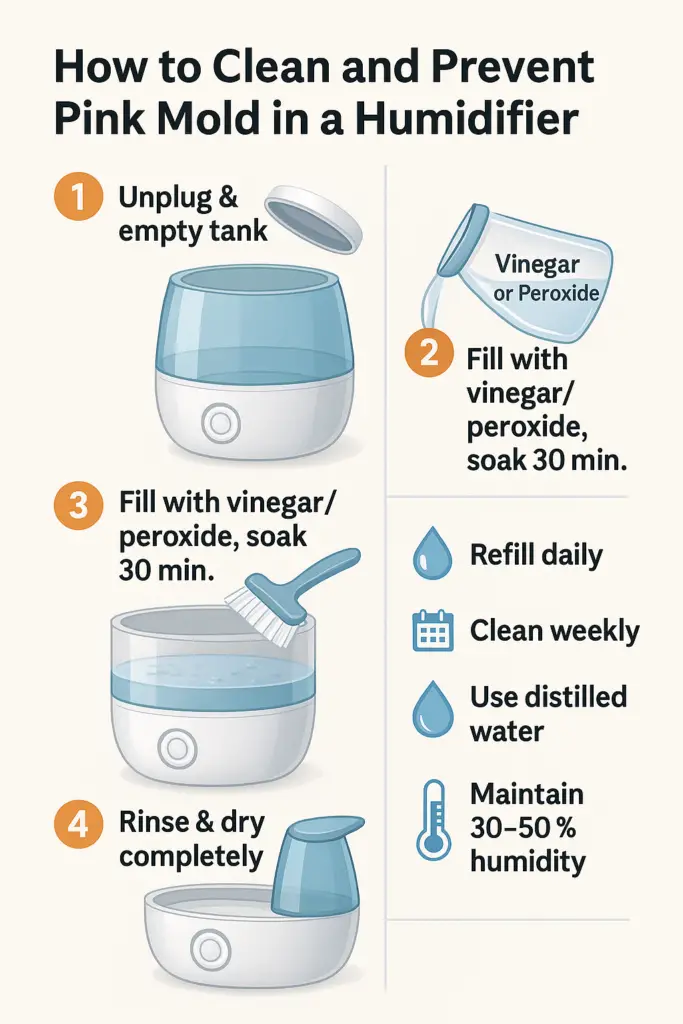
Step-by-step infographic showing how to clean and prevent pink mold in a humidifier.Okay — how do I get the pink out right now?

Here’s a gentle, effective clean that most manufacturers are happy with:

1) Power down and empty. Unplug, remove the tank, and pour out any water.
2) Soak to loosen. Fill the tank with white vinegar or 3% hydrogen peroxide and let it sit for about 30 minutes. This softens residue and disrupts the biofilm.
3) Light scrub. Use a soft brush or toothbrush to reach seams and corners. Avoid abrasive pads that can scratch the plastic (scratches give microbes hiding spots).
4) Rinse thoroughly. Warm water rinse until you no longer smell vinegar or peroxide.
5) Dry completely. Air‑dry parts on a clean towel before reassembly so you’re not trapping moisture in crevices.

Tip: Skip bleach unless your manufacturer specifically recommends it — it can pit plastics and leave fumes you don’t want to inhale.

Simple habits that keep pink mold from coming back

Refresh daily. Don’t let water sit in the tank more than 24 hours. A quick dump and refill knocks down growth dramatically.
Weekly reset. Do the soak‑and‑rinse routine once a week during heavy use. It takes about the length of a TV episode and pays back all season.
Mind the minerals. Distilled water reduces scale (less “grip” for microbes). If you stick with tap, clean a touch more often.
Optional helpers. Some people like a drop or two of tea tree oil or a labeled “humidifier treatment” tablet; use sparingly and only if your manual allows additives.

When to consider replacing the unit

If pink film returns immediately after a proper clean, or the tank has deep scratches and permanent staining, replacement may be cheaper (and safer) than battling hidden biofilm. Motors and misters last longer — and run quieter — when the water path is clean.

The bigger picture: a healthy home humidity rhythm

Humidifiers shine when they take the edge off dry winter air — preventing nosebleeds, easing coughs, and protecting wood furniture — without pushing your home into the soggy zone. Keep an eye on that 30–50% range, size the unit to the room, and give the tank a weekly reset. Do that, and pink mold tends to become a non‑issue.

Want a broader, step‑by‑step overview that covers types, setup, safety, and maintenance? Dive into our
Complete Humidifier Guide
for clear tips you can use today.

Quick answers to common questions

Is pink mold the same as black mold?

No. Pink growth is most often Serratia marcescens (a bacteria) or Aureobasidium species (yeast‑like fungus). It’s generally less hazardous than black mold but still irritating — especially with repeated exposure. Treat it seriously, clean it fully.

Can I keep using the humidifier while there’s pink film?

Pause it, clean it, then resume. Running through the film can aerosolize contaminants and worsen irritation or allergies.

What humidity should I aim for?

30–50% RH is the comfort and health sweet spot for most homes. If you’re consistently above 55–60%, reduce runtime, ventilate, or use a dehumidifier until the reading drops.

Will a bigger humidifier fix dry air faster?

It will — but it’s easier to overshoot and end up damp. For steady comfort without pink mold, match capacity to your room:
humidfier sizing guide.

Bottom line

Pink mold in a humidifier is a nudge, not a nightmare. Clean the tank thoroughly, keep your indoor humidity in the 30–50% range, and make sure your unit is sized for the space. With those pieces in place — and a quick weekly reset — you’ll keep the pink film away and your air comfortably healthy. For deeper how‑tos and setup tips, explore the
Humidifier Guide.

Is “White Noise” a Reason to Buy a Humidifier?

There is something about the noise that a humidifier makes while it’s misting the air that has an almost instantaneous sleep effect to it.

  It’s very calming and hypnotizing at the same time. Combined with the relief of being able to breathe because of the moisture it emits into the air, humidifiers are kind of an elixir for helping you rest.

Interesting enough, you can browse YouTube and find a number of videos that provide the sounds of a humidifier that you can play while you are sleeping.

But not all humidifiers produce that white noise effect. And even though there are many people who enjoy the calming sound of a humidifier, there are just as many people who do not want to be able to hear their humidifier working at all.

And I can’t blame you, whatever side of the fence you’re on, because I can see the point of both.

Types of Humidifiers that produce White Noise

1.Evaporative cool mist humidifiers create a white noise effect that can be comforting to sleep with.

2.Impeller humidifiers have a spinning disc that makes a humming noise that can be

But if you’re looking for a quiet humidifier, ultrasonic humidifiers do not have a fan or a disc which makes them the quietest type of humidifier. relaxing too.

Should you buy a humidifier based on the White noise it makes?

Probably not.

Humidifiers can be pretty sophisticated devices these days. And come with all kinds of bells and whistles.

But one of the benefits to these humidifiers is that they are quiet.

And quiet seems to be a feature that most people are looking for when they are looking to purchase a humidifier.

Take the Levoit lv600s

This humidifier fully hooks up to your Wi-Fi and can be controlled by your phone or an Alexa or Google Assistant.

You can simply tell your humidifier what percentage of humidity you want, and it does the rest.

It is easily filled from the top, which is a huge improvement over other kinds of humidifiers that require you to take the tank off and turn it upside down to fill it.

It runs up to 50 hours without having to be refilled and can humidify a 500 square foot room up to four times faster than any other humidifier.

It features a built-in hygrometer and hydrostat so that you can set the humidity level to what you want and then leave the humidifier to reach and maintain that level.

And it can be used as either a cool mist humidifier or a warm mist humidifier.

And don’t forget, it is a fully functioning essential oil diffuser at the same time.

But if you’re looking for a white noise humidifier. This one is not it. This one is very quiet as a benefit.

Noisy humidifiers tend to be less sophisticated and rely on technologies that aren’t as good at humidifying the air.

Which is the primary point of having a humidifier.

But if the humidifier noise is something that you are very much interested in,

Air Care in a Whole House humidifier

This is a large humidifier that doesn’t have most of the bells and whistles that say the Levoit does but it does come with a hygrometer / humidistat automatic shut off to maintain the correct humidity.

You can also cover up to 2600 square feet which is pretty amazing.

It also comes with casters, which can give you an ideal of how heavy this thing can be with water in it.

And being a larger unit, it definitely has the humidifier sound that people either find relaxing or despise

Other White Noise options.

And like I mentioned before, there are plenty of videos that play the sounds of a noisy humidifier to sleep by.

And if you don’t want to use your phone or tablet to play a video while you’re sleeping,

  you can always take another route and purchase a white noise machine dedicated to giving you a dozen or so soothing White noise sounds and a night light to boot.

White noise machines come in an array of different styles. Some are made to look like an office device that blends in with the other office supplies, while other white noise machines are cute and come in shapes that look like anything from turtles to owls for the baby’s room and bed.

Rose White Noise machine

This is a nice noise maker that would look good in the kids room, for the living room.

It illuminates in seven seven different colors and it has 16 soothing sounds that range from ocean waves, the chirping of insects and birds, water flowing in the valley, and rain.

It also has four lullabies for the young ones.

In addition it features an automatic shut off timer. See Here

Another noise machine that has some interesting sounds including the usual rain and thunderstorm, campfire and ocean sounds.

But also has some very unique sounds including vacuum cleaner, fetal tone, gentle surf and shushing.

This white noise machine is called the “Dream Egg“.

recap

The white noise that you can get from a humidifier is one of the most relaxing sounds especially when you factor in the relief that you are getting from the additional moisture that is providing.

If you were specifically looking for a humidifier to get you that “white noise”, then you should look more at evaporative humidifiers and impeller humidifiers.

Both of these types of humidifiers use fans and discs that create that humidifier hum and gurgling sound.

But even though the noise from a humidifier may be something that many people enjoy, it is also something that many people do not enjoy in the least.

Most of the humidifiers you find these days are exceptionally quiet. Because quiet is what sells.

But the features that you can get in a humidifier these days are amazing. And make the drug store humidifiers of the past seem like pretty small potatoes.

And the truth is if you’re searching for the white noise that you are used to hearing from running a humidifier,

You can find videos of humidifiers running on YouTube.

And if that’s not an option for you, White noise machines are inexpensive and can give you a couple of dozen different options right at the push of a button.

My Top 11 Ultimate “Plant Humidifier” Must Haves

1.Easy to fill

A humidifier must be easy to fill.

I have had humidifiers in the past that you could barely get the tank underneath the faucet in the kitchen to fill it up.

You practically have to turn the thing sideways to get it out from underneath the faucet.

And you can’t expect to do so without spilling some of the water.

Also , If I have to turn it upside down to fill it, that means I’m going to get water everywhere.

An easy to fill humidifier that fills from the top and fits in my sink is a must have for a plant humidifier.

2.  Easy to clean

Humidifiers are well known to be maintenance heavy devices that require cleaning at least once a week.

  And I can tell you that if it’s too hard to mess with, breaking it down and such, it’s probably not going to get done as often as it needs to.

That’s why, when it comes to a humidifier, one of the main things I’m looking for is how easy it is to clean.

On that note, I want to stick it in the dishwasher if I can, and just be done.

An Easy to clean is a “humidifier must have”. Plant or otherwise.


3.  Humidity meter (Hygrometer)

  Keeping the proper Humidity balance is such an important part of staying healthy and keeping my plants thriving that I want to make sure that I’m running the humidifier only when I need it.

And though I can tell you when it feels muggy or if I’m experiencing more than my share of static electricity, that is not enough to ensure that the humidity level in the house is staying at the proper relative humidity range.

The bottom line is, without a humidity meter (hygrometer) , I have no idea of what my RH (relative humidity) actually is.

One of my “humidifier must haves” is the inclusion of a hygrometer to provide me with an actual way of measuring the humidity without guessing.

4.  Humidistat

Along the same lines as a humidity meter, a humidistat turns the humidifier on and off to adjust to the humidity in the room.

It’s very much like a thermostat that you use for your heat and air conditioning. For instance, if you want your room to be 75°, you set your thermostat at 75 and the room slowly adjusts to that temperature.

That’s exactly the same way a humidistat works except for it adjusts the room for relative humidity level.

Smart humidifiers rely on sensors to tell the humidistat to adjust the humidity.

5. Auto shut off

If you have ever owned a basic drug store plastic humidifier then you know what I’m talking about already.

Most humidifiers from yesteryear were basic machines that you feel with water and turn on.

And the machine would stay on regardless until you hit the off button.Which made it not uncommon to come along and find your humidifier bone dry and still running.

Luckily “auto shut off” is a feature you can find fairly easily when you are shopping around for a humidifier these days.

Indicator lights and alerts are also part of the norm for humidifiers these days.

Smart humidifiers can even send you a text when the humidifier is about to be out of water.

Auto shut off is a must-have for your plant humidifier

6. Extra long run time.

A large basin that can hold enough water that my humidifier can run for at least a couple of days without me having to fill it is an essential convenience.

Along the same lines as having to clean it all the time, there is the built-in necessity of having to fill a humidifier with water continuously.

That’s why having a large water tank that doesn’t have to be filled as often is a must-have on the humidifier features list.

love my new plant humidifier


7. Warm or cool mist options

Some plants do better with steamier air because it creates more of a simulation of their natural habitat. Many tropical plants for instance are used to heavy humidity and high temperatures all day.

That being said, you may not want a vaporizer running all the time because they are steamier which can make the room feel swampy and it cost more to run a warm mist humidifier.

  That’s why owning a humidifier that has both an option to use it as a warm mist or cool mist is a must have for me.

8.  Aromatherapy / essential oils

Using essential oils around your plants may not seem like such a great idea until you realize that there are many essential oils and aromatherapy blends that will stop fungal growth.

They also Repel insects, and provide an all-natural alternative to fertilizers that have harmful chemicals and poisons in them.

The inclusion of an aromatherapy tray on a plant humidifier is an absolute must have feature.

9.  Wi-Fi

Every home appliance you can think of these days as a Wi-Fi version.

Some of them make a lot of sense and some not so much.

Having the option to monitor your humidifier through an app is a good idea because you can view the relative humidity in your home from a remote location and get an alert letting you know when your water is nearly gone.

You can even turn the humidifier light on, via your phone.

10. Quiet

Humidifiers are so noisy that they are practically White noise machines.

Which can be a good thing for some people and I know that kind of “white noise” can help a baby sleep,

But it’s not for me.

I don’t want a device in the bedroom or the living room but I have to turn the TV or radio up to hear it.

Having a humidifier that is quiet is a must have feature for me.

11. Germ-free

The latest innovation in humidifiers is the addition of different types of options to keep your humidifier germ-free.

Antimicrobial plastic and ultraviolet light are the main ideals at the forefront.

If a guy could get all the features included in this list and top it off with the option of being germ and bacteria free,

I would say that you would have the ultimate plant humidifier.

Plant Humidifier – When, Where, and How (My Experience)

I enjoy plants. I get a real jolt out of seeing plants and flowers that I have potted and kept up with the watering, thriving and growing, big and luscious.

I also have a couple of excellent areas where I put my plants that they seem to grow like crazy in.

One being the window sill in the kitchen,

  and  the other one being a bathtub (it’s a ridiculously small bathtub, I don’t know what the builders of the house were thinking when they put it in)

that sits underneath a skylight in the bathroom.

Both of those areas work well for growing because of their easy access to water and direct sunlight for 4 or 5 hours a day. Not to mention the amount of humidity in those rooms.

But I also have a room where even though it gets a lot of sunlight, it is very dry and a pain to carry water in there  to take care of the plants.

I know that makes me sound lazy, but there is a big difference in taking care of plants when you have easy access to water. Take it from me.

My Plant Humidifier Experience

Recently I decided to go the humidifier route, with the plants in that room.

After all, it only makes sense.

When you compare that room to the other rooms where we keep plants, there’s an obvious difference.

The plants in the bathroom and in the kitchen both get a lot of humidity.

  Bathrooms are naturally humid because of the showers going on and kitchens also get their share of humidity from the kitchen sink.

So putting a humidifier in the other plant room to keep moisture in the air seemed like the perfect ideal.

Are humidifiers good for plantsSo what did I learn from it?


Are humidifiers good for plants?


  Putting a humidifier with my plants works pretty well. Does it transform that area into a greenhouse? Not exactly. But it does make a difference.

The plants seem to be a little greener from just having a little humidity settling on them.

They have that vibe of being happy and healthy, the way they’re reaching for the sky..

I told you I like growing plants.

Do plants need a cool or warm mist humidifier?


I originally used a vaporizer because we just happen to have one in the closet.

And it made sense that tropical plants probably like hot humidity because of their natural habitat and what.

It also seemed like a good idea because the water in the vaporizer was being boiled which means less chance of mold and bacteria growing in it.

Both of those assumptions were true.

But nevertheless, I decided to take out the vaporizer and put a cool mist humidifier in there instead ,because the vaporizer was making the room feel too swampy.

Did I see a difference in the plants by swapping out the vaporizer with the humidifier?

No I didn’t. I’m guessing humidity is humidity no matter what the temperature is.

when should i use a humidifier for my plantsWhen should I use a humidifier for my plants?

 

Some of the other particulars like when and how, I just Googled them.

In Particular, I needed to know when to use it and where to put it.

I needed to know when the actual humidity in the house warranted using a humidifier and I needed to know when, as in what time of the day to use it.

What I found out about “when to use it” made perfect sense when I heard it.

The ideal is to run the humidifier in the morning before the sun shines directly on the plants.

That probably all depends on which room you’re putting them in and what time the Sun shines into that room.

The Sun hits my room in the afternoon, so running the humidifier in the morning is better for me.

The main reason and why it makes so much sense is that if you are running your humidifier at the same time that the Sun is directly hitting your plants,

The condensation that the humidifier creates can have a magnifying glass effect which can cause the sun to burn your plants.

The same reason why they say not to water your grass in the afternoon sun.

Told you it would make sense when you heard it.

As far as the humidity level in the house, it turns out that plants are very similar to humans in the level of humidity that they find most beneficial.

  Though some tropical plants need more humidity, most plants thrive best when the humidity in the house is between 40 and 60%.  Other plants like succulents prefer desert conditions so a humidifier is pretty useless for growing cactus.

How do you know what your humidity is?

A little device called a hygrometer. It’s also called a humidity gauge or a humidity meter.

As a standalone device, they’re pretty cheap. Around the $20 mark.

But you can also buy a humidifier that has a humidity meter built in. And a humidistat to control when the humidifier comes on and turns off according to the relative humidity of the room at any time.

A much more convenient option.

Where do you place a plant humidifier?

The other thing I needed to know was where to put the humidifier in relation to the plants.

The answer I found when I Googled this didn’t make as much sense to me.

It’s  because I would think that plants would love the feeling of having condensation on them.

Since, especially when you’re talking about tropical plants, they are used to having the rain pour down on them.

But the experts say that putting the humidifier too close to your plants can cause them to become limp and mushy.

This probably warrants experimenting.

I think I’m going to have to feel this one out a little longer, because with the amount of sunlight coming into that room, I haven’t noticed any mushiness in my plants.

Plant Humidifier Drawbacks

The main drawback is the maintenance required for the humidifier itself.

Not only is keeping it filled with water a drag, it also has to be cleaned weekly to avoid mold and bacteria growing in it.

So if you are shopping for a humidifier, I suggest you find one that has a big tank that doesn’t require refilling as often,

And find something that is easy to clean. Dishwasher friendly.

plant humidifierRecap

A humidifier for your plants is a great idea.

What better way to simulate the natural habitat of a tropical plant than to add moisture into the air with a humidifier?

Just remember that humidifiers require  some work. They have to be refilled and cleaned fairly often.

And there are some rules about when and where you want to put it. Like when to use it and where to put it.

And if you are shopping for a plant humidifier,


A few tips you might want to consider are:

  1. Find one that’s easy to clean.
  2. Find one that is big enough to run a long time without having to refill it.
  3. Get one with a humidity meter( hygrometer) so you can make sure you’re running when you need it and not when you don’t.
  4. And remember you can always go the vaporizer route to minimize  the cleaning.

Better yet, get a humidifier that can function as a cool mist humidifier or a warm mist (vaporizer).