





Why Does Air Conditioning Make Me Cough?

Why does air conditioning make me cough?

Coughing around an air conditioner is usually a symptom that your air conditioning unit is dirty.

For example, neglecting to change the AC filters will cause the debris and allergens caught in the dirty filter to circle around the house when the unit kicks on.

Dirty filters can also cause your unit to function poorly.

The first place to look when your air conditioner is not cooling or causing you to cough is the filters.

Some Reasons for Air Conditioning Sickness Symptoms

  • Dirty filter
  • Air conditioning drying air out
  • Mold in duct work
  • Dust and dust mites in duct work


h4>Air-Conditioning Cough Treatment?

Treating an AC cough is not about taking a pill or getting some rest, it is identifying what is in the air conditioner or the air conditioning ducts that is causing you do you have an allergic reaction.

why does air conditioning make me cough
Check the Filter

The easiest thing to check when you find yourself coughing or getting a dry or sore throat around an air conditioner is the filter.

This is a more common problem than you would think. There is no telling how much money has been spent hiring a HVAC tech only to find out that the filter hasn’t been changed and the unit is not heating or cooling. A cool hundred dollars down the drain for such an easy fix.

If the HVAC filter is not changed regularly then all the household allergens floating around the air, things like pet dander, pollen, dust mites, and just everyday dust are all stuck in your HVAC filter.

So basically every time the unit kicks on, it filters the air through a layer of allergens before it distributes back into your room.

Any one of these pollutants can present you with allergy symptoms like coughing, sore throat, sneezing, phlegm, etc.

Changing the dirty filter may not only alleviate an annoying cough when you’re around air conditioning,

You will also have identified a problem that will eventually cause your HVAC to work much less efficiently or even freeze up.

Not changing the filters or not using a filter will also provide a early death for your air handler.

AC Dry Air

The second reason your AC may be making you cough is that air conditioners dry out the air.

When there’s not enough humidity in the air you can experience a whole host of symptoms including coughing, sore throat, clogged nasal passages,etc

The easiest thing to do when there is not enough humidity in the air is turn on the humidifier.

If you’re not acquainted with what a humidifier is, it is a small appliance that you fill with water, which is slowly dispersed into the air as a mist.

Humidifiers are a low-cost item that can give you an enormous amount of relief from the health symptoms related to dry air.

In the South where I live, we keep cool mist humidifiers in every room during the winter.

If you don’t have a humidifier, there are some ways that you can add moisture to the air without one.

How do you humidify the air without a humidifier?

1.Place some open containers of water around the room or house.

This is an old trick that I remember seeing as a kid but back then I had no idea what the water was for.

My grandmother would keep mason jars with water in them, sitting around the house on shelves and whatnot.

Turns out she was simply adding some moisture to the air.

2. Plants

Plants require watering, so keeping house plants is also is a great way of adding moisture into the air. They will not only help add some humidity back into the air, they will also supply some much-needed oxygen back to the air that will also help you breathe.

Some species of plants also act like an air purifier and will help keep your air clear of allergens.

3. Another humidity remedy that I remember seeing as a kid was keeping a pot of boiling water on the stove.

Keeping a pot of water slowly boiling on the stove top will do a great deal to add humidity into the air will that having to purchase a humidifier.

Moldy AC

The third thing you can check when you have a air conditioner cough is whether or not your air conditioner has mold in it.
Unfortunately this is not as easy as changing your filter or turning on a humidifier.

Your air conditioner could be moldy because AC creates condensation when it is running, the inside of an HVAC system, being that it is dark and humid, is actually the perfect environment for mold to breed.

The easiest way to find out if you have a moldy AC is to examine the Vents and see if you can find any mold around them.

If you do then great, you’ve identified the problem.

But if you don’t then that doesn’t automatically mean that there is not mold in the system.

Since there’s no way to get inside the duct work without some kind of probing camera,

The second way to look for mold in your HVAC is to simply smell for it.

Mold and mildew you have a distinct smell that you will probably recognize as soon as you smell it.

Getting the mold out if the AC is a whole other issue.

This is where you start talking about spending money to fix the problem.


The first thing, of course, is you’re going to have to call in an HVAC tech.

He will clean your duct work and supply you with a new filter and will probably suggest that you purchase a induct air purifier.

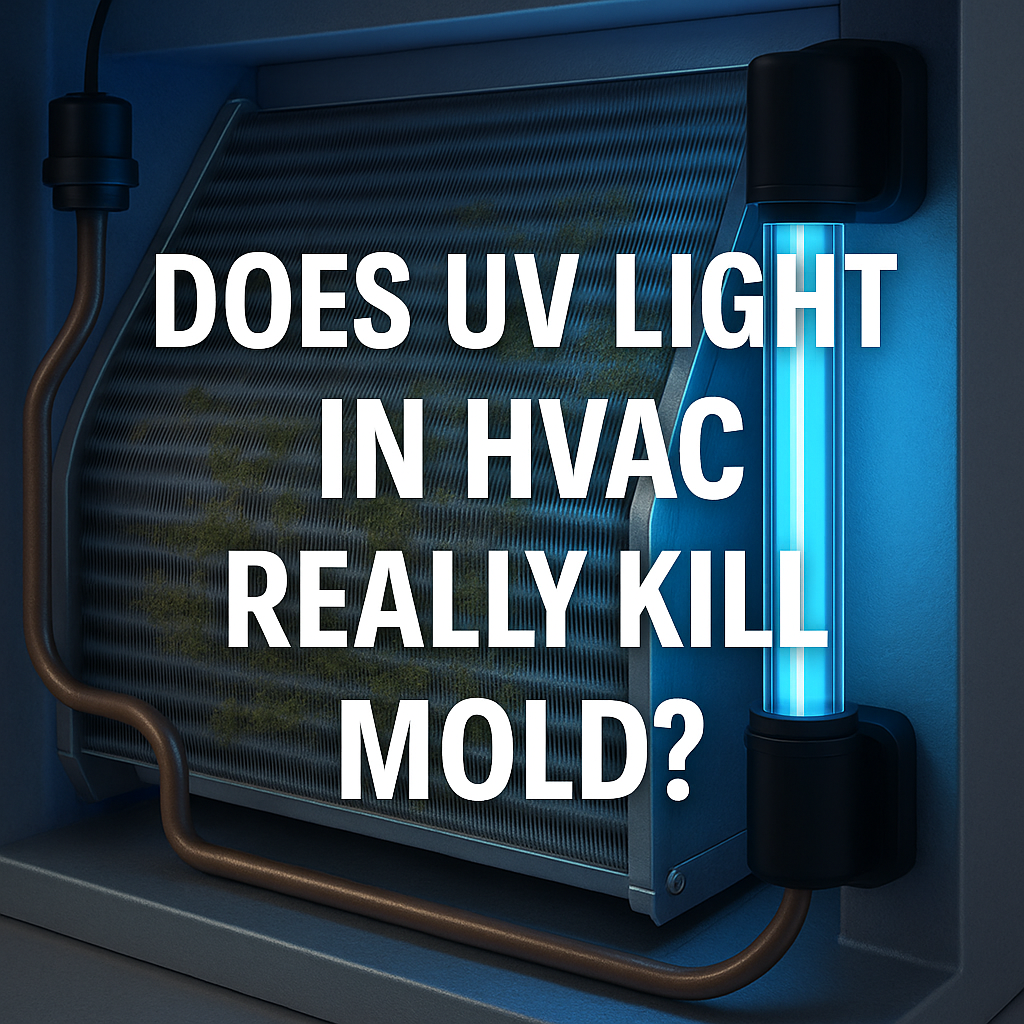
In duct air purifiers work by:

a. targeting ultraviolet light on the source of the mold which is the coils in the drip pans

b. PCO or plasma ionic air purifiers.

These purifiers are placed in your in duct system and run continuously in the background to ensure that the air inside of your unit is clean and that you are getting clean air delivered into your house via your HVAC duct work system.

Dirty and dusty duct work.

The fourth reason you may have developed a cough when you around air conditioning is that the duct work is just plain dusty.

Like stated before, the inside of the HVAC is going to be humid by nature because of the fact that air conditioning creates condensation when it is working.

What do you have when you combine dust and humidity?

Dust mites.
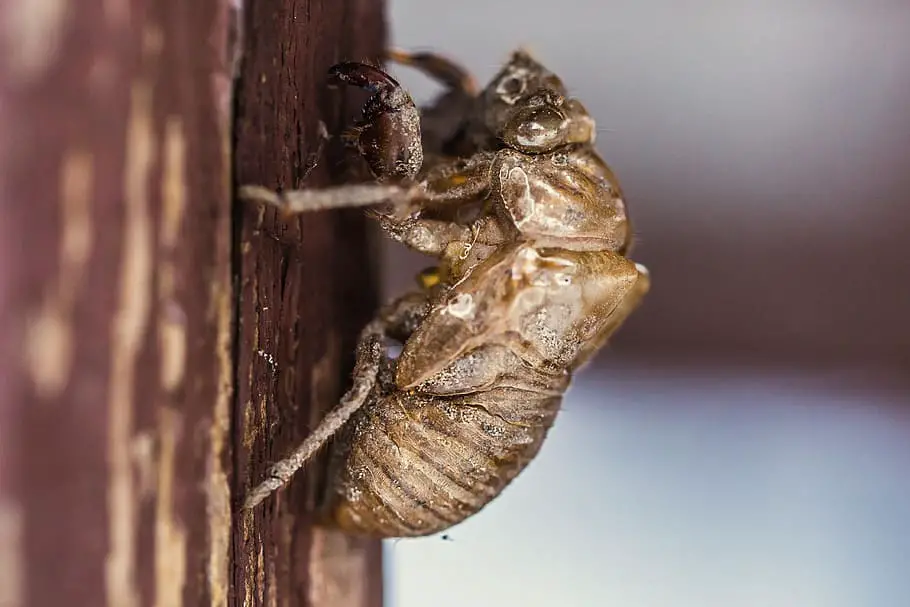
Dust mites thrive in humidity.

Dust mites are also a major source of indoor allergy problems.

Just like mold, dust mites also can exasperate asthma causing symptoms like tightening in the chest and wheezing.

If the duct work is extra dirty, then there is no other recourse other than calling your neighborhood HVAC tech.

Another one of those bills that you’re going to be shocked at the price when you realize that it could have been avoided simply making sure you’re using filters and making sure they are the right size for a tight fit.

Summary

Air conditioning cough can be caused by several things including a dirty filter, no filter, dry air, moldy or Dusty AC.

Most of the time at is as easy as changing the HVAC filter or adding a humidity machine to the room.

But if the culprit is mold or extra Dusty duct work, you are looking at calling in a professional and having it cleaned properly.

Though no one wants a cough or any type of allergy symptom, when it comes to your air conditioning, your cough is a red flag that something is not right with your air handler.

Taking it as a sign that it is time to do some maintenance on your AC can save you a lot of money down the road.


 

20 Ways to Lower the Humidity in Your House

Are you wondering how to lower the humidity in your house? You are not alone, as a lot of people feel a sense of discomfort and unhappiness when they deal with super high humidity levels. And that’s why it makes a lot of sense to find new, creative ways to lower home humidity as quickly as possible. With that in mind, here you have a few tips that will help in this situation.

1.Use a dehumidifier

A dehumidifier is one of the simplest tools you can use to keep the humidity levels as low as possible. It’s highly recommended to invest in a good dehumidifier since it allows you to ensure proper airflow circulation, all while eliminating any humidity from the air. Ideally you want to keep the unit away from furniture or any walls, unless it has air vent on the top.

2. Clean the downspouts and gutters

You want to do this because they will carry water away from your home. It’s a good idea because if you don’t do this, you will end up with high humidity levels in your home. Plus, it’s a good idea to restrict watering plants to bare necessities, just to be safe. The more restrictions you have in this situation, the better it will be as you do want to avoid complications.

3. Keep fresh-cut firewood outside

Why is this important? The most important aspect to consider is that freshly cut firewood has large amounts of water in it when you store it indoors. You want to leave the firewood outside so all that water will evaporate. If you don’t do that, then you will increase the humidity levels inside. Even if it doesn’t feel like a lot, in a situation like this, every little thing counts, so you might as well want to take that into consideration just to be safe.

4. Bring all your plants outside

Don’t keep plants indoors. They end up increasing the humidity levels and that’s the type of thing that you want to avoid. Ideally you want to keep them outside and you will be just fine. You could also keep them in a single room, however that room will have lots of humidity, so you really need to figure out what works for you here.

5. Keep the AC drip pans and drain lines clean

If you keep them clean and unobstructed, it will be a lot easier to avoid any humidity issues. The AC will remove all the humidity from your room. However, if the AC is not working properly, then you will have issues with this approach. You need patience to do this right, but it will be worth it.

6. Vent your clothes dryers outside

The reason you want to do that is that you end up generating a lot of humidity if you do this inside. There’s no real benefit coming with performing this activity inside anyway, so you have to figure out what works for you and how you can adapt to the entire process.

7.Add double-glazing to your windows

When you do that, you will have less humidity and that on its own can be a very important aspect to consider. Double-glazing really brings in front great results, and the best part is that you can avoid severe condensation without spending a whole lot of money. It’s the best of both worlds and you should totally check it out.

8.Aerate your attic and basement

Normally these are two of the places in your home where you will have a lot of moisture. If you start bringing in fresh air in there, you will start removing more and more moisture naturally. It’s one of the best approaches you can have and it does work really well if you do it right. We recommend you to test it out and perform this task often to avoid moisture and dampness in your home.

9. Use a fan in your kitchen

If you cook often, you will generate humidity in your kitchen. It makes a lot of sense to use a fan or anything that will bring in fresh air and push the humidity away too. This is an important aspect to think about, and it will offer you a very good experience every time. In a situation like this, you need to start easily, and this approach does make a lot of sense.

10. Open the fireplace damper

The fireplace damper allows you to push moisture away from your room. It’s a good way to lower the humidity naturally, and we believe that you should always consider it as one of the first things you can do when you deal with lots of humidity inside your home.

11. Open up the windows

This is simple, but it helps you push humidity away, all while bringing in dry air from outside. You have to figure out what approach works for you, and it all comes down to delivering the best results and having the right approach here.

12. Cover your food while cooking

Another interesting thing to do when you are cooking is to try and cover the food. This will keep the humidity under control. Alternatively, you could use a slow cooker, which brings pretty much the same experience and great results you would expect. It’s always a good idea to find alternative solutions, and it can be very well worth the effort all the time without any worries.
Lower your Humidity

13. Take cold, short showers

Hot showers will generate steam and that will obviously increase the humidity levels in your home. Not only that, but if those hot showers are long, then you are further increasing the humidity levels. You need to pay a lot of attention to this, because the more you take hot showers, the more humidity you are generating within the entire home.

14.Replace the carpet if it’s a model that retains moisture

Some types of carpets like the fluffy or very thick ones tend to retain a lot of moisture. They will also end up capturing dust mites and bacteria. It makes a lot of sense to replace your carpets with simpler ones. Make sure that you go with carpets that are not going to retain any moisture. And if you do that properly, it will be more than ok.

15.Add wrap or tubular insulation

Insulating tubing works great for the cold water pipes. It will help decrease sweating, and the best part is that you will have less humidity in your home. Even if it seems like a simple thing to do, it will make quite the difference.

16. Repair the door and window frames

When you have issues with the window and door frames, the first thing you want to do is to repair them. These frames can bring in moisture into your home, and that’s the last thing you want to have. Even some simple repairs can make quite the difference, and all you need is to give these a try, it will be well worth it in the end.

17.Insulate the crawl spaces

The best method you can use for insulating crawl spaces is through using a plastic vapor barrier. This is not that hard to do actually, and it will bring in front some pretty impressive results. The idea is to know how to perform proper insulation, and if you do it right, it will be a very good experience.

18. Waterproof the concrete basement walls

Waterproofing these walls will be a major way to deal with excess humidity. Most of the time concrete walls will bring in humidity to your home. That’s why waterproofing them is so important, and you should treat this as a priority to avoid any possible problems.

19. Treat the foundation with Hydroclay

Hydroclay is known for waterproofing tunnels. It’s a water-absorbing clay, and it will seal the basement where you have water infiltrations. Waterproofing your foundation with this will make quite the difference, and it will help you keep your home safe. Plus, you get to deal with humidity the right way, and that on its own can deliver quite the difference.

20. Vinyl wallcovering

Using vinyl wallcovering can be a very good idea. The trick here is that this type of wallcovering will help trap the moisture and basically keep it out. If you ignore this, it will lead to mold growth. So that’s certainly something to keep in mind.

Conclusion

It’s very important to find great, creative ways to keep the humidity levels as low as possible within the entire home. If you have low humidity levels within your home, you will breathe better, your skin will feel better, and you will have a great sense of well being. It’s important to take all of this into consideration, and the results can be very good every time. If you still have high humidity levels within your home, it’s a very good idea to hire a professional and solve this issue!