Do You Need a Carbon Monoxide Detector with a Propane Heater?

Carbon monoxide can be an issue anytime that there is fuel being burned as a source of heat.

It’s for this reason that almost every state has a law in place that requires carbon monoxide detectors in some capacity whether it be in homes or daycares.

At the very least it is highly encouraged to have a carbon monoxide detector in your home.

Carbon monoxide is invisible, tasteless, odorless, and is a hazard to your health.

Carbon monoxide poisoning can even result in death. It’s not be toyed with obviously.

A properly functioning propane heater will produce nearly zero carbon monoxide.

But a malfunction in a propane heater can cause incomplete combustion. Which will lead to the presence of carbon monoxide.

And could lead to carbon monoxide poisoning.

Do you need a carbon monoxide detector with a propane heater?

Carbon monoxide detectors are inexpensive and should be employed anytime you are using a propane heater. For any heater that uses gas.

And since the probability of you already having carbon monoxide detectors installed, it’s always a good time to make sure that they are working and that the battery is good.

Other Propane Heater safety measures

Oxygen depletion sensor (ODS)

Propane heaters that are meant for indoor use come with an oxygen depletion sensor as a standard protection mechanism.

This is a safety feature that causes the heater to shut off when the oxygen around the heater becomes depleted.

This is important because when the oxygen becomes low, it creates a void where carbon monoxide will fill it.

If the oxygen depletion sensor shuts down the heater, although there is a good chance of carbon monoxide, the ODS sensor will not detect it.

Another reason that a carbon monoxide detector is a must when using a propane heater indoors.

Propane additives

Propane is completely odor free at its origin. For that reason, a harmless chemical called Mercaptan is added to let you know when there is a leak.

The smell is similar to rotten eggs or a dead animal. So there is no mistaking when you smell it.

But relying on the sense of smell is not full proofed. One of symptoms common to cold and flu season is a reduced sense of smell.

For that reason, it is highly suggested that in addition to a carbon monoxide detector that you use a propane gas detector.

Multi function detectors like the Kidde Nighthawk Carbon Monoxide Detector & Propane, Natural, & Explosive Gas Detector

will add a higher level of protection from the threat of a propane leak or any other natural or explosive gas and serve a carbon monoxide detector in one.

Summary

Do you need a carbon monoxide detector with a propane heater?

A Carbon monoxide detector is highly suggested with the use of a propane because even though a propane heater may come with an oxygen depletion sensor, it does not have a carbon monoxide detector on board.

Carbon monoxide poisoning can be deadly and is not something worth risking since the price of a carbon monoxide detector is fairly inexpensive.

Many people opt for multi-detectors that can measure carbon monoxide as well as gases like propane and other natural gases. And sound a loud alarm when they are detected.

Sore Throat Humidifier- Good Idea or Not?

” When the air is extremely dry, it can make an already painful sore throat feel that much worse. A humidifier is the perfect tool to add moisture back into the room and help alleviate some of the pain. But if you’re talking about the dreaded summer cold when the humidity is already high, a humidifier will not help.”

Everyone knows the feeling of waking up with a sore throat. And to be honest there are very few quick remedies that can make a big difference when you do have a sore throat.

There are some decent sore throat lozenges like the Mucinex and the Vicks brands that provide that ultra cool feeling on your throat but they are not all that long lasting and they do nothing to help at the root of it. And you don’t want to fall asleep with a throat lozenge in your mouth. Or you might end up waking up choking on it.

Drinking a lot of liquids ( coffee and Coke not included) and gargling with warm salt water also have a calming effect on a sore throat. And staying hydrated is absolutely the best policy to get you out of your sickbed quicker.

But the one thing that can exacerbate a sore throat more than any other and in turn help you when you do have a sore throat is maintaining the proper humidity in the room.

Is a Humidifier Good for a Sore Throat?

Humidity levels in the house have a great deal to do with how dry your throat can feel. And though most throat issues are caused by a virus and there’s not a whole lot you can do besides wait it out.

If the humidity in your house is excessively low, it is going to have a compounding effect on your sore throat which will make it more painful. And since sore throat often accompanies nasal congestion, it follows that you tend to breathe through your mouth more which is only drying out your throat further.

Most professionals including the national library of science say that keeping the humidity level at between 40 and 60% in the home is the optimal level for keeping winter related symptoms at Bay.

“The humidifier is the perfect tool for adding humidity back into a room that is lacking the level of humidity that is required to keep viruses from spreading easier and to provide essential moisture for your nasal passages and throat.”

And humidifiers have become pretty sophisticated devices over the last few years that include hygrometers to be able to measure your own humidity as well as give you the option of using cool or warm mist as well as doubling as aromatherapy diffusers.

And when they are performing in a diffuser mode, there are essential oils like eucalyptus they can also have a clearing effect and offer some relief for a sore throat.

But the humidifier is definitely not the answer in every situation. For instance, everyone is familiar with the dreaded summer cold as well. And most of the time, adding extra humidity to the room in the summer is not the solution since the humidity levels in summer typically range above what would be considered the optimal humidity of 40 to 60% indoors.

At that point, it makes zero sense to try to relieve a sore throat by turning on a humidifier.

Can a humidifier give you a sore throatCan a humidifier give you a sore throat?

A humidifier can actually give you a sore throat and here’s why.

Humidifiers have to be cleaned often. When they are not well maintained, they can easily become a perfect breeding ground for mold and bacteria.

Anytime that a humidifier is left with standing water in it, it can begin to accumulate mold and bacteria in as little as 48 hours.

Imagine turning the humidifier on after it has had standing water in it for an extended time. At that point, it has basically become a distributor of bacteria into your airstream.

And the symptoms of moldy air on your health look suspiciously like the symptoms of the flu. Sore throat, headaches, sneezing, runny nose, etc.

A dirty humidifier can account for the reason you are having a sore throat in the first place.

There are a few humidifiers and humidifier products that are made to hinder the production of bacteria.

On the subject of Moldy air, humidifiers are not the only source of mold and bacteria that can affect your breathing and cause you to have cold-like symptoms.

The HVAC system (Central heating and Air) is also famous for being a distributor of bacteria throughout the house. Persistent mold allergy symptoms like sore throat and headaches can often be traced back to a dirty heating and Air system.

Most HVAC supplies offer induct air purifiers that are placed inside of your ductwork and have a high kill rate for mold.

RGF REME HVAC HALO 24V Air Purification System Light

  • 24V Installation with included transformer / Professional Installation by an HVAC Tech or Electrical Contractor is recommended ).
  • It is good against mold, odors, VOC’s, bacteria or viruses. Also: Dust, Particles, Chemicals. (It is recommended to use an electrostatic air filter.)

Buy Reme Halo here

Evaporative coolers or also known for being a huge breeding ground for bacteria and mold. These machines operate by basically blowing a fan across water to cool the air.

Just like humidifiers, they have the propensity to collect standing water from time to time and must be cleaned often to avoid blowing moldy Misty air into your home.

There are also products you can put into your evaporative coolers to help prevent bacteria from growing.

Is a Humidifier Good for a Sore ThroatSummary: Sore throat humidifier. Good idea or not?

Though a sore throat is usually not the direct result of having dry air, dry air can definitely have a compounding effect on how a sore throat feels.

Waking up with a sore throat is often accompanied with other symptoms like congestion that lead you to breathing through your mouth.
Dry air in the room can make a sore throat that much more painful.

When the humidity in the air is low, a humidifier can be a great tool to add humidity back into the air and help relieve some of the pain of having a sore throat.

But if we are talking about a sore throat in the summer when the humidity is typically too high, the humidifier is not the answer to sore throat relief.

Many people have complained about getting a sore throat as a result of running a humidifier.

And yes, even though a humidifier can be a great relief to you when you have a sore throat and they can conditions are dry,

Humidifiers have a huge disadvantage in that they have to be cleaned very often.

Running a humidifier that has had standing water left in it can actually introduce mold and bacteria into the air which can cause symptoms very similar to the flu including sore throat, sneezing, and headaches.

Which all is directly and indirectly the result of poor air quality.

Poor air quality can be the result of an unmaintained humidifier but it can be the result of other circumstances including dirty HVAC ducts and evaporative air conditioning which has the same type of mechanics as a humidifier and needs to be cleaned very well and often.

Protect Your Health and Sleep Better with a Humidifier

Humidifiers can do wonders for your fitness by keeping the air in your house moist and at ease.

It’s instrumental in winter when dry air can cause breathing issues, skin irritations, and static strength. A humidifier can also assist you to sleep higher by reducing loud night breathing and congestion.

There are a few matters to maintain in mind when choosing a humidifier. The best way to know everything is to take guidance, or you can also find a counselor UK. First, decide what sort of humidifier you need.

There are both heat mist and cool mist options to be had. Heat mist humidifiers use boiling water to create steam, that’s then released into the air. Cool mist humidifiers use ultrasonic era to generate a pleasant mist dispersed into the air.

Next, consider the size of the unit. If you have a large home, you will need a larger humidifier. Conversely, a small unit will be sufficient for a smaller space.

Finally, consider any special features you may want in a humidifier. Some units come with filters to remove impurities from the water, while others have built-in humidistats to help maintain the ideal humidity level in your home.

Humidifiers are an important part of keeping your home healthy and comfortable. Adding moisture to the air can help relieve various ailments, including dry skin, sinus problems, and respiratory issues.

And humidifiers also greatly benefit your sleep beyond just making you feel better. Here are ways a humidifier can improve your sleep quality and overall health:

Relieve Dry Skin:

A humidifier can be a lifesaver if you be afflicted by dry skin. The more moisture inside the air will assist in hydrating your skin and prevent it from becoming angry or cracked. It’s particularly beneficial in wintry weather when the air is dry.

Prevent Nosebleeds:

Nosebleeds are often caused by dryness in the nasal passages. A humidifier can help to prevent this by keeping the air moist and reducing the risk of nosebleeds. Dry air can cause your nasal passages to become irritated and lead to nosebleeds. By adding moisture to the air, a humidifier can help prevent these nosebleeds from occurring.

Reduce Snoring:

If you or your partner snores, a humidifier can help. The air’s moisture will help keep the throat lubricated and reduce irritation. It can lead to quieter nights for everyone involved!

Soothe Sinuses:

Dry air can cause sinus problems like congestion, headaches, and even nosebleeds. Adding moisture to the air with a humidifier can help to soothe these symptoms and provide relief.

Prevent Colds and Flu:

Humidifiers can also help to prevent colds and flu by keeping the air moist. It can reduce the risk of viruses spreading through the air and causing illness.

Relieve Asthma Symptoms:

People living with Asthma often find relief with a humidifier. The air’s moisture can help open up the airways and make breathing easier

Reduce Allergy Symptoms:

Like Asthma, allergies can also be improved with a humidifier. The air’s moisture will help reduce irritation and inflammation caused by dryness.

Boost Immune System:

Humidifiers can also help to boost your immune system by keeping the air moist. It can reduce the risk of illnesses like colds and flu.

Detoxify the Air:

Some humidifiers also come with features that help to detoxify the air. It can remove harmful toxins and chemicals, making the air healthier for you to breathe.

humidifier

Reduce Stress Levels:

The extra moisture in the air can also help to reduce stress levels. It can lead to calm and relaxation, which can benefit your overall health.

Alleviate respiratory problems:

Humidifiers can help alleviate congestion, sinus infections, and nosebleeds by adding moisture to the air. If you have Asthma, a humidifier can help alleviate your symptoms by adding moisture to the air. The extra moisture will help thin mucus secretions, making them easier to expel.

Protect your hair:

Just like your skin, your hair can also benefit from the extra moisture in the air. Indoor heating can cause your hair to become brittle and dry, but a humidifier can help reverse these effects.

Ease congestion:

A humidifier can help ease congestion by thinning mucus secretions if you’re struggling with a cold or allergies. The extra moisture will also make it easier to breathe through your nose.

Soothe a sore throat:

Humidifiers can also help soothe a sore throat by keeping your throat moist. It is especially important if you suffer from a cold or the flu.

Improve sleep quality:

More moisture within the air can also improve your sleep by making breathing easier and stopping your skin from becoming too dry. When you have a problem sleeping, a humidifier can help. The extra moisture inside the air will assist you to breathe extra easily and make you feel greater at ease. It could cause a better nighttime sleep.

Prevent Static Electricity:

The extra moisture in the air can also help prevent static electricity from building up. It is especially important in the winter when indoor heating can make static electricity more pronounced.

Reduce dust mite allergies:

Dust mites are tiny creatures that thrive in dry environments. By adding moisture to the air, a humidifier can help reduce dust mite allergies by making their environment less hospitable.

Purify the air:

A few humidifiers come with filters that could assist purify the air by eliminating allergens and other contaminants. It may help improve your common fitness and sleep great.

Wrapping Up!

If you’re looking for ways to improve your health and sleep quality, consider using a humidifier. It can make a big difference in your respiratory health, skin health, and overall comfort level.

Humidifiers may be useful to your home, particularly all through winter. Keeping the air in your house wet and comfortable can lessen respiration problems, skin irritations, and static strength.

A humidifier can also assist you sleep better by decreasing snoring and congestion. While selecting a humidifier, consider the type, length, and special capabilities you could need. By doing so, you could locate the precise humidifier in your wishes.

Do Window Air Conditioners Reduce Radon?

Window air conditioners seem to exchange air in a room with out door air. Which leads to a lot of questions about where the air is coming from that a window ac blows. That assumption also leads to questions like:

Do Window Air Conditioners Reduce Radon?

Window air conditioners do not specifically reduce radon levels in a home. Radon is a naturally occurring radioactive gas that can seep into homes through cracks in the foundation or other openings.

To reduce radon levels,

it is recommended to install a radon mitigation system, such as a radon fan, which can help to vent the gas out of the home before it can build up to dangerous levels.

Additionally, sealing any cracks or openings in the foundation can help to prevent radon from entering the home in the first place.

Even though it may seem that a window air conditioner can help with radon because it does exchange outdoor air with indoor air to a point,

Exchanging indoor air with outdoor air through a window air conditioner will not specifically help to reduce radon levels in a home.

Radon is a naturally occurring gas that can seep into homes through cracks in the foundation or other openings.

The process of a window air conditioner exchanging indoor and outdoor air is not designed to address radon specifically.

To reduce radon levels, it is recommended to install a radon mitigation system, such as a radon fan, which can help to vent the gas out of the home before it can build up to dangerous levels.

Additionally, sealing any cracks or openings in the foundation can help to prevent radon from entering the home in the first place.

Do Window Air Conditioners Reduce Radon?

It’s worth noting that, even if you have a window air conditioner, if your home has high levels of radon, it is important to take steps to mitigate the radon before it becomes a health hazard.

What is a Thermo Hygrometer? What’s the Use?

What is a Thermo Hygrometer?


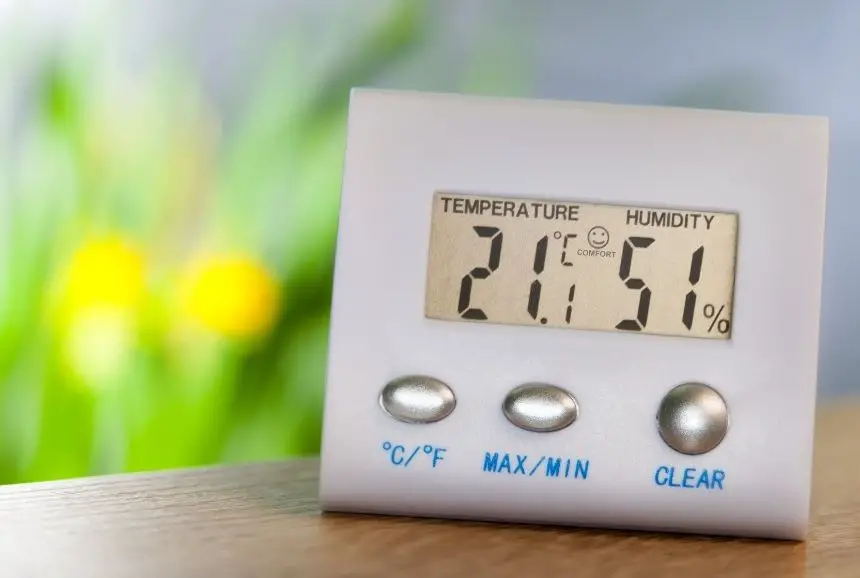
A thermo hygrometer is a gauge that combines both a thermometer and a hygrometer in one measuring device.

What is a hygrometer and what is it used to measure?

A hygrometer is a device that is used to measure the relative humidity or the amount of moisture that is in the air.

The relative humidity is given as a percentage.

Hygrometers go by quite a few different terms.

Humidity checker, humidity sensor, humidity monitor, and humidity meter are all basically the same device though some may contain extra features here and there.

Most modern hygrometers combine a thermometer in a digital format that is easy to read.

  1. When to Replace Humidifier Filters Signs & Maintenance TipsHygrometer Uses

The number one use of a hygrometer is simply to give you a way to keep an eye on the relative humidity.

Why would you want to do that?

There’s a lot of reasons actually. This is by no means exhaustive.

1. Comfort

Humidity as a day to day factor affects your comfort level substantially. For instance a day that he is 80° could easily feel 100°. If the humidity outside is too high.

It also does a number on your hair.

But though comfort and stylish hair are two things we tend to value highly, the relative humidity can affect your health much more than you may have believed.

2. Health

Low humidity equals dry air and dry air can cause a whole lot of issues when it comes to respiratory and skin health.

Low humidity and dry air are usually associated with winter. And winter just happens to be the time of year when people are closed inside with the heater turned on.

It’s not exactly a coincidence that cold and flu germs spread easier during that time of year.

Humidity or the lack thereof during winter plays a big part of staying healthy during those months.

For instance

1. Low humidity dries out the mucus lining in your airways which creates a type of docking station in your sinuses for viral particles.

In other words, dry air makes it easier for germs to get stuck in your respiratory system easier.

2. Viral particles tend to decay faster in humid air.

Viruses and germs stay alive longer and dry air because moisture has a decaying effect on airborne particles.

3. And low relative humidity provides an easier path of transmission for viral particles.

When humidity droplets come in contact with airborne particles including bacteria and viruses, it makes it too heavy for the particles to float.

The result is they fall to the surface faster, giving you a lesser chance of breathing them in.

It’s amazing how just adding moisture to your air when the relative humidity has dropped,

not only keeps viruses from being able to travel as far,

it also causes them to decay much faster

and provides the right dampness inside your airways to fight off viruses.

Not to mention, the relief from the pain and irritation of having a dried out nose and throat.

The hygrometer is an easy way to keep track of the humidity level in the home during the winter to avoid excessively dry conditions that help viruses and germs prosper.

Hint: One of the symptoms of low humidity in your house is the presence of static electricity. If you find yourself getting shocked while walking and touching things in your house, check your hygrometer. The humidity has probably dropped.

3. Skin care

Humidity has a big impact on your skin.

Dry air and Dust pull the moisture out of your skin and cause it to become damaged and crack.

Dry and damaged skin allows the bacteria that causes acne to burrow deeper into the skin.

Which also causes the epidermal layer to produce an over abundance of oil, all to which adds up to an excellent breeding ground for acne.

A vicious circle.

Using a hygrometer to monitor the humidity in the air during the winter and adding moisture back into the air with the use of a humidifier,

can mean the difference in dry and broken skin versus naturally shiny and hydrated skin.

4. Dust

Humidity has a “wetting” effect on airborne particles which is to say “Dust”.

Dry air allows dust particles to flow freely through the air and be kicked up every time you walk across the floor.

But adding the proper humidity back to a room, dust particles will come in contact with humidity droplets, which will cause a type of microscopic mud that will be too heavy to float and fall out of the ambient air.

5. Allergies

Humidity can affect allergies in a couple of different ways.

Low humidity allows pollen and other household allergens to travel easier and further through your home.

High humidity creates a breeding ground for dust mites and promotes mold growth which are also common household allergens.

Hygrometers are devices to help you maintain a healthy relative humidity between 40 and 60%. Which helps keep allergens from traveling as easy and dust mites from having the nutrition they need to expand.

High humidity is also thick which can be harder to breathe.

6. Cigars and humidors


Hygrometers are mentioned frequently in the world of cigar aficionados.

It’s because cigars require humidity to keep them fresh in their humidors.

Though it may not be a hobby that everyone embraces,

The people that do have a very great interest in it.

Which is a good thing for the rest of us because they also have some of the best recommendations for the best hygrometers and hygrometer calibration kits.

7. Mold damage


Excessive humidity leads to mold growth. And mold gone unchecked can cause significant damage in your home in a very short amount of time.

Keeping an eye on your hygrometer gauge will help you know when to add more or subtract more humidity to avoid structural damage to your home.

8. Plant life


Plants have a hard time in the winter when the humidity drops and the heater is blasting.
Monitoring your relative humidity with a hygrometer is an excellent way to make sure your plants are getting the amount of moisture out of the air that they need to thrive.

Recap

Thermal hygrometers are an indispensable tool for your home.

The relative humidity inside of your home has so many implications and effects on your health and property that keeping tabs on the humidity is essential.

Maintaining the proper relative humidity protects your personal health and the health of your family by keeping viruses and bacteria at Bay during the dry season.

It also helps keep your skin healthy and prevents the outbreak of acne. As well as providing relief from other skin ailments like psoriasis.

Finding the right hygrometer for your home can be as easy as looking to your friendly uncle who is a cigar aficionado.

Cigar aficionados are very particular about the humidity inside of their humidors.

Which makes their product research that much more detailed.

And also makes their recommendation for hygrometers and hygrometer calibration kits hold more weight.

Is a Humidifier a Cure for Asthma? (click bait alert)

The humidifier is not a cure for asthma.

But maintaining proper humidity levels in your home is very important to living with, and living well when you have asthma.

As stated in a research article listed by the National Library of Medicine, “the majority of adverse health effects caused by relative humidity would be minimized by maintaining indoor levels between 40 and 60%.”

The article goes on to say that mite populations reach their maximum size when the relative humidity is at 80%. And that most species of fungi cannot grow unless the relative humidity exceeds 60%.

Conversely, as pointed out in this article” droplets and aerosols tend to stay afloat longer and travel farther and air with lower relative humidity. Virus containing aerosols, in particular, can penetrate more deeply into the lungs to increase the possibility of transmission”

“In addition, research shows viruses have the potential to live longer on surfaces in cold environments.”

The point is that the relative humidity in your home should be maintained at a level between 40 and 60% regardless.

And depending on the season and, or the climate you live in, you may very well need a humidifier. And, or a dehumidifier.

But whether you’re in a cold or hot situation right now,

The first thing you need to know is what the humidity level is in your house.

And for that you will need a hygrometer.

Hygrometers measure the humidity and show you exactly what the relative humidity in your home is.

Or if you are already in the market for a humidifier then the first feature you’ll want to be sure to include is a built-in hygrometer.

Because how will you ever know how much humidity you need to add to make your air healthier and easier to breathe if you don’t have a way to measure it.

After you have measured the humidity and found that yes, the humidity level in your home has dropped below or risen above the health and comfortability point, then it’s time to think about a humidifier.

Humidifiers come in different types and have a different range of levels of what they are capable of achieving.

And like everything else they come with the cheap version and there are also Cadillac versions.

Fortunately there are versions of humidifiers that are built for persons with asthma directly in mind.

Humidifier for Asthma

What types of features should you rank higher than others when you are in the market for a humidifier for asthma?

1. Humidistat

The humidistat will tell you what your humidity is in your home and allow you to set your humidifier to the desired humidity level you want.

Just like a thermostat that you dial in on a heater or air conditioner, a humidistat lets you dial in exactly the percentage of humidity you want in your room.

2. Secondly, you want to choose a humidifier that is germ-free.

“Germ-free” is a term used loosely here, because there is no such thing as a humidifier that doesn’t have the potential to produce mold and bacteria if it is allowed to go unmaintained.

But there are a few technologies available that can lower the risk of a humidifier becoming contaminated, and also lower the frequency that the humidifier needs cleaned.

A few options are:

a. Ultraviolet light

Ultraviolet light inside of a humidifier works the same way as putting a UV light in a fish tank or keeping one and a sterilizing container for combs and scissors works.

A UV lamp targeted directly upon the water in your humidifier will kill 99% of the germs and bacteria in the basin.

b. Antimicrobial plastic

Antimicrobial plastic is one of the coolest advancements to come along in humidifiers. It is a type of plastic that is actually resistant to fungi and mold.

It is also a great way to reduce the chance of a humidifier becoming a problem instead of a help.

c. Antibacterial additives

You can also purchase bacteria destroying additives that can be added straight to the basin of your humidifier.
Some humidifiers come with antibacterial drop in products included.

3. Combination cool mist and warm mist

Another option that you should think about including in your humidifier purchase is the capacity of the humidifier to run as either a cool mist or a warm mist humidifier.

Having the option to either use a humidifier as a warm or cool mist is a huge advancement in humidifier technologies also.

4. Larger tank size.

Humidifiers come with different tank sizes. The tank size is what determines how long you will be able to use the humidifier without refilling.

You can get humidifiers with tank sizes that last up to 60 or even more hours.

5. Whole house humidifier

A whole house humidifier, also commonly referred to as a furnace humidifier, connects directly into your duct work.

These units have a great advantage over portable units because they can produce the right relative humidity throughout your home via your already installed HVAC.

Another great advantage is the fact that there is no basin to refill with water.

They do however pose the risk of mold growth in walls and require the proper maintenance. They also have yearly replacement parts.

Summary

If you’re an asthmatic, maintaining the proper relative humidity is more important to you.

Excessively low and high humidity has consequences for everyone, but when you’re struggling with asthma, the difference in being in a room with the proper relative humidity between 40 and 60% can mean the difference in breathing or not breathing.

Humidifiers have come pretty far with advancements. There are humidifiers available these days that monitor and keep the relative humidity in your room at the optimal spot.

There are also humidifiers that have built-in cleaning methods such as ultraviolet light and antimicrobial plastics that keep the risk of mold and asthma triggering bacteria at Bay.

Humidifiers also come with many more options such as being able to use them in either cool mode or vapor mode and they also are sold large enough to be able to use them several days without refilling.

The best option however may be placing a whole house furnace humidifier that can keep the relative humidity in your entire home at the right level at all times.

Boiling Water as a DIY Humidifier (a few other cool ones too)

How Boiling Water Works as a DIY Humidifier

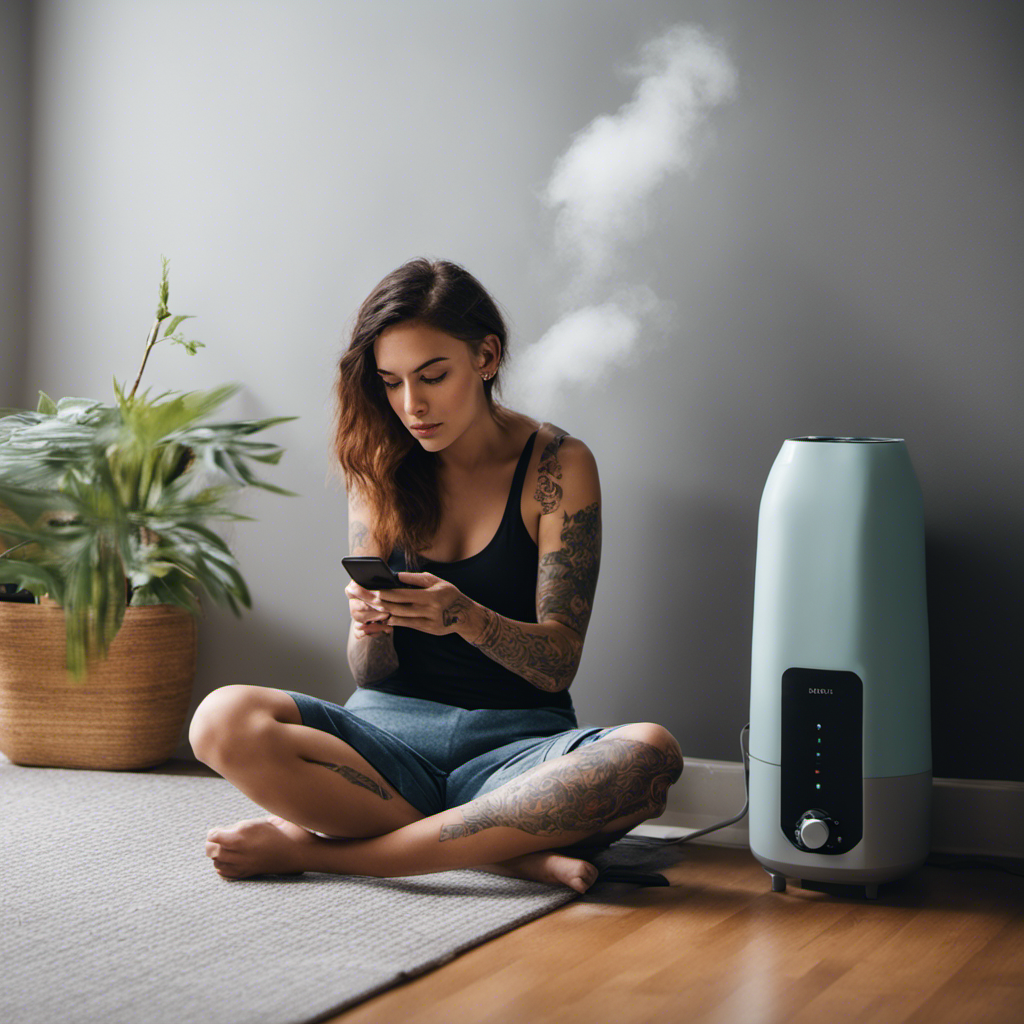
To use boiling water as a humidifier, simply boil water on your stove or use an electric kettle, then carefully transfer the hot water to a heat-resistant bowl or pot. Place it in a safe location in your desired room. As the water cools and evaporates, it will add moisture to the air, acting as a simple and effective DIY humidifier.

Introduction

Did you know that you can use boiling water as a humidifier? As a kid growing up in the country of the plains of Texas, and although I didn’t know it then, I was privy to a lot of homegrown methods of getting things done, that even in my lifetime have gone to the wayside.

One of those methods that has kind of got forgotten but I remember quite well is the art of using boiling water as a DIY humidifier.

The old house that my grandparents owned had the furnace style that was kept beneath the floor and worked by sending heat into the house through metal vents that looked like a 2 x 3 grill.

I remember if you stood on it too long, it would melt your shoes.

I also remember my grandmother putting a pot of water on that furnace grill.

I didn’t know what that pot of water was nor did I have any interest in that as a kid.

But now I know she was using that pot of water as a humidifier. The furnace underneath the house was so hot that it was not only melting shoes, it was drying out the air and causing all kinds of havoc with dried out noses, throats, and lips. Putting a pot of water on the furnace was a way of offsetting the dryness in the air and relieving those symptoms.
See our full humidifier guide.

pot of boiling water

Boiling water as a DIY humidifier

is a trick that is as old as the hills you might say.

If you were to compare it to today’s humidifiers, the method of boiling water as a humidifier would be considered a vaporizer if you were to buy it at a big box store.

Vaporizers boil water to moisturize the air with steam. Boiling water on the stove is the exact same thing.

The only difference is the vaporizers usually come with some sort of medicinal additive like Vicks to help with congestion and breaking up phlegm.

Important Side Note: Boiling Water and Your Humidifier

As we explore various DIY humidifier methods, it’s crucial to clarify a common misconception. While boiling water can be used as a makeshift humidifier in the ways described above, it is not advisable to pour boiling water directly into a standard humidifier.

Humidifiers are designed to operate safely within specific parameters, and introducing boiling water can damage the unit, void warranties, and pose serious safety risks, including the potential for burns or causing the humidifier to malfunction.

Add Some Essential Oils

But there’s nothing saying that you can’t add essential oils to your boiling water and get a similar, if not better breathing effect.

Some of the most common essential oils for adding to a vaporizer, Diffuser, or a DIY humidifier are:

  • Eucalyptus
  • Peppermint
  • Lavender
  • Clove
  • Rosemary
  • Oregano
  • Ginger

1.Eucalyptus oil

Next to putting Vicks rub all over your chest, eucalyptus oil is one of the most popular ways of combating breathing problems. It is known for its anti-inflammatory agents that help minimize respiratory flare-ups including bronchitis and asthma.

2.Peppermint oil

Peppermint is a lot like eucalyptus, it not only has a similar smell, it also has many of the antimicrobial properties that help ward off bacteria and viruses that eucalyptus oil has.

3.Lavender oil

If you ever do any research on what kind of things you can do to help you relax, lavender essential oils usually appear at the top. Lavender oil is known for its ability to reduce anxiety and promote a sense of calmness. Lavender oil is an excellent addition to your do-it-yourself humidifier.

4.Clove oil

Clover oil is another essential oil that is known for its benefits related to respiratory conditions. When inhaled, clove oil is a deterrent to allergy and asthma triggers.

5.Rosemary

Rosemary oil has a very unique smell that is great to add to your homemade vaporizer. Not only does it smell great, it contains an ingredient called “Cineole”

According to the US National Library of Medicine, Cineole reduces cough frequency after 4 days.

5.Oregano

Oregano oil in your homemade humidifier will help fight off a cold bug. It’s true. Oregano oil contains three ingredients that are known to fight off bacteria. Carvacrol, Thymol, and Rosmarinic acid, all found in oregano oil, create a natural antibiotic and fungicide.

6.Ginger

Ginger oil has been shown to effectively decrease the symptoms of a cold. If you got the sniffles, adding Ginger oil to your boiling water humidifier is an excellent way to open up your airways and make it easier to breathe in general.
A bowl of water in front of a fan

Alternative DIY Humidification Methods

A bowl of water in front of a fan

You can get a good DIY cool mist humidifier effect by placing a bowl of water in front of a fan.

That is essentially what an evaporative cooler does. It blows a fan across water to add cool air to the house.

By

putting a bowl of water in front of a fan, the fan helps evaporate the water and moisturize the air and give you a cool breeze off the water at the same time.

Although it’s not going to be as effective as buying a cool mist humidifier, it’s still a very good option if you do not have a humidifier.

Humidify a room with a bowl of water

When you think about it, water evaporates. And though it may not evaporate at the rate that can give you instant relief, just leaving bowls of water around the house is a humidifier because the water will evaporate and add the moisture to the air.

Leave the water in the bath

One of the easiest ways to have a huge DIY humidifier is to run a bath and leave the water to evaporate instead of draining it out.

Take a shower for humidity

Leaving the doors open when you shower so that the moisture from the shower gets into the rest of the house is also an adequate do-it-yourself humidifier.

Air dry your clothes

I’m old enough to remember when dryers were much less popular and people dried their clothes on clothes lines in the backyard.

They also draw their clothes on clothes lines inside of the house when the weather is not permitting.

It may have taken a lot of door spaces up but nevertheless it increased the humidity inside of the home.

diy dryer hose humidifier

DIY Dryer hose humidifier

Dryers are hooked up to the wall with a hose that expels the heat and humidity outside when it is working.

Unhooking the hose so that the heat and humidity is expelled inside is a do it yourself humidifier that will actually do the job of a warm mist humidifier.

Get some fish

A fish tank is basically the same concept as leaving bowls of water around the house to evaporate.

Your aquarium serves the same purpose and it makes for an excellent hobby.

There are also fish tank/ humidifier combination devices being sold on Amazon. Might be worth checking out.

flowers in a vase diy humidifier

Flowers in a vase

Another way to keep containers of water around the house is to put flowers out in vases.

Same concept as leaving bowls of water around the house, only with the beautiful addition of flowers to help humidify the home.

House plant sweat

House plants can actually be a good source of indoor humidity because of the little known fact of House plant sweat.

It’s actually called plant transpiration. It’s the process where moisture passes through a plant’s stomata or pores and releases water into the air through their foliage.

This is one of the main reasons for keeping your plants clean. To ensure that their pores are not clogged.

Some plants make better humidifying plants than others though.

Spider Plant humidifier

Spider plants are really easy to grow and they increase the humidity indoors.
They are also on NASA’s big list of air purifying plants which gives them a double bang.

English ivy is another easy plant that has a high humidity increasing rate.

It also is good for reducing the carbon monoxide in the air.

Rubber Plant humidifier

Rubber plants are one of the coolest house plants you can own that also have a high transpiring rate.

They are also on NASA’s list of natural indoor air purifying plants.

Rubber plants also have huge leaves which aids in the humidifying process immensely.

Dwarf Date Palm

Also a cool looking plant to have in the house that is great for increasing the humidity in the home is the dwarf date palm.

Basically a miniature palm tree that can get pretty tall on its own.

Super easy to grow and keep healthy too.

diy houseplant humidifier

Recap:

Boiling water as a humidifier maybe an old trick but it is one that still works as well as it ever did. It is not only a great way to add moisture to the air, it is also ready to add essential oils to help you breathe better or relax if you want to.

Other DIY tricks people use to increase the humidity in their home is to place bowls of water around the house to evaporate. Good one.

Keep flowers out in vases, same concept, also a good one.

Unhook the dryer hose. You will definitely get some humidity with this trick.

Humidifier plants.

Putting the right plants in your home will not only increase the humidity but will also increase oxygen and decrease indoor air pollution. Win. Win.

Check out the Levoit “everything you could need in a humidifier” if you want to skip the do-it-yourself route.

Other Resources: Vaporizer or Humidifier


How Many Watts Does a Fan Use? (7 Fan Types Examined)

Right now, we are at the beginning of the month of March. We are just starting to feel warmer days and relief from the winter. Some days are cooler and some almost summer like. But windy to be sure.

This is about the time of the year people began to pull out the fans.

In our house, We have fans in every room, except the kitchen and the bathrooms.

We have a ceiling fan in every bedroom and in the living room, that stays on constantly. And in the master bedroom there is two tower fans on each side of the bed that run almost all year long.

You would think with all the fans running that we must be using a ton of energy and our electric bill is outrageous.

But comparably, when you look at the wattage of an average fan which is usually around a 100 w and compare it to say a space heater that uses up to 1500 w on high, the difference is quite striking.

how many watts does a box fan useHow many watts does a fan use?

40 w up to 120 w is the average.

How much does it cost to run a 120 w fan 24 hours a day?

23 cents a day or 7 dollars a month.
$3.50 if you only run it at night for the entire month.

But that is a estimate based on the average price per kilowatt hour in the United States per state. Which is 12.8 cents per kilowatt hour.

Those numbers can vary greatly if you live in say Hawaii. Where the price per kilowatt hour is 29.14 cents. Which means the cost to run a 120 watt fan for 24 hours in the aloha state is more like 83 cents a day and $26 a month.

You can figure out how much energy any of your appliances use by using a simple formula.

Watts x Hours(used) ÷1000 x cents per kilowatt hour

How many watts does a ceiling fan use?

The average wattage of a standard 52″ ceiling fan is anywhere from 50 to 120 w.

For instance the Hampton Bay classic 52-in ceiling fan with remote and lights uses only 53 Watts on high, 23 Watts on medium, in 10 watts on low.
7
Where as the similarly sized Casablanca luxurious Correne 56″ uses 100 w on high.

Hint: Does running a ceiling fan help your AC?

Using a ceiling fan in conjunction with your AC can actually help lower your overall cooling cost because it will help circulate the cool air coming from your AC much easier.
It will also spread out the cool air coming from your air conditioner much faster which in turn will take a load off of your AC unit.


How many watts does a 20″ box fan use?

A 20-in box fan uses anywhere from 50 to 90 Watts.

The typical Lasko box fan that you see piled on pallets in the middle of Walmart is rated at 54 Watts.

The same exact style by Comfort Zone uses 75 w.

Hint: Box fans are the most economical for the amount of air that they blow for the money.
But they’re not the easiest to find a good place for.
helpful hint: If someone in your house is a guitar player, guitar stands make a excellent DIY solution to adjusting the placement of a box fan.

How many watts does a tower fan use?

The average wattage of a 42-in tower fan is 54 to 82 Watts.

A side-by-side comparison of the Lasko 42-in tower fan with the Vornado 42-in tower fan shows that the Lasko uses 54 w on high whereas the Vornado uses 82 Watts on high.

How many watts does a Stand (pedestal) fan use?

Standing Pedestal fans are usually a little less powerful than a box fan and for the same reason use less energy than other kinds of fans.

The 16 inch pedestal fan by Lasko only uses 42 Watts.

How many watts does a 20″ floor fan use?

Floor fans typically move a lot more air than a pedestal fan and the amount of wattage that they use reflects that.
The average 20 inch floor fan uses 120 w

The Lasko 20 inch floor fan uses 127 Watts where is the Toshiba comes in at 120 watts on high.
What is the wattage of a table fan?

Table fan wattage ranges from 30 to 50 w

The most energy efficient table fan we found was the Hunter retro 12″ that uses 35 Watts.
The runner-up was the comfort zone at 40 Watts.
And in last place surprisingly, was the Lasko at 48 w

How many watts does a 24″commercial fan use?

240 w is the average.
Once you get into the commercial fan and professional air mover area, the amount of energy it takes to run these becomes quite a bit higher.
Air movers are designed to push a great deal of air into an area in a short amount of time.
Out of every type of fan, air movers use the most energy by far.

How many watts does an air mover use?

About 400 w is the average.
The Rigid air mover uses exactly that.

how many watts does a box fan use

How do you position a fan to get the best out of it?

How you position the fan and where you put it can make all the difference in how effective a fan is regardless of the wattage that it is using.

In the springtime, putting a box fan in the window and blowing the cool air from the outside into the inside is a great way to cool the house off. The humming of the fan also has the unintended effect of discouraging insects from coming through the window.

Placing a fan where it can easily pull in air is the trick to getting the air moving. Many times people will want to place a fan closer to the wall or the drapes to get it out of the middle of the room, but that has the effect of limiting the amount of air that can move through the fan. Thus the fan should always be in an open area where air can easily enter it.

Keeping the fan clean is also a easy way to get a lot better effectiveness out of it.

Though you will not find this problem with the ceiling fan, every other type of fan has a tendency to gather dust and Lent on the back grill. If the dirt and dust are allowed to get thick enough, they will keep air from flowing through the fan.
By cleaning the grime and dust off the back of a fan, you will be amazed at how well that old fan works.

Most of time you view a fan as a way to cool off the air inside of a room or inside of a computer, etc.

But a fan is simply a way to move air from one place to another and can be used to move the warm air from the ceiling down by simply switching the direction of the ceiling fan from counterclockwise to clockwise.

This works because as you know, heat rises.
By reversing the direction of the blades you can pull the heat from the ceiling into the room.

Why Is There Mold On The Styrofoam In The Air Conditioner?

Mold growth happens where there is a lack of light and lot of moisture and nutrients to feed it. Most mold strains are common to leaves and grass and more specifically the soil that is feeding the grass.

So how does mold get on the Styrofoam in the air conditioner?

1. The Styrofoam is dirty.
2. There is standing water inside the air conditioner.

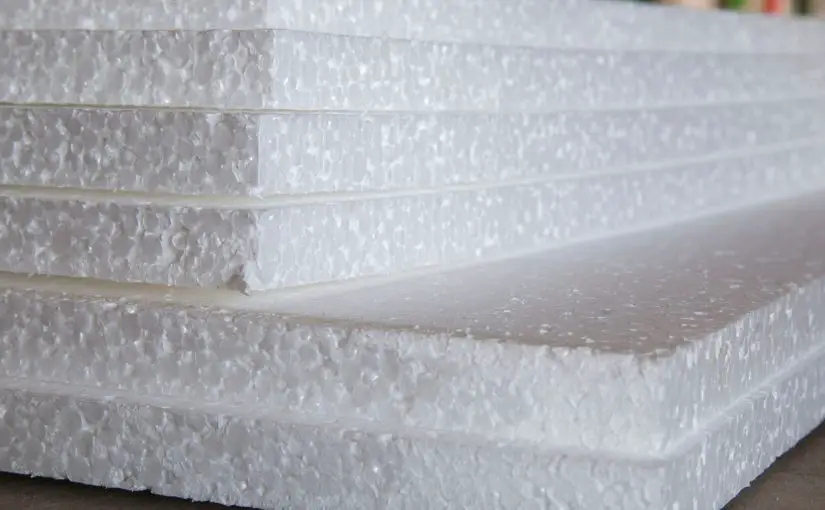
Styrofoam is one of the most unlikely places for mold to grow. The reason is it has absolutely no ability to absorb moisture and it has zero nutrients.
But given the right circumstances even Styrofoam can have mold growing on it.

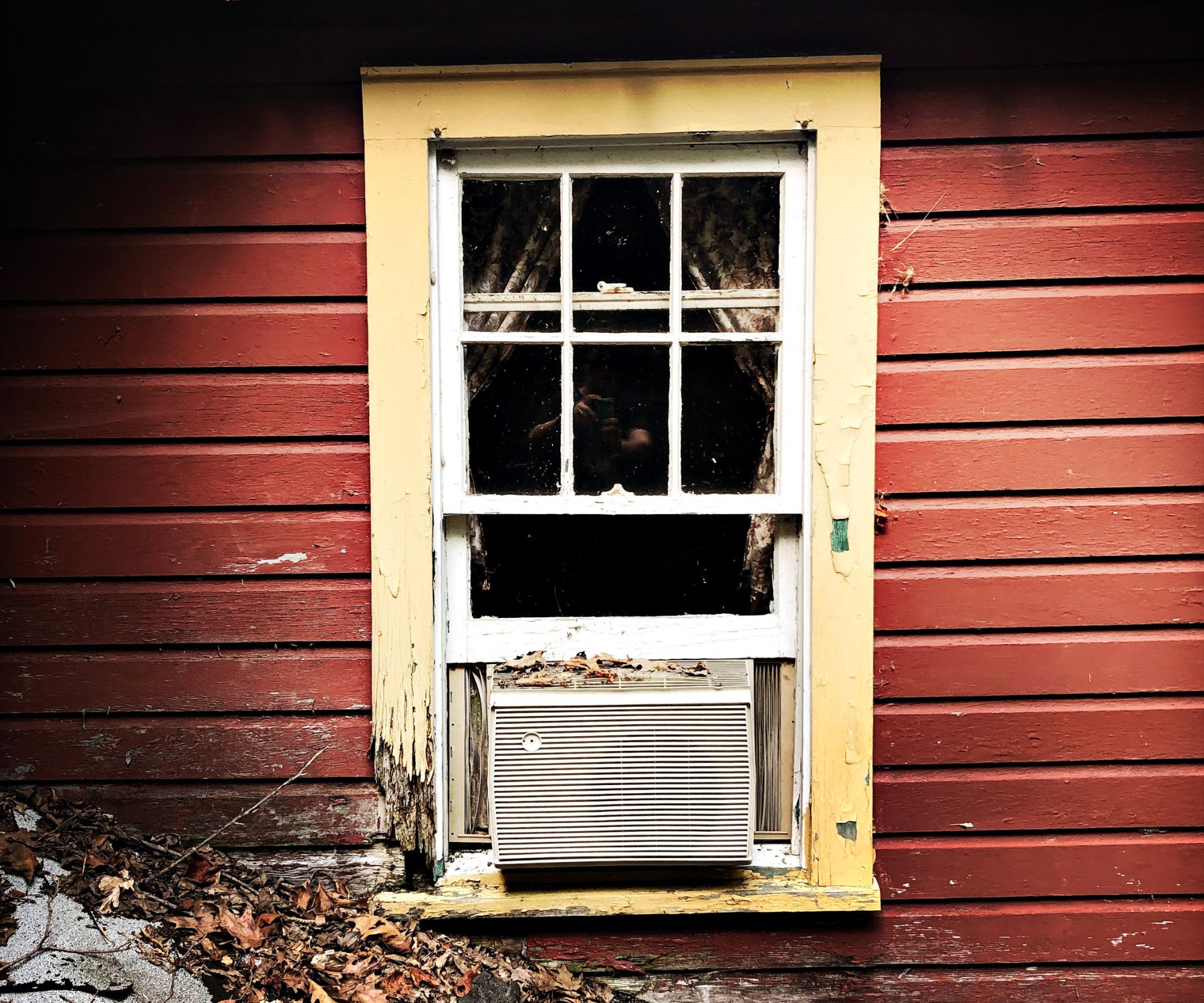
window ac covered in leaves


MIDEA EasyCool. Air Conditioner, Dehumidifier, and Fan.12,000 BTU, Rooms up to 550 Sq. Ft. Learn More Here

1.It is dirty.

If there is mold growing on the Styrofoam inside of your window air conditioner, it is most likely because the Styrofoam is dirty and there is either rain or humidity droplets supplying moisture to it. All inside a dark humid space.

The outside of the window air conditioner is in fact outside in the elements.

Overtime dirt is going to get into the machine and get on the Styrofoam.
Combine the nutrients of the dirt with the humidity and darkness inside of the housing of the air conditioner and you have the ingredients of mold production.

2. There is standing water inside of the air conditioner.

All household molds have one thing in common, they all thrive in standing contaminated water.

Condensation from the cooling coils inside of the air conditioner is meant to drip freely to the outside of the machine so as the inside of the machine stays dry.

If the inside of the machine is unnaturally filled with debris, the drip hole could be clogged to the point where there is standing water inside of the air conditioner.

This could explain why there is a continuing water supply for the Styrofoam.
Again creating the essentials for mold production which are nutrients, moisture and darkness.

Unlevel AC

Another reason why there may be standing water is that the Window air conditioner is not level and condensation water is able to gather to the lower side of the unleveled unit. Its important to note that not all Window ACs are meant to be level. Some require a slight tilt for the condensation water to drain towards the drainage hole. Check your manual for for your specific info.
dirty window ac


TOSOT 8,000 BTU Portable Air Conditioner Quiet, Remote
Control, Built-in Dehumidifier, Fan – Cool Rooms Up to 300 Square Feet. See a Picture of it Here

Where is the air conditioner located?

If the inside of the air conditioner has mold and you’ve already determined that the recipe for mold is nutrients, moisture, and darkness, then the question is , how is the source of nutrients getting inside of the machine?

Some of the possibilities include that it is located under a tree, or it is in an area like a wind tunnel where dirt is easily kicked up and can get into the machine.


There are many reasons why an air conditioner can be exposed to extra dirt and debris. Also if the air conditioner has been recently brought in from storage, the likelihood of it being dusty inside is more than a little high.

Storage areas have a tendency to be humid, whether it be the Attic, the basement, or a storage building outside, they almost always seem to be moist.

Again you have all the components necessary for the production of mold in one spot. Humidity, dust, and no light. Taking apart your air conditioner when you bring it out of storage is a great time to examine it and make sure that there is no debris inside the block the drainage hole and to clean off any dirt and dust on the Styrofoam.

But regardless of whether you’re taking it out of storage or not, it is time to take apart the air conditioner and completely clean out any mold, debris, and dirt.

Another additional tip at this juncture is to add a mold inhibitor.

A mold inhibitor is a specific product that is manufactured to add to livestock feed. It keeps mold from being able to grow in their food.

It is also sold as a spray or solution to keep decks from mold growth.

While your air conditioner is taken apart for cleaning and maintenance, spraying a mold inhibitor on the Styrofoam as well as the other components inside the machine before you reassemble it is a great way to help ensure that your air conditioner and more importantly your air is free of mold and mold spores.

Della 6000 Smart Window AC. 250 square ft. See it Here.

Black Mold In Air Conditioner

Dealing with black mold on Styrofoam within an air conditioning unit is a concern that requires careful attention, primarily due to the potential health risks associated with certain types of mold, such as Stachybotrys, commonly referred to as “black mold.” This particular mold is notorious for its toxic properties and the potential health risks it poses when its spores are inhaled. I

t thrives in moist, damp environments, which can easily occur within the components of an air conditioner, especially if there’s stagnant water or excessive moisture.

Here’s a more detailed guide on how to address this issue:

Understanding the Environment for Mold Growth

  • Moisture Source: Black mold needs a constant moisture source to grow. In air conditioners, this can be due to standing water or high humidity levels within the unit.
  • Material: Styrofoam within air conditioning units can easily retain moisture, providing an ideal environment for mold growth.

Health Risks

  • Toxicity: Certain molds that appear black can be particularly harmful. Stachybotrys chartarum is one such mold known for producing toxins that can be dangerous when inhaled.
  • Symptoms: Exposure to toxic molds can lead to various health issues, including respiratory problems, headaches, fatigue, and in severe cases, neurological damage.

Safe Cleaning Guidelines

  • Preparation: Wear protective gear such as gloves, N95 masks, or respirators, and eye protection to prevent direct contact with mold and inhalation of spores.
  • Cleaning Solution: Use a mixture of water and mild detergent, or a solution specifically designed for mold removal. For non-porous surfaces, diluted bleach (1 cup of bleach in 1 gallon of water) can be effective, but it should be used with caution due to its corrosive nature.
  • Cleaning Process: Gently clean the affected Styrofoam areas to avoid breaking it and releasing more spores into the air. Avoid using excessive water, which can exacerbate the moisture problem.
  • Drying: Ensure the cleaned area is thoroughly dried to prevent mold from returning. Increased ventilation, the use of dehumidifiers, or air movers can accelerate the drying process.
  • Professional Help: If the mold infestation is extensive or if you’re unsure about handling it yourself, consider hiring a professional mold remediation service.

Preventive Measures

  • Regular Maintenance: Regularly inspect and maintain your air conditioning unit to prevent water buildup and ensure proper drainage.
  • Humidity Control: Use dehumidifiers or ensure adequate ventilation in areas prone to high humidity to keep moisture levels in check.
  • Prompt Repairs: Address leaks and water damage promptly to prevent the conditions that foster mold growth.

By understanding the conditions that lead to mold growth and following safe cleaning practices, you can effectively address mold issues in your air conditioner while minimizing health risks. If ever in doubt, don’t hesitate to consult with a professional to ensure the safety and well-being of your household.

Summary

Even though Styrofoam is a material that does not facilitate the growth of mold easily. Any material given the right circumstances can develop mold growth.

If there is mold on the Styrofoam in your air conditioner, then more than likely the Styrofoam is dirty.

Mold needs nutrients, and without there being something like dirt on the Styrofoam, there is no way that mold could grow on Styrofoam.

Mold also needs moisture, if there is something blocking the exit of the moisture inside the air conditioner, like mud or leaves, then you have all the components of mould and the perfect environment for it to grow in.

In order to find out if you have these issues, you may have to take apart your air conditioner to clean and maintain it.

Taking apart and cleaning an air conditioner is a very easy thing to do and there are plenty of tutorials and YouTube videos available to take you through the process.

But before you put the air conditioner back together and reinstall it, it is the perfect time to consider spraying a mold inhibitor on the Styrofoam and all the other components inside of the air conditioner.


How Do I Know if I Need a Humidifier?

Do I Need a Humidifier?

The most sure way to know whether or not you need a humidifier is to measure the humidity in your room. The hygrometer is a gauge that will measure your humidity and tell you what the relative percentage of moisture you have in your air.

What should the humidity be in your home?

The ideal relative humidity range is between 40 and 60% according to the National Library of Medicine.

Most publications including Martha Stewart.com say that the ideal humidity is between 30 and 50%.

So going off on average, you should be sitting good at 45% relative humidity.

Don’t Have a Hygrometer Handy?

Don’t worry there are plenty of telltale signs that indicate your humidity is too low and that you need a humidifier without having to have an actual humidity meter.

do i need a humidifierSymptoms of Low Humidity in the House

1. Chapped lips

If you have noticed that your lips are extra dry and you are pulling out the Chapstick more often than usual, that’s a pretty good indication that the air is dry.

Dry air is like a sponge that draws moisture out of every possible thing it can.

When your lips get irritated and dry, they will eventually start cracking. And most of us just put more and more Chapstick on.

But the underlying condition is a lack of moisture in the air.

2. The Bloody Nose

Bloody noses are one of the more popular indications that air is too dry.

Whether you blow your nose and there’s blood on the tissue or your nasal passages have gotten so dry that they crack and bleed, there is one culprit that may be going unnoticed.

And that is the low relative humidity in your space. Increasing the moisture in the air will moisturize the inside of your nose and give you some much-needed relief.

3. Dry, Itchy, and Cracking Skin

Dry skin is one of the main telltale signs that dryness has taken over the ambient air.

And it is also one of the biggest reasons people seek out a humidifier to give them some relief with dry skin.

Dry skin is not only annoying, it can also cause your skin to break and allow airborne bacteria to burrow down into your skin and cause outbreaks of rashes and acne.

Replenishing the moisture in your air for the humidifier is one of the best skin moisturizers you can buy.

4. Dustiness

Dust is a problem when there’s not enough moisture droplets in the air to weigh down dust particles so that they fall to the surface.

Dust is also very greedy for any available moisture in the surroundings. That’s why dust dries your face and skin out so bad.

The humidifier will add the necessary humidity droplets to attach to wayward dust particles and keep them from floating.

5. Viruses

Along the same lines of using a humidifier to alleviate dustiness, is the need for moisture in the air to keep viruses from being able to spread as far.

When there is a lack of moisture, allergens, viruses, and airborne bacteria are free to float and travel further throughout a room or house.

When the proper moisture is added back into the air, humidity droplets attach themselves to the viral particles and cause them to be too heavy to float or travel.

Which reduces the chance of exposure to the viruses.

6. Asthma

Asthma is another problem that can be triggered by airborne particles.

Particles that are allowed to flow freely throughout the air because of a lack of moisture droplets to weigh them down.

Many asthmatic episodes can be avoided by keeping the moisture level in the home in the 40 to 60% range.

7. Acne

Acne is not a condition that you normally consider being an issue with humidity. But acne can actually be a dry skin problem.

Dry skin can break open and allow the bacteria that is causing the acne to get a deeper root inside of your skin.

Moisturization in the form of humidity can keep your skin from drying out and being a richer plantation for acne to grow.

low humidity symptoms8. Static Electricity

Static electricity is one of the first indicators that the moisture in the air has dipped.

Walking around, shocking each other, discharging on every metal object you touch is a huge neon sign blinking “your humidity is too low!”

And just like every other humidity problem, it seems to go on weeks before you ever make the connection between the static electricity and the humidity level.

9. Dry Throat.

Just like the nasal passages, the throat needs proper moisture to function.

When the humidity is dropped, you will often start to get a sore, itchy, and dry throat.

And often just turning on a cool mist humidifier for a few hours will magically relieve the soreness.

10. Wood Cracking.

When the air is too dry it causes wood to shrink. The shrinking can eventually cause the wood to crack. And if it’s your furniture, not so good.

The lack of humidity also causes stress on an acoustic guitar which can make it buzz. And warp the neck to the point that the strings are hard to press down. And it will eventually crack.

Too much humidity can eventually saturate the wood causing expansion and adhesives to give loose.

Warning about improper humidifier useWarning:

You may need a humidifier if you have any of these symptoms.

But for all the benefits that keeping the proper humidity level in your house can offer you,

It’s important to remember that humidifiers are maintenance heavy by nature.

They require thorough cleanings often.

Most of the symptoms above would be negated if you were to use the humidifier wrongly.

And by wrongly, I mean if you were to operate the humidifier after it has had stagnant water sitting in it with bacteria growing.

The bacteria that grows on water can be very dangerous. That is why it is very important to understand that humidifiers must be kept clean.