





Ozoning a House: Effective Bug Control Method?


Key Takeaways

  • Ozoning a house with ozone generators can be an effective bug control method for pests like bed bugs, spiders, roaches, and fleas.
  • Ozone treatment disrupts pests but may not guarantee complete eradication, requiring additional pest management practices.
  • Safety precautions, including occupant evacuation, proper ventilation, and monitoring, are crucial when using ozone generators.
  • Ozone treatment can also affect plants, necessitating protection or removal during the process.

Introduction:

In the quest to maintain a pest-free living space, many homeowners are exploring alternative methods of insect control.

One approach is the use of ozone generators.

From bed bugs to spiders, roaches, and beyond, we explore the capabilities of ozone generators and provide essential guidance on safe and responsible usage.

does ozone kill bed bugsOzone and Bed Bugs

What’s not to hate about bed bugs? Who doesn’t love getting bit in their sleep? bed bugs are one of the hardest things to get rid of. A lot of people want to know if using an ozone generator can help. let’s see if using ozone to fight bed bugs is a good idea?

Can Ozone Kill Bed Bugs?

Bed bugs are notorious for their resilience and ability to hide in the tiniest of cracks and crevices. While ozone generators can be effective in eliminating bed bugs, it’s crucial to understand their limitations. Ozone primarily works by oxidizing the outer shells and respiratory systems of bed bugs, ultimately killing them. However, here are some key considerations:

    • Hiding Spots: Bed bugs often hide deep within mattresses, furniture, and wall voids, where ozone may have difficulty reaching.
    • Eggs: Ozone may not effectively target bed bug eggs, which are well-protected and hidden.

For a more realistic walkthrough on why gas treatments often fail to reach hidden nests, see our dedicated guide on using ozone for bed bugs and what methods actually work.

Tips for Using Ozone Against Bed Bugs:

  • Thorough Inspection: Identify bed bug hiding spots and focus ozone treatment on these areas.
  • Multiple Treatments: Ozone treatment may need to be repeated to ensure all stages of bed bugs are eliminated.
  • Complement with Other Methods: Combine ozone treatment with other bed bug control strategies, such as cleaning, vacuuming, and the use of bed bug-proof covers.

does ozone kill spidersSpiders and Ozone

Spiders are an unwelcomed guest in most people’s homes.
I happen to live in a house with 4 women who go into a panic episode at the sight of the smallest spiders. I know the madness.  If you’re seeking a way to deter these eight-legged intruders, you might have considered the use of ozone generators.

Does Ozone Kill Spiders:

Ozone can disrupt spider webs and create a less inviting environment for spiders, making it an effective tool in controlling various species. Here’s its effectiveness against some common spiders:

  1. Black Widow Spider (Latrodectus spp.): Ozone can deter black widow spiders by disrupting their webs and nesting areas. However, exercise caution, as black widow bites can be medically significant.
  2. Brown Recluse Spider (Loxosceles spp.): Ozone can help deter brown recluse spiders, but these spiders are often elusive and hide in secluded places.
  3. Common House Spider (Parasteatoda tepidariorum): Ozone can be highly effective against common house spiders, which are frequently found indoors.
  4. Cellar Spider (Pholcidae): Cellar spiders, often found in dark, damp areas, may be deterred by ozone treatment.
  5. Wolf Spider (Lycosidae): Ozone can disrupt wolf spider habitats, reducing their presence in treated areas.

Limitations of Ozone for Spider Control:

While ozone can be effective against various spider species, it’s essential to understand its limitations:

  • Species Variability: The effectiveness of ozone may vary depending on the spider species and their sensitivity to ozone.
  • Web Regeneration: Spiders may attempt to rebuild their webs after ozone treatment, requiring ongoing efforts to deter them.

does ozone kill roachesRoaches and Ozone

Roaches are notorious scavengers that can infest homes and create unsanitary conditions. If you’re dealing with a roach problem, you might be exploring various methods for effective control. In this section, we delve into the potential of using ozone generators to combat roach infestations.

How Ozone Kill Roaches:

Roaches often inhabit hidden areas within homes, making it challenging to reach and eliminate them. Here’s how ozone can be effective in controlling roaches:

  • Nest Disruption: Ozone can disrupt roach nests and hiding spots, making it difficult for them to establish colonies.
  • Repellent Effect: Ozone’s strong scent and reactivity can act as a repellent, discouraging roaches from frequenting treated areas.

Tips for Using Ozone Against Roaches:

  • Targeted Treatment: Identify roach-prone areas and focus ozone treatment on these spaces to maximize effectiveness.
  • Repeat as Needed: Roach infestations may require multiple ozone treatments over time to ensure comprehensive control.
  • Combine with Other Methods: Use ozone treatment in conjunction with other roach control strategies, such as sanitation, sealing entry points, and eliminating food sources.

does ozone kill fleasFleas and Ozone

Fleas are tiny but persistent bloodsuckers that can infest both your pets and your home, making life uncomfortable for everyone. When it comes to flea control, homeowners seek effective and non-toxic solutions. In this section, we’ll explore the role of ozone generators in combatting flea infestations.

Does Ozone Kill Fleas?:

Fleas can be particularly challenging to eradicate due to their life cycle and ability to hide in various areas. Here’s how ozone can be effective in controlling flea populations:

  • Killing Fleas: Ozone can penetrate flea hiding spots and kill adult fleas on contact.
  • Interrupting the Life Cycle: Ozone can disrupt the pupae stage of fleas, preventing them from developing into biting adults.

Tips for Using Ozone Against Fleas:

    • Thorough Treatment: Ensure comprehensive ozone treatment, targeting areas where fleas are likely to hide, including carpets, pet bedding, and upholstered furniture.
    • Repeat as Necessary: Flea infestations may require multiple ozone treatments to address all life stages of fleas.
    • Complement with Pet Care: Concurrently treat pets for fleas to prevent reinfestation. Consult your veterinarian for flea control options for your pets.

FAQ Section: Various Insects and Ozone

Q1: Can Ozone Kill Termites?

A: Ozone generators can affect termites when used correctly. Ozone may penetrate termite nests and disrupt colonies. However, termite control usually requires a specialized approach, and ozone should be considered as a supplementary method.

Q2: Does Ozone Kill Ticks?

A: Ozone can have an impact on ticks, particularly in their nymph stages. However, effective tick control may involve other strategies, such as tick repellents and habitat modification.

Q3: Does Ozone Kill Ants?

A: Ozone may deter ants, especially when applied directly to ant trails or nests. However, it’s important to identify and address the source of the ant infestation for long-term control.

Q4: Does Ozone Kill Dust Mites?

A: Ozone can help reduce dust mite populations in mattresses and bedding by oxidizing their exoskeletons. Regular ozone treatment, combined with thorough cleaning, can be effective in managing dust mites.

Q5: Do Ozone Generators Work Against Flies?

A: Ozone can deter flies by disrupting their breeding sites and deterring them from treated areas. Proper sanitation and waste management are essential for effective fly control.

Q6: Can Ozone Kill Head Lice Infestations?

A: Ozone may be less effective for head lice control, as these parasites reside on the human scalp. Traditional methods like medicated shampoos and combing are typically more suitable for lice removal.

Q7: Does Ozone Kill Mosquitoes?

A: Ozone may deter mosquitoes from treated areas, but it’s typically not a primary method for mosquito control. Mosquito control often involves repellents, traps, and habitat management.

Q8: What About Moths in Closets and Pantries?

A: Ozone can help deter moths by breaking down their eggs and disrupting their life cycle. Regular ozone treatment in storage areas can assist in moth control.

Q9: Can Ozone Get Rid of Mice and Rodents?

A: Ozone generators are not effective against rodents like mice. Rodent control requires specialized traps and exclusion methods.

Q10: How long does it take ozone to dissipate after you use a ozone generator?

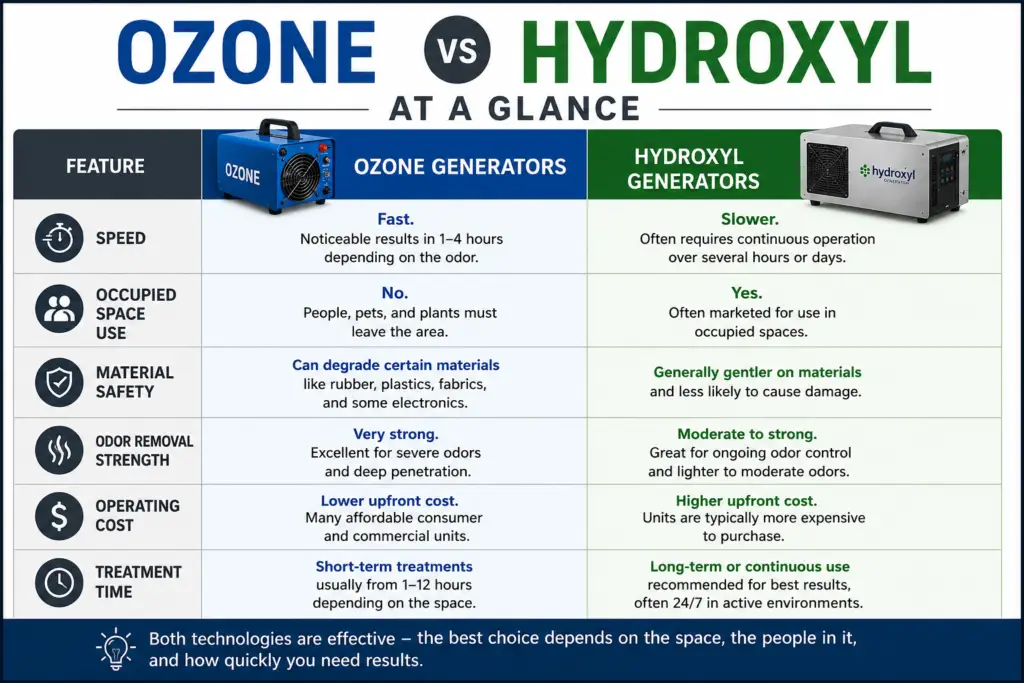
A: The best answer is to err on the safe side and give it a few hours to ensure your safety. As you may guess, the answer varies with both strength of the generator and the length of time it is operated. That being said, ozone has a short life and most experts agree that it will revert back to breathable oxygen in about 30 minutes

Q11: Do ozone generators remove cigarette smoke odor?

A: Yes. Ozone will oxidize the over 4000 chemicals that make up cigarette smoke and eliminate the lingering smell.

Cigarette and cigar odors tend to travel to every nook and cranny they can find.
And because of the tar residue that that is part of tobacco smoke, it adheres to everything, especially carpets, drapes, and furniture.

Ozone will travel in a similar path as cigarette  smoke and break down the the molecules that are causing the odor, even the molecules that have glued their self to your furniture.

Q12: Will Ozone kill Mold?

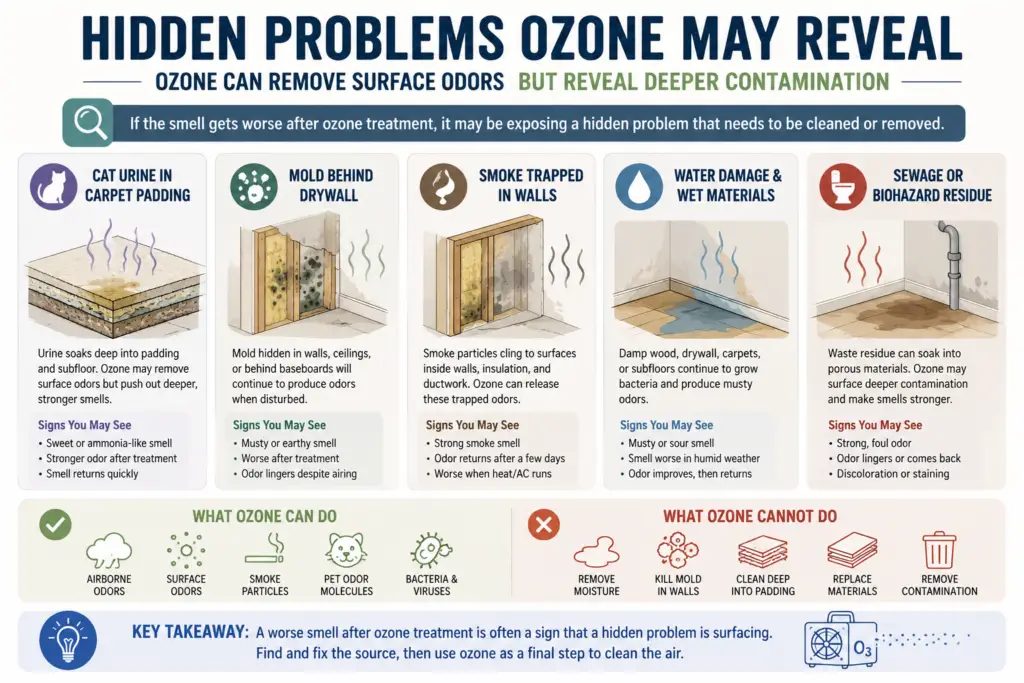
A: An Ozone generator will kill any exposed mold or fungus in the room it is operated inBut similarly to the effect you get with insects is what you get with mold. If you have a problem with mold before you use the ozone generator, you will still have a problem afterwards. It will not do any physical cleanup or identify and fix the original problem.

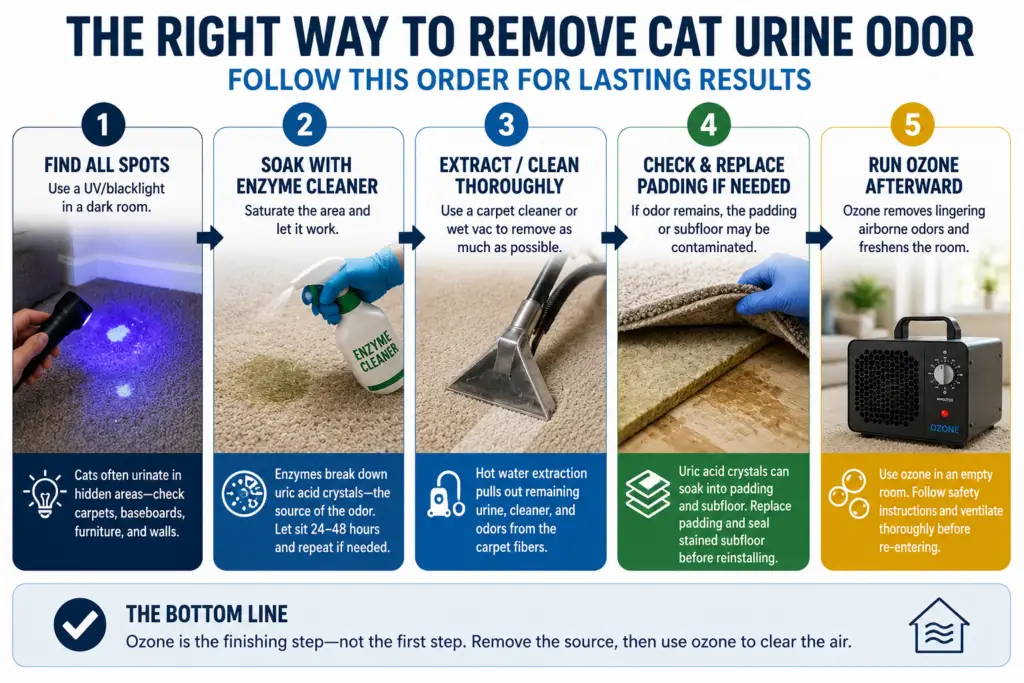
Q13: Will Ozone Get Rid of the Smell of Cat Urine?

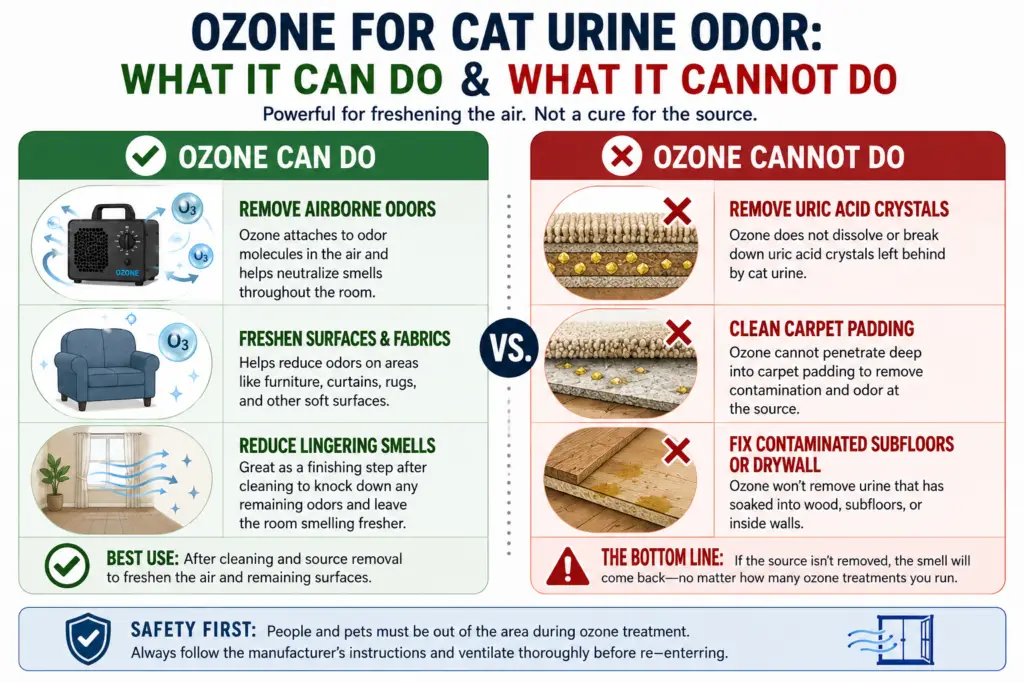
A: The answer is mostly no. Cat urine typically gets deep down into the carpet underneath the floorboards. Ozone is a topical oxidizer and doesn’t get underneath the carpet or inside the walls. There are different oxidizer solutions you can put on cat urine if the problem is not too extreme.

Q14: What Are Ozone Generators Used For?

A. Ozone generators have diverse applications, including:

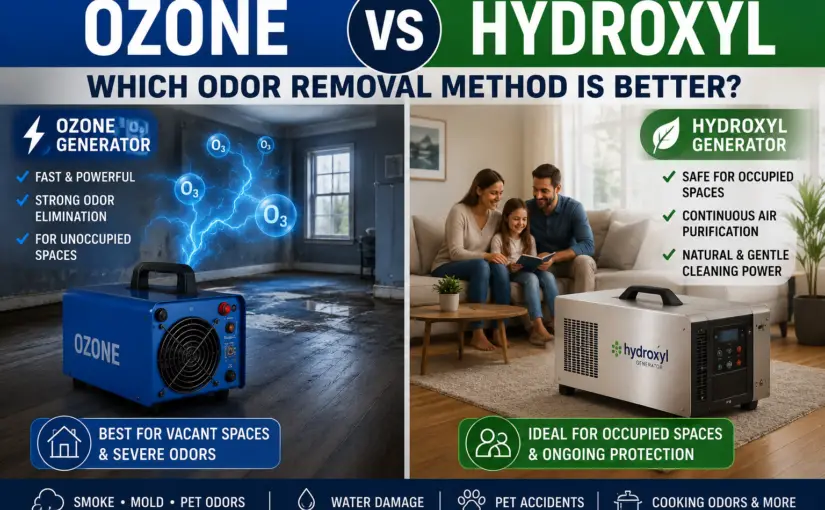
  • Hotel Rooms: Transforming smoking rooms into non-smoking rooms, restoring rooms with smoke odors, and eliminating cooking smells and harmful germs.
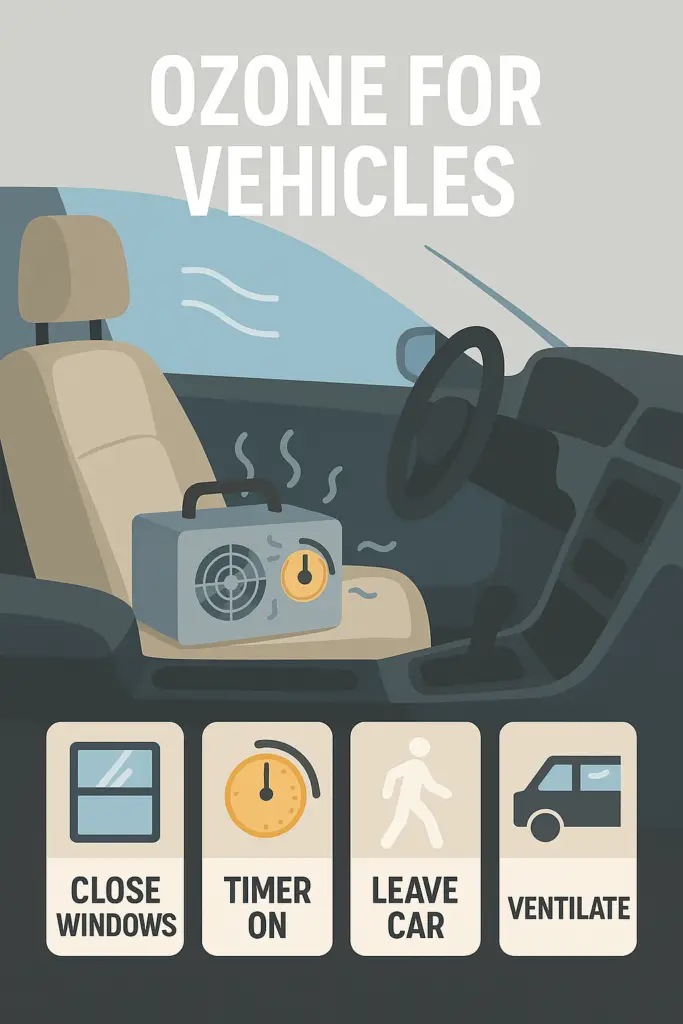
  • Vehicles: Removing persistent cigarette and cigar odors, especially in the cab of cars or trucks, making them smell fresh.
  • House Flipping and Rental Remediation: Removing lingering smoke smells left behind by previous occupants, enhancing property value.
  • Mold Remediation: Clearing mold spores and musky odors from homes after identifying and fixing the source of mold issues.

How To Get The Best Results From A Ozonator?

1.Use the appropriate size generator for your area.

Too small of an ozone machine will not accomplish much and only make the air unbreathable.
To find a machine capable of reaching the high concentrations needed for pest suppression, you can compare our recommended high-output ozone generators for home use.

Using too large of an ozone generator will increase the amount of time you will need to wait before re-entering the area.

2.  Vacuum the carpets. getting the smell out of the carpets will be much easier if there is not debris and dust all over them.

3. Mop floors and wipe down surfaces.

The same principle as vacuuming the floors. Ozone will have a much easier time getting rid of deep smells if it doesn’t have to get through a film of dirt or grime. Skipping this deep cleaning phase is the biggest mistake people make when using an ozone generator, as the gas cannot reach pests buried under layers of physical debris.

4.  Center the ozone machine in the middle of the room.

5.  Start small. It is always better to use the machine for a shorter time then check the results.

6. You can always run it again and turn it up a little if you need.

The problem with ozone not dissipating the way it should can linked to too much ozone being blasted for too long.

According to some experts, you can get into an arena where VOCs begin to break up and form other types of gases when exposed to heavy ozone too long.

This is not result you’re after. It is much better to start small then have to deal with a problem like that.

Safety Precautions When Using Ozone Generators for Insect Control:

Using ozone generators for insect control is a practical and non-toxic approach, but safety should always be a top priority. Ozone is a powerful oxidizing agent that can have health risks if not used correctly. Follow these safety precautions to protect yourself, your loved ones, and your pets when using ozone generators:

1. Read the User Manual:

  • Before operating an ozone generator, thoroughly read and understand the manufacturer’s user manual. Each machine may have specific instructions and safety guidelines.

2. Occupant Evacuation:

  • Always evacuate people, pets, and plants from the treated area during ozone exposure. Ensure that the space is completely empty.

3. Ventilation:

  • After ozone treatment, ventilate the area by opening windows and doors to allow fresh air to circulate. This helps in dissipating any remaining ozone.

4. Safety Gear:

  • When setting up the ozone generator or adjusting its settings, wear appropriate safety gear, including gloves and safety glasses, to protect yourself from direct exposure.

5. Timer Usage:

  • Use an outlet timer to control the ozone generator’s operation. This prevents overexposure and allows for safe intervals between treatments.

6. Sealing Gaps:

  • Seal any gaps or openings that may allow ozone to escape into adjacent living spaces. Ensure a proper seal for maximum ozone concentration in the treated area.

7. Remote Operation:

  • If your ozone generator supports remote control, use it to turn the machine on and off from outside the treated area.

8. Monitor Ozone Levels:

  • Consider using an ozone monitor to measure ozone levels during and after treatment. This provides a clearer understanding of when it’s safe to re-enter the treated area.

9. Limit Duration:

  • Avoid excessive ozone exposure by limiting the duration of treatment. Longer treatment times may lead to unwanted chemical reactions.

10. Children and Pets:

  • Ensure that children and pets cannot access the treated area during and after ozone treatment. Ozone exposure can be harmful to their respiratory systems.

11. Health Considerations:

  • If you have respiratory issues, consult a healthcare professional before using an ozone generator. People with asthma or other respiratory conditions should exercise extreme caution.

12. Maintenance:

  • Regularly maintain and clean your ozone generator according to the manufacturer’s recommendations to ensure safe and effective operation.
  1. Protecting Plants:
  • While ozone exposure can be harmful to plants, take extra precautions to shield them during treatment. Cover delicate or sensitive plants with plastic sheeting or move them to an ozone-free area. After treatment, thoroughly ventilate the space to help clear any lingering ozone that may affect your plants.

Remember that ozone generators should be used as part of a comprehensive pest control strategy, and safety should always come first. Following these precautions will help you use ozone generators effectively and protect the well-being of everyone in your household.

Ozone Generator Sizing Guide: What Size You Need for Smoke, Mold, Pets, or Skunk

Ozone Generator Sizing Guide: Find the Right Size for Any Room or Problem

Trying to figure out how powerful of an ozone machine you need? Whether you’re clearing out cigarette smoke, cooking odors, or something much worse, the right ozone generator size makes all the difference. Too small, and you’ll be running it for hours without results. Too large, and you could end up with lingering ozone long after the job is done.

This guide walks you through the numbers, the expectations, and the safety tips — so you can choose the right size with confidence.

Disclaimer: This guide is for informational use only. Never use an ozone generator in an occupied space. Always follow manufacturer instructions and allow time for ozone to dissipate before reentry.

Infographic showing how to calculate the required ozone output by multiplying room square footage by 0.5 to 1 mg/h."❓ How Strong of an Ozone Generator Do I Really Need?

Answer: Match output to your room size: about 1,000 mg/h per 100–150 sq ft. For stubborn odors like smoke or skunk, scale up or plan on multiple treatments.

Room Size Chart (with Output Range)

Room Type Square Footage Suggested Output
Closet, Bathroom, Small Bedroom 100–200 sq ft 1,000–3,000 mg/h
Living Room, Kitchen, Office 200–500 sq ft 3,000–7,000 mg/h
Basement, Garage, Open Concept Space 500–1,000+ sq ft 8,000–12,000+ mg/h

❓ Can I Use Too Much Ozone?

Answer: Yes — but the danger comes from reentering too soon. Larger generators release more ozone faster, but ozone naturally decays within 30–90 minutes. Always allow time and ventilate after treatment.
Because the machine’s output level affects how quickly the air becomes safe again, you can find more detailed re-entry timelines in our guide on how long to wait after using an ozone generator

Rule of Thumb: Wait 1 hour for every hour of ozone treatment — or 2 hours if using a high-output machine.
Timeline showing ozone treatment process from machine startup, ozone decay phase, to safe reentry with ventilation icon."

What Does Ozone Smell Like?

Dark blue safety graphic with warning symbol showing the safe ozone concentration limit of 0.08 ppm or below."
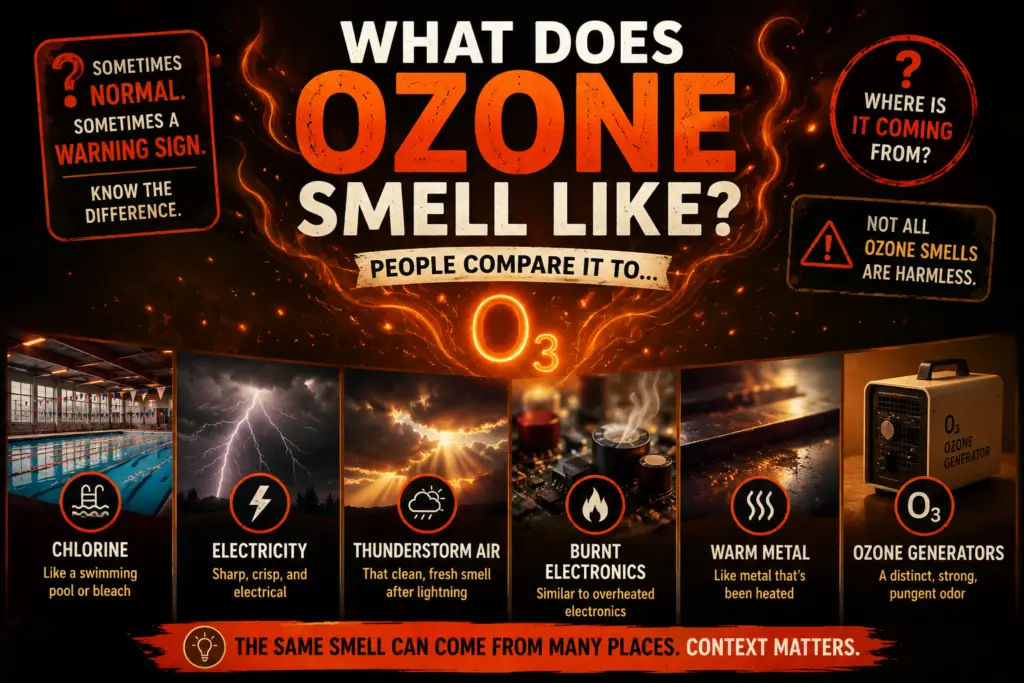
One of the first things people notice during or after a treatment is the distinct smell of ozone. It’s often described as sharp, clean, and slightly metallic — similar to chlorine, an electric spark, or the air after a lightning storm.

This smell is perfectly normal. It’s a sign that ozone was generated and is still active in the air. If you can still smell ozone, it’s not safe to reenter the room just yet. Let the space air out fully and wait until the scent fades to a barely noticeable level or disappears entirely.

Don’t worry if the smell lingers longer than expected. Factors like low ventilation, soft furnishings, or high output machines can extend the time it takes for ozone to fully break down. Just crack a window and use a fan to help speed it up.

❓ Can I Treat the Whole House at Once?

Answer: Technically yes, but it’s usually not the best approach. Treating one room at a time gives you better control and deeper results. If you do treat the whole house, keep interior doors open and use fans to help ozone circulate.

Pro Tip: Ozone doesn’t flow like air freshener — it needs time, circulation, and space to reach problem areas.
Visual safety guide showing icons for no people or pets, use a timer, post warning signs, ventilate the area, and follow instructions."

Ceiling Height Makes a Big Difference

Most ozone sizing guides only consider floor space — but ceiling height matters too. Why? Because ozone fills the entire volume of a room, not just the surface area. The more vertical space you have, the more ozone you’ll need to fill it effectively.

As a quick reference, multiply your room’s square footage by the ceiling height to get the total cubic feet. A 300 sq ft room with 8-foot ceilings = 2,400 cubic feet. But if that same room has 12-foot ceilings, you’re working with 3,600 cubic feet — 50% more airspace to treat.

Rule of thumb: If your ceilings are over 10 feet tall, increase your ozone output by 25–50%, or plan on longer treatment times. This ensures ozone can reach the upper corners of the room effectively.

Flat design showing recommended ozone treatment time with hourglass icon and the text 'About 30 minutes.'"Small vs Medium vs Large Ozone Generators: What to Expect

Ozone machines are rated in milligrams per hour (mg/h). That number tells you how much ozone the machine puts out — but it doesn’t always tell you what results you’ll get. Here’s what you can expect from each size:

🔸 Small Units: 1,000–3,000 mg/h

  • Best for: Closets, small bedrooms, cars, pantries
  • Room size: Up to 200 sq ft
  • Treatment time: 30–60 minutes
  • What to expect: Light odors removed in one session; stronger odors may require 2–3 cycles
  • Bonus: Great for small containers or odor-proof boxes (treat shoes, books, or clothes)

🔸 Medium Units: 3,000–7,000 mg/h

  • Best for: Bedrooms, kitchens, offices, mild smoke damage
  • Room size: 200–500 sq ft
  • Treatment time: 1–2 hours
  • What to expect: Handles most odors in one or two sessions; easy to carry and store
  • Common use: Landlords, car detailers, Airbnb hosts

🔸 Large Units: 8,000–12,000+ mg/h

  • Best for: Basements, open floorplans, large living rooms
  • Room size: 500–1,000+ sq ft
  • Treatment time: 2–4 hours (longer for severe odors)
  • What to expect: Strong ozone smell afterward; may need extra ventilation time
  • Caution: Overkill for small rooms — always follow wait-time safety instructions

Portable vs. Professional Ozone Generators

Not all ozone machines are built the same. While most consumer-grade units are marketed by their output — like 5,000 or 10,000 mg/h — there are important differences between portable models and commercial-grade machines.

Portable units are typically lightweight, made with plastic or thin aluminum casings, and designed for short cycles in single rooms or cars. These are great for DIY odor removal projects at home.
If you are ready to see which specific models we recommend for these types of home projects, you can read our full breakdown of the best ozone generators currently on the market.
Professional ozone generators tend to have metal housings, stronger internal fans, better heat sinks, and often include multi-stage timers, fan speed settings, and ozone plate controls. They’re built to withstand longer runtimes, and some are rated for treating very large spaces or entire buildings.

Also, be cautious with extremely cheap models — especially those sold by unfamiliar brands with questionable mg/h claims. Look for third-party reviews, real product specs, and a manufacturer that actually publishes safety documentation.

If you’re still unsure whether renting or purchasing is best for your situation, this guide explains when ozone machine rental is the right choice

❓ What Size Ozone Generator Should I Use for My Car?

Answer: A 3,000–5,000 mg/h unit is usually enough for cars, trucks, and RVs. Run it with windows up and a small fan inside to help circulate ozone through seats and vents. Most treatments take 30–60 minutes, but tough odors may require a second session.

Reminder: Never sit in the car during treatment — and air it out for at least 30 minutes after ozone use.

Match the Ozone Size to the Problem You’re Solving
Infographic showing recommended ozone generator sizes for various odor problems, including cigarette smoke, pet odor, mold, fire damage, car interiors, and skunk, with matching mg/h output ranges."

Room size is important — but so is the type of odor or contamination you’re dealing with. Here’s a quick guide:

🚬 Cigarette Smoke

  • Best size: 5,000–10,000 mg/h
  • Use notes: May need multiple treatments

🐾 Pet Odors

  • Best size: 3,000–5,000 mg/h
  • Use notes: Use in areas where pets sleep or mark

🦠 Moldy or Musty Smell

  • Best size: 5,000–10,000 mg/h
  • Use notes: For odor only — does not kill mold in walls or materials

🦨 Skunk Odor

  • Best size: 10,000–12,000+ mg/h
  • Use notes: May require multiple high-output treatments

🔥 Fire/Smoke Damage

  • Best size: 10,000–20,000 mg/h
  • Use notes: Use only for odor; not for cleanup or restoration

🚗 Cars, Vans, and RVs

  • Best size: 3,000–5,000 mg/h
  • Use notes: Short cycles with a fan inside help spread ozone

Ozone Works Best After You Clean the Source

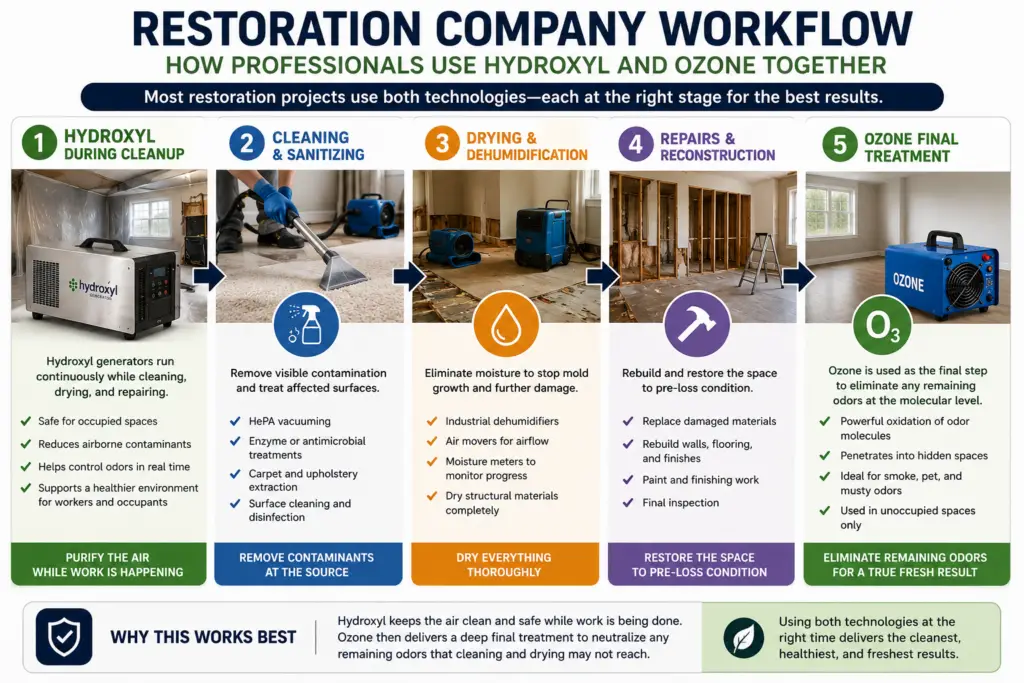
Ozone is excellent at removing odors — but it can’t replace cleaning. Think of it as the final step after you’ve removed the source of the smell.

If you’re treating smoke odor, for example, ozone can neutralize the lingering particles in the air and surface fabrics. But it won’t remove sticky tar or nicotine residue left on walls or inside furniture. The same goes for pet odors soaked into carpet pads or mold behind drywall — if the source remains, the smell may return.
Remember, ozone’s size and power don’t make it a pest solution — even strong units can’t reach bed bugs. Here’s why.

Before using an ozone generator, always clean as much as you can first. Vacuum, wipe down surfaces, remove soft items if possible, and address any visible mold or soot. Ozone is most effective in a clean, dry, and sealed environment.

❓ Can I Run the Ozone Generator More Than Once?

Answer: Yes — and for stubborn odors, you’ll probably need to. It’s perfectly safe to run multiple ozone cycles as long as you allow time for the ozone to decay between treatments.

Tip: Run one cycle, wait 2–4 hours, ventilate, then repeat. You’ll get better results and keep it safe.

Dark blue safety graphic with warning symbol showing the safe ozone concentration limit of 0.08 ppm or below."Ozone Safety: What You Need to Know Before You Plug It In

✅ Do:

  • Leave the room completely during treatment
  • Post a warning sign on doors
  • Wait 1–2 hours after cycle ends
  • Use fans to help ventilation
  • Start small — you can repeat if needed

❌ Don’t:

  • Use ozone around people, pets, or plants
  • Use near fish tanks or sealed food
  • Run it in a shared space without notifying others
  • Assume “more ozone” means better results
  • Rush reentry — always allow time to air out

Important: Ozone machines are not medical devices or professional restoration tools. Always use in unoccupied spaces and follow safety guidelines carefully.

📚 Want to Go Deeper?

These guides cover ozone safety, deeper system strategies, and when to consider alternatives to ozone treatment.

Still wondering What ozone smells like? Learn why people describe ozone as smelling like chlorine, electricity, thunderstorms, and even burnt electronics.

OdorStop vs MaxBlaster: Which Ozone Generator Should You Buy?

Quick answer: If you want a rugged, high-output machine for fast “shock” treatments in cars, smoke/fire jobs, and severe odors, choose MaxBlaster Pro/Pro-G. If you want a more affordable, beginner-friendly unit with a built-in timer and UV support for routine room resets and hospitality use, choose OdorStop OS3500UV. Always treat in unoccupied spaces and ventilate thoroughly afterward.

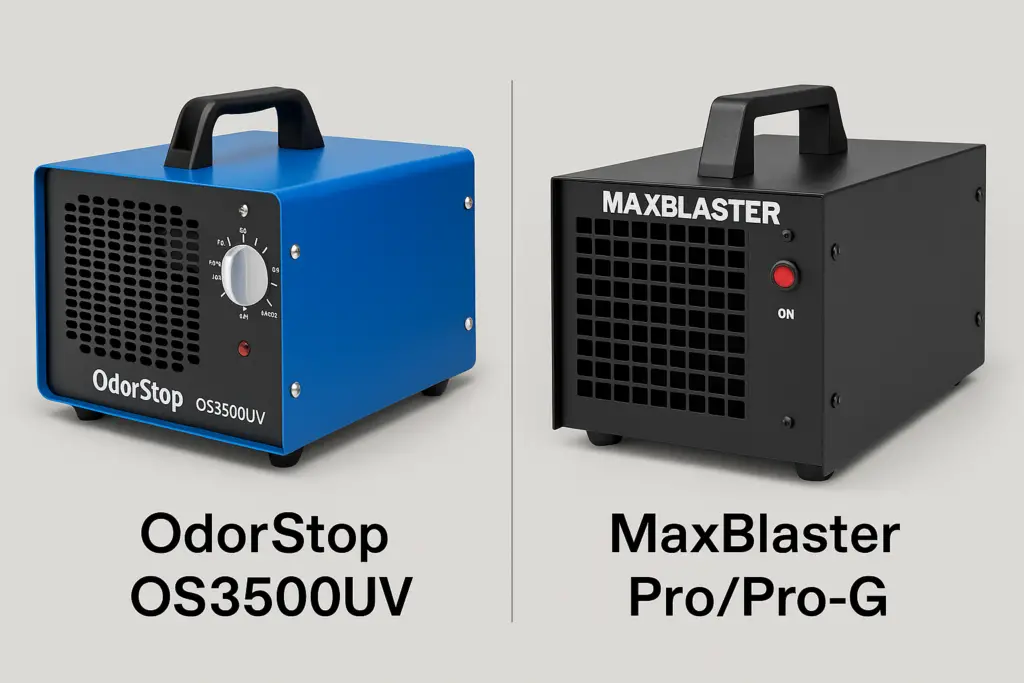
OdorStop OS3500UV and MaxBlaster Pro ozone generators side by side for comparison

OdorStop vs. MaxBlaster Ozone Generators: Which Is Better for Your Job?

When you’re searching for an ozone generator, two names will keep popping up: OdorStop and MaxBlaster. They’re the #1 and #2 players on the market, and for good reason. But here’s the thing—just because they’re both at the top doesn’t mean they’re built for the same kind of job. One is designed to be approachable and versatile, the other is built like a powerhouse tool for professionals. Let’s look at what you actually get if you buy one, and how to decide which fits your needs best.

OdorStop OS3500UV — In Plain English

The OdorStop OS3500UV, produced by OdorStop LLC, a U.S.-based company, is the more “appliance-like” option. It’s quiet, reasonably priced, and has a built-in timer and UV lamp that make it easy to run in hotels, Airbnbs, or homes without needing extra gadgets. Imagine you’re an Airbnb host with just a couple of hours before the next check-in. The OdorStop lets you set it, walk away, and know the room will be fresh when the next guest arrives. Think of it as the practical daily driver—great for moderate smoke, musty basements, or routine turnover cleaning where ease of use matters as much as raw power.

MaxBlaster Pro / Pro-G — In Plain English

The MaxBlaster Pro, made by MaxBlaster USA in Cleveland, Ohio, is the pro’s workhorse. It doesn’t bother with fancy controls—it’s built to pump out massive amounts of ozone quickly and reliably. Picture a detailer with three cars lined up in the lot. They don’t have the luxury of running a 3-hour cycle; they need a 20-minute shock treatment that clears out smoke and pet odors fast. That’s where the MaxBlaster earns its reputation. It’s more expensive, but it’s built like a drag racer: designed to win when the job is serious.

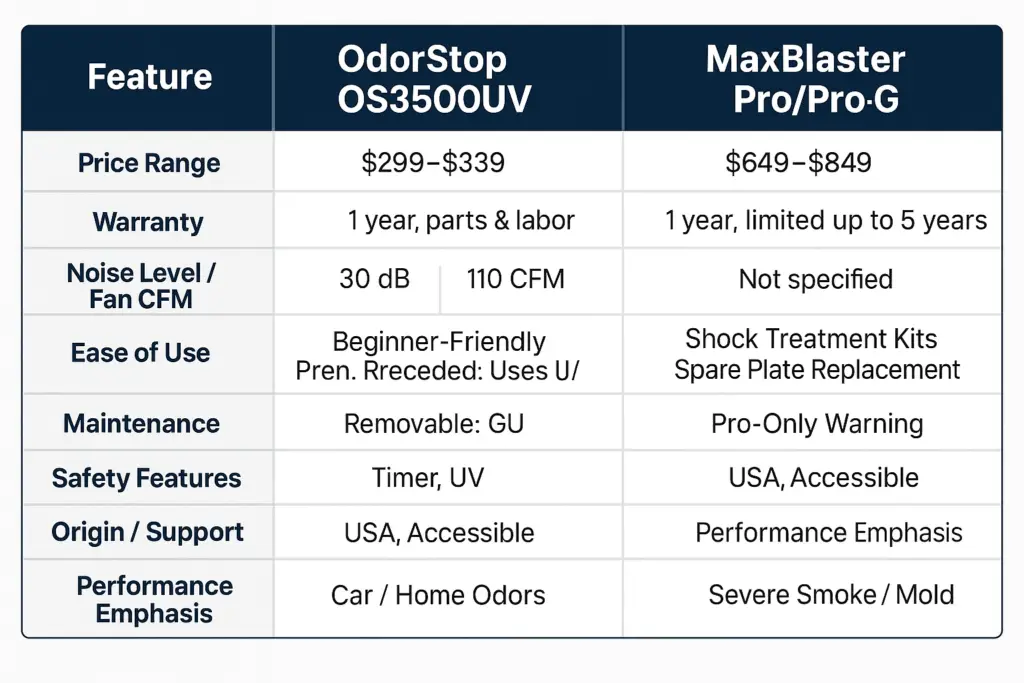
Comparison chart showing OdorStop OS3500UV vs MaxBlaster Pro ozone generator features and specs

Side-by-Side Specs (All in One Place)

Feature OdorStop OS3500UV MaxBlaster Pro / Pro-G
Ozone output 150–1,400 mg/h (adjustable) Up to ~15,000 mg/h (Pro-G higher)
Coverage (typ.) Up to ~3,500 sq. ft. ~1,500–6,000 sq. ft.
Fan / Noise 110 CFM / ~30 dB (quiet) 110 CFM / dB not specified
Controls Variable dial + 12-hr timer + Hold Minimal; use external timer kit
UV-C lamp Yes (dual ozone + UV) No (ozone-only)
Maintenance Cleanable plates; affordable replacements Replaceable plate packs; no UV bulb
Build / Weight Aluminum / ~10 lb Rugged steel/aluminum / ~11 lb
Warranty 1-yr parts & labor 1-yr unlimited; 5-yr limited; 10-yr transformer; lifetime trade-in
Typical price $299–$339 $649–$849
Best for Routine room resets; hospitality; prosumers Severe odors; fast shock cycles; pro remediation

Which One Should You Use? (Scenarios)

This is where the real decision happens. Specs aside, here’s how they perform in everyday situations:

🚗 Car Detailing

If you’re a pro detailer dealing with smoke or weed smells, the MaxBlaster is the clear pick—it blasts odors fast. Imagine you’re cleaning out a used car for resale: 20 minutes with the MaxBlaster can make it feel showroom-ready. For a DIY user freshening up a family SUV, the OdorStop works fine with longer runs.

🏚️ Basements & Musty/Moldy Odors

Heavy mold smell? MaxBlaster has the power to shock-treat quickly. Picture a damp basement after a rainy season—it needs serious output. Just a musty smell from stored boxes? OdorStop will handle it over a few hours without overdoing it. For mold health guidance, see the CDC’s mold remediation page, which confirms ozone treats odors but doesn’t replace removal of colonies.

🔥 Smoke / Fire Damage

For serious smoke or fire cleanup, MaxBlaster is the workhorse restoration crews rely on. Imagine walking into a living room with heavy smoke damage after a fire—raw power is what shortens turnaround. The OdorStop can be used for follow-up room resets after heavy cleanup.

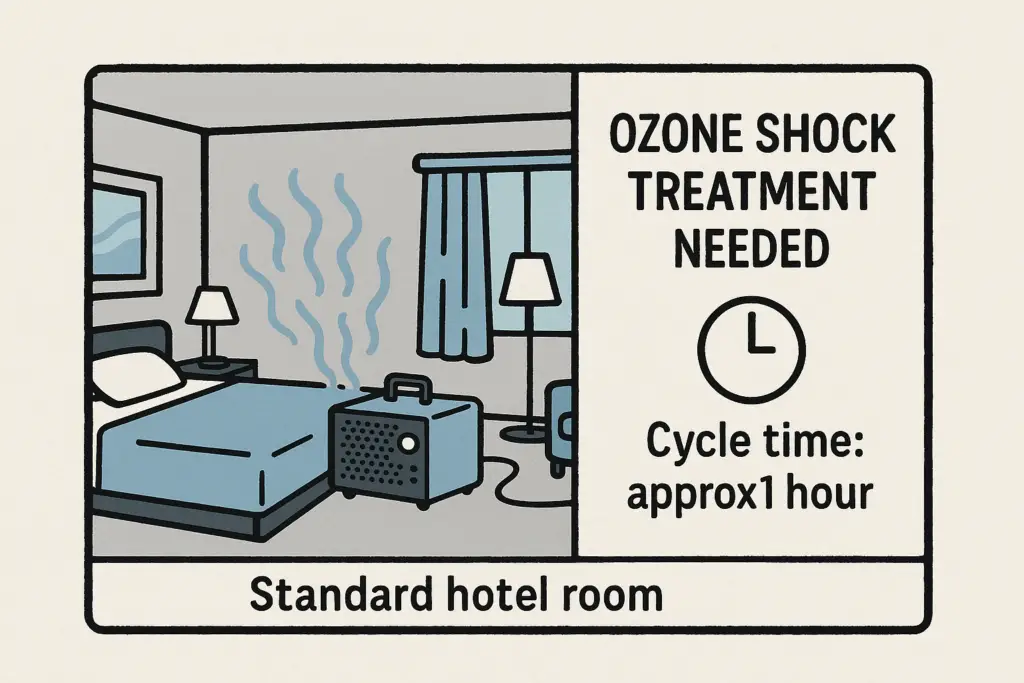
Diagram of ozone shock treatment cycle in a hotel room using an ozone generator

🏨 Hotels & Airbnb Turnovers

Need something staff can plug in and walk away from? OdorStop is easier, quieter, and more budget-friendly. Picture an Airbnb host with a last-minute booking: set the timer, walk away, and know the odor will be gone. If you run into a smoking suite or large unit that needs a deep reset, MaxBlaster earns its keep.

Safety Essentials

  • Always run in unoccupied spaces—no people, pets, or plants inside.
  • Ventilate thoroughly with fresh air before re-entry.
  • Ozone removes odors but does not replace full mold remediation.
  • For health and exposure context, see the EPA on ozone generators and OSHA’s ozone limits.
  • These machines fall under Indoor Air Quality (IAQ) topics, where safe use and ventilation are critical.

Verdict

The MaxBlaster is built for professionals: fast, rugged, and made for the toughest jobs. The OdorStop is built for accessibility: affordable, easy to use, and perfect for hotels, rentals, and general home odor problems. Think of it this way—OdorStop is your daily driver, MaxBlaster is the drag racer. Pick the lane you drive in most often.

Expanded FAQs

  • Is ozone safe to breathe? No. Only use in unoccupied spaces and ventilate fully afterward. (See EPA link above.)
  • Does higher output always mean better? Not always—higher output is faster, but overkill for small rooms or cars.
  • Can ozone kill mold? It neutralizes odors but does not remove visible colonies—remediation still needed. (See CDC link above.)
  • How often should I replace ozone plates? Every 1–2 years, or when output noticeably drops.
  • How long should I run an ozone generator? Cars: 20–60 minutes depending on severity; rooms: 1–4 hours; basements: 2–3 hours; always ventilate after.
  • Can I leave furniture and clothes inside during treatment? Yes, but ozone may leave a temporary smell on fabrics—air them out after treatment.
  • What’s the difference between ozone and UV disinfection? Ozone reacts with odors and airborne contaminants; UV light targets microbes in the air and on surfaces. OdorStop combines both, while MaxBlaster focuses purely on ozone power.
  • Do I need an external timer? OdorStop has one built-in. MaxBlaster users should pair it with a heavy-duty external timer for safe, consistent operation.

h2>Read More About Ozone Generators
If you’re researching ozone generators, ozone safety, or ozone treatments for homes and vehicles, these articles may be helpful:

Ozone for Bed Bugs: Why It Doesn’t Work — and What Actually Does

Ozone can kill bed bugs — but only at levels far too dangerous for people or pets. While ozone gas is powerful enough to destroy bacteria, mold, and odors, the concentrations required to eliminate bed bugs would make a home uninhabitable. Heat, steam, and encasements are far safer and far more effective solutions.

Ozone Seems Like a Quick Fix — But Bed Bugs Aren’t

When you first discover bed bugs, it’s tempting to reach for an ozone generator. After all, ozone can kill bacteria, neutralize odors, and wipe out mold. So why not bed bugs?

The problem is that ozone doesn’t reach where bed bugs live — deep inside mattress seams, wall cracks, and clothing folds. Even powerful commercial units can’t penetrate far enough without filling the air with unsafe levels of ozone gas.

Warning: Ozone might seem like a fast solution, but bed bugs rarely are. Even with perfect cleaning and treatments, it usually takes several weeks to fully reclaim your bed and bedroom.

So if ozone isn’t the answer, what’s really going on with bed bugs — and how do you get your life back?

Cutaway diagram showing ozone gas in open air while bed bugs hide inside mattress seams and wall cracks.Bed Bugs 101: Why They’re a Problem, Where They Hide, and Why Clothes Matter

Why Bed Bugs Are a Big Deal

Bed bugs don’t spread disease, but they do cause itchy bites, sleepless nights, and stress that can wear you down fast. Their bites often appear in clusters or rows, usually on arms, legs, or the neck. Some people have no reaction, while others get red, swollen welts that take days to heal.

The worst part? They’re patient. Bed bugs can live months without feeding, waiting quietly until you lie down again. For a medical overview of symptoms and identification, see the CDC’s guidance: CDC: Bed Bugs.

Where Bed Bugs Hide

Bed bugs are master hiders. They squeeze into paper-thin spaces and prefer places near where people sleep. Typical hiding spots include:

  • Mattress seams and box spring fabric
  • Behind headboards and baseboards
  • Inside screw holes, wall outlets, and picture frames
  • Under loose wallpaper, rugs, or carpet edges
  • In dresser drawers, nightstands, and even book bindings
  • Inside clothing and laundry piles near beds or chairs

Educational graphic labeling common hiding spots for bed bugs — mattress seams, baseboards, clothing, and wall outlets.For a detailed, practical field guide, see EPA: Bed Bugs and the University of Minnesota Extension’s excellent overview: UMN Extension: Bed Bugs.

Why Clothes Are Such a Big Issue

Clothing gives bed bugs warmth, texture, and scent — all things they seek. They cling to worn items, hide in cuffs, and hitchhike to other rooms or even other homes. A single infested hoodie or blanket can reintroduce bed bugs weeks after you thought they were gone.

That’s why washing and sealing clothes is a crucial step. You’re cutting off one of their best hiding and travel routes.

Freshly washed clothes stored in clear plastic bins labeled clean during bed bug treatment.What Actually Works to Get Rid of Bed Bugs

Here’s the complete, realistic process — not a one-day trick, but a plan that works.

Visual checklist showing washing, vacuuming, steaming, encasing, and setting traps to remove bed bugs.Step 1: Contain and Clean Everything

  1. Strip the bed completely. Put all bedding straight into heavy-duty trash bags or plastic bins beside the bed. Don’t carry loose sheets through the house.Close-up of bed bug–proof mattress encasement zipper and fabric seal.
  2. Wash and dry on high heat. Hot water and at least 30 minutes on high heat kills bed bugs and eggs. After drying, immediately seal items in clean bags or bins labeled CLEAN – DO NOT OPEN YET.
  3. Vacuum and steam the bed frame and mattress. Vacuum seams, edges, and cracks. Steam slowly — about 1 inch per second — to let the heat do its job. Let everything dry 30 minutes.
  4. Install mattress and box spring encasements. Zip them completely shut and check the zipper seal. These trap any bugs inside (they’ll starve) and block new ones from getting in. Leave them on for at least 12 months. You can sleep on them immediately.
  5. Add clean bedding. Use freshly laundered sheets and pillowcases from your sealed “clean” set. Keep extras sealed until you’re sure the infestation is gone.Bed legs placed in interceptor traps to capture bed bugs climbing up or down.
  6. Set up interceptor traps. Place them under each bed leg to catch bugs trying to climb up or down.
Can I sleep in my bed tonight? Yes — once your mattress and box spring are encased and the bed is freshly made, it’s actually better to sleep there. Your body heat and breath draw any remaining bugs toward the traps instead of spreading them elsewhere.

Step 2: Manage Your Clothes the Smart Way

  • Pick a clean rotation. Before sealing everything, choose ~1 week of outfits. Wash/dry on high heat and store in a sealed tote or bag you open only when dressing.
  • Keep the rest sealed ~2 weeks. Long enough for hidden bugs to die or starve. If activity persists after two weeks, rewash and keep sealed another week.
  • Re-wash as you rotate. When your wear set gets dirty, launder on high heat and return it to the clean tote.
  • Dirty clothes protocol. Toss worn items directly into a “to-wash” bag — never on the bed or floor.

Step 3: Vacuum and Steam Regularly

  • Vacuum daily for 2 weeks, then every other day for one more week. Focus on corners, baseboards, bed frame joints, and under furniture. Seal/dispose bags outdoors immediately.
  • Steam weekly to hit hatchlings that survived the first pass.

Handheld steam cleaner removing bed bugs from mattress seams.Step 4: Use EPA-Approved Bed Bug Sprays

Choose products that clearly list “bed bugs” on the label (e.g., Ortho Home Defense, EcoRaider, Harris, Bedlam). Apply carefully in cracks, furniture joints, and along baseboards. Repeat every 7–10 days for three cycles to catch newly hatched bugs, and ventilate rooms after use. For pesticide safety basics, see EPA: Controlling Bed Bugs.

Step 5: Sleep in Your Bed (Really)

It feels wrong, but it’s necessary. Once your bed is encased and clean, keep sleeping in it. If you start sleeping on the couch, the infestation spreads. Interceptors under the legs help confirm progress.

Step 6: Use Ozone for Odor Cleanup Only

After your pest treatments are complete, ozone can be useful to remove musty or chemical odors. Run the generator in an empty room for 1–2 hours (3–4 hours for larger rooms). Air out for at least 12 hours before re-entry. Use ozone only for deodorizing — not for killing bed bugs.
If you are shopping for a machine to handle this final step, you can review our recommended ozone generators for home use to find a unit that balances performance with safety features.
For safety guidance and limitations of ozone indoors, see the EPA’s advisory: EPA: Ozone Generators that are Sold as Air Cleaners.

How Long It Takes to Reclaim Your Room

Infographic timeline from day 1 to month 2 showing cleaning, spraying, encasing, and achieving a bug-free home.Here’s the real timeline most people experience:

Phase What’s Happening What You Can Do Bed/Room Use
Days 1–3 First cleanup: wash, vacuum, encase, and trap. Bag laundry, set traps, encase mattress. Safe to sleep with encasement.
Week 1–2 Eggs hatch; traps catch wanderers. Vacuum daily, reapply spray after 7–10 days. Fully usable, but stay consistent.
Week 3–4 Population drops sharply. Steam again, inspect traps and seams. Normal use with caution.
Week 5–8 No new bites or spots; hidden bugs starve. Keep encasement and traps in place. Back to normal life.
Month 3–4 Complete eradication. Continue light monitoring. Maintain encasement as prevention.

Comparison: Ozone vs. Other Bed Bug TreatmentsComparison chart of ozone, heat, steam, and encasement treatments showing effectiveness, speed, and cost.

Treatment Kills Eggs Safe Indoors DIY Option Cost Best For
Ozone No ⚠️ Not at effective levels ⚠️ Risky $$ Odor removal only
Heat Treatment (Pro) Yes Yes (professional) No $$$$ Full infestations
Steam Cleaning Yes Yes Yes $$ Mattresses & furniture
Encasements & Traps No (trap/starve) Yes Yes $ Prevention & monitoring
EPA Sprays Yes Use as directed Yes $ Light infestations

Common Myths About Ozone and Bed Bugs

Myth 1: “Ozone kills everything.”
Fact: It kills exposed organisms, not hidden insects or eggs. See EPA’s ozone advisory.

Myth 2: “You can just run it overnight.”
Fact: The ozone level needed would be unsafe to breathe.

Myth 3: “If it smells clean, the bugs are gone.”
Fact: Ozone removes odors but doesn’t confirm pest removal.

Myth 4: “You can’t sleep on your bed for months.”
Fact: Once encased, your mattress is safe to sleep on immediately.

Frequently Asked Questions

Can ozone kill bed bug eggs?
No. Bed bug eggs have thick shells that protect them from ozone exposure.

Is ozone safer than pesticides?
Not at the concentrations needed for pest control. Ozone can harm your lungs and corrode electronics. For indoor ozone risks, see EPA.

What kills bed bugs instantly?
Heat above 120°F kills them and their eggs on contact — that’s why steam and professional heat treatments are so effective. See EPA: Bed Bugs.

Can I use ozone on my mattress?
Only after extermination, for odor cleanup. Run ozone in an empty room and ventilate afterward.

How do I remove the ozone smell afterward?
Open windows, use fans, and wash fabrics. Baking soda and sunlight also help. See our guide: Ozone Smell on Clothes.

Final Thoughts

Ozone might make the room smell cleaner, but it won’t solve a bed bug problem. They’re stubborn, patient insects that require time and consistency — not just gas or chemicals.

The good news is, with heat, steam, encasements, and persistence, you can reclaim your bed and your sleep safely. Stick to the plan, stay consistent for a few weeks, and you’ll win.

Still wondering What ozone smells like? Learn why people describe ozone as smelling like chlorine, electricity, thunderstorms, and even burnt electronics.

Learn More